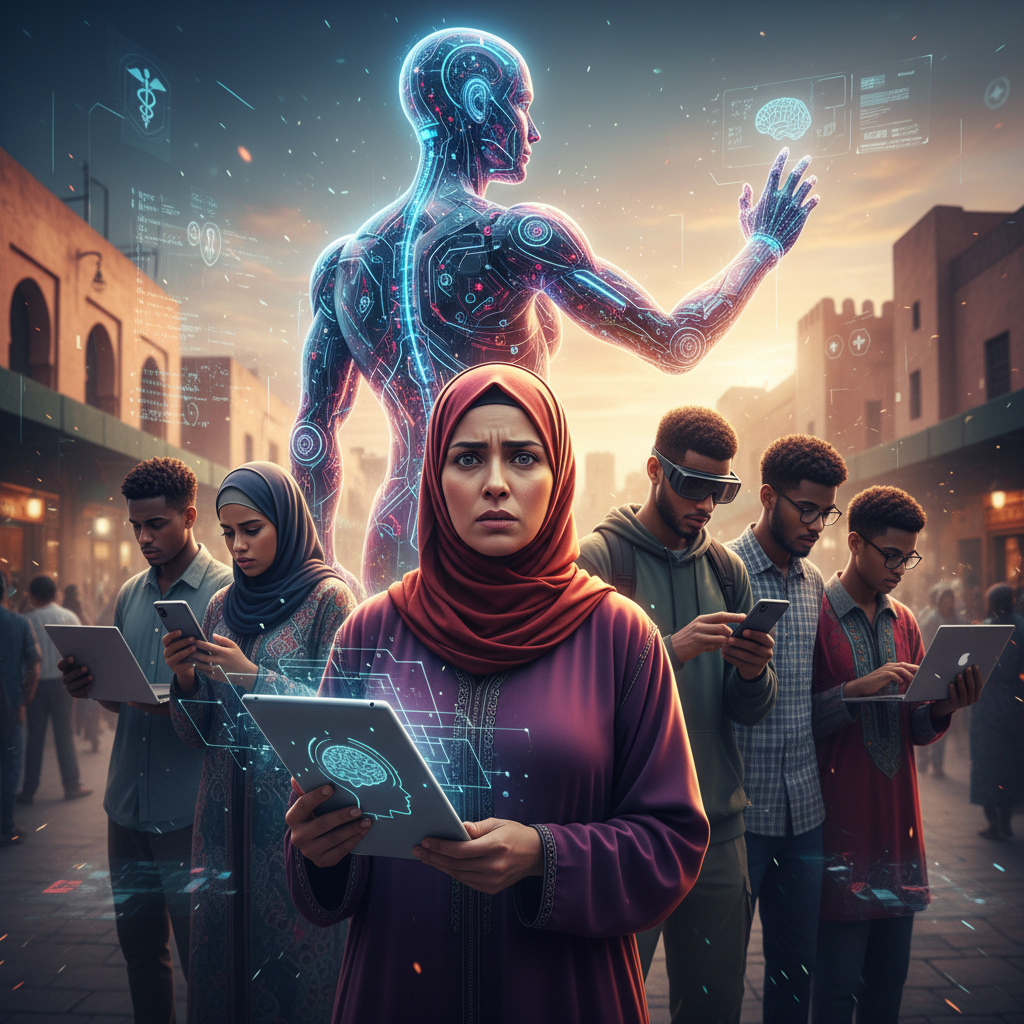
The digital therapist, once a whispered promise, has become a palpable presence in Morocco, offering solace and support to a population increasingly open to mental health conversations. Yet, a new, urgent report from the Moroccan Ministry of Health and Social Protection, released just this morning, casts a stark light on the burgeoning field of AI-powered mental health applications. It’s a moment of reckoning, a critical examination of the very tools we are embracing to mend our minds. This isn't just about algorithms; it is about trust, culture, and the very fabric of our digital future.
The report, titled "Mindscapes and Machines: Navigating AI in Moroccan Mental Healthcare," details the rapid adoption of AI chatbots, mood trackers, and virtual therapy platforms across the kingdom. Within the last two years alone, the number of active users on such platforms has surged by an estimated 180 percent, reaching nearly 1.5 million Moroccans. This growth is particularly pronounced among younger demographics and in rural areas where access to traditional mental health services remains limited. The convenience is undeniable, the anonymity appealing, and for many, these digital tools have been a lifeline.
However, the report doesn't stop at celebrating access. It delves deep into the risks, highlighting a concerning lack of regulatory oversight, inconsistent data security protocols, and a significant gap in cultural and linguistic sensitivity within many of these AI models. "While the promise of AI in democratizing mental health support is immense, we cannot ignore the potential for harm," stated Dr. Fatima Zahra El Fassi, Director of Digital Health Initiatives at the Ministry, during a press conference in Rabat. "Our preliminary findings indicate that nearly 40 percent of the AI therapy applications available in Morocco lack adequate Arabic language support, and an even higher percentage fail to account for the nuances of Moroccan cultural context and social norms. This isn't just an inconvenience; it can lead to misdiagnosis or inappropriate advice."
The key details of the report are sobering. It identifies three primary areas of concern: data privacy and security, algorithmic bias and cultural irrelevance, and the potential for over-reliance and misguidance. On data privacy, the report found that only 35 percent of reviewed applications clearly outlined their data retention policies, and a mere 20 percent offered robust end-to-end encryption for user conversations. This is particularly alarming given the highly sensitive nature of mental health data. Imagine intimate thoughts and vulnerabilities, shared in confidence, potentially exposed or misused. It is a chilling prospect.
Algorithmic bias is another major red flag. Many of these AI models are trained on datasets predominantly from Western populations, often in English. This means their understanding of mental health symptoms, coping mechanisms, and even the very concept of well-being can be fundamentally misaligned with Moroccan cultural experiences. "A chatbot trained on American data might interpret a collective family decision as a sign of dependence, when in our culture, it signifies strong familial bonds and support," explained Professor Hassan Alaoui, a leading psychologist and AI ethicist at Mohammed V University in Rabat. "This isn't just about translation; it's about deep cultural understanding. We need AI that speaks not just our language, but our lived experience."
Official reactions have been swift and varied. Minister of Health and Social Protection, Khalid Ait Taleb, acknowledged the report's findings with gravity. "This is a wake-up call," he stated. "We have been proactive in encouraging digital innovation, but innovation must always be tempered with responsibility. We are immediately forming a national task force to develop comprehensive guidelines and a regulatory framework for AI in mental health. Our citizens' well-being, both physical and mental, is paramount." He emphasized that a collaborative approach, involving tech developers, mental health professionals, and cultural experts, would be essential.
From the private sector, there is a mix of apprehension and commitment. Omar Benjelloun, CEO of 'Nafs AI,' a Moroccan startup developing culturally sensitive mental wellness apps, welcomed the scrutiny. "This report validates our long-held belief that Morocco sits at the crossroads of Africa, Europe, and the Arab world and that's our AI superpower," Benjelloun asserted. "It means we have a unique responsibility, and opportunity, to build AI solutions that truly understand and serve diverse populations. We have been actively incorporating Moroccan dialect, cultural proverbs, and Islamic principles into our models from day one. This report will only accelerate our efforts to set a gold standard for culturally intelligent AI." His company, for instance, has partnered with local imams and community leaders to ensure their content resonates authentically.
Expert analysis suggests that while the challenges are significant, they are not insurmountable. Dr. Aisha Radi, a neuroscientist specializing in human-computer interaction, pointed to the necessity of local data collection and model training. "We cannot rely solely on imported AI solutions," she argued. "We must invest in building our own datasets, annotated by Moroccan experts, to train AI models that reflect our unique reality. This is an opportunity for our universities and research centers to lead." She also highlighted the ethical imperative of transparency, urging developers to clearly state the limitations of their AI and to always recommend human intervention when complex issues arise.
What happens next is crucial. The Ministry of Health's task force is expected to deliver its initial recommendations within three months. These recommendations will likely include mandatory certification for AI mental health platforms, strict data governance requirements, and guidelines for cultural and linguistic localization. There is also talk of establishing a national AI ethics board specifically for healthcare, a move that could set a precedent for other sectors. The report also calls for increased public awareness campaigns to educate users about both the benefits and risks of digital therapy.
For readers, particularly those across Africa and the Arab world, this story holds profound relevance. Morocco's proactive stance on regulating AI in mental health could serve as a vital blueprint. As digital solutions proliferate, the questions raised here, about privacy, bias, and cultural appropriateness, will only grow louder. The Sahara is vast, but the data flowing across it is vaster, and ensuring its ethical and effective use is a collective responsibility. Casablanca is becoming the AI capital nobody expected, and its approach to these challenges will echo far beyond its bustling streets. This isn't just a Moroccan problem; it is a global one, and our response today will shape the mental well-being of generations to come. We must ensure that our digital healers are truly healing, not inadvertently harming, the very minds they seek to serve.