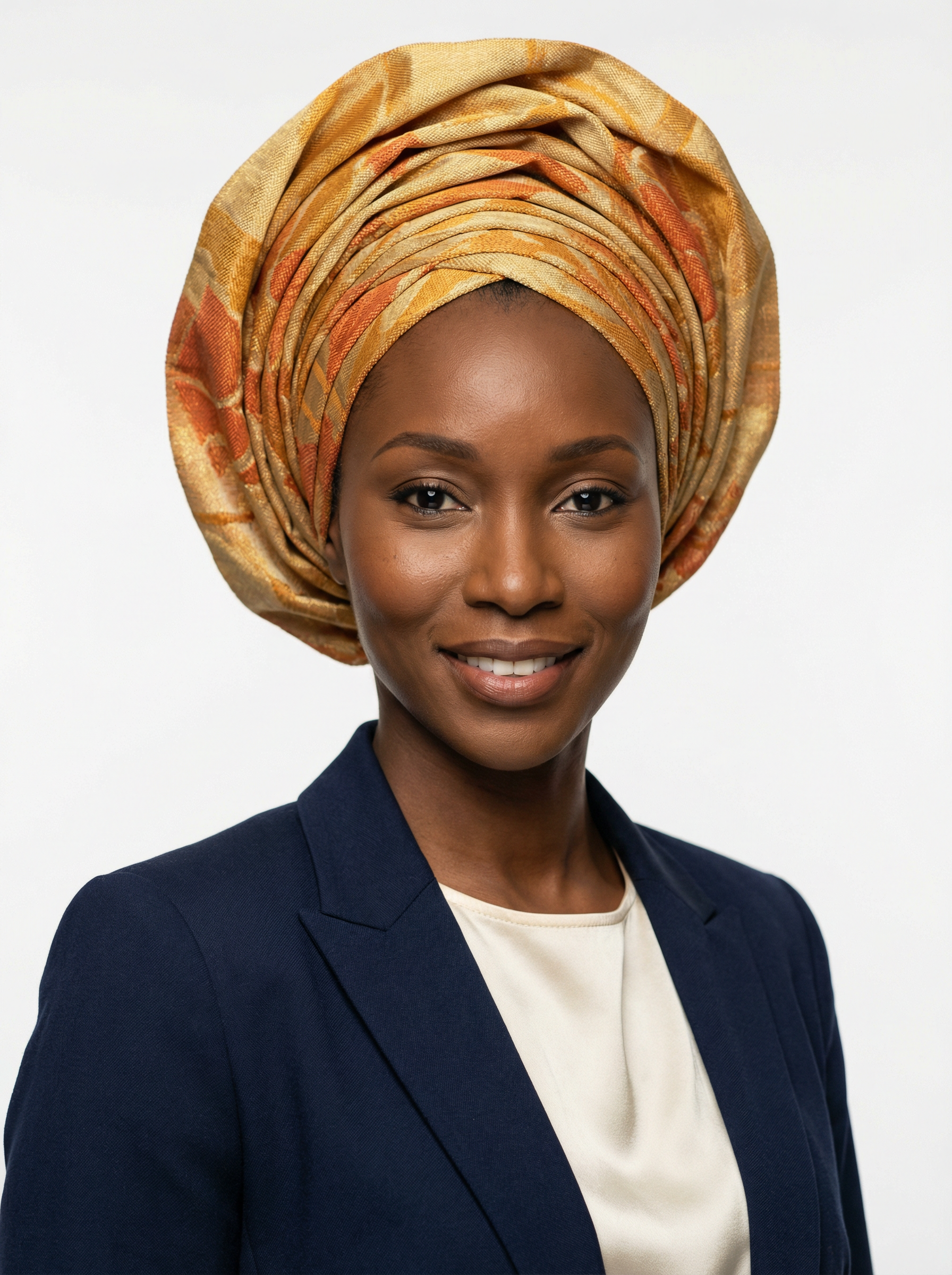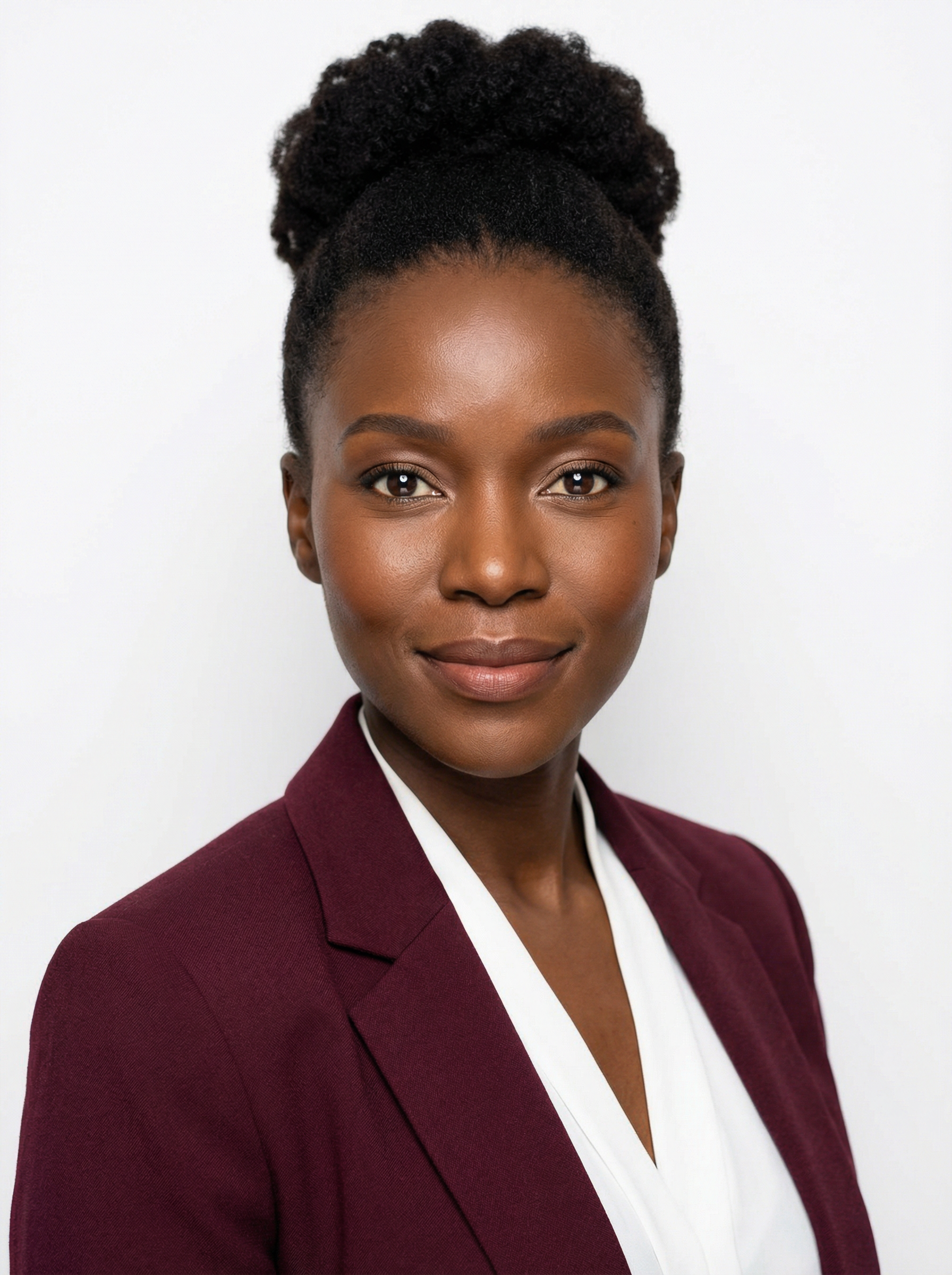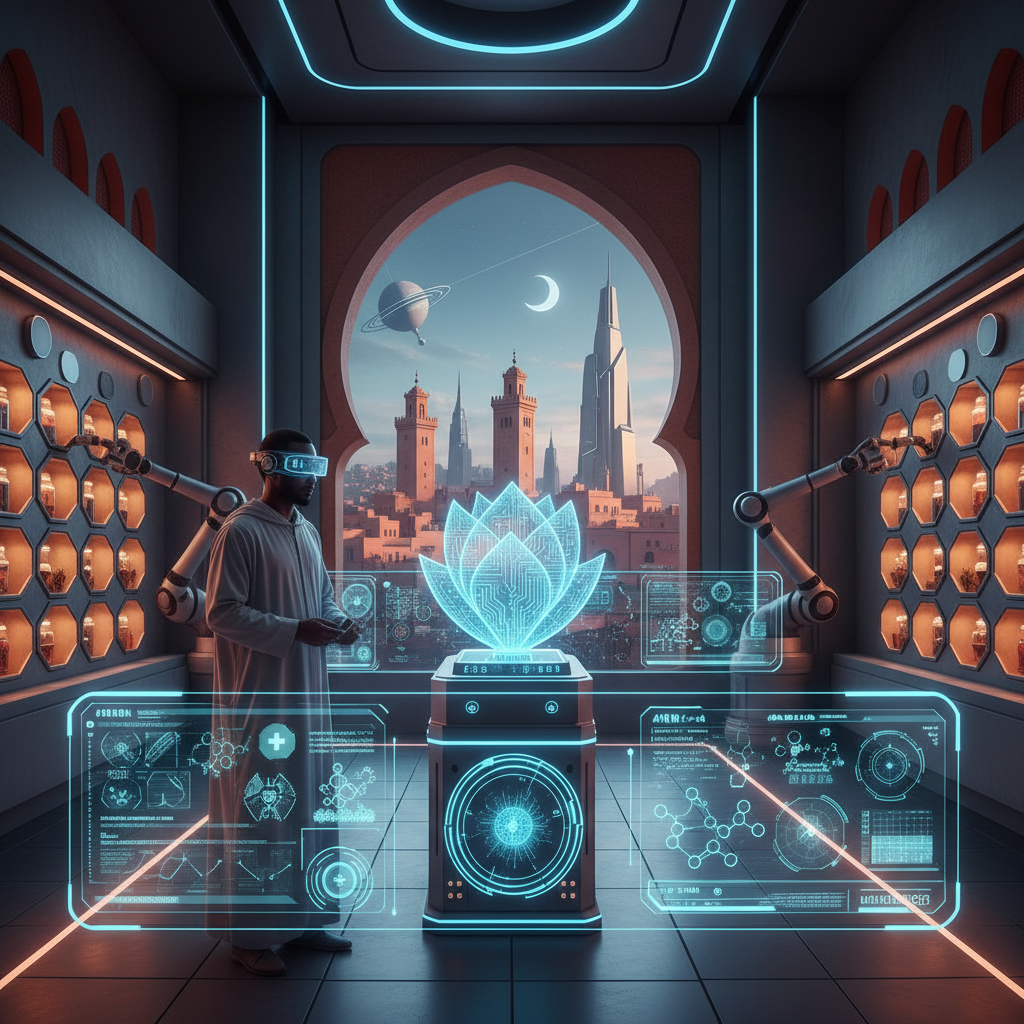
The scent of mint tea and the murmur of conversation usually fill the air at the Pharmacie Al Amal in Casablanca, a familiar comfort for generations. But today, a different kind of hum permeates the space, a quiet whirring from the back office where Dr. Fatima Zahra, a pharmacist with two decades of experience, stares intently at a screen. It is not a patient record she is scrutinizing, but a complex data visualization projected from 'Alchemist AI', a new drug discovery platform adopted by her pharmaceutical supplier, PharmaMaroc. The platform claims to accelerate lead compound identification by 70 percent, a number that sounds like magic to her, yet it dictates the new inventory arriving daily. She feels a disconnect, a subtle shift in the very essence of her profession. The art of healing, once rooted in intuition and experience, now feels increasingly guided by unseen algorithms.
This scene, playing out in various forms across Morocco, is a microcosm of a profound transformation. AI in drug discovery and medical research is not a distant dream for Silicon Valley anymore, it is a tangible force reshaping our very understanding of health and commerce here in North Africa. For years, we spoke of AI's potential, but now, the data is undeniable. A recent report from the Moroccan Ministry of Industry and Trade, in collaboration with the National Agency for the Development of Digital Technologies, indicates that over the past 18 months, 45 percent of major pharmaceutical companies and research institutions in Morocco have either piloted or fully integrated AI solutions into their R&D pipelines. This represents a staggering 300 percent increase from just three years ago. The return on investment, for those who have embraced it, is equally compelling. Early adopters like PharmaMaroc and the Institut Pasteur du Maroc are reporting a 25 percent reduction in the time it takes to move from preclinical trials to Phase 1, and a 15 percent decrease in overall R&D costs. These are not small numbers, they are seismic shifts in an industry known for its glacial pace and exorbitant expenses.
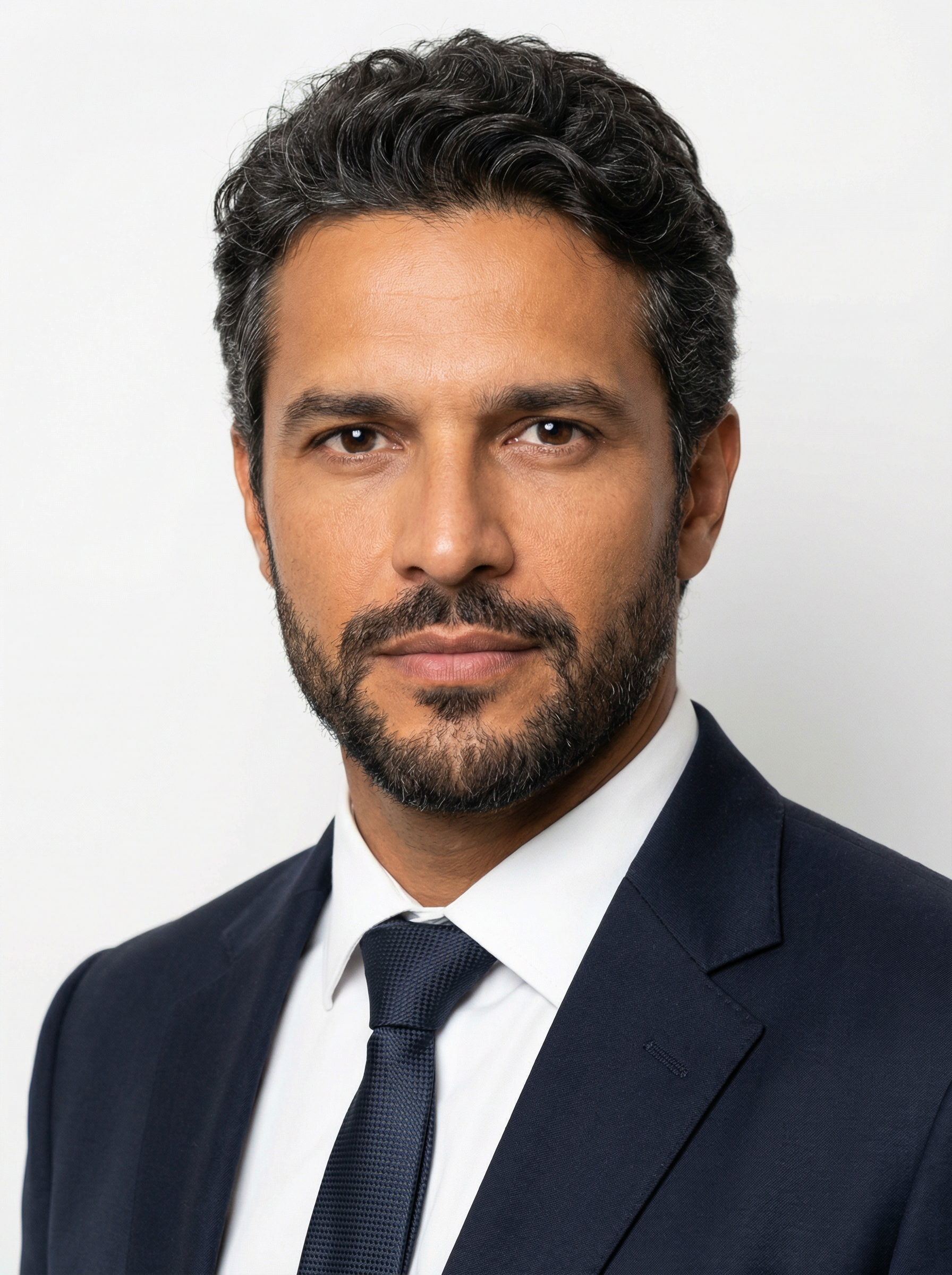
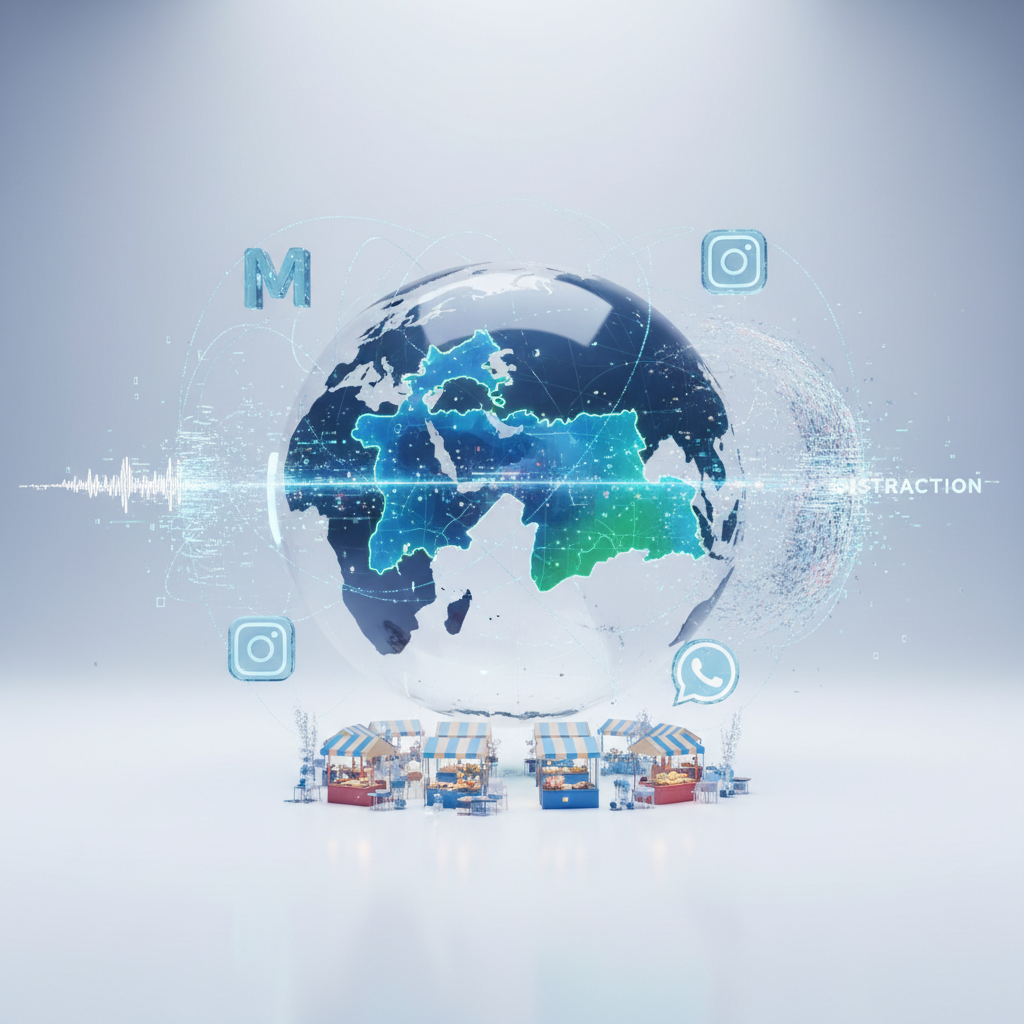
So, who are the winners and losers in this algorithmic race? On one side, we have companies like PharmaMaroc, a homegrown success story that has invested heavily in AI infrastructure and talent. Their CEO, Dr. Karim Benjelloun, a visionary trained in both Rabat and Paris, speaks with infectious enthusiasm. "We used to spend years, sometimes a decade, sifting through millions of compounds, a needle in a haystack," he told me during a recent visit to their state-of-the-art facility in Bouskoura. "Now, Alchemist AI can predict molecular interactions and potential efficacy with unprecedented accuracy. Our success rate in identifying promising candidates has doubled. This is not just about profit, it is about bringing life-saving medicines to our people faster. Morocco sits at the crossroads of Africa, Europe, and the Arab world and that's our AI superpower, allowing us to leverage diverse datasets and talent pools." Their stock price has soared, and they are aggressively expanding their research partnerships across the continent.
Then there are the smaller, more traditional research labs and contract research organizations, many of which are struggling. Lacking the capital for substantial AI investment, they find themselves outmaneuvered. BioTech Solutions, a mid-sized Moroccan CRO specializing in preclinical testing, saw its client base shrink by 30 percent last year. "Clients are demanding AI-driven insights, predictive modeling, and accelerated timelines that we simply cannot offer without a massive overhaul," explained Dr. Aicha El Fassi, their lead toxicologist. "We are trying to adapt, but the pace is relentless. It feels like the ground is shifting beneath our feet."
For the workers on the front lines, the experience is complex. Dr. Zahra at Pharmacie Al Amal represents a generation of pharmacists and researchers who are now grappling with new tools. "I have always prided myself on my deep understanding of pharmacology, my ability to connect with patients, and my clinical judgment," she confides. "Now, I am asked to interpret AI-generated reports, to trust algorithms that I do not fully understand. It is efficient, yes, but it also feels like a part of my expertise is being outsourced to a machine. There is a fear, a quiet anxiety, about what this means for our roles in the long term." This sentiment is echoed by many. A recent survey of pharmaceutical R&D professionals in Morocco found that while 60 percent recognized the benefits of AI, 40 percent expressed concerns about job displacement or the de-skilling of their roles. However, the same survey also highlighted a growing demand for new skills, with data scientists, AI ethicists, and bioinformaticians becoming indispensable.
Dr. Omar Hilali, Director of the National Institute of Health Research, offers a broader perspective. "The integration of AI is not merely a technological upgrade, it is a paradigm shift in how we approach healthcare. We are moving from reactive medicine to predictive, personalized interventions. This requires a new educational framework, a commitment to continuous learning, and a robust ethical governance structure. We must ensure that this revolution benefits all segments of society, not just the privileged few. The Sahara is vast, but the data flowing across it is vaster, and we must harness it responsibly for the health of our continent."
Indeed, the ethical considerations are paramount. The potential for bias in AI models, particularly when trained on limited or skewed datasets, is a significant concern. If AI models are developed primarily with data from Western populations, will they be truly effective for the diverse genetic and environmental contexts of Morocco and wider Africa? This is where local expertise becomes crucial. Institutions like the Mohammed VI Polytechnic University are actively developing AI models trained on Moroccan and African genomic data, aiming to create more equitable and effective drug discovery platforms. "Our goal is not just to consume AI, but to produce it, to tailor it to our unique needs," states Professor Laila Mansouri, head of their AI in Health program.
Looking ahead to the next decade, the trajectory is clear. Casablanca is becoming the AI capital nobody expected, quietly building an ecosystem that merges deep scientific expertise with cutting-edge technology. We will see an acceleration in the development of 'digital twins' for patients, allowing for personalized drug testing in silico, dramatically reducing the need for traditional clinical trials. Gene editing technologies, guided by AI, will become more precise and accessible, offering cures for previously untreatable diseases. The lines between pharmaceutical companies, tech giants, and healthcare providers will blur, creating integrated health ecosystems. For Morocco, this means a unique opportunity to lead, not just follow. By leveraging our strategic location, our multilingual workforce, and our commitment to innovation, we can shape an AI-driven healthcare future that is both globally competitive and locally relevant. The challenge, as always, will be to ensure that this algorithmic alchemy truly serves humanity, preserving the human touch even as machines unlock new frontiers of healing. The future of medicine in Morocco, and indeed in Africa, will be written in code, but its impact will be felt in the lives of millions. It is a future that demands our careful attention, our bold vision, and our unwavering commitment to progress, tempered with an understanding of our shared humanity. The journey has only just begun. We are not just witnessing history, we are actively shaping it, one algorithm, one discovery, one patient at a time.