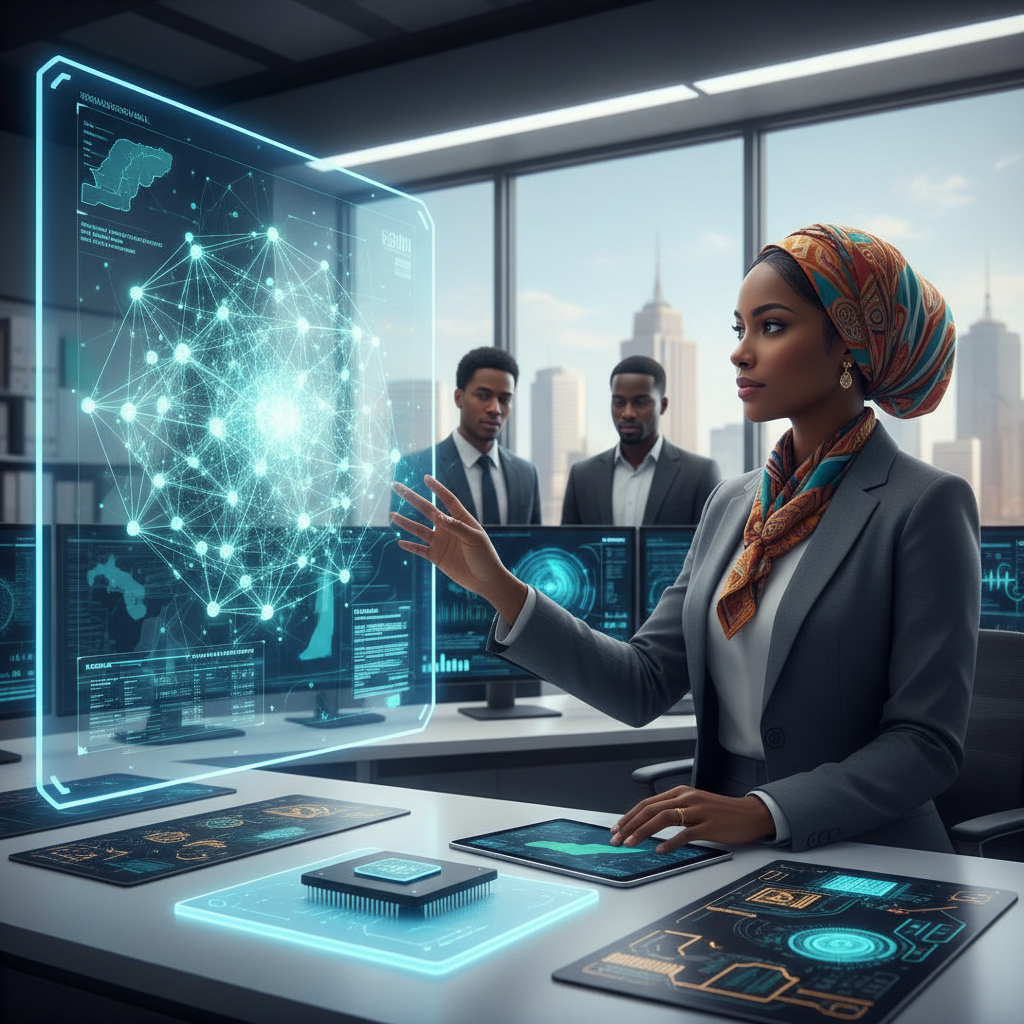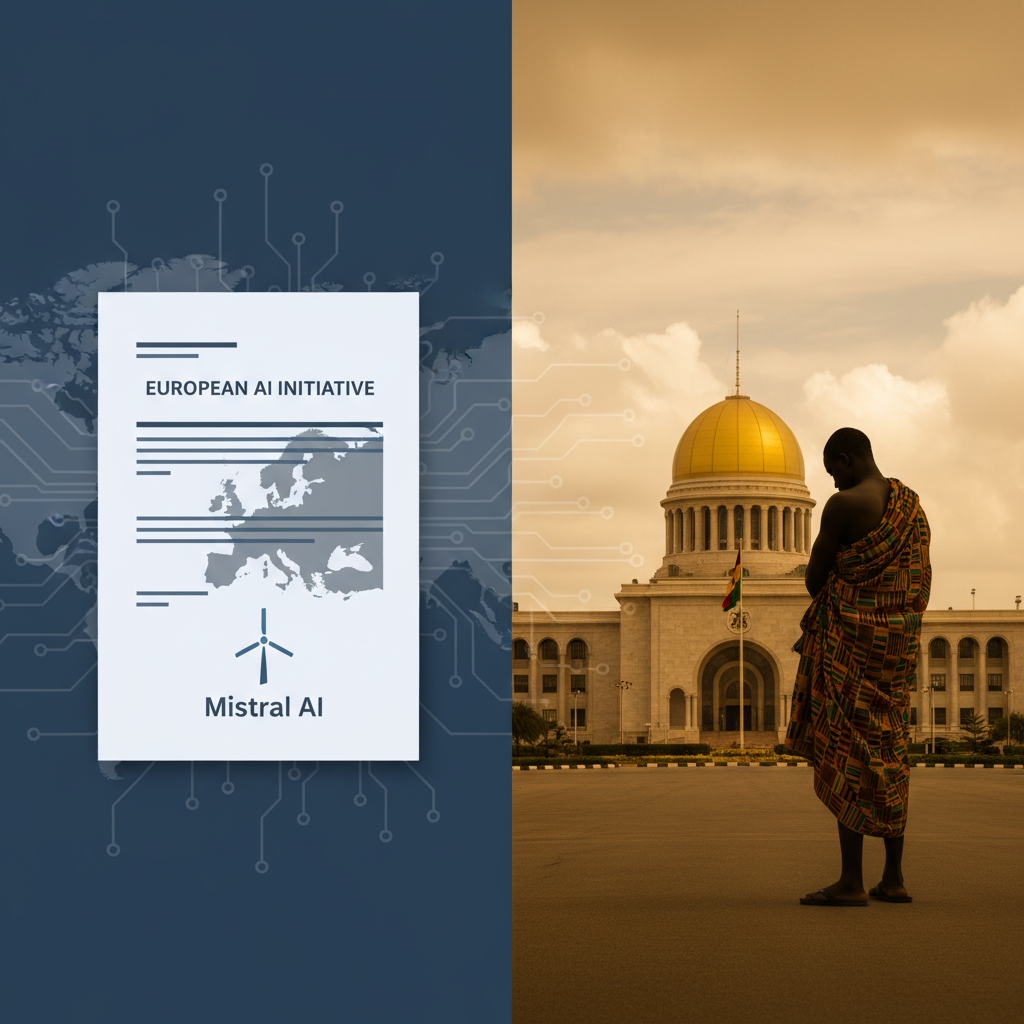
The drumbeats of digital sovereignty are growing louder in Europe, echoing across the continent with a distinct French accent. At the heart of this chorus is Mistral AI, the Paris-based startup that many are hailing as Europe's answer to OpenAI, Google, and the American tech giants. Brussels and various European capitals are pouring resources, political will, and regulatory frameworks into nurturing Mistral, hoping it will secure Europe's technological independence in the age of artificial intelligence. But from my vantage point here in Accra, I have to ask: what does this grand European ambition mean for Ghana, for Africa, and for the equitable future of AI globally?
The policy move is clear: Europe wants its own AI champions, built on its own values, and governed by its own rules. The recent maneuvers around the EU AI Act, coupled with significant investments in companies like Mistral, signal a strategic pivot. The goal is to avoid over-reliance on US or Chinese AI models, which are often seen as embodying different ethical frameworks or geopolitical interests. This isn't just about economic competition, it's about control, data privacy, and ensuring that the AI shaping European societies is aligned with European principles. As Reuters recently reported, the push for 'sovereign AI' is gaining unprecedented traction, with governments actively shaping market conditions to favor local players.
Who is behind this, and why? Well, it's a consortium of European lawmakers, industry leaders, and even some civil society groups who believe that a truly independent AI ecosystem is vital for the continent's future. The French government, in particular, has been a vocal proponent, seeing Mistral as a symbol of technological prowess and strategic autonomy. They argue that if Europe doesn't develop its own foundational models, it will forever be a consumer, not a creator, of the most powerful technologies of our time. This sentiment is understandable, a desire to not be left behind, to shape one's own destiny. It's a familiar feeling for many nations, including Ghana.
What does this mean in practice? For Europe, it means a protected market, favorable regulations, and direct funding for companies like Mistral. It means prioritizing European languages and cultural nuances in AI training data, aiming for models that reflect the continent's rich diversity. For us in Ghana, and across Africa, the implications are far more complex and potentially troubling. If Europe builds its own walled garden of AI, what kind of access will we have to these advanced models? Will they be designed with our needs in mind, or will they be yet another set of tools that we must adapt, often awkwardly, to our unique contexts? Will the data used to train these 'sovereign' models include the rich tapestry of African languages, histories, and knowledge systems, or will they perpetuate a Eurocentric bias?
Industry reaction within Europe has been largely positive, especially from those poised to benefit. French President Emmanuel Macron has championed Mistral, seeing it as a cornerstone of France's digital future. Arthur Mensch, CEO of Mistral AI, has consistently emphasized the company's commitment to open science and European values, even as it attracts billions in funding from global players like Microsoft. This dual narrative of openness and sovereignty is a delicate balance they are trying to strike. However, outside Europe, the reaction is more muted, a mix of admiration for the ambition and concern about potential exclusion. While some might see this as a necessary step for Europe, I see a potential for further fragmentation of the global AI landscape, where the powerful few dictate the terms for everyone else.
From a civil society perspective, particularly here in Ghana, the concerns are palpable. We have been advocating for inclusive AI development, for models that understand Twi, Ga, Ewe, and Dagbani, not just English or French. We want AI that can help our farmers, our healthcare workers, our educators, in ways that are culturally appropriate and locally relevant. If Europe's sovereign AI movement leads to a further concentration of power and resources, making it harder for African nations to develop their own AI capabilities or even access equitable versions of global models, then it becomes a problem. Nana Ama Nkansah, a leading voice at the Ghana AI Ethics Initiative, put it succinctly: "When Europe talks about sovereignty, we hear echoes of exclusion. Will their AI models be truly global, or will they just be another digital colonial project? We need to ensure that the data, the algorithms, and the governance structures are built with equity at their core, not just for Europe, but for all of humanity." Her words resonate deeply, reminding us that the principles of Sankofa, looking back to move forward, must apply to technology too, ensuring we learn from past inequalities.
Will it work? For Europe, perhaps. They have the resources, the political will, and the talent to build a formidable AI ecosystem around Mistral and similar ventures. They might achieve their goal of digital autonomy. But for the rest of the world, especially for countries like Ghana, the success of this 'sovereign AI' movement could be a double-edged sword. On one hand, it might spur greater competition and diversity in AI models, which could be beneficial. On the other hand, it risks creating new barriers, new standards, and new forms of digital dependency. If Europe's AI models are not designed with global interoperability and inclusivity in mind, if they don't actively seek partnerships and knowledge exchange with nations in the Global South, then we risk a future where AI further exacerbates existing inequalities.
This affects every single one of us. We cannot afford to be passive observers. Ghana, along with other African nations, must actively engage with these emerging regulatory frameworks and technological shifts. We must demand a seat at the table, not just as consumers, but as co-creators and shapers of the AI future. We need to invest in our own AI talent, develop our own datasets, and advocate for global AI governance that prioritizes equity and access over nationalistic digital fortresses. As Dr. Kojo Mensah, Director of the African Institute for AI Research in Accra, recently stated, "The sovereign AI movement is a wake-up call. We must not wait for crumbs from the European table. We must build our own feast, informed by our own wisdom and our own needs." His sentiment captures the urgency of the moment. Silence is complicity when the future of technology is being decided, and we in Ghana have too much at stake to remain silent. The path to equitable AI is not through isolation, but through genuine, inclusive collaboration, ensuring that the adinkra symbol of Nkyinkyim, representing versatility and dynamism, guides our approach to this transformative technology. We must ensure that the global AI landscape does not become a series of disconnected, self-serving islands, but rather a vibrant, interconnected continent where all voices are heard and valued. For more insights on global tech policy, I often turn to The Verge for their comprehensive coverage. We need to ensure that the conversations happening in Brussels are not just about European sovereignty, but about global digital justice.