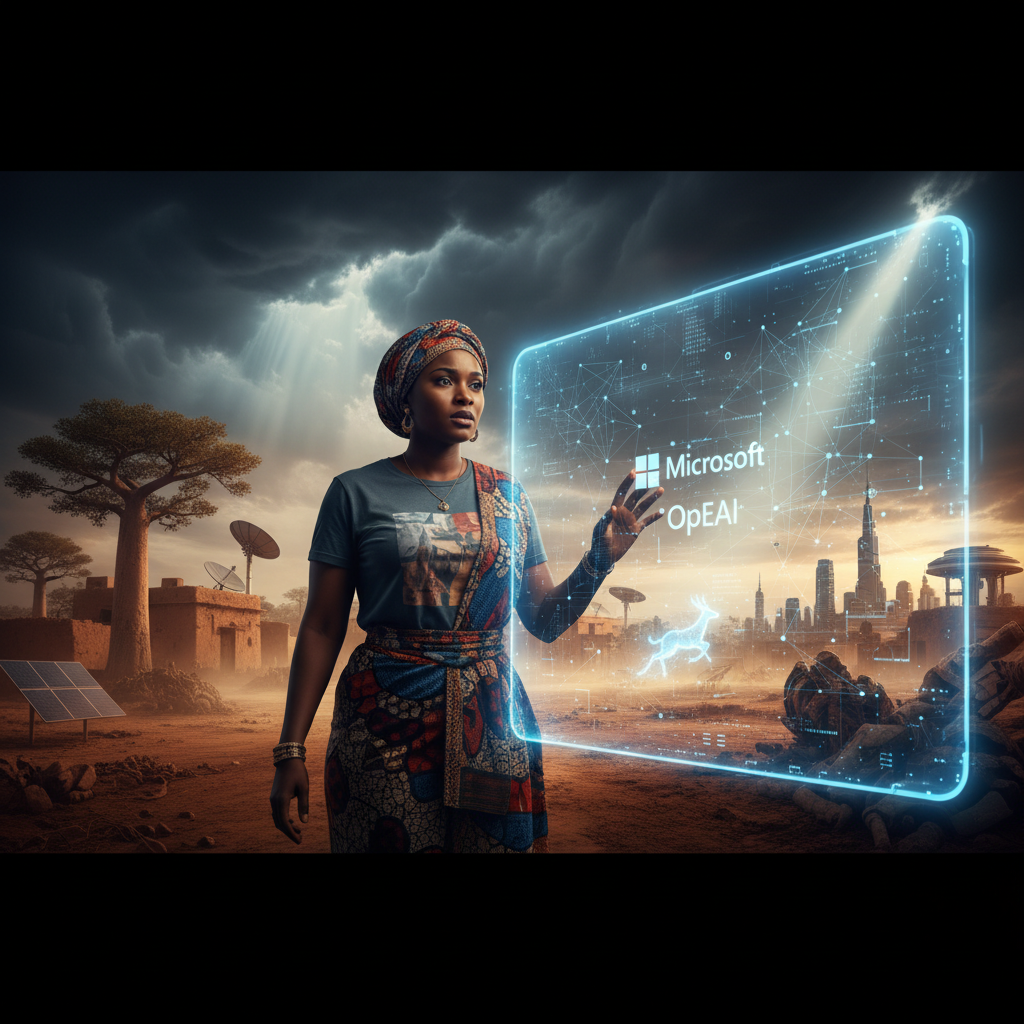
In Senegal, we have a saying, "Ndimbal lu baax la, waaye na jëkk ci sa bopp." It means, "Help is good, but it must first start with yourself." This wisdom echoes loudly today as the world watches Microsoft and OpenAI, two titans of the digital age, navigate their monumental partnership. The question on everyone's lips, from the bustling markets of Sandaga to the quiet tech hubs of Diamniadio, is whether Microsoft's reported $13 billion investment in OpenAI is truly paying off, not just in Redmond or San Francisco, but right here in Africa.
Just this week, a new development has brought this global story right to our doorstep. Microsoft announced an expansion of its AI initiatives across Africa, with a particular focus on leveraging OpenAI's models for local development projects. While the details are still emerging, the buzz is palpable. Is this the Ndimbal we have been waiting for, a true partnership that empowers our people, or just another grand promise that fades like the Harmattan wind?
The Breaking News Lead: A New Dawn, or Distant Thunder?
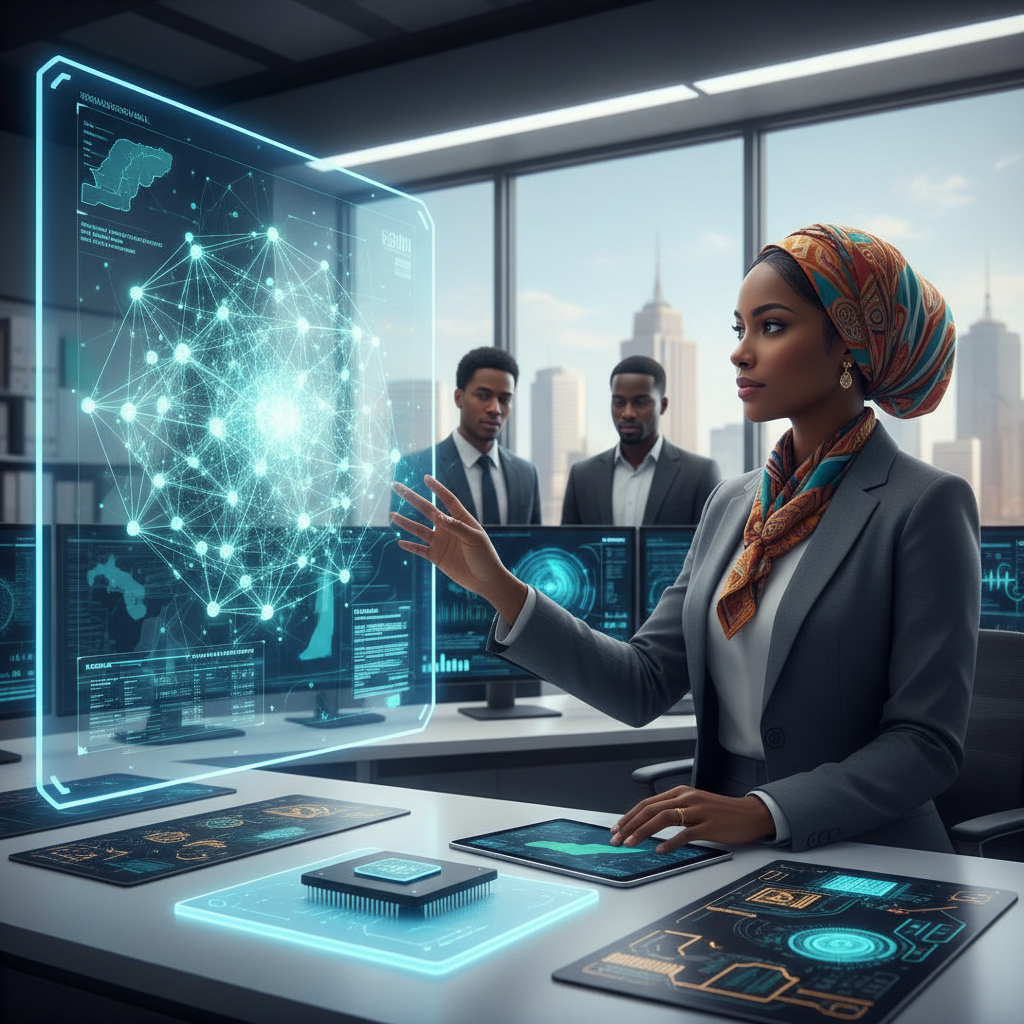
Word reached us this morning: Microsoft, in collaboration with the Senegalese Ministry of Digital Economy and Telecommunications, is launching a pilot program aimed at integrating OpenAI's advanced language models into local agricultural and educational platforms. This is not just about bringing technology to Africa; it is about tailoring it, making it speak our languages, and address our unique challenges. This move, directly linked to the broader strategic alliance between Microsoft and OpenAI, signals a shift. For years, the global AI narrative felt distant, a story told in other lands. Now, it feels like the plot is thickening right here, in our own villages and cities.
Key Details: What This Partnership Means on the Ground
The pilot program, tentatively named "Jàng ak AI" (Learn with AI), aims to deploy AI-powered educational tools in rural schools, offering personalized learning experiences in local languages like Wolof, Pulaar, and Serer. Simultaneously, an agricultural initiative, "Mbokk Sàmm" (Farmer's Friend), will use OpenAI's models to provide farmers with real-time advice on crop management, weather patterns, and market prices, accessible via simple feature phones. This is a significant step beyond mere connectivity; it is about contextualized intelligence.
"This is a critical moment for Senegal," said Dr. Aminata Sow, a leading AI researcher at Cheikh Anta Diop University in Dakar. "For too long, we have been consumers of technology. This initiative, if implemented thoughtfully, could position us as active participants, even innovators. The potential for localized AI to address our specific needs, from healthcare to education, is immense." Her eyes lit up when she told me about the possibilities, particularly for preserving and promoting our rich linguistic heritage through these new AI tools.
Microsoft's investment in OpenAI, which began with a reported $1 billion in 2019 and grew significantly to an estimated $13 billion by 2023, has been central to their strategy to lead the AI race. This massive financial commitment has fueled OpenAI's research and development, leading to breakthroughs like GPT-4 and the integration of these models into Microsoft's product suite, including Copilot. Now, a fraction of that power is being directed here, promising to transform lives.
Official Reactions: Hope and Caution
The announcement was met with a mix of optimism and measured caution from Senegalese officials. "We welcome this partnership with Microsoft and OpenAI," stated Mr. Abdoulaye Diallo, Minister of Digital Economy and Telecommunications, during a press conference in Dakar. "It aligns with our national digital strategy, 'Sénégal Numérique 2025,' which prioritizes leveraging technology for inclusive growth. We are keen to see how these advanced AI tools can be adapted to our unique cultural and socio-economic context." He emphasized the importance of data sovereignty and ethical AI deployment, reminding everyone that technology must serve humanity, not the other way around.
However, not everyone is entirely convinced. "The intentions are good, but the devil is in the details," remarked Madame Fatou Ndiaye, a community organizer from the Thiès region. "We have seen many projects come and go. Will this AI truly understand the nuances of a farmer's struggle in a small village, or will it just be another tool designed elsewhere, imposed here? Will it create jobs, or displace them? These are the questions we must ask." Her concerns are valid, reflecting a deep-seated desire for genuine impact, not just technological spectacle.
Expert Analysis: Bridging the Divide, or Deepening It?
Experts from across the continent are weighing in. Dr. Nanjira Sambuli, a renowned Kenyan digital rights advocate, shared her perspective with DataGlobal Hub. "Microsoft's investment in OpenAI has given them a formidable edge in the global AI landscape," she explained. "The challenge for Africa is to ensure that this power translates into tangible benefits for our communities, without exacerbating existing inequalities. We need to move beyond being mere recipients of technology to becoming co-creators." Her words resonate with the proverb, "Ku bëgg a gis lu neex, na xool ci boppam," meaning, "If you want to see something good, look within yourself." It is about self-determination in the face of global tech giants.
Indeed, the success of this initiative hinges on localization. OpenAI's models, while powerful, are trained predominantly on Western data. Adapting them to understand the intricacies of Wolof proverbs, the specific challenges of millet farming in the Sahel, or the diverse learning styles in a multi-ethnic classroom, will require significant effort and local expertise. This is where the true test of Microsoft's $13 billion bet will be measured in Africa: not just in quarterly earnings, but in real human impact.
I sat down with Professor Omar Diop, a linguist and AI ethicist, who expressed cautious optimism. "The potential for these tools to democratize access to information and education is transformative," he said. "Imagine a student in a remote village having access to an AI tutor that understands their language and cultural context. This is a story about people, not algorithms, and how technology can serve their aspirations." He stressed the importance of local data scientists and linguists being at the forefront of this adaptation, ensuring the AI reflects our realities.
What Happens Next: A Path Forward
The pilot programs are expected to roll out in select regions of Senegal over the next six months. Microsoft has pledged to work closely with local universities, NGOs, and community leaders to gather feedback and iteratively improve the AI models. There is also talk of establishing an AI training center in Dakar, aimed at upskilling local talent in prompt engineering, data annotation, and ethical AI development. This is a crucial step to ensure that the benefits are sustainable and locally driven. TechCrunch has been closely following similar initiatives globally, highlighting the importance of local engagement for success.
Why Readers Should Care: Our Future, Our Voice
This is not just a story about a tech giant's investment paying off; it is a story about the future of a continent, and specifically, the future of Senegal. The integration of advanced AI into our daily lives carries immense promise, but also significant risks. Will it empower our farmers, educate our children, and preserve our culture? Or will it create new dependencies, widen digital divides, and erode local knowledge? The answer lies in how we, as a nation, engage with this technology. It is about ensuring that the Ndimbal truly helps us help ourselves.
As the sun sets over the Atlantic, casting long shadows across Dakar's vibrant streets, I think of the many faces I have met, the hopes they carry, and the challenges they face. This Microsoft-OpenAI initiative is a powerful current in the river of progress, but it is up to us to steer our canoe. The world is watching, and more importantly, our people are watching. This is our moment to shape how AI serves humanity, starting right here in Senegal. For more insights on the broader implications of AI, you can explore articles on MIT Technology Review. The journey has just begun, and the story is still being written, by us. And if you are interested in how other African nations are navigating the digital landscape, you might find this article on Mdundo's algorithmic maestro [blocked] insightful.