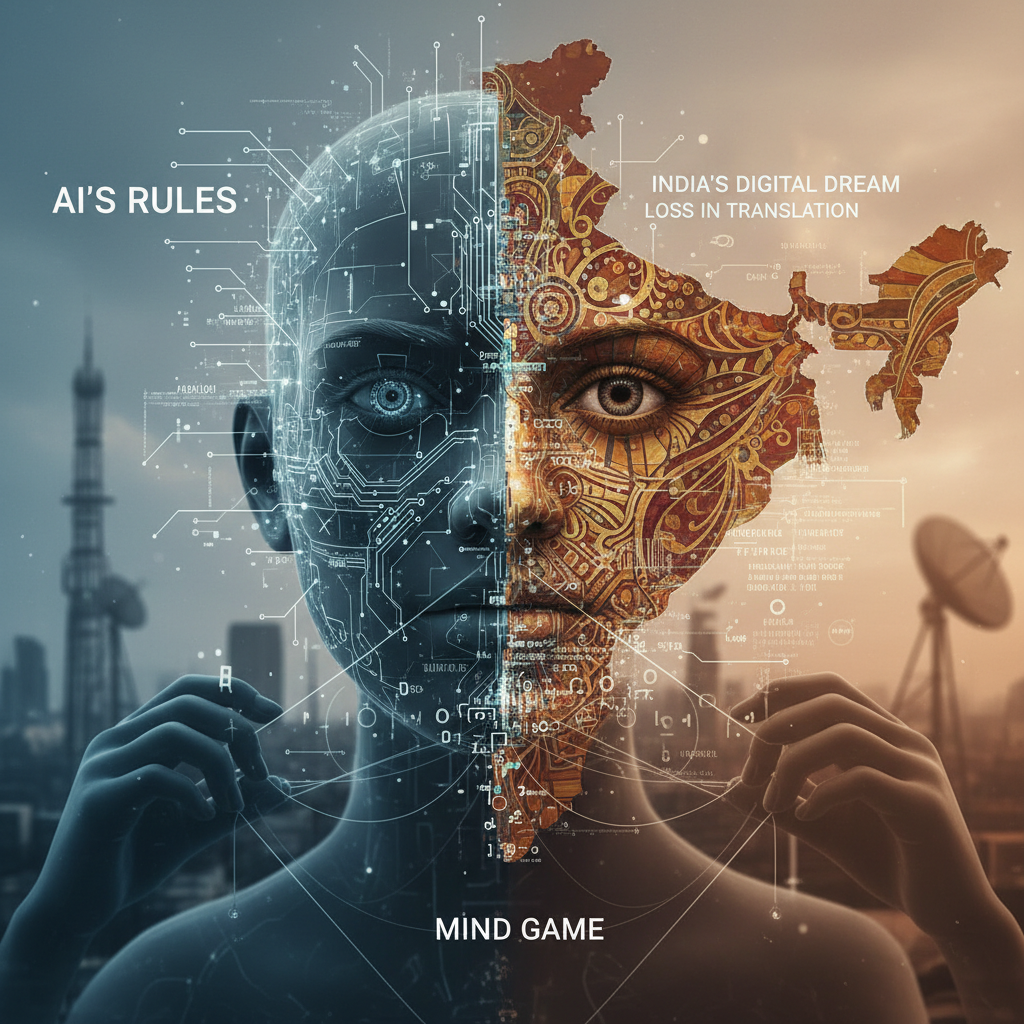

Is this it? Is this the moment when software development, as we know it, fundamentally changes? For years, we have talked about AI augmenting human intelligence, not replacing it. Now, with tools like Microsoft's GitHub Copilot, that conversation feels a lot less theoretical and a lot more immediate. It is not just about writing code faster anymore; it is about rethinking the very craft of engineering. This is the inflection point, and trust me, India will own the next decade of AI, especially in how we adapt and innovate with these new tools.
Let us rewind a bit, shall we? For decades, software development has been a deeply human endeavor. It is problem solving, logic, creativity, and a fair bit of grunt work. From the punch cards of yesteryear to the intricate IDEs of today, the core process remained largely the same: a human mind translating abstract ideas into concrete instructions for a machine. Then came the internet, then agile, then DevOps, each iteration promising to make us faster, more efficient, less prone to error. But the fundamental act of typing out lines of Python or Java, that remained sacrosanct. The idea of a machine suggesting entire blocks of functional code, let alone generating them, was science fiction just a few years ago.
Now, here we are in April 2026, and GitHub Copilot, powered by OpenAI's formidable models, is deeply embedded in millions of developer workflows. It is no longer a novelty; it is a utility. Microsoft reported that Copilot users are completing tasks up to 55% faster, and that is a number that should make every CTO sit up and pay attention. Anecdotally, I hear from developers in Bengaluru and Hyderabad that it is a game changer for boilerplate code, for exploring unfamiliar APIs, and even for learning new languages. It is like having a hyper-efficient junior developer sitting right next to you, ready to offer suggestions at a moment's notice. The sheer velocity it offers is undeniable. According to a recent survey by Stack Overflow, a significant percentage of professional developers are already using AI code assistants, with GitHub Copilot leading the pack in adoption rates, especially in enterprise environments.
But let us not get carried away by the shiny new toy syndrome. The real question is not if it changes things, but how deeply and for whom. For India, with its colossal talent pool of software engineers, this is not just an efficiency boost; it is an existential discussion. Will it elevate our developers, freeing them from mundane tasks to focus on higher-order problem solving, or will it commoditize entry-level coding, making the initial rung of the ladder harder to grasp for fresh graduates?
I have spoken to quite a few folks on the ground. "Copilot is a double-edged sword," remarked Dr. Priya Sharma, a lead architect at a major Indian IT services firm in Pune. "On one hand, our senior engineers are leveraging it to accelerate complex projects, allowing them to deliver solutions faster to clients. On the other, we are seeing a dip in fundamental understanding among some newer recruits who rely too heavily on its suggestions without fully grasping the underlying logic. It is a pedagogical challenge as much as a technical one." Her point is well taken. The risk is that we create a generation of 'prompt engineers' who can coax code out of an AI, but lack the deep, intuitive understanding that truly innovative problem solving requires.
Then there is the intellectual property conundrum. Copilot is trained on vast swathes of public code, including open source repositories. While GitHub and Microsoft maintain that the generated code is unique and does not directly copy existing code, the legal and ethical waters are still murky. "The provenance of AI-generated code is a critical concern for enterprises," stated Mr. Anand Singh, a legal expert specializing in technology law based in Delhi. "Companies are increasingly wary of potential IP infringement claims, especially when dealing with client projects where liability can be substantial. Clearer guidelines and perhaps even indemnification from tool providers will be necessary for widespread, uninhibited adoption." This is not just a Western problem; Indian IT services companies, often working for global clients, are acutely aware of these legal quagmires. The stakes are high, and the legal frameworks are still playing catch-up, as discussed in articles on Reuters Technology.
Another perspective comes from Professor Rajeev Gupta, who heads the AI research lab at IIT Bombay. "The true power of Copilot, and similar tools, lies not in automation, but in amplification," he told me. "It is a cognitive assistant that can expand the mental bandwidth of a developer. Imagine a scenario where a single senior architect, augmented by AI, can oversee and guide several complex modules simultaneously, rather than being bogged down by syntax or trivial debugging. This shifts the value proposition of human engineers towards design, architecture, and innovative problem solving, areas where human intuition and creativity remain paramount." This resonates with my own view. Forget Silicon Valley, look at Hyderabad. Our ability to adapt, to integrate, and to innovate with these tools will define our competitive edge.
My verdict? GitHub Copilot is far from a fad. It is the new normal, but not in the way many initially feared or hoped. It is not going to replace developers en masse, at least not in the next decade. What it will do is redefine the job. The rote, repetitive aspects of coding will increasingly be handled by AI. This means the demand for developers who can simply 'code to spec' might diminish, but the demand for architects, system designers, ethical AI implementers, and brilliant problem solvers will skyrocket. The Indian education system, our tech training institutes, and our companies must pivot rapidly to focus on these higher-level skills. We need to teach critical thinking, architectural design, and ethical considerations alongside coding, not just syntax and frameworks. The future of our developer workforce depends on it.
This shift also presents an incredible opportunity for India to leapfrog. If we can train our millions of developers to effectively leverage these AI assistants, we can dramatically increase our output and innovation capacity. Imagine a startup in Chennai, with a lean team, able to build and iterate at the speed of a much larger enterprise, all thanks to AI augmentation. This democratizes high-speed development. It levels the playing field, allowing smaller teams to punch above their weight. This is where the real magic happens, where innovation is no longer constrained by the sheer volume of human hands available to type code.
Of course, there are challenges. The 'hallucination' problem, where AI generates plausible but incorrect code, still exists. The need for human oversight and rigorous testing becomes even more critical. The ethical implications of using AI to generate code, particularly concerning security vulnerabilities or biased outputs, are still being actively debated and researched, as often highlighted by MIT Technology Review. But these are problems to be solved, not reasons to shy away from progress. We have always adapted, from the Green Revolution to the IT revolution, and this AI revolution will be no different.
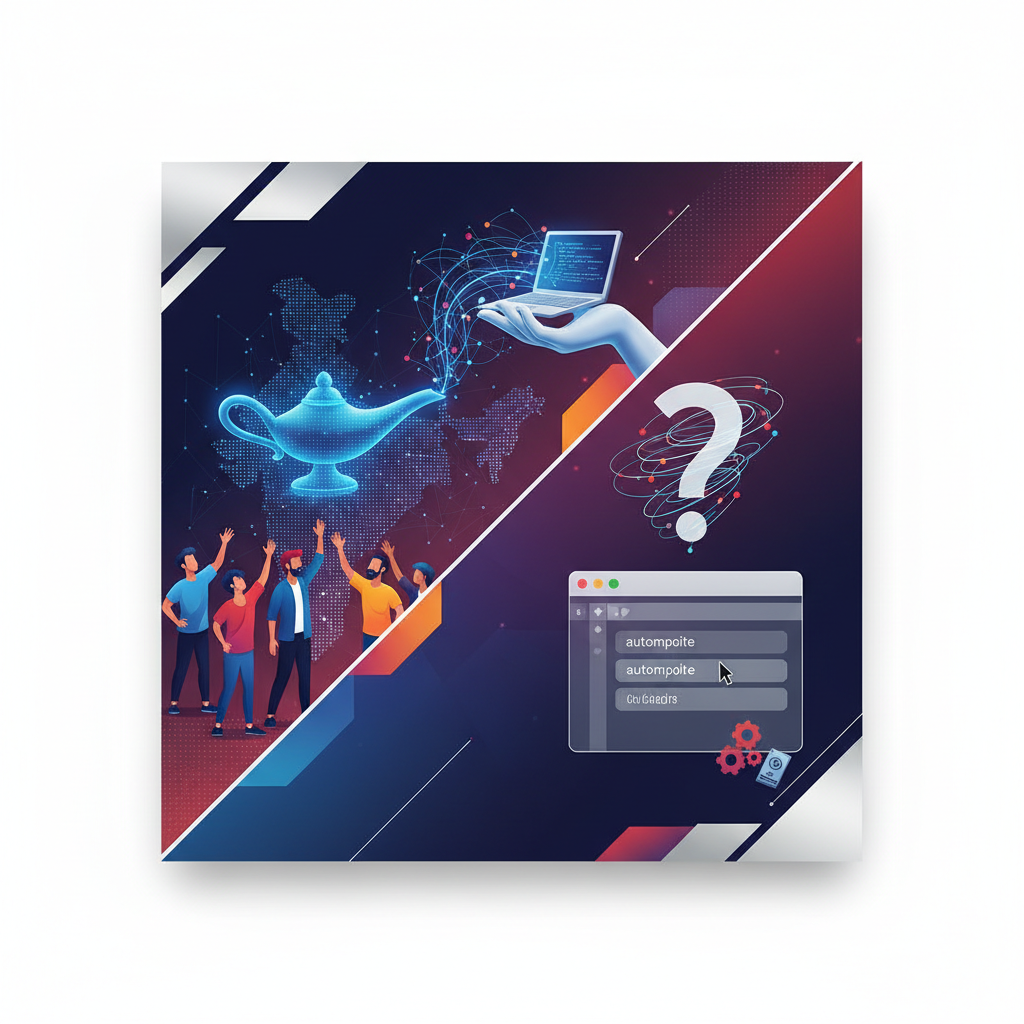
So, is GitHub Copilot a genie or just a glorified autocomplete? It is both, and much more. It is a powerful tool that, in the right hands, can unlock unprecedented levels of productivity and creativity. But like any powerful tool, its impact depends entirely on how we wield it. For India, this is not just about efficiency; it is about strategically positioning ourselves to lead the next wave of global technological innovation. The code is being rewritten, and we must ensure we are not just passengers, but the architects of this new digital destiny.