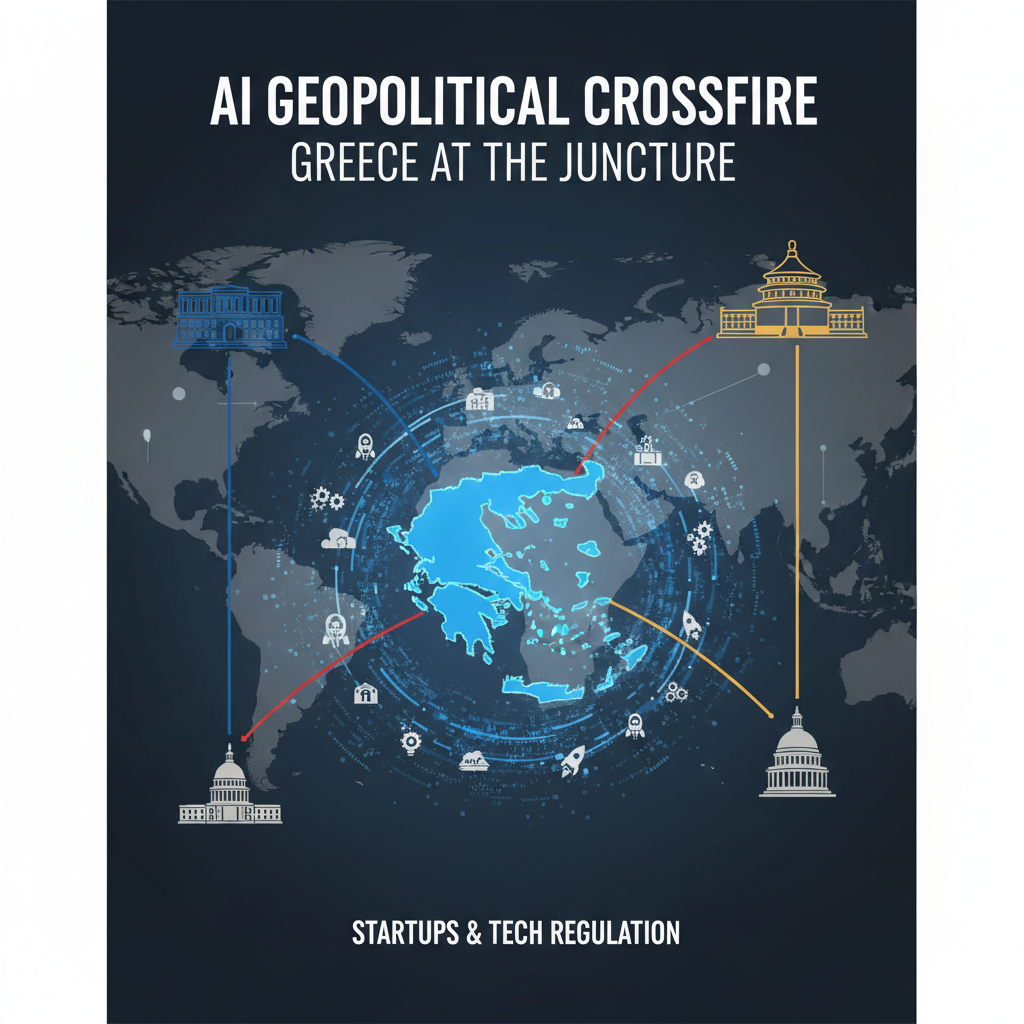

The gods of Olympus would have loved this AI drama. Microsoft, with its ever-present CEO Satya Nadella at the helm, is playing a high stakes game across Europe, particularly with its Azure AI services. From where I sit in Athens, it looks less like a benevolent offering of advanced technology and more like a carefully orchestrated move to solidify its empire, much like the empires of old, but with data centers instead of legions. We are talking about cloud dominance, folks, and in the age of AI, that means controlling the very infrastructure of innovation.
The Strategic Move: Azure AI's European Offensive
Microsoft's strategy is clear, almost brazen in its simplicity: embed Azure AI into the very fabric of European enterprise. They are not just selling cloud space anymore. They are selling the intelligence that runs on that cloud space. Think of it: OpenAI's models, Copilot, Azure Machine Learning, Cognitive Services, all packaged neatly and offered as the definitive solution for businesses scrambling to integrate AI. They are pouring billions into data centers, expanding their regional presence, and forging partnerships with governments and large corporations. Here in Greece, we have seen the fanfare around Microsoft's investment in data centers, promising digital transformation and job creation. It sounds wonderful on paper, like a modern-day oracle promising prosperity.
This isn't just about providing tools. It is about creating an ecosystem so deeply integrated into existing Microsoft infrastructure, from Windows to Office 365, that disentangling becomes a Herculean task. They are leveraging their decades-long relationships with enterprises, offering a seamless, if not inescapable, path to AI adoption. It is a brilliant move, really, if you are Microsoft. For Europe, and for Greece, it is a question of whether we are building our own digital future or merely renting a very sophisticated one from Redmond.
Context and Motivation: The Cloud Wars and AI's Gold Rush
Why this aggressive push now? Because the cloud wars are far from over, and AI is the new battleground. Amazon Web Services (AWS) still holds a significant market share, and Google Cloud is making steady gains. Microsoft knows that the enterprise, particularly the vast, often slow-moving European enterprise sector, is its stronghold. By intertwining AI capabilities directly into Azure, they are making it incredibly difficult for these companies to look elsewhere. It is a classic vendor lock-in strategy, but dressed in the shiny new clothes of artificial intelligence.
Furthermore, the regulatory landscape in Europe, with its stringent data privacy laws like GDPR, presents both a challenge and an opportunity. Microsoft is positioning itself as the 'trusted' partner, emphasizing data residency and compliance. They are saying, in essence, 'We understand your European sensibilities better than those other American giants.' It is a smart play, appealing to a continent that values data sovereignty more than most. As Reuters often reports, the regulatory environment is a key differentiator in the global AI race, and Microsoft is trying to turn it into an advantage.
Competitive Analysis: Titans and Upstarts
Microsoft's main rivals in this arena are, of course, AWS and Google Cloud. AWS has its own formidable suite of AI services, like Amazon SageMaker and Bedrock, and a massive customer base. Google Cloud, with its deep research in AI and models like Gemini, is also a serious contender. The difference is often in the approach. AWS tends to be more modular, giving customers more flexibility but also more complexity. Google, while powerful, sometimes struggles with the enterprise sales motion that Microsoft has perfected over decades.
Then there are the smaller, nimbler players, the AI startups that are popping up like wildflowers after a spring rain. Companies like Mistral AI in France or Aleph Alpha in Germany are trying to offer sovereign AI solutions, promising greater control and transparency. But let's be honest, they are David to Microsoft's Goliath. While their technology might be cutting edge, their ability to compete on infrastructure, integration, and sheer sales force is limited. They are the spirited local tavernas competing with a global fast-food chain. The food might be better at the taverna, but the chain has a location on every corner.
Strengths and Weaknesses: The Trojan Horse of Innovation
Microsoft's strengths are undeniable. Firstly, its existing enterprise relationships are a goldmine. Many European companies are already deeply invested in the Microsoft ecosystem, making Azure AI a natural, almost inevitable, next step. Secondly, the integration of OpenAI's cutting edge models, like GPT-4, directly into Azure provides a powerful, ready-to-use AI capability that few can match. Thirdly, their global data center footprint and commitment to regional data residency are crucial selling points in privacy-conscious Europe. Satya Nadella himself has often spoken about the importance of 'democratizing AI,' a phrase that sounds almost philosophical, like something Aristotle might have pondered, but in practice, it means making Microsoft's AI accessible to everyone, on Microsoft's terms.
However, there are weaknesses. The primary one is the very vendor lock-in that is their strength. European policymakers are increasingly wary of single points of failure and excessive dependence on non-European tech giants. The push for digital sovereignty is real, and it is gaining momentum. There is also the cost factor; while Azure offers scale, it is not always the cheapest option, especially for smaller businesses or startups. Furthermore, the pace of AI innovation is so rapid that even a giant like Microsoft can struggle to keep up with every niche development. Sometimes, a smaller, specialized AI solution might outperform a generalist Azure offering for a specific task.
Verdict and Predictions: A Greek Tragedy or a New Golden Age?
So, is Microsoft's strategy enough? For now, yes. Their dominance in the enterprise cloud, coupled with the sheer power of OpenAI's models, gives them a significant lead. They are making it incredibly easy for businesses to adopt AI, and in a world obsessed with efficiency and competitive advantage, ease of adoption is a powerful currency. We are seeing Greek companies, from shipping magnates to tourism operators, increasingly turn to Azure for their AI needs. It is understandable; the promise of streamlined operations and predictive analytics is too tempting to ignore.
However, the long-term outlook is more complex. Europe's desire for digital sovereignty will not wane. We invented logic, remember? We understand the implications of ceding control. The European Commission and individual member states are actively exploring alternatives, fostering local AI ecosystems, and investing in open source initiatives. While Microsoft is building a formidable fortress, it is also creating a target. The question is not if, but when, Europe will decide that relying too heavily on one foreign power, however benevolent it appears, is a risk too great.
My prediction? Microsoft will continue to dominate the enterprise AI space in Europe for the foreseeable future, certainly for the next 3-5 years. Their integration, scale, and strategic partnerships are too powerful to overcome quickly. However, this dominance will also catalyze a stronger, more unified European response. We will see increased investment in homegrown AI, more stringent regulations around data ownership and interoperability, and a concerted effort to build alternatives. It will be a slow burn, not a sudden revolution.
For now, pass the ouzo, this tech news requires it. We are watching a modern epic unfold, where the titans of Silicon Valley battle for control of our digital future. And us, here in Greece, we are trying to ensure that our own voice, our own logic, is not lost in the algorithmic hum. The future of AI in Europe will not be a monologue from Redmond, but a complex, multi-voiced dialogue, I assure you. You can read more about the broader implications of AI on our society and economy on Wired. The stage is set, the actors are in place, and the play has just begun.