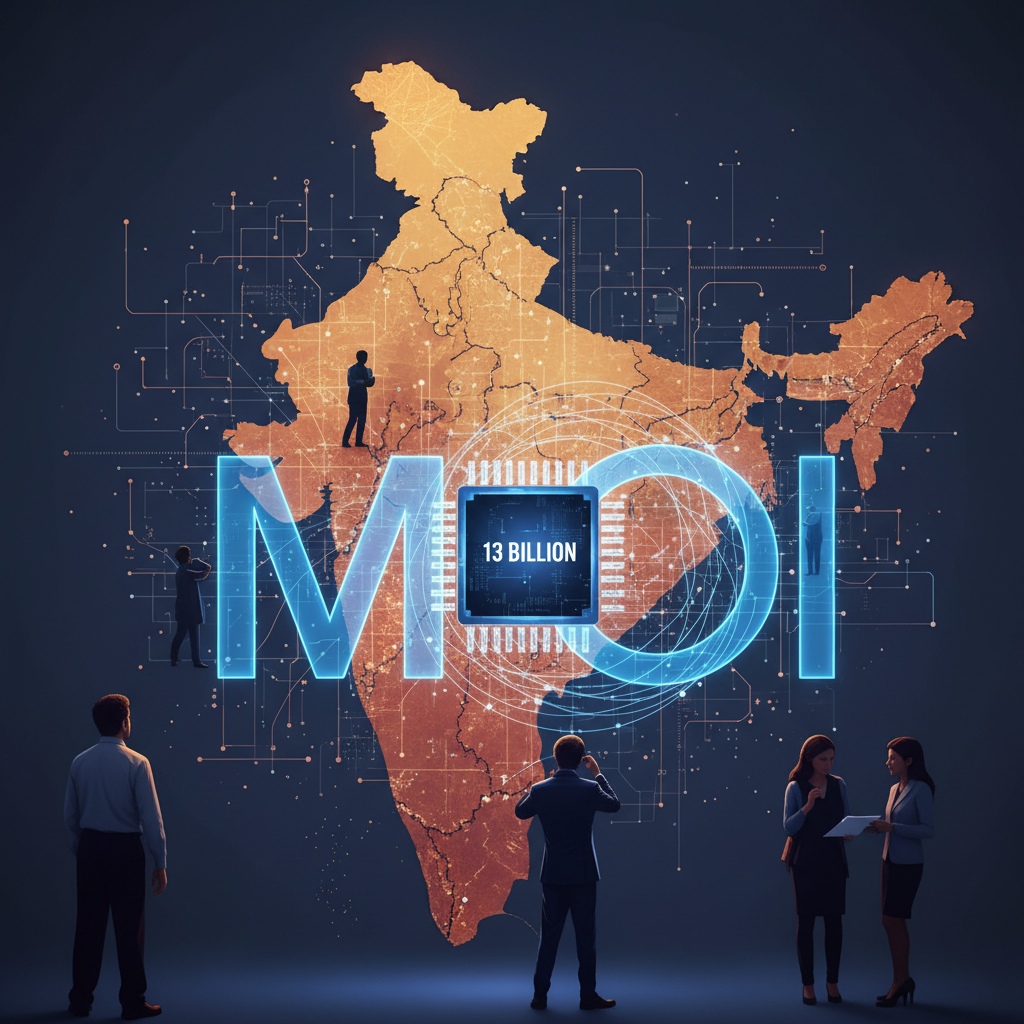
The aroma of freshly brewed chai still lingers in my memory as I recall a conversation from a bustling tech conference in Bengaluru last month. Everyone was buzzing about AI, of course, but the talk often drifted to the giants: Google, Meta, and then, inevitably, Microsoft and OpenAI. The sheer scale of Microsoft's $13 billion investment in OpenAI, a partnership that began with a $1 billion commitment in 2019 and deepened significantly over the years, feels like a story plucked from the pages of a grand epic. It is a tale of ambition, innovation, and a high-stakes gamble on the future of artificial intelligence. But for many, especially here in India, it feels like a distant drumbeat, a Silicon Valley drama playing out far from our daily lives. Why should we care about two American tech behemoths and their colossal financial dance?
Most people, I find, are ignoring this monumental partnership because the headlines often focus on the abstract: market capitalization, technological breakthroughs, and corporate rivalries. They see ChatGPT as a fun tool, Copilot as a niche productivity booster, and the deeper strategic implications are lost in the noise. It is easy to dismiss it as another corporate power play, something that happens 'over there' in the West. We are busy with our own lives, our own businesses, our own dreams. The connection between a multi-billion dollar investment and the price of vegetables in a Mumbai market, or the job prospects for a young engineer in Hyderabad, seems tenuous at best. But I assure you, the threads are more intertwined than you might imagine.
So, how does this colossal investment affect you, my dear reader, whether you are a student in Pune, a small business owner in Ahmedabad, or a farmer in rural Punjab? Think about the tools you use every day. Microsoft products, from Windows to Office 365, are ubiquitous. With OpenAI's models deeply integrated into Microsoft's ecosystem, from Azure AI services to Microsoft 365 Copilot, the AI you interact with is directly shaped by this partnership. Your emails are getting smarter, your spreadsheets are analyzing data with greater ease, and even your programming code is being written with AI assistance. For students, this means new learning tools, but also a shift in the skills needed for the future workforce. For professionals, it is about enhanced productivity, but also the looming question of job displacement. For entrepreneurs, it is a double-edged sword: unprecedented access to powerful AI infrastructure via Azure, but also fierce competition from those who leverage it best. The digital transformation spurred by this alliance is not just for multinational corporations; it trickles down to every startup, every freelancer, every digital consumer in India.
The bigger picture reveals a profound reshaping of global technological power. Microsoft's investment has not just given it a competitive edge against rivals like Google and Amazon in the AI race; it has fundamentally altered the landscape. It has provided OpenAI with the computational resources and infrastructure, primarily through Microsoft Azure, to train increasingly larger and more sophisticated models. This synergy has accelerated AI development at an unprecedented pace. The implications for national security, economic competitiveness, and ethical governance are immense. Countries like India, with a vast talent pool and a burgeoning tech sector, stand at a critical juncture. Will we be merely consumers of this technology, or will we become active participants, shaping its direction and ensuring it serves our unique societal needs? The partnership also raises questions about concentration of power. When two entities control so much of the foundational AI technology, what does it mean for open source initiatives, for smaller players, and for diverse perspectives in AI development? It is a question of digital sovereignty and equitable access to the tools that will define our future.
Experts are watching this space with a mix of awe and trepidation. Satya Nadella, Microsoft's CEO, has consistently emphasized the democratizing potential of AI, stating,