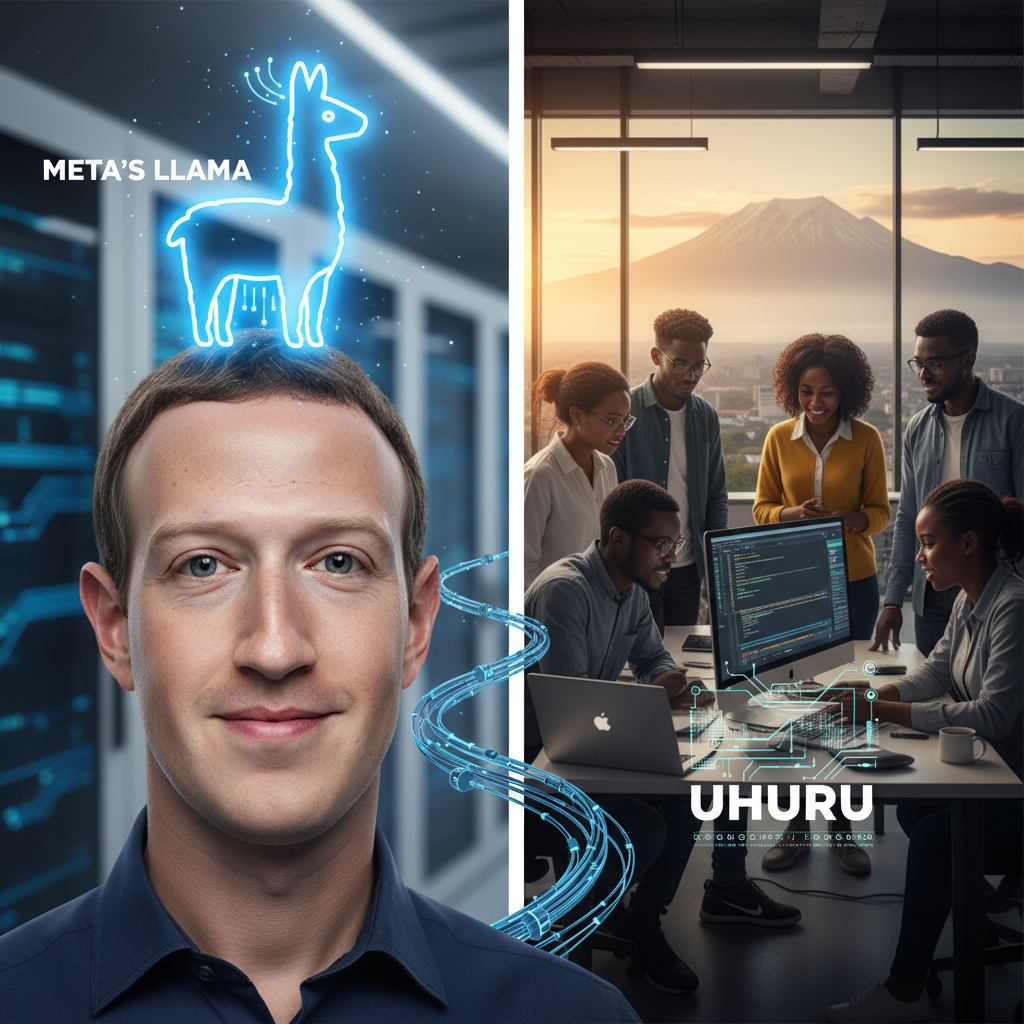
Let me tell you, the tech world, bless its cotton socks, sometimes feels like a perpetual circus. One minute, everyone is whispering about the dangers of AI, the next they are shouting about its glorious future. And right now, the loudest debate is about open versus closed AI models. On one side, you have the titans, OpenAI and Google, clutching their proprietary algorithms like they are the secret recipe for eternal youth. On the other, you have Meta, with Mark Zuckerberg himself, throwing open the gates with Llama, their large language model, saying, 'Come one, come all, build your own AI empire!'
It is quite a spectacle, especially from my perch here in Dar es Salaam. We are often told that Africa is a 'blank slate' for technology, a place where the latest innovations can truly flourish without the baggage of legacy systems. But I say, we are not a blank slate, we are a canvas, rich with our own colors and patterns. And when it comes to AI, the question for us is not just what it can do, but who controls it, and how it serves our unique needs.
Meta's decision to open-source Llama, particularly Llama 3, has sent ripples across the globe. Suddenly, developers, researchers, and even ambitious startups who could never dream of building a foundational model from scratch have access to powerful AI. This is not just about code; it is about power. OpenAI and Google have invested billions in their closed models like GPT-4 and Gemini, maintaining tight control over their capabilities and deployment. Their argument is usually about safety and ensuring responsible development, which, let us be honest, often translates to 'we want to control the narrative and the revenue.'
But Meta, in a move that still has many scratching their heads, decided to go the other way. 'Our belief is that an open ecosystem is better for everyone,' stated Nick Clegg, Meta's President of Global Affairs, in a recent interview. 'It fosters innovation, democratizes access, and ultimately leads to safer, more robust AI.' He sounds like a man who just discovered Ubuntu, doesn't he? It is a compelling argument, especially for regions like ours that have historically been on the receiving end of technological innovation, rather than at its helm.
Consider the implications for Tanzania. Imagine a local startup in Arusha, perhaps one focused on agricultural tech, wanting to develop an AI assistant that understands Swahili dialects, recognizes local crop diseases, and can advise farmers using culturally relevant metaphors. With a closed model, they would be utterly dependent on the Silicon Valley giants. They would pay through the nose for API access, and their data would flow back to servers halfway across the world. The model itself might struggle with linguistic nuances or cultural contexts that were never part of its training data. It is like trying to explain the intricacies of a ngoma dance using only a textbook written in English by someone who has never left their village.
But with Llama, or models derived from it, the game changes. Developers can download the weights, fine-tune the model on local datasets, and even host it on their own infrastructure. This means greater data sovereignty, reduced costs, and the ability to build AI that truly reflects our realities. 'For us, the open-source movement is not just about cost savings, it is about self-determination,' says Dr. Asha Mwaipopo, CEO of BongoTech Innovations, a Tanzanian AI firm. 'We are building an AI literacy tool for primary schools, and being able to adapt Llama 3 to understand children's language patterns and incorporate local folklore is invaluable. With a closed model, we would be waiting for a feature request to be prioritized by a company thousands of miles away.'
This is where the rubber meets the road, or perhaps, where the daladala meets the dusty track. The promise of open-source AI is that it empowers local innovation. It means we can build solutions that are not just for us, but by us. It means an AI that understands the subtle humor of a Tanzanian proverb or the specific challenges of a farmer in the Rufiji Basin. You can't make this stuff up, the potential is truly transformative.
However, it is not all sunshine and ugali. The open-source movement also brings its own set of challenges. One major concern is the proliferation of potentially harmful or biased models. If anyone can take a foundational model and fine-tune it, what prevents malicious actors from creating AI that spreads misinformation, generates hate speech, or even develops sophisticated scams? The 'safety' argument from the closed-model proponents suddenly does not sound so self-serving. It is a valid point, one that requires robust ethical frameworks and community vigilance.
Another issue is the sheer computational power required to fine-tune and run these models effectively. While Llama is open, the hardware needed to truly leverage it, particularly for complex tasks, is still expensive. NVIDIA's GPUs, the workhorses of AI, do not exactly grow on mango trees here. So, while the software might be free, the infrastructure often is not. This creates a new kind of digital divide, where access to compute power becomes the new bottleneck.
'The open-source model is a double-edged sword,' explains Professor Juma Mkama, a leading AI ethics researcher at the University of Dar es Salaam. 'It democratizes access to the technology, which is fantastic for local development. But it also means we need stronger local capacity in AI governance and cybersecurity. The responsibility shifts from a few large corporations to a global community of developers, which is both exciting and terrifying.' His point is well taken. We need to be prepared to handle the freedom that comes with open-source, not just embrace it blindly.
Despite these hurdles, the momentum for open-source AI, spearheaded by Meta, is undeniable. Companies like Mistral AI in Europe are also making significant strides in this space, demonstrating that the future of AI might not be solely locked behind corporate walls. The competition is fierce, and that is good for everyone. It forces the closed-model giants to innovate faster, to consider more equitable access, and perhaps, just perhaps, to share a little more of their digital pie.
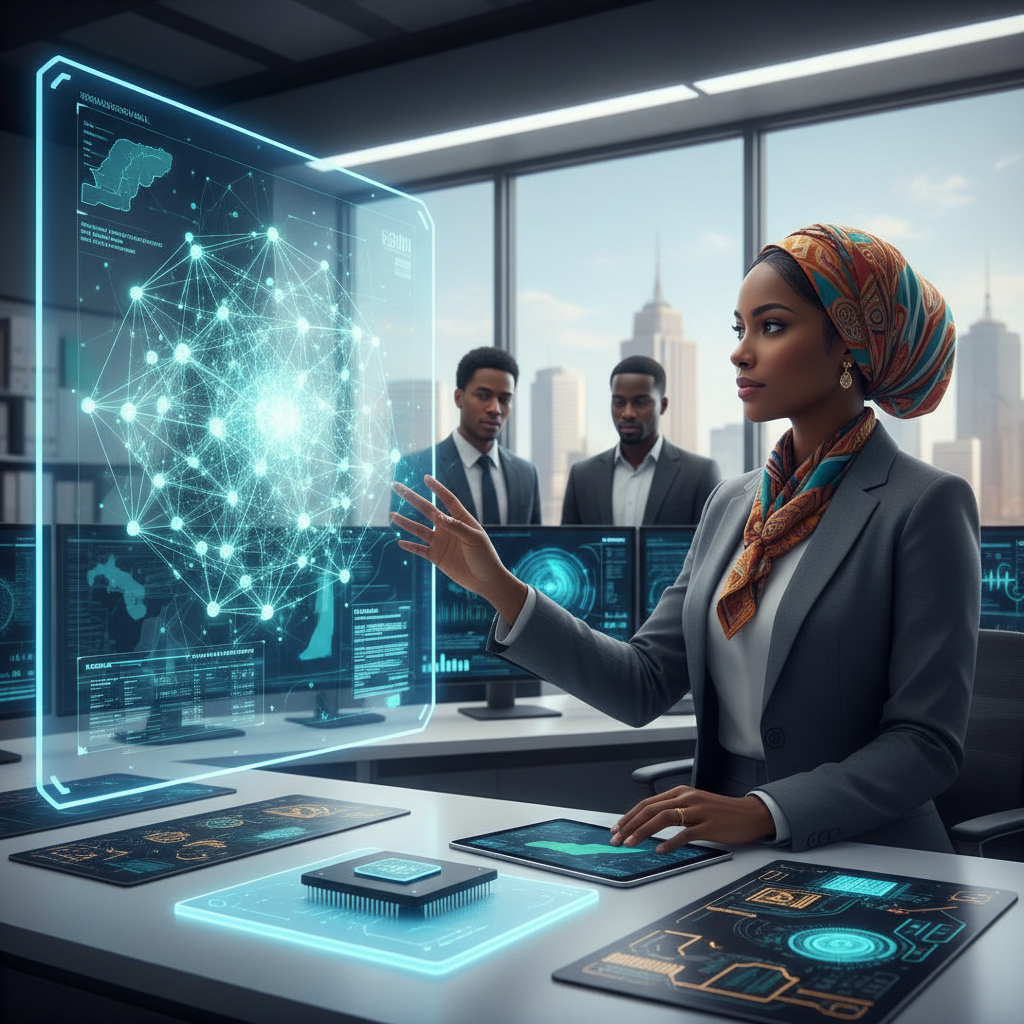
For Tanzania and the broader African continent, this open-source shift presents a unique opportunity. It allows us to leapfrog some of the traditional development cycles and build AI that is truly tailored to our contexts. It is a chance to define our own digital future, rather than simply importing one designed elsewhere. Welcome to the future, because it is weird, and it is wonderfully complex. It is a future where a small team in Kinondoni might just build the next groundbreaking AI application, all thanks to a model released by a social media giant. Only in East Africa, where ingenuity thrives against all odds, can such a paradox feel so perfectly normal.
This is not just about Meta versus OpenAI; it is about the fundamental architecture of our digital future. Will it be a walled garden, meticulously curated and controlled by a few powerful entities, or a sprawling, vibrant marketplace where ideas and innovations can flourish freely? For my money, the latter, with all its beautiful chaos, is far more appealing. The stakes are high, and the implications for digital sovereignty, economic development, and cultural preservation are profound. We are watching, we are learning, and we are ready to build. You can read more about the broader implications of open-source AI on MIT Technology Review and track the latest developments on TechCrunch. The conversation is just beginning.