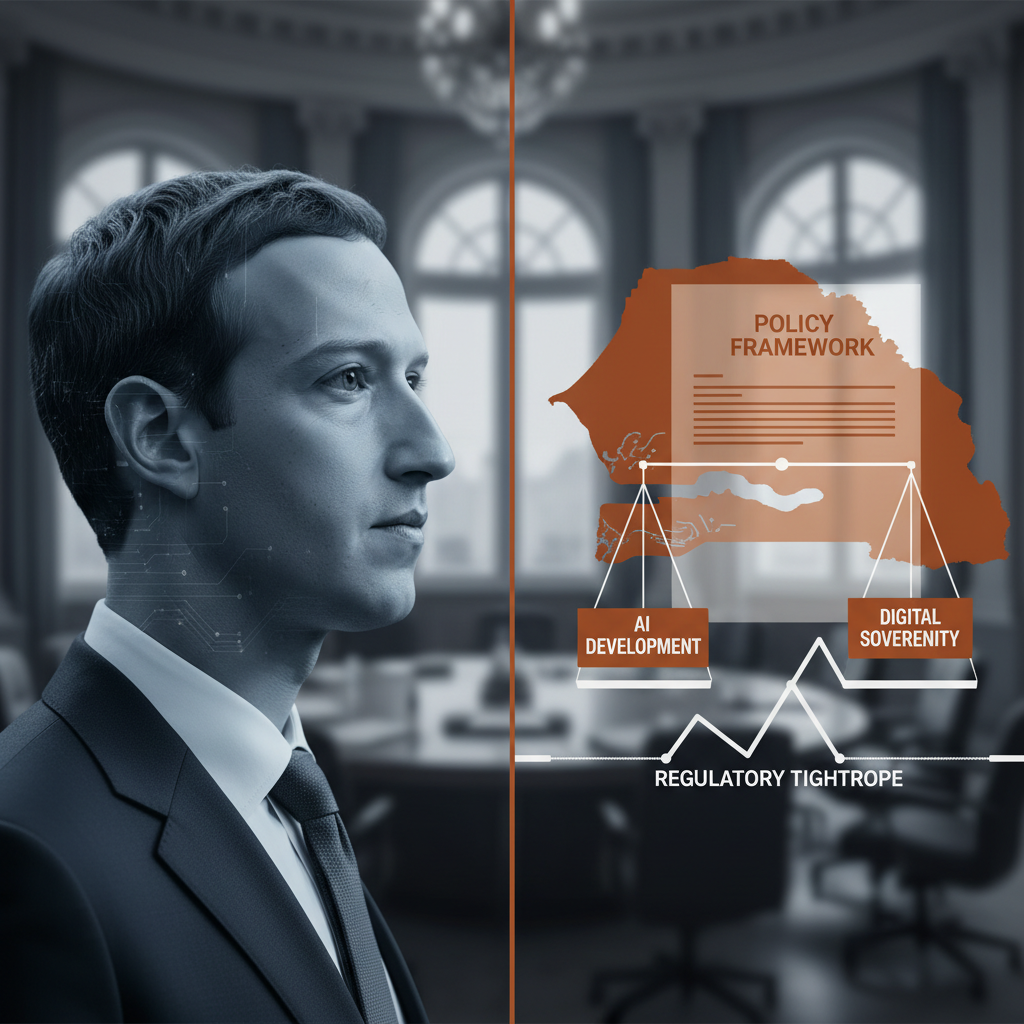
The digital winds of change, often originating from Silicon Valley, rarely arrive on African shores without significant geopolitical implications. Mark Zuckerberg’s much-publicized pivot from the immersive, albeit costly, dream of the metaverse to the tangible, immediate power of artificial intelligence is one such seismic event. While Meta Platforms Inc. reorients its colossal resources towards AI, particularly in large language models and generative AI, nations like Senegal find themselves at a critical juncture, grappling with how to govern these powerful technologies before they govern us.
For months, the echoes of Meta’s internal restructuring have reverberated through the global tech community. The company, which once championed its metaverse vision with billions of dollars in investment, now openly prioritizes AI, pouring resources into projects like its Llama series of open source models and integrating AI across its vast ecosystem of applications, including WhatsApp, Instagram, and Facebook. This strategic calculus is not merely about market trends; it is about securing a dominant position in the next frontier of computing, a frontier that promises to reshape economies and societies worldwide. But what does this mean for a nation like Senegal, keen on fostering its own digital ecosystem while protecting its citizens' interests?
The policy move, or rather the urgent necessity for one, stems directly from this accelerated AI integration. In Senegal, the conversation around AI governance is gaining momentum, driven by a growing awareness of AI's pervasive influence. The Ministry of Digital Economy and Telecommunications, in collaboration with the Autorité de Régulation des Télécommunications et des Postes (artp), has begun drafting preliminary frameworks. Their primary objective is not to stifle innovation, but to create a regulatory environment that promotes ethical AI development, ensures data privacy, and mitigates potential societal harms, such as algorithmic bias or job displacement. This is a delicate balancing act, akin to navigating the strong currents of the Senegal River, where one wrong move can capsize the pirogue.
Who is behind this push, and why now? The impetus comes from a confluence of factors. Domestically, there is a burgeoning tech scene in Dakar and other urban centers, with young entrepreneurs eager to leverage AI for local solutions in agriculture, healthcare, and education. These innovators require clarity and a level playing field. Internationally, the European Union's comprehensive AI Act, a landmark piece of legislation, serves as a powerful precedent, demonstrating that robust regulation is not only possible but necessary. My sources tell me that Senegalese policymakers are closely studying the EU model, adapting its principles of risk-based classification and transparency to our local context. "We cannot afford to be passive observers," stated Madame Fatou Sow, a senior advisor at the Ministry of Digital Economy, during a recent closed-door briefing. "The digital future of Senegal must be built on our terms, with our values embedded in its foundations." This sentiment underscores a broader African desire for digital sovereignty, moving beyond being mere consumers of foreign technology.
In practice, what does this nascent regulatory framework entail? Initial proposals suggest a multi-pronged approach. Firstly, there is a strong emphasis on data localization and protection. Given Meta's reliance on vast datasets to train its AI models, ensuring that data generated by Senegalese citizens is processed and stored within national borders, or at least under strict data governance agreements, is paramount. Secondly, the framework aims to establish clear accountability mechanisms for AI systems deemed 'high-risk,' particularly those used in public services, justice, or critical infrastructure. This would involve mandatory impact assessments, human oversight requirements, and provisions for redress when AI systems cause harm. Thirdly, there is a push for transparency, requiring developers to disclose how their AI models are trained and how decisions are made, particularly concerning issues of bias. This is crucial for building public trust, which, as we know from the communal spirit of teranga, is the bedrock of our society.
The industry reaction to these proposals has been mixed, yet largely pragmatic. Major global players like Meta, Google, and Microsoft, already accustomed to navigating diverse regulatory landscapes, are engaging with the Ministry. While they advocate for harmonized global standards to avoid a patchwork of regulations, they also recognize the growing demand for local control. Local startups, however, generally welcome the initiative. "Clear rules provide certainty," remarked Ousmane Diallo, CEO of a Dakar-based AI startup focused on agricultural analytics. "It helps us plan, attract investment, and compete fairly, knowing that the same standards apply to everyone, big or small." The challenge for these companies, particularly smaller ones, will be the compliance burden, which could be significant. This is where the government must provide support, perhaps through regulatory sandboxes or specialized training programs.
Civil society organizations, long advocating for digital rights and ethical technology, view these developments with cautious optimism. Groups like Article 19 West Africa and the pan-African Paradigm Initiative have been vocal proponents of human-centric AI governance. They stress the importance of public consultation, ensuring that the voices of ordinary citizens, not just tech giants and government officials, are heard. "The risk of algorithmic discrimination, particularly against vulnerable populations, is real," stated Ndeye Fatou Diallo, a digital rights advocate. "Any regulatory framework must include robust mechanisms for public participation, independent oversight, and easy access to recourse for those negatively impacted by AI decisions." Their concerns are valid; the documents reveal that initial drafts sometimes overlook the nuances of local cultural contexts, which can exacerbate existing societal inequalities if not addressed proactively.
So, will it work? The path ahead is fraught with challenges. Enforcement will be a significant hurdle, requiring not only legislative teeth but also the technical expertise and financial resources to monitor compliance effectively. The rapid pace of AI innovation means that any regulation risks becoming obsolete even before it is fully implemented. Furthermore, the geopolitical dynamics of AI, with major powers vying for technological supremacy, will undoubtedly influence the choices made by smaller nations. Senegal's ability to assert its digital sovereignty will depend on its capacity to forge regional alliances, share best practices with fellow African nations, and present a united front in global digital policy forums. This is just the tip of the iceberg, as the true test will lie in the implementation, in ensuring that the spirit of these regulations translates into tangible protections and opportunities for the Senegalese people. The future of our digital landscape, much like the changing tides of the Atlantic, remains in motion, and our vigilance is paramount.
For further insights into global AI policy, readers may consult analyses from MIT Technology Review or follow breaking news on AI developments from Reuters Technology. The landscape is constantly shifting, and informed discourse is our best defense against unintended consequences. For a broader understanding of how AI is impacting various African nations, consider the complexities explored in When IBM Watson Whispers in Ouagadougou's Boardrooms: Is Our Intuition Listening, or Just Learning? [blocked].