
Ah, the tech world. Always something new, always something bigger, always something promising to change everything. This week, or perhaps this month, depending on which news cycle you follow, the buzz is all about Magic AI and their audacious bet on ultra-long-context models. They are talking about context windows so vast, they could swallow entire codebases, documentation, and maybe even your grandmother's secret recipe for pilau, all in one gulp. The idea, apparently, is to revolutionize software engineering, making developers more productive than a seasoned mama preparing a wedding feast.
Now, from my perch here in Dar es Salaam, watching the sun rise over the Indian Ocean, I can't help but raise an eyebrow. Revolution, they say? For whom, exactly? The folks in California, perhaps, who already have more computing power than some small nations? Or for us, here in Tanzania, where the internet can still be as unpredictable as a politician's promise and a stable power supply is sometimes a luxury?
Magic AI, a company that has been quietly making waves with its foundational models, recently unveiled its latest triumph: a model with a context window reportedly stretching into the millions of tokens. This isn't just a bigger memory; it's like giving an AI the ability to read an entire library and remember every single word, then write a new book based on all of it. The implications for software development are, on paper, staggering. Imagine an AI that can understand every line of code in a complex enterprise system, grasp the nuances of its business logic, and then automatically identify bugs, refactor inefficient sections, or even generate new features with minimal human intervention. It sounds like something out of a science fiction novel, doesn't it? Reuters Technology has been tracking these developments closely, noting the significant investments flowing into such ventures.
“The ability to hold an entire project's context is a game changer for large-scale software development,” proclaimed Dr. Anya Sharma, lead AI researcher at Magic AI, in a recent online briefing. “It moves us beyond mere code completion to true code comprehension and generation at an unprecedented scale.” She went on to explain how this could drastically reduce the time spent on debugging, integration, and even architectural design. For the Silicon Valley giants, already grappling with codebases that span millions of lines and involve thousands of developers, this is like finding the holy grail.
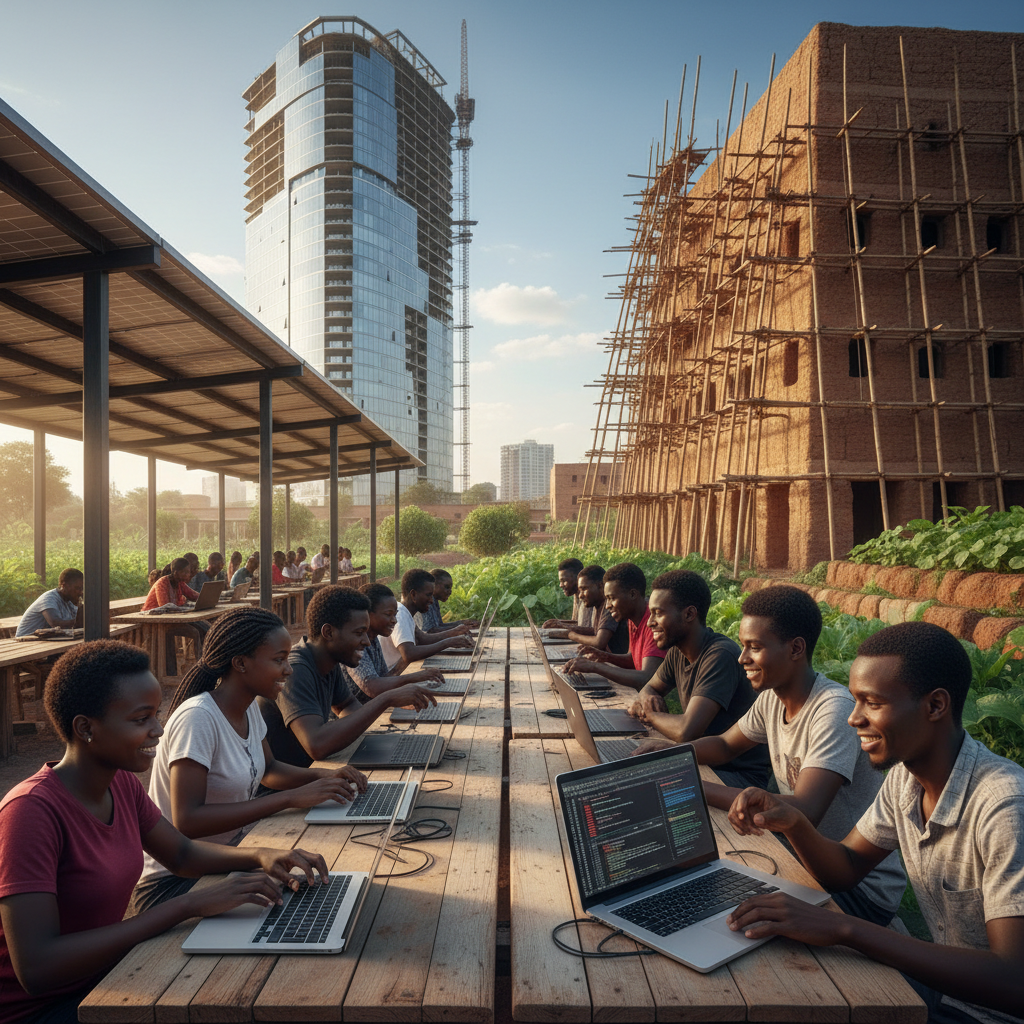
But let's bring this back down to Earth, specifically to our vibrant, often chaotic, and always innovative corner of the world. In Tanzania, and indeed across much of Africa, our software engineering landscape is a different beast. We have brilliant developers, innovative startups, and a rapidly growing tech ecosystem. We are building solutions for local problems, from mobile banking platforms that serve millions of unbanked individuals to agricultural tech that helps farmers maximize their yields. Our challenges are often fundamental: access to affordable, high-speed internet; reliable electricity; and the capital to invest in cutting-edge infrastructure. MIT Technology Review often highlights the disparity in tech adoption and infrastructure globally.
So, when Magic AI talks about ultra-long-context models, my first thought isn't about refactoring a legacy Java system. It's about whether this technology will be accessible, affordable, and truly beneficial to the developers here. Will it run on the kind of hardware we can afford? Will it be trained on data relevant to our contexts, our languages, our unique coding styles, and our specific problems? Or will it be another powerful tool designed for the global North, requiring massive computational resources that are simply out of reach for most African innovators?
Consider the sheer computational cost. Training these models requires vast arrays of NVIDIA GPUs, consuming energy equivalent to a small town. Running inference on them, while less demanding, still requires significant resources. For a startup in Kariakoo, trying to build the next big thing on a shoestring budget, these costs can be prohibitive. It's like being offered a Formula 1 race car when all you need is a reliable daladala to navigate the city's traffic.
“We need tools that are powerful, yes, but also practical and localized,” says Neema Mshana, CEO of BongoTech Solutions, a promising Tanzanian startup focused on AI for healthcare. “A model that understands the intricacies of Swahili medical terminology, or can help us build robust applications with limited bandwidth, that's what excites us. Not necessarily one that can ingest every single commit from a decades-old codebase in a language we barely use.” Her point is valid. The context of our problems is often hyper-local, and a global, ultra-long context model might be overkill, or worse, irrelevant.
There's also the data privacy aspect. If these models are ingesting entire codebases, what about proprietary information? What about the sensitive data that many African businesses handle? Trust, in the digital realm, is a fragile thing, especially when dealing with powerful, opaque AI systems. We've seen enough stories about data breaches and misuse to be wary. Wired has extensively covered the ethical dilemmas surrounding large language models and data privacy.
This isn't to say that ultra-long-context models are without merit. The underlying research, the push to make AI understand more, remember more, and reason more comprehensively, is undeniably important. There will be niche applications, perhaps in advanced research institutions or for large, well-funded enterprises operating globally, that can leverage this power. And who knows, perhaps the technology will eventually trickle down, becoming more efficient and accessible over time. You can't make this stuff up, the speed at which things change.
But for now, as Magic AI touts its latest breakthrough, I see a familiar pattern. The tech world, particularly the AI segment, often builds incredible, complex machines without always considering the diverse landscapes they are meant to operate in. It's a bit like building a superhighway through a village that still relies on dirt paths. The potential is there, yes, but the immediate utility and accessibility are questionable.
My hope is that as these models become more sophisticated, the focus will shift from merely 'bigger is better' to 'smarter and more adaptable.' We need AI that understands not just the code, but the context of the people writing it, the problems it's solving, and the environment it's operating in. Only then will these technological marvels truly revolutionize software engineering for everyone, from Silicon Valley to the bustling streets of Dar es Salaam. Welcome to the future, because it's weird, and sometimes, a little out of touch.