Walk into any major hospital in Seoul, or for that matter, New York or London, and you will hear the whispers. Artificial intelligence, they say, is coming for medicine, but slowly. Too many regulations, too much human nuance, too much at stake. Everyone's wrong about this, and Brandon Suh, the CEO of South Korean medical AI giant Lunit, is living proof.
Suh, a former physician, embodies a rare blend of clinical understanding and entrepreneurial fire. He is not just talking about AI in healthcare; he is deploying it, getting it approved by the most stringent regulatory bodies, and saving lives. His story is not just about a startup's rise, but about a nation, South Korea, pushing the boundaries of what is possible in deep tech, even when the world is still debating the ethics of chatbots.
The defining moment for Suh, perhaps, was not in a boardroom, but in a quiet hospital corridor. He was a medical doctor, specializing in preventive medicine, acutely aware of the systemic inefficiencies and the human toll of delayed diagnoses. The sheer volume of medical images, the subtle anomalies easily missed by even the most experienced eyes, the crushing workload on radiologists; it was a problem begging for a technological solution. He saw AI not as a replacement, but as an indispensable co-pilot, a tireless second opinion that could elevate human expertise.
His journey began far from the startup hustle. Suh studied medicine at Seoul National University, one of Korea's most prestigious institutions. He gained firsthand experience in the healthcare system, understanding its pain points from the inside. This clinical background is crucial; it is what separates Lunit from countless other AI companies built by engineers without a deep appreciation for the medical context. He knows what doctors need, because he was one.
The genesis of Lunit, however, was not a solo endeavor. Suh joined the company in its early days, bringing his medical acumen to a team of brilliant engineers and computer vision experts. The original founders, including Anthony S. W. Paek and Donggeun Yoo, had a vision for AI in medical imaging, but it was Suh who helped bridge the chasm between cutting-edge algorithms and clinical utility. This fusion of medical insight and technical prowess became Lunit's secret sauce. They understood that an AI model, no matter how sophisticated, is useless if it cannot seamlessly integrate into a doctor's workflow, or worse, if it cannot gain the trust of the medical community.
The breakthrough came with Lunit Insight, their flagship AI solution for cancer detection. Imagine an AI that can analyze mammograms and chest X-rays with incredible precision, flagging suspicious areas that might otherwise go unnoticed. This is not science fiction; it is Lunit's reality. Their AI has demonstrated performance comparable to, and in some cases exceeding, human radiologists in detecting early signs of breast cancer and lung cancer. It is about catching diseases earlier, when treatment is most effective, and ultimately, saving more lives. The company has rigorously pursued regulatory approvals, securing clearances from the US FDA, Europe's CE Mark, and Japan's Pmda, among others. These are not trivial achievements; they are monumental hurdles that prove the reliability and safety of their technology.
Building Lunit was not without its challenges. The medical field is notoriously conservative, and rightly so. Introducing a new technology, especially one as transformative as AI, requires immense validation. Suh and his team had to conduct extensive clinical trials, publish in peer-reviewed journals, and build trust with clinicians globally. Hiring was another complex task, finding individuals who could navigate the intersection of deep learning, medical science, and business development. They cultivated a culture of scientific rigor, continuous learning, and a relentless focus on patient outcomes. This is not just about algorithms; it is about impact.
Funding and growth followed. Lunit has successfully raised significant capital from both domestic and international investors, including major Korean venture capital firms and global healthcare funds. They went public on the Korea Exchange in 2022, a testament to investor confidence in their vision and execution. Their products are now deployed in over 3,000 medical institutions across more than 40 countries. This global reach is a point of pride, showing that a South Korean deep tech company can lead on the world stage. The K-wave is coming for AI too, and Lunit is riding it.
Today, Lunit is not just about cancer detection. They are expanding into pathology with Lunit Scope, an AI-powered platform for analyzing whole-slide images in cancer pathology. This moves AI further along the diagnostic pathway, from initial screening to definitive diagnosis and even treatment prediction. Suh often speaks about the future of precision medicine, where AI not only detects disease but also helps personalize treatment plans based on individual patient data. He envisions a world where AI empowers every doctor to be a specialist, making advanced diagnostics accessible everywhere.
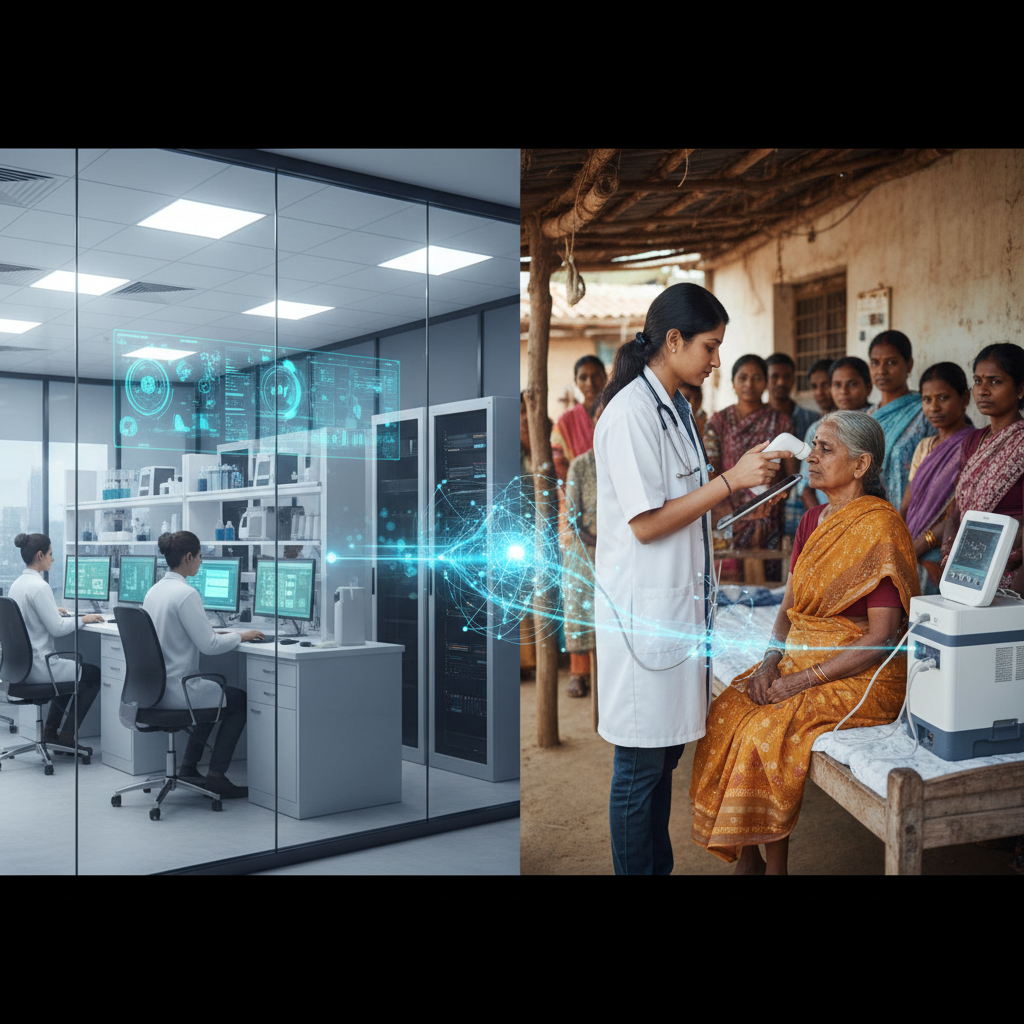
What drives Brandon Suh? It is the profound belief that technology can democratize healthcare. He has seen the disparities in medical access and expertise firsthand. AI, in his view, is a tool to bridge those gaps, to bring world-class diagnostic capabilities to underserved regions, and to alleviate the burden on overworked medical professionals. He is not just selling software; he is selling hope, efficiency, and a better future for healthcare. As he once stated in an interview,