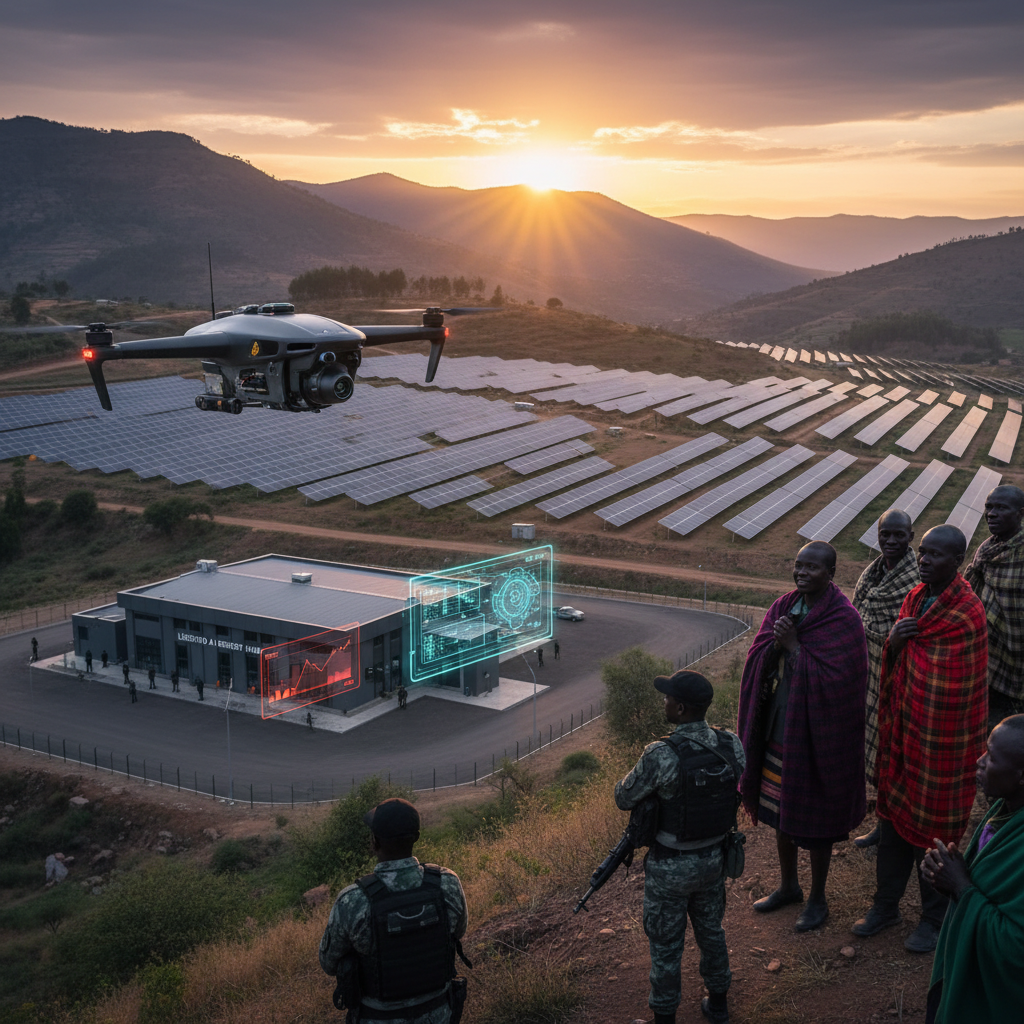

The flickering lights in Maseru, a familiar sight for many Basotho, are increasingly being framed as a problem solvable by artificial intelligence. Across Africa, the narrative is compelling: AI can optimize grids, predict outages, and integrate renewable energy sources, ushering in an era of stable, affordable power. But as the algorithms begin to hum in our nascent energy infrastructure, a critical question emerges: who truly benefits from this technological leap, and what are the unseen costs for nations like Lesotho? My investigation suggests a familiar pattern, one where the promise of progress often masks a deeper, more complex reality.
For years, Lesotho has grappled with an energy deficit, relying heavily on hydroelectric power from the Lesotho Highlands Water Project and imports from South Africa. The notion that AI could provide a panacea, a digital shepherd for our grid, has naturally gained traction among policymakers. International development banks and private tech firms are eager to fund and implement these solutions. They speak of 'smart grids' and 'predictive maintenance,' terms that sound like a future where power cuts are a relic of the past. But what they're not telling you, or perhaps what they are not emphasizing enough, is the intricate web of dependencies and potential vulnerabilities being woven into our national fabric.
Consider the recent announcement by the Lesotho Electricity Company, LEC, regarding a pilot project to integrate AI-driven predictive analytics for grid stability. The project, valued at an estimated 80 million Maloti, is being spearheaded by a consortium led by a European tech giant, 'GridSense AI,' and a relatively unknown local firm, 'Mokhotlong Innovations.' While the official narrative extols the virtues of efficiency and reduced downtime, sources close to the matter confirm that the contract terms heavily favor the foreign partner, with significant portions of the data infrastructure and intellectual property remaining under their control. This raises immediate concerns about data sovereignty and long-term economic leverage.