
The ocean around Fiji is a constant reminder of both beauty and vulnerability. Our islands face the future with clear eyes, knowing that climate change isn't some distant threat, it's a daily reality. This perspective shapes how we look at every new technology, especially AI. When it comes to the backbone of modern AI, NVIDIA's software stack, particularly Cuda and TensorRT, has become the undisputed king. But for a small island nation like ours, this dominance isn't just about performance, it's about sovereignty, cost, and long-term resilience.
My first encounter with the full force of NVIDIA's ecosystem was during a pilot project for early cyclone warning systems at the Fiji Meteorological Service. We were exploring how AI could process satellite imagery faster, identifying storm patterns with greater precision. The data was immense, the need urgent. Naturally, the conversation quickly turned to GPUs, and with GPUs, came NVIDIA's Cuda. It's like trying to build a traditional Fijian bure, a thatched house, and realizing the best, strongest vau (hibiscus bark fiber) for lashing the structure only comes from one supplier, and their tools are proprietary. You can use other materials, sure, but the strength and ease of assembly just aren't the same.
Key Features Deep Dive: The Cuda and TensorRT Advantage
At its core, Cuda is a parallel computing platform and programming model that enables NVIDIA GPUs to perform general-purpose processing. Think of it as the language that unlocks the immense processing power of their graphics cards for AI tasks. TensorRT then takes those AI models, once trained, and optimizes them for faster inference, meaning they can make predictions or classifications much quicker. For anyone working with deep learning, especially large models, this combination is incredibly potent. It's why NVIDIA has become synonymous with AI hardware. Developers flock to it because it works, and it works exceptionally well.
In our cyclone prediction project, using a system optimized with Cuda and TensorRT meant we could reduce the processing time for complex atmospheric models by nearly 60 percent compared to CPU-only alternatives. This isn't just a technical statistic, it's a matter of precious hours saved when a Category 5 cyclone is bearing down on our shores. "The speed gains are undeniable, especially for real-time applications like disaster monitoring," noted Dr. Alani Waqalevu, head of the Pacific Climate Data Centre, during a recent workshop. "When every minute counts, you lean on what delivers." This sentiment is echoed across the AI community globally, as reported by outlets like TechCrunch.
What Works Brilliantly: Unmatched Performance and Ecosystem Maturity
The sheer performance of NVIDIA's stack is its greatest asset. For tasks demanding heavy parallel computation, like training large language models or processing high-resolution imagery, CUDA-enabled GPUs are often orders of magnitude faster than competing solutions. The ecosystem is also incredibly mature. There's a vast library of tools, frameworks, and pre-trained models that are optimized for Cuda. This means less time spent reinventing the wheel and more time focusing on the actual problem you're trying to solve. For our small team of data scientists in Fiji, this access to a robust, well-documented environment is invaluable. It lowers the barrier to entry for complex AI development, allowing us to leverage global advancements without needing to build everything from scratch.
Another significant advantage is the community support. If you run into a problem with Cuda, chances are someone else has already faced it and posted a solution online. This collective intelligence is a powerful force, especially when local expertise might be limited. The continuous innovation from NVIDIA, led by CEO Jensen Huang, also means that their hardware and software are constantly evolving, pushing the boundaries of what's possible in AI. Their investment in research and development is staggering, as evidenced by their presence in academic circles and publications like MIT Technology Review.
What Falls Short: The Lock-in Dilemma and Cost Implications
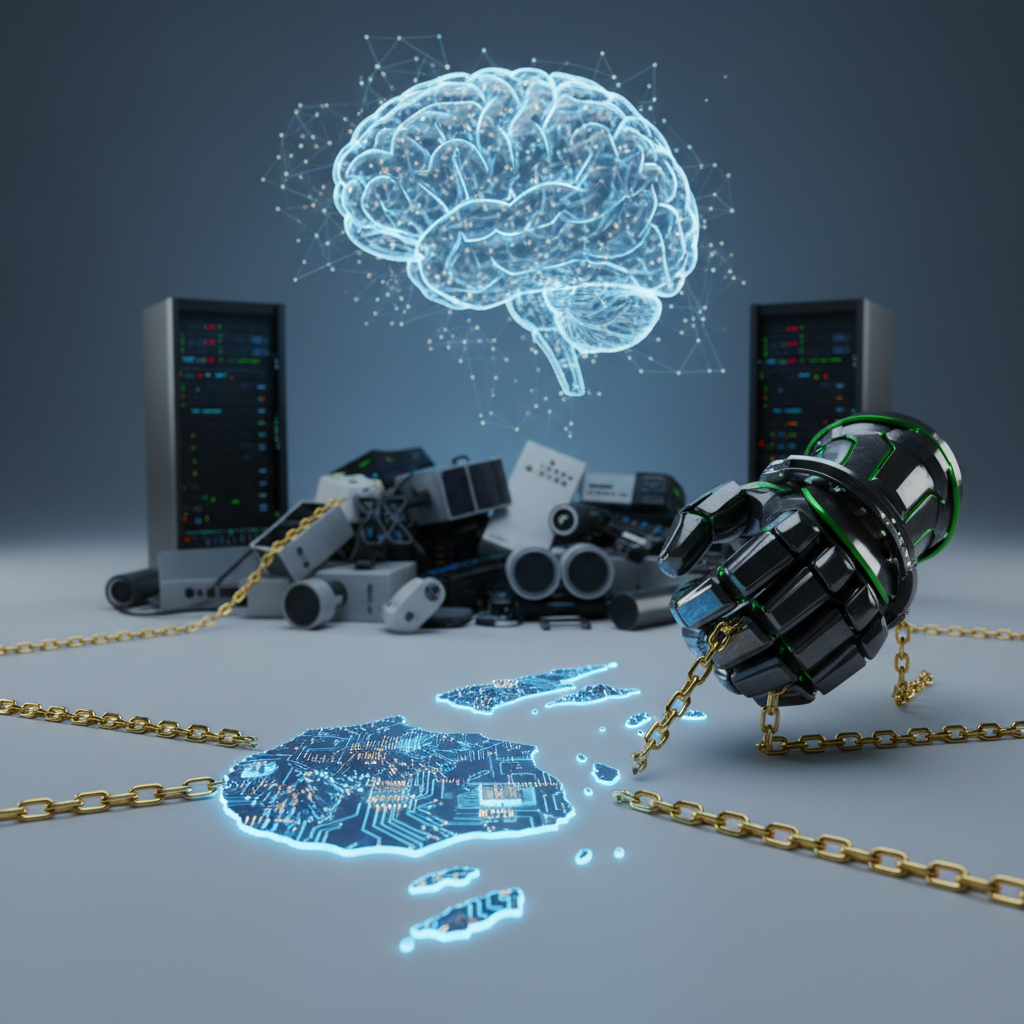
Here's where the shine starts to dull a bit, especially for a nation like Fiji. The primary concern is vendor lock-in. Cuda is proprietary to NVIDIA. If you've invested heavily in NVIDIA GPUs and developed your AI applications using Cuda, migrating to another hardware platform, say from AMD or Intel, becomes a monumental task. It often means rewriting significant portions of your code, a process that is both time-consuming and expensive. This creates a dependency that can be problematic. What if NVIDIA's pricing changes dramatically? What if their priorities shift away from the specific needs of developing nations? We become beholden to a single company's roadmap.
The cost is another major hurdle. NVIDIA's top-tier GPUs are expensive, and their demand continues to outstrip supply, driving prices even higher. For a country with limited resources, investing in a high-performance NVIDIA cluster can be a significant budget allocation. "We need solutions that are not just powerful, but also sustainable and affordable in the long run," stated Mr. Ratu Peceli Naiqama, a senior official at the Ministry of Economy, during a recent discussion on digital infrastructure. "The initial investment is one thing, but the ongoing maintenance and upgrade costs in a proprietary ecosystem can quickly become prohibitive." This is a classic small island, big challenges, smart solutions scenario, where we must weigh immediate gains against long-term strategic vulnerabilities.
Comparison to Alternatives: Open Source and Emerging Competitors
While NVIDIA dominates, alternatives do exist. AMD's ROCm platform, for instance, aims to provide an open-source alternative to Cuda. Intel also has its oneAPI initiative. These platforms offer the promise of hardware agnosticism, meaning you could potentially run your AI workloads on different vendors' GPUs without a complete rewrite. The challenge is that these alternatives are not as mature or as widely adopted as Cuda. Their ecosystems are smaller, documentation can be less comprehensive, and performance might not always match NVIDIA's top-tier offerings.
For smaller projects or those with less stringent performance requirements, open-source frameworks like TensorFlow and PyTorch can be run on CPUs or less powerful, non-NVIDIA GPUs. However, for the kind of heavy-duty climate modeling or medical imaging AI that could truly revolutionize healthcare in Fiji, the performance gap is still substantial. We need to explore options like OpenAI's work on model optimization that might reduce hardware dependency, but the core issue of the compute backbone remains.
Verdict: A Necessary Evil or a Strategic Choice?
For Fiji, and indeed for many developing nations, NVIDIA's AI software stack presents a paradox. On one hand, it offers unparalleled performance and a mature ecosystem that can accelerate our efforts in critical areas like climate adaptation and public health. Imagine AI-powered diagnostics for remote clinics, or predictive models for agricultural yields. These are not luxuries, they are necessities for our survival and prosperity. The immediate benefits are clear and tangible.
On the other hand, the lock-in concerns and the high cost demand careful consideration. We cannot afford to build our digital future on foundations that could become financially unsustainable or strategically limiting. The Pacific way of problem-solving involves looking at the whole picture, not just the immediate gratification. We need to push for more open standards, support the development of alternative hardware and software ecosystems, and negotiate for more equitable access and pricing for these critical technologies.
My recommendation for Fiji and similar nations is this: leverage NVIDIA's power where absolutely necessary for critical, high-impact projects, but always with an exit strategy in mind. Invest in training local talent in open-source AI development. Explore hybrid approaches that combine the best of proprietary performance with the flexibility of open standards. We must engage with companies like NVIDIA, but also advocate for a future where cutting-edge AI isn't confined to a single, proprietary garden. Our resilience depends on it. We need to build our own digital foundations, strong and adaptable, just like our traditional bures, ready to weather any storm, technological or otherwise.