
Chào các bạn, my friends, from the vibrant heart of Ho Chi Minh City! The energy here is electric, a symphony of motorbikes, street food, and the relentless hum of innovation. It is this very spirit that makes me look at the global AI conversation, particularly the incessant chatter about an impending ‘AI bubble,’ with a mix of excitement and a little bit of a knowing smile.
Everywhere I turn, from the bustling tech hubs of District 1 to the quiet coding corners in Thủ Đức, the question lingers: are we living through a repeat of the dot-com bust of the early 2000s, or is this AI surge something fundamentally, spectacularly different? My answer, delivered with the full force of Vietnamese optimism and a journalist’s keen eye, is a resounding, unequivocal different.
Let us not forget the dot-com era. It was a time of grand promises, often built on shaky foundations and business models that evaporated faster than morning dew on a Saigon street. Companies with little more than a fancy website and a catchy name commanded astronomical valuations, only to collapse when the underlying technology could not deliver, or the market simply was not ready. Pets.com, anyone? It was a speculative frenzy, fueled by hype and a premature vision of the internet’s full potential.
But what we are witnessing now, with the likes of OpenAI, Google DeepMind, and Anthropic leading the charge, is not just hype. It is a genuine, paradigm-shifting technological leap. We are talking about foundational models that are not just improving existing processes, but creating entirely new capabilities. Think about the impact of large language models like GPT-4 or Gemini on everything from content creation to scientific research. This is not about selling pet food online; this is about augmenting human intelligence, automating complex tasks, and unlocking efficiencies across every single industry imaginable.
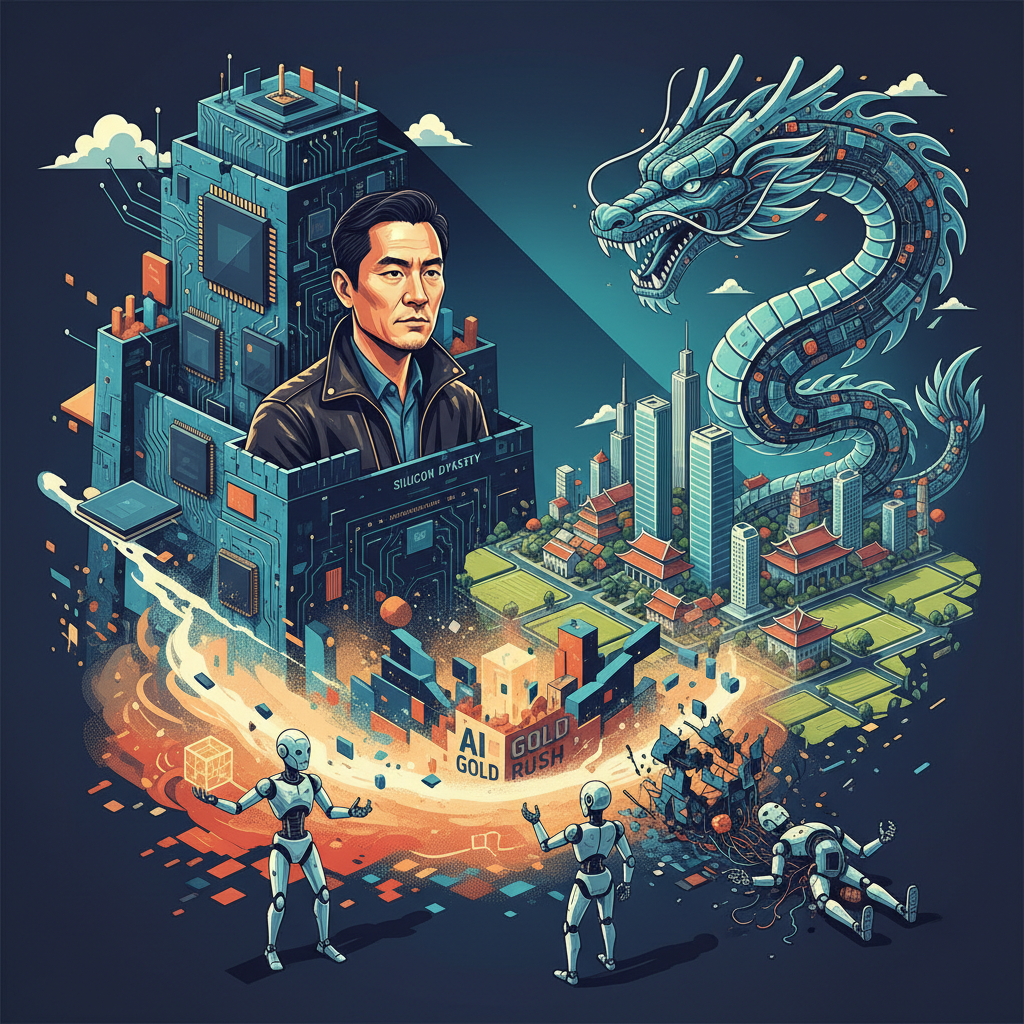
Consider the sheer scale of investment, but more importantly, the nature of that investment. We are seeing billions poured into research and development, into building the actual infrastructure required for this new era. NVIDIA’s Jensen Huang, for instance, is not just selling chips; he is selling the very picks and shovels for this new gold rush, creating an ecosystem that is indispensable. The demand for their GPUs is unprecedented, driven by real computational needs, not just speculative fervor. “The foundational models being developed today are not just incremental improvements, they are entirely new platforms upon which future economies will be built,” explained Dr. Lê Thị Mai, a lead AI researcher at FPT University in Hanoi. “The investment reflects a deep understanding of this transformative potential, not just a fleeting trend.”
And here in Vietnam, we see this transformation firsthand. Our manufacturing sector, traditionally known for its nimble workforce, is rapidly integrating AI for quality control, predictive maintenance, and supply chain optimization. Startups like Vingroup’s VinAI are not just mimicking Western models; they are developing localized solutions, from smart city applications to advanced driver-assistance systems tailored for our unique traffic conditions. This is practical, impactful AI, solving real-world problems and creating tangible economic value.
Of course, I hear the counterarguments. Critics point to the soaring valuations of AI startups, the massive capital raises, and the occasional over-promising from some corners of the industry. They warn that the market might be overheated, that expectations are unrealistic, and that a correction is inevitable. “We must be cautious not to conflate technological potential with immediate profitability,” cautioned Mr. Trần Văn Hùng, a seasoned venture capitalist based in Ho Chi Minh City. “Many companies are still in the research phase, and their path to commercial viability is not always clear. The capital markets are certainly exuberant.”
I acknowledge these concerns. Prudence is always wise. However, the fundamental difference lies in the utility and pervasiveness of AI compared to the internet in its nascent stages. The internet, while revolutionary, was initially a new communication medium. AI, particularly generative AI, is a new tool for creation and intelligence. It is not just connecting us; it is empowering us to do more, faster, and often better. It is a general-purpose technology, like electricity or the internal combustion engine, with applications that are still being discovered.
Moreover, the talent pool is deeper and more globally distributed than ever before. Ho Chi Minh City never sleeps, especially its coders, and they are contributing to this global AI wave. Universities across Vietnam are churning out highly skilled graduates in data science and machine learning. We are seeing a brain gain, not just a brain drain, as Vietnamese talent returns home or chooses to build their AI dreams right here. This distributed intelligence, coupled with open-source initiatives from companies like Meta AI, means innovation is not confined to a single valley or continent.
This is not a bubble based on vaporware. This is an investment in fundamental capabilities. When Satya Nadella talks about Microsoft’s AI-first strategy, or Sundar Pichai highlights Google’s commitment to Gemini, they are not just talking about software; they are talking about reshaping how we work, learn, and interact with the world. The underlying technology, the algorithms, the data, and the computational power are real, and they are delivering demonstrable results.
Consider the impact on sectors like healthcare, where AI is accelerating drug discovery and personalizing treatment plans, or in climate science, where it is modeling complex systems with unprecedented accuracy. These are not speculative ventures; these are critical advancements addressing humanity’s most pressing challenges. According to MIT Technology Review, AI’s potential to revolutionize scientific discovery is one of its most underestimated aspects, promising breakthroughs that could redefine entire fields.
So, while some may fear a bubble, I see a foundation being laid. A foundation built on real innovation, real utility, and a global collective effort. Vietnam is the dark horse of AI, quietly building its capabilities, integrating AI into its economy, and preparing its workforce for the future. We are not just consumers of AI; we are becoming creators and innovators.
The real question is not if there will be market corrections or if some companies will fail; that is the natural ebb and flow of any transformative period. The real question is whether the underlying technology is truly revolutionary and capable of sustained, widespread impact. And on that front, my friends, the evidence is overwhelming. This is not a dot-com bubble; this is the dawn of a new era, and I, for one, am incredibly excited to be living through it. The future is being coded right now, and it is brilliant. For more insights into how AI is shaping global industries, you can always check out the latest from Reuters Technology. The pace of change is truly breathtaking, and it is only accelerating. You can also explore the cutting edge of AI research on arXiv to see the foundational work being done.
Let us embrace this future with open minds and a readiness to innovate, just as we always do here in Vietnam. The journey ahead will be dynamic, challenging, and undoubtedly rewarding.