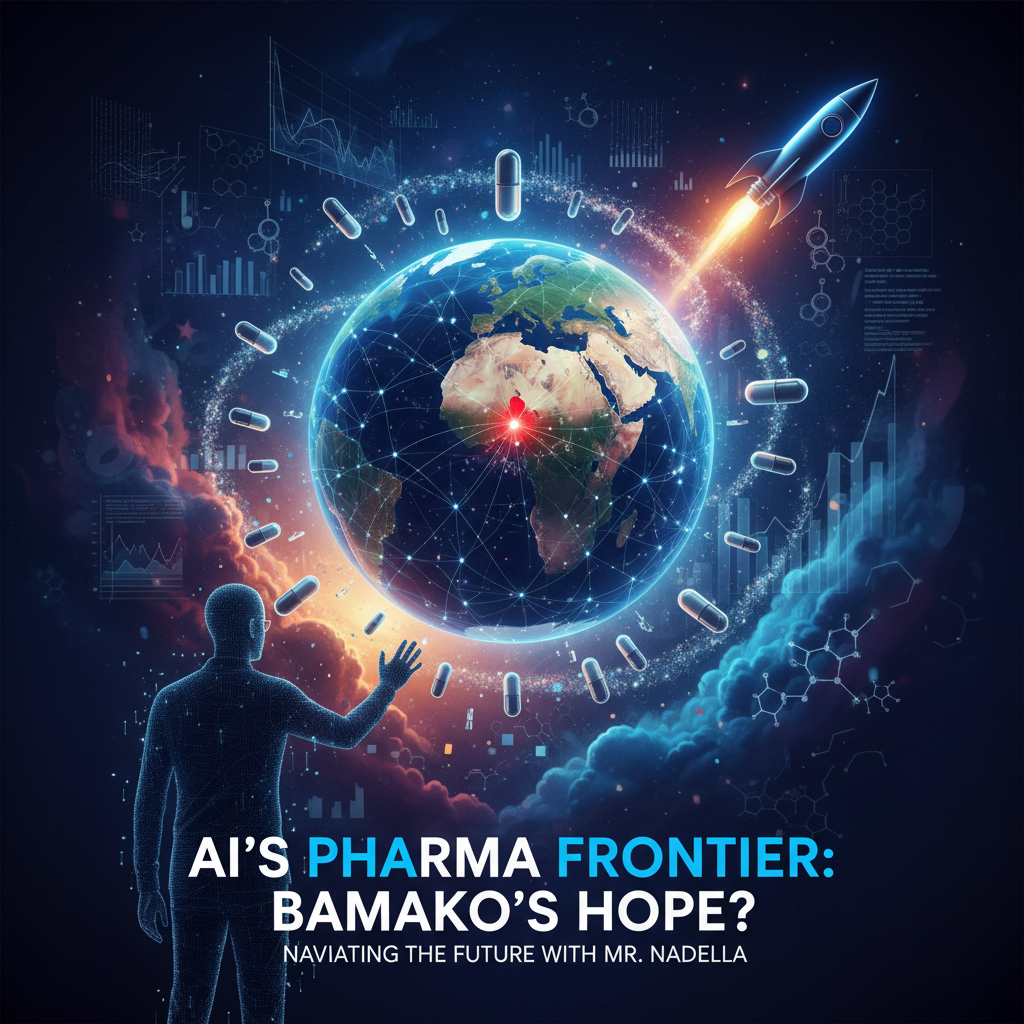
The pharmaceutical industry has long been a realm of painstaking research, staggering costs, and timelines that stretch for a decade or more. Developing a new drug, from initial concept to market availability, traditionally involves billions of dollars and an average of 10 to 15 years. This protracted process has often left communities in places like Mali waiting for critical advancements, sometimes indefinitely, as global health priorities shift and market forces dictate investment. Now, a new narrative has emerged, one where artificial intelligence promises to compress these timelines from years to mere months. But is this a genuine revolution, or simply another wave of technological optimism that will bypass the regions most in need?
Historically, drug discovery has been a largely empirical and iterative process. Scientists would synthesize thousands of compounds, test them in vitro, then in vivo, slowly narrowing down candidates through trial and error. The sheer volume of chemical space, the almost infinite combinations of molecules, made this a monumental task. The advent of high-throughput screening in the late 20th century accelerated some steps, but the fundamental bottleneck remained in identifying truly effective and safe compounds, then navigating complex clinical trials. This is where AI, particularly machine learning and deep learning, purports to offer a paradigm shift.
Today, companies like Insilico Medicine, a pioneer in AI-driven drug discovery, claim remarkable successes. Their AI platform, AlphaFold, developed in part by Google DeepMind, has demonstrated unprecedented accuracy in predicting protein structures, a critical step in understanding disease mechanisms and designing drugs. Insilico Medicine itself announced in 2022 that its AI-discovered and AI-designed drug for idiopathic pulmonary fibrosis, ISM001-055, had entered Phase I clinical trials, a process that took less than 30 months from target identification. This is a fraction of the traditional timeline. Similarly, BenevolentAI, another prominent player, has several AI-generated drug candidates in various stages of development, focusing on areas like ulcerative colitis and Parkinson's disease. The data tells a different story than the old one of slow, incremental progress; it suggests a dramatic acceleration is indeed possible.
These advancements are not isolated incidents. A report by Reuters in late 2025 highlighted that over 70 AI-discovered drug candidates are now in preclinical or clinical development globally, up from fewer than 10 just five years prior. The investment in this sector reflects this optimism, with venture capital pouring billions into AI biotech startups. Pharmaceutical giants like Pfizer and AstraZeneca are not merely observing; they are actively integrating AI platforms, partnering with companies like NVIDIA for computational power and developing their own in-house AI capabilities. Satya Nadella of Microsoft, speaking at a recent health tech summit, emphasized the transformative potential, stating,