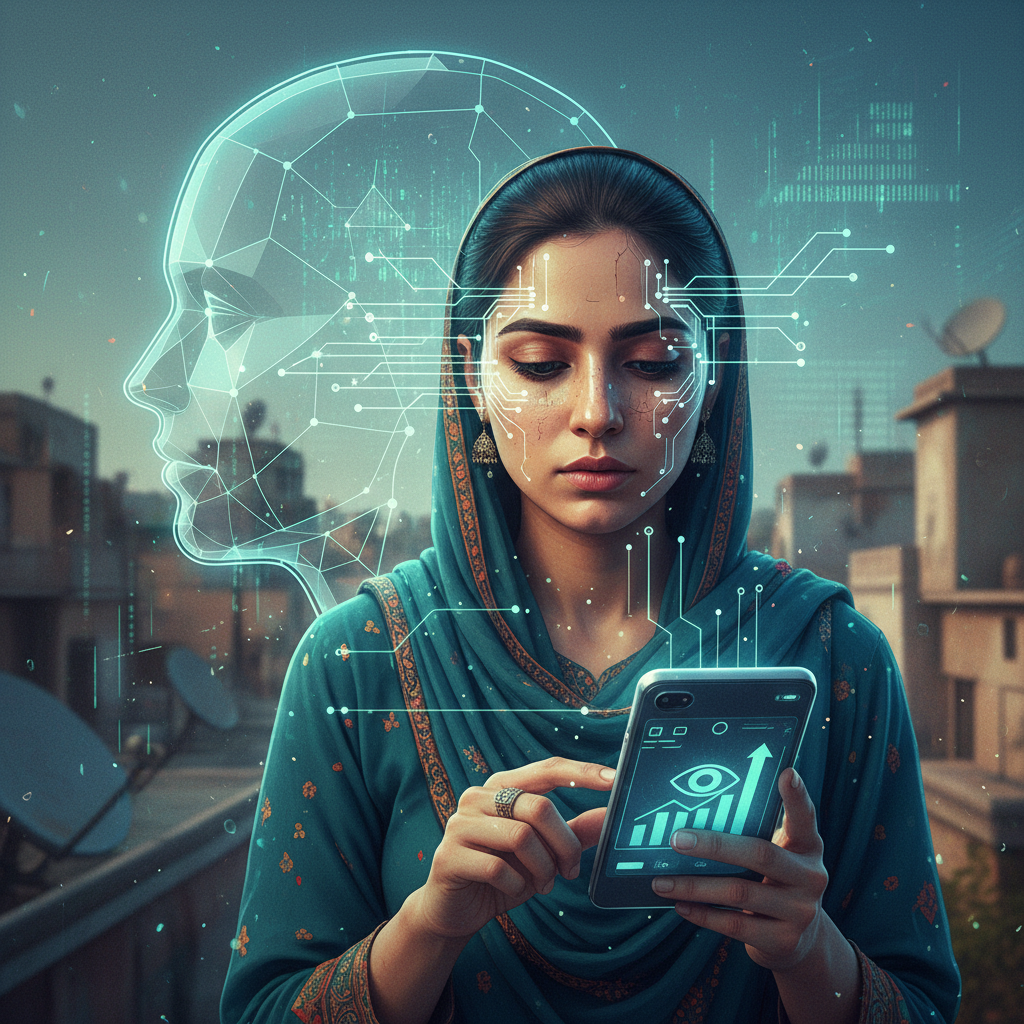
Let me tell you, my friends, something truly profound is stirring in the digital heart of India, and it's got me scratching my head and reaching for another strong filter coffee. We're talking about AI, yes, that ubiquitous buzzword, but not in the context of self-driving cars or predictive analytics. No, we're talking about something far more sacred, far more deeply woven into the very fabric of who we are: our stories, our epics, our languages. We're talking about AI writing the Mahabharata and the Ramayana, not just translating them, but generating new narratives in Sanskrit and Tamil. And believe me, the nation is absolutely divided.
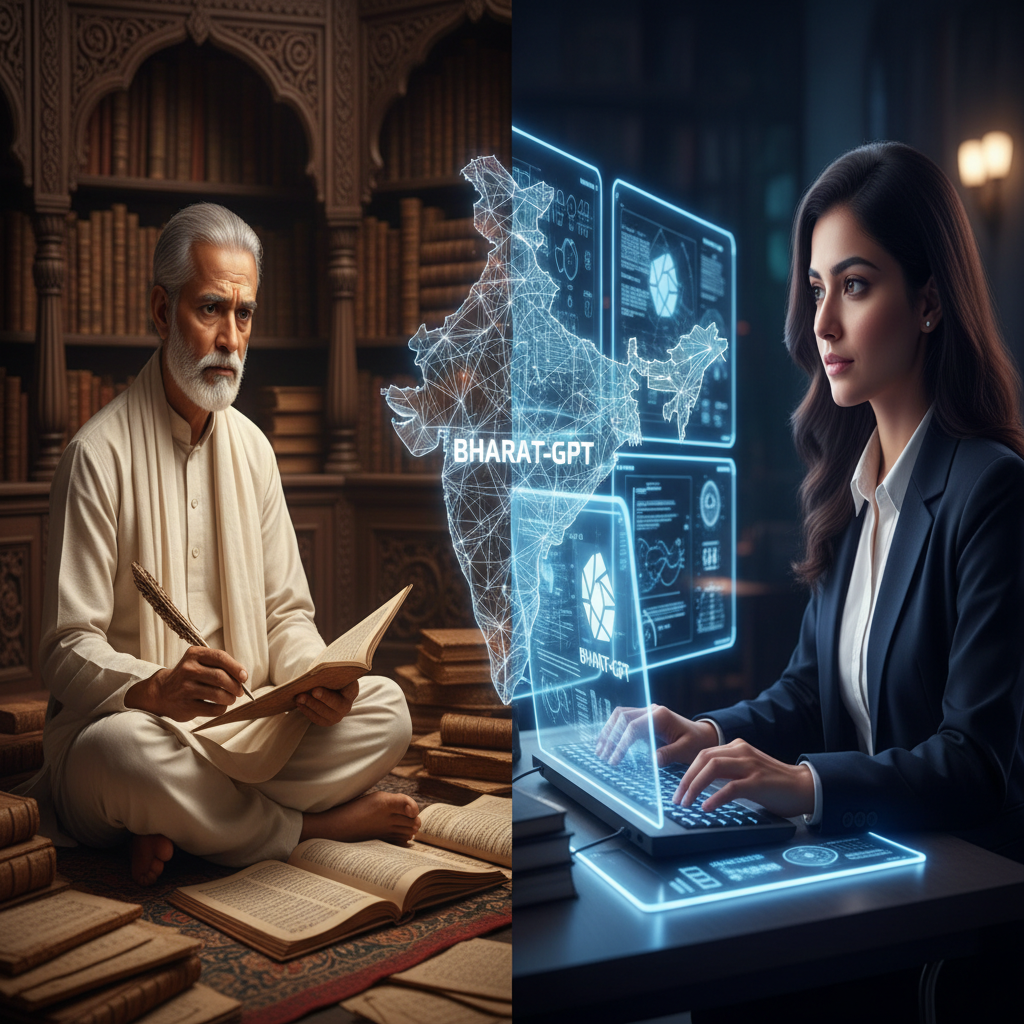
This isn't some far-off Silicon Valley fantasy. This is happening right here, right now, driven by a consortium of Indian tech giants and cultural institutions under the ambitious banner of 'Bharat-GPT'. Their latest unveiling, a module dubbed 'Kavya-Srishti' (Poetry Creation), has sent shockwaves from the hallowed halls of Chennai's Kalakshetra to the bustling tech parks of Bengaluru. Kavya-Srishti, they claim, can produce original verses in classical Tamil and Sanskrit, mimicking the stylistic nuances of ancient poets, even generating new parables that feel eerily authentic to our Puranic traditions. Imagine that – algorithms crafting poetry that could, theoretically, be mistaken for something unearthed from a forgotten palm-leaf manuscript.
“This is not just about translation; it’s about creation,” explained Dr. Ananya Sharma, lead AI ethicist at the Indian Institute of Technology Madras, during a recent, fiery panel discussion I attended. “Kavya-Srishti analyzes millions of lines of ancient texts, understanding not just grammar and vocabulary, but the underlying narrative structures, the philosophical tenets, the very rasa – the aesthetic essence – of these works. It’s learning to tell stories in a way that resonates with our deepest cultural memory.” She spoke with an almost evangelical zeal, her eyes gleaming with the promise of a digital renaissance.
But not everyone is buying the dream. For many, especially those who have dedicated their lives to the painstaking preservation and study of our classical heritage, this feels less like a renaissance and more like a digital desecration. “You cannot algorithmically reproduce the human spirit,” thundered Professor Karthik Subramanian, a revered scholar of Tamil literature at the University of Madras, his voice echoing the sentiments of countless purists. “Our epics are not mere data points. They are the culmination of millennia of human experience, devotion, and artistic genius. To suggest an AI can replicate that is not just hubris; it is a profound misunderstanding of what culture truly is. It's like asking a machine to feel bhakti.”
And he has a point, doesn't he? When I sat down with Professor Subramanian over a cup of strong filter coffee, his passion was palpable. He argued that the beauty of our ancient texts lies not just in their words, but in the human context of their creation, the oral traditions that shaped them, the spiritual journeys they represent. Can an algorithm truly grasp the nuances of dharma or karma beyond their lexical definitions? Can it understand the silent tears shed by a devotee reading the Thirukkural? It’s a question that cuts to the very core of our identity.
The developers of Bharat-GPT, however, see it differently. They envision a future where AI acts as a collaborative partner, not a replacement. “Think of it as a tool that democratizes access and even inspires new forms of creativity,” offered Rajeev Mehta, CEO of TechBharat Solutions, one of the key players behind the initiative. “Imagine a young student in a remote village, struggling to connect with ancient Sanskrit. Kavya-Srishti could generate personalized, simplified narratives that retain the original essence, making these treasures accessible to a new generation. Or, imagine artists using it to explore new interpretations of old myths, breathing fresh life into them.” Mehta’s vision is certainly compelling, painting a picture of cultural enrichment and wider engagement.
Indeed, the potential for accessibility is immense. India, with its hundreds of languages and dialects, faces a monumental task in preserving its linguistic and literary diversity. AI could, theoretically, help bridge these gaps, translating and even adapting stories across linguistic barriers, ensuring that the richness of, say, a Telugu folk tale can be appreciated by a Punjabi speaker, and vice-versa. The sheer volume of content that could be generated, curated, and made available is mind-boggling. We're talking about potentially unlocking vast troves of cultural knowledge that have, until now, been limited to a select few scholars.
But the ethical tightrope walk is precarious. Who owns these AI-generated narratives? If an AI creates a new chapter of the Ramayana, does it become canonical? What happens when the lines blur between human-authored and machine-authored content? The very definition of 'authenticity' is being challenged. “We are entering uncharted territory,” warned Dr. Priya Singh, a cultural anthropologist specializing in digital humanities. “The risk is that we might inadvertently dilute the very essence of what we seek to preserve. If an AI can generate a thousand new verses of a devotional hymn, does it diminish the unique spiritual power of the original, human-crafted verses? We must proceed with extreme caution, establishing clear guidelines and ethical frameworks, or we risk losing our cultural anchor in a sea of algorithmic mimicry.”
This isn't just an academic debate; it's a conversation that needs to happen in every household, every temple, every school across India. Are we ready to embrace AI as a co-creator of our cultural narrative, or do we draw a firm line, protecting the sanctity of human artistic endeavor? The answers won't be simple, and they certainly won't be unanimous. But one thing is clear: Bharat-GPT's Kavya-Srishti has opened a Pandora's Box, or perhaps, a celestial pot of nectar, depending on your perspective. It forces us to confront fundamental questions about creativity, authenticity, and the very soul of a nation steeped in millennia of storytelling. As the digital age continues its relentless march, we, the inheritors of one of the world's oldest and richest cultures, must decide: will AI be our greatest muse, or our ultimate mimic?