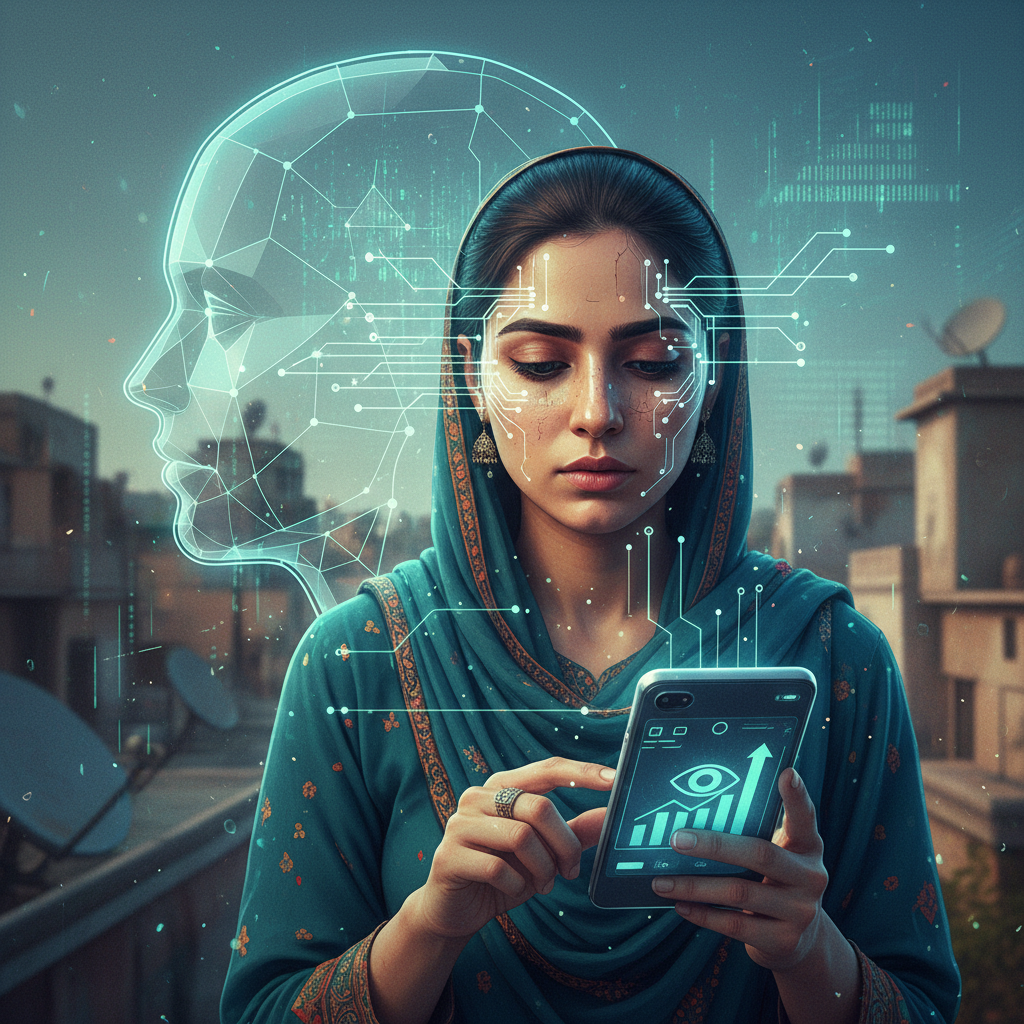

Let's be honest, most of you probably glaze over when you hear 'AI regulation' or 'government policy.' It sounds like a dusty file in a forgotten ministry office, right? Technical jargon, endless committee meetings, and pronouncements that feel detached from the pulsating reality of our lives. But I'm here to tell you, my friends, that ignoring this stuff is like ignoring the monsoon clouds gathering on the horizon. It's coming, and it will reshape our landscape, for better or worse. This isn't just about some abstract tech; it's about the very fabric of our society, our livelihoods, and the kind of future we are building, brick by digital brick.
The headline development, the one most people are missing amidst the daily deluge of AI chatbot updates and venture capital announcements, is the quiet, yet profound, acceleration of national AI strategies. From Delhi to Dubai, from Singapore to Seoul, governments are waking up. They are realizing that AI isn't just another technology, it's the foundational layer of the next industrial revolution. India, for its part, is not just participating; it's positioning itself to lead. The Ministry of Electronics and Information Technology, Niti Aayog, and various state governments are not just talking, they are drafting, consulting, and pushing policies that will define our digital destiny. We are seeing a flurry of white papers, task forces, and pilot projects, all aimed at carving out India's space in this new world order. While the West often gets caught in philosophical debates about existential risk, here, the focus is pragmatic: how do we harness AI for our billion-plus population, for our farmers, our doctors, our small businesses?
Why are most people ignoring this? Simple. The immediate gratification of a new AI image generator or a smarter virtual assistant overshadows the long-term, complex work of governance. It's not flashy. There are no viral TikToks about a new data governance framework. The impact isn't always immediate or obvious. People are busy with their daily lives, navigating traffic, earning their livelihoods, and trying to keep up with the latest smartphone. The abstract notion of 'data sovereignty' or 'algorithmic accountability' feels distant when you are worried about your next meal or your child's education. The attention economy thrives on instant hits, and policy, by its very nature, is a slow burn. It's the silent, invisible hand that shapes the game long before you even realize you're playing.
But how does this affect you, my friend, sitting there reading this? Let me paint a picture. Imagine your job. Is it safe? AI policy, or the lack thereof, will determine that. If regulations are too lax, companies might rush to automate, displacing workers without adequate retraining programs. If they are too restrictive, innovation could stagnate, and India might miss out on creating new industries and jobs. Think about your privacy. Every time you use a digital service, you leave a trail. Who owns that data? How is it used? AI policy dictates whether your digital footprint is a commodity to be sold, or a protected aspect of your identity. Consider your rights. Will an AI decide if you get a loan, a job, or even medical treatment? Without clear ethical guidelines and accountability mechanisms, these decisions could be biased, opaque, and deeply unfair. This is not some distant dystopian future; this is happening now. A recent report from the Indian Council for Research on International Economic Relations (icrier) estimated that without proactive policy, nearly 30% of India's service sector jobs could be significantly altered or displaced by AI within the next seven years. That's millions of people.
The bigger picture, the societal, economic, and political implications, are monumental. For India, this is an inflection point. We have the talent, the data, and the sheer scale to become an AI superpower. India will own the next decade of AI, not just as consumers, but as innovators and policy shapers. Our unique challenges, from healthcare access in rural areas to personalized education for millions, demand AI solutions tailored to our context. This isn't about copying Silicon Valley; it's about building our own path. Strong, thoughtful AI policy can ensure that the benefits of AI are distributed equitably, preventing a widening of the digital divide. It can foster trust in AI systems, which is crucial for public adoption. Politically, a robust AI framework can enhance national security, protect critical infrastructure, and even project India's soft power on the global stage, offering a balanced, human-centric alternative to other models. Just look at the discussions around the Global Partnership on Artificial Intelligence (gpai), where India plays a crucial role in shaping international norms. This isn't just about domestic policy; it's about our standing in the world.
Experts are not just observing; they are actively trying to guide this ship. "We cannot afford to be reactive," says Dr. Ritu Sharma, Director of the Centre for Digital Governance at IIT Delhi. "The speed of AI development demands a proactive, agile regulatory framework that can adapt without stifling innovation. Our policy needs to be a living document, not a static law." Mr. Anil Kumar, a veteran policy advisor at Niti Aayog, emphasizes the economic imperative: "Our goal is to leverage AI to uplift our economy, create high-skill jobs, and solve our grand challenges. This means fostering an environment where startups can thrive, but also ensuring ethical guardrails are in place from day one." Meanwhile, Ms. Priya Singh, a leading AI ethicist based in Bengaluru, warns, "Without robust data privacy laws and algorithmic transparency, we risk embedding existing societal biases into our future. The 'digital divide' could become an 'AI divide' if we are not careful." And from the industry side, Mr. Rajesh Gupta, CEO of a prominent AI unicorn in Hyderabad, states, "Forget Silicon Valley, look at Hyderabad. Our innovators are building for India, and they need clear, consistent policies that encourage growth while protecting citizens. Ambiguity is the biggest enemy of progress." These voices underscore the urgency and complexity of the task at hand.
So, what can you do about it? First, educate yourself. Read beyond the headlines. Understand what AI policy entails, from data governance to ethical guidelines. Follow organizations like Niti Aayog and the Ministry of Electronics and Information Technology. Engage in public consultations when they happen; your voice matters. Support initiatives that advocate for responsible AI development and digital rights. If you're in tech, push for ethical AI practices within your own companies. If you're a consumer, demand transparency from the services you use. This isn't just a government problem; it's a societal responsibility. We all have a role to play in shaping this future. For more insights into how different regions are approaching this, consider articles like The Nordic Paradox: Can Europe's AI Sovereignty Survive the Silicon Valley Scramble? [blocked], which highlights global regulatory challenges.
The bottom line: AI regulation and government policy will matter profoundly in five years. By 2031, the choices we make today will have solidified into the infrastructure of our digital lives. We will either live in a world where AI serves humanity, designed with our values and needs at its core, or one where we are merely cogs in an algorithmic machine, dictated by opaque systems. The stakes are too high for indifference. The future of India, and indeed the world, hinges on getting this right. This isn't just about technology; it's about humanity's next chapter, and we, in India, have a chance to write a significant part of it. Keep an eye on global developments, for instance, how other nations are grappling with these issues, as reported by Reuters Technology. The conversations happening now, in quiet government offices and bustling tech hubs, are laying the groundwork for the world your children and grandchildren will inherit. Don't just watch; participate. The future is not something that happens to us; it's something we build, together. For a deeper dive into the ethical considerations, MIT Technology Review often publishes excellent pieces.