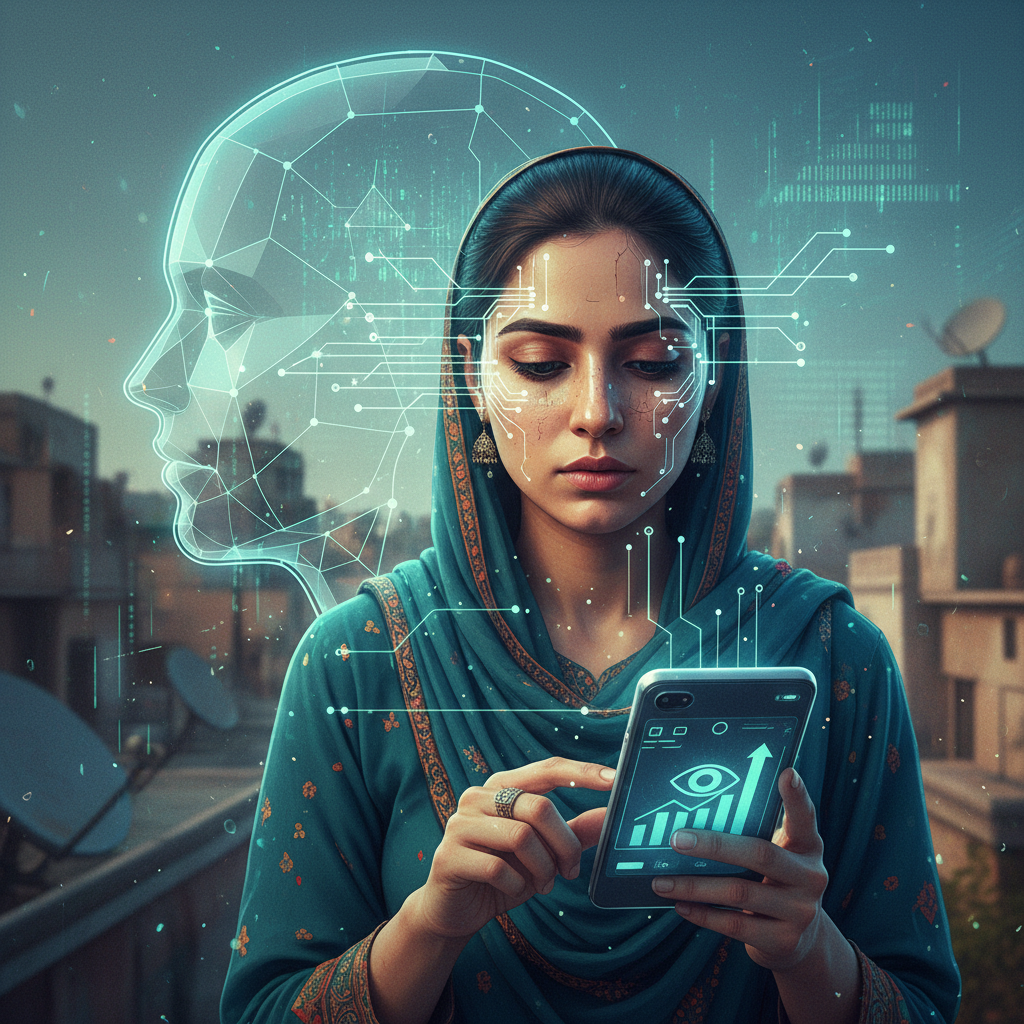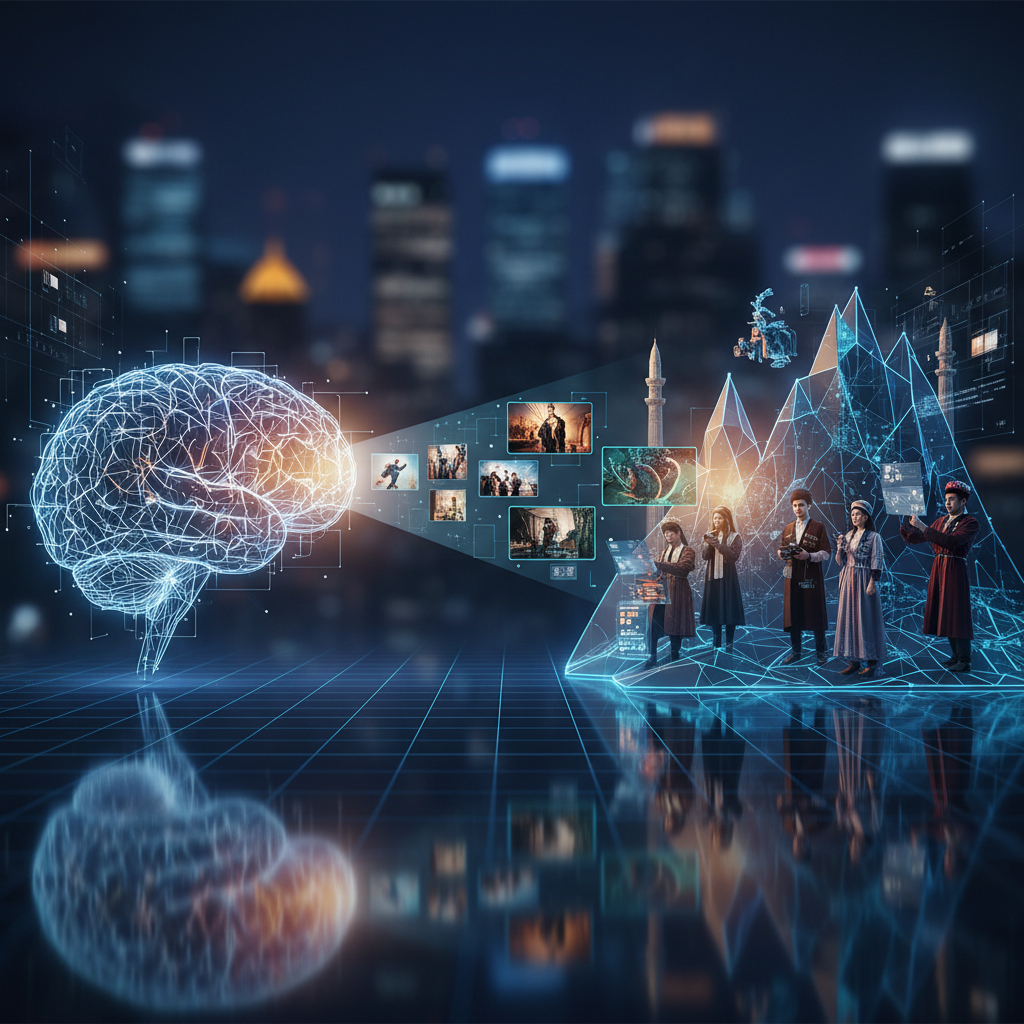

The flickering light of a projector, once the sole domain of human creativity and painstaking labor, now faces a formidable challenger: artificial intelligence. From the bustling studios of Los Angeles to the nascent film industries emerging in Central Asia, the question is no longer if AI will impact filmmaking, but how profoundly. For a country like Tajikistan, where resources are often constrained and narratives are rich but underrepresented on the global stage, the prospect of AI-generated movies and TV shows presents both a tantalizing opportunity and a complex technical puzzle. Let us move past the sensational headlines and examine the engineering reality.
The technical challenge at hand is immense: transforming abstract textual descriptions into coherent, dynamic, and visually compelling video sequences. This is not merely about generating static images, a task at which models like Midjourney and Stable Diffusion have excelled, but about synthesizing temporal consistency, character movement, scene transitions, and narrative flow. The problem requires a multi-modal approach, integrating natural language understanding, image generation, and motion dynamics into a unified, scalable system.
At the core of this burgeoning field are advanced generative models, primarily diffusion models and transformer architectures. Consider the architecture overview of a leading text-to-video model, such as Google's Imagen Video or OpenAI's Sora. These systems typically employ a cascaded approach. An initial text encoder, often a large language model like a T5 variant, translates the input prompt into a rich semantic representation. This representation then feeds into a series of spatio-temporal diffusion models. The first stage might generate low-resolution, short video clips, focusing on overall scene composition and basic motion. Subsequent stages then progressively upsample these initial generations, adding finer details, higher resolution, and extending temporal length, often leveraging techniques like attention mechanisms to maintain consistency across frames.
Key algorithms and approaches involve several sophisticated components. For instance, the temporal aspect is often handled by incorporating 3D convolutions or attention mechanisms that operate across the time dimension, not just spatial dimensions. This ensures that objects maintain their identity and move plausibly from one frame to the next. Conditional generation is paramount, where the diffusion process is guided by the text embedding at each step. Pseudocode for a simplified video diffusion process might look like this:
# Simplified conceptual pseudocode for video generation
function generate_video(text_prompt, num_frames, resolution):
 text_embedding = encode_text(text_prompt) # e.g., using a frozen LLM

# Stage 1: Low-resolution, short video generation
 noisy_latent_video = sample_gaussian_noise(low_res_dims)
 for t from T down to 1:
 predicted_noise = video_unet(noisy_latent_video, t, text_embedding)
 noisy_latent_video = denoise_step(noisy_latent_video, predicted_noise, t)
 low_res_video_latent = noisy_latent_video

# Stage 2: Spatio-temporal upsampling and extension
 high_res_video_latent = upsample_and_extend_temporal(low_res_video_latent, text_embedding)

 # Apply VAE decoder or similar to get pixel space video
 final_video = decode_latent_to_pixels(high_res_video_latent)
 return final_video
# Simplified conceptual pseudocode for video generation
function generate_video(text_prompt, num_frames, resolution):
 text_embedding = encode_text(text_prompt) # e.g., using a frozen LLM

# Stage 1: Low-resolution, short video generation
 noisy_latent_video = sample_gaussian_noise(low_res_dims)
 for t from T down to 1:
 predicted_noise = video_unet(noisy_latent_video, t, text_embedding)
 noisy_latent_video = denoise_step(noisy_latent_video, predicted_noise, t)
 low_res_video_latent = noisy_latent_video

# Stage 2: Spatio-temporal upsampling and extension
 high_res_video_latent = upsample_and_extend_temporal(low_res_video_latent, text_embedding)

 # Apply VAE decoder or similar to get pixel space video
 final_video = decode_latent_to_pixels(high_res_video_latent)
 return final_video
This simplified view belies the complexity of training such models, which requires immense computational resources and vast datasets of captioned videos. OpenAI's Sora, for example, is reportedly trained on an unprecedented scale of video data, allowing it to learn complex physics and world dynamics directly from observation. The model treats video as a collection of