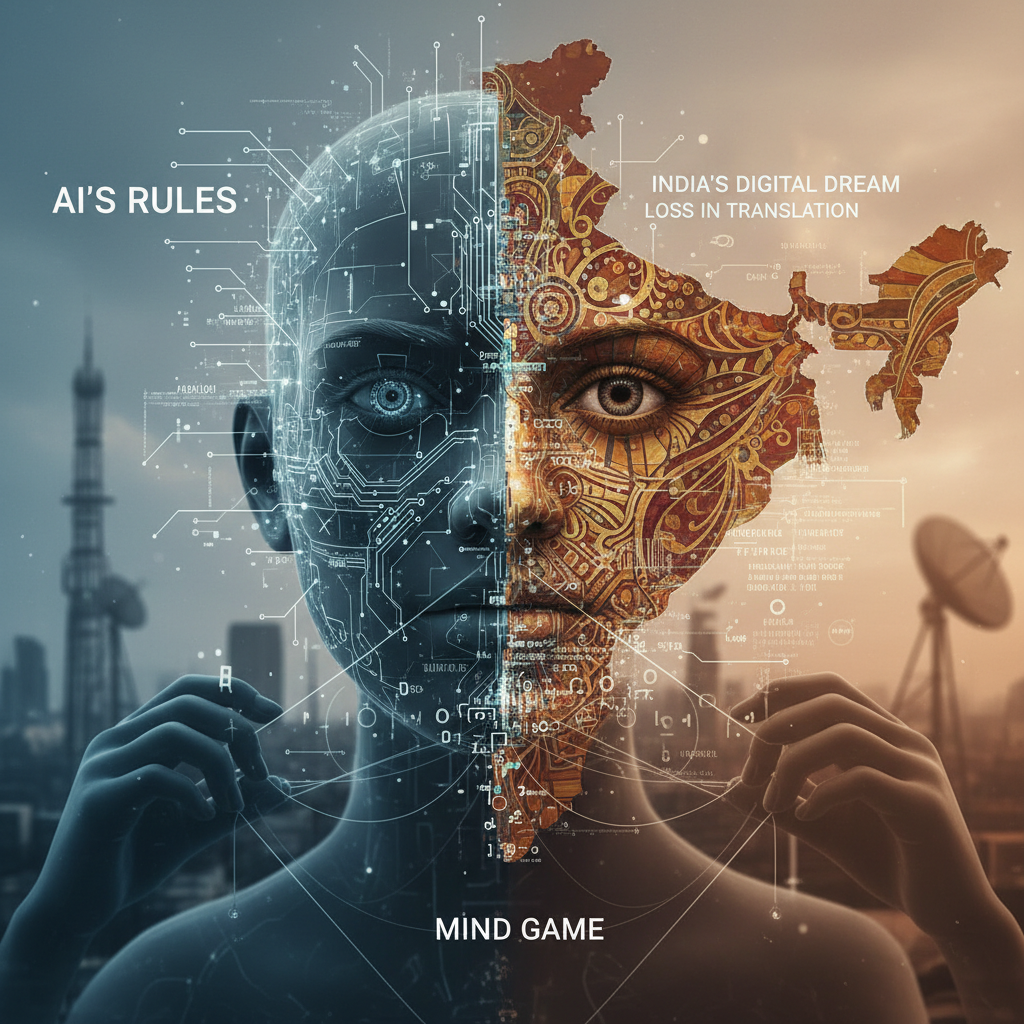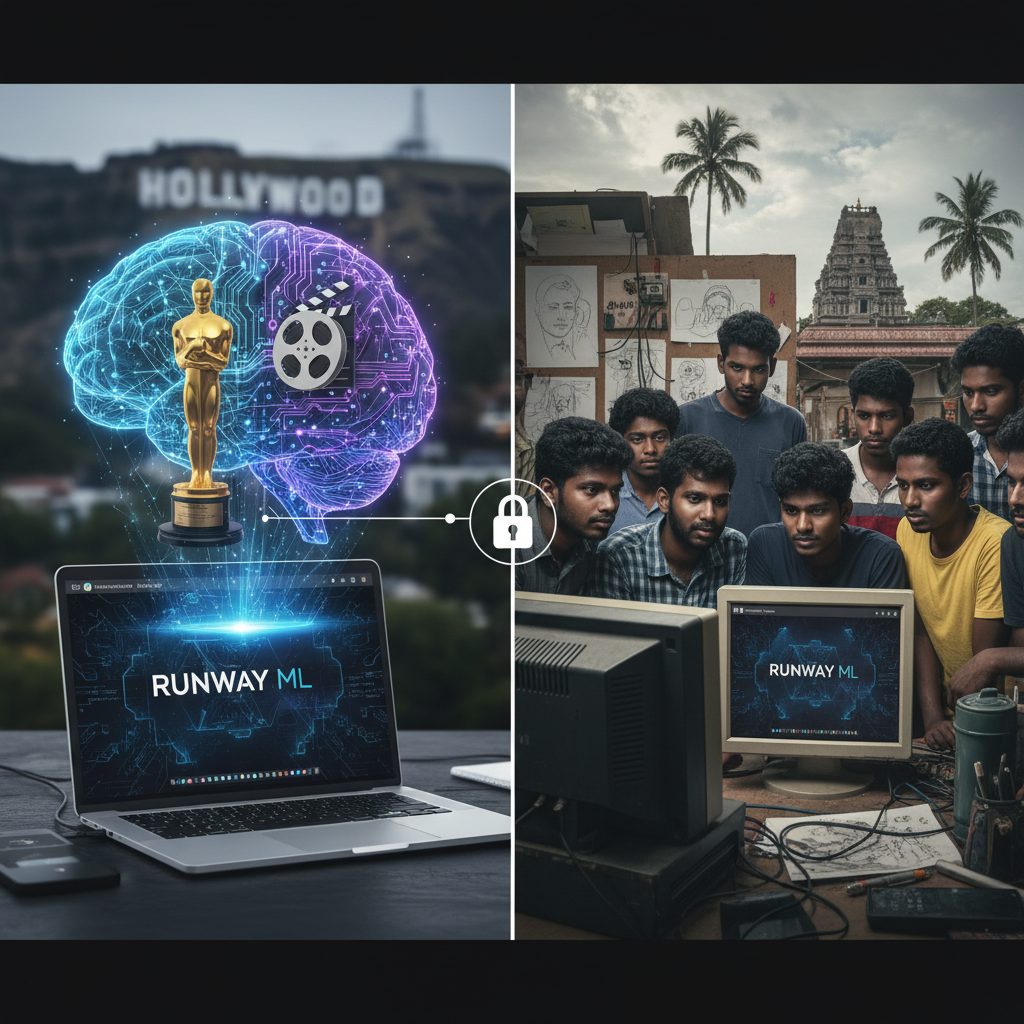

The flickering lights of Hollywood have always held a certain allure, a distant dream for many across the globe. Now, a new kind of magic is being woven into its fabric, not by traditional celluloid, but by algorithms. Runway ML, once a niche Brooklyn startup, has rapidly ascended to become a darling of the film industry, its generative AI video tools lauded as transformative. From pre-visualisation to special effects, the company’s suite of offerings, particularly its text-to-video capabilities, have been embraced by studios and independent filmmakers alike, promising unprecedented speed and creative freedom. But as I’ve been tracking this for months, a crucial question arises: does this glittering promise extend beyond the gilded gates of Los Angeles and into the vibrant, yet resource-constrained, creative hubs of Asia, specifically here in Sri Lanka?
The narrative surrounding Runway ML is undeniably compelling. Founded by Cristóbal Valenzuela, Anastasis Germanidis, and Alejandro Maiche, the company has secured significant funding, reportedly valuing it in the high hundreds of millions of dollars. Its Gen-1 and Gen-2 models allow users to generate video from text, images, or existing video clips, offering a level of control and sophistication that was unimaginable just a few years ago. Major studios are experimenting with it, independent creators are producing short films, and the buzz is palpable. “Runway has democratized access to high-end visual effects,” stated a senior executive at a prominent visual effects studio, who preferred to remain anonymous due to ongoing contractual discussions. “It’s cutting down production cycles and opening up new avenues for storytelling that were previously cost-prohibitive.”
This is precisely where my skepticism, honed by years of observing grand technological pronouncements from a Sri Lankan vantage point, begins to sharpen. The promises don't match the reality for many here. While Hollywood revels in its newfound efficiency, the foundational infrastructure required to leverage such tools effectively is often absent in developing nations. High-speed internet, powerful computing resources, and access to the latest GPUs are not universal commodities. In Sri Lanka, where internet connectivity can be erratic and powerful hardware an expensive luxury, the barrier to entry for advanced AI tools remains significant. A young animation studio in Colombo, for instance, might struggle to afford the subscription costs or the necessary computational power to run these models at a professional scale.
Consider the practicalities. Runway ML’s advanced features, while impressive, demand robust computing power. While cloud-based solutions mitigate some of this, reliable, low-latency internet access is paramount. In many parts of Sri Lanka, particularly outside the major urban centers, consistent broadband remains a challenge. The average internet speed in Sri Lanka, while improving, still lags behind developed nations, making real-time collaboration and large file transfers a frustrating endeavor. Furthermore, the cost implications cannot be overlooked. For a fledgling animation or film production house in Sri Lanka, every dollar counts. Investing in a suite of AI tools, no matter how powerful, might be seen as a luxury when basic operational costs are already a strain.
I spoke with Dr. Priyantha Wijesinghe, a lecturer in digital media at the University of Moratuwa, a leading engineering and technology institution in Sri Lanka. “The potential of tools like Runway ML is undeniable for global film production,” he observed, “but we must be realistic about adoption here. Our students and emerging professionals often work with limited budgets and older hardware. The digital divide is not just about access to the internet, but also access to the computational resources and training necessary to master these cutting-edge technologies.” He emphasized that while the enthusiasm for AI is high, practical implementation faces significant hurdles.
Moreover, the very nature of generative AI raises questions about creative ownership and the future of traditional artistic roles. While proponents argue that AI empowers artists, critics worry about job displacement and the commodification of creativity. For Sri Lankan artists and animators, who often work in a highly competitive global outsourcing market, the emergence of AI tools that can automate certain tasks presents both an opportunity and a threat. Will it enable them to compete more effectively, or will it simply drive down the value of their labor?
Here's what the data actually shows: global investments in AI for media and entertainment are skyrocketing. According to a report by Reuters Technology, venture capital poured billions into generative AI startups in 2023 and 2024, with a significant portion targeting content creation. Yet, the geographical distribution of these investments remains heavily skewed towards North America and Europe. Asia, while a growing market, often sees these technologies as imports rather than homegrown innovations, leading to a dependency that can be economically disadvantageous. The local ecosystem of AI development in Sri Lanka, while nascent, is focused more on practical applications in agriculture or healthcare, not necessarily on high-end media production.
The Sri Lankan government, through initiatives like the Information and Communication Technology Agency (icta), has been pushing for digital transformation and skill development. However, the focus has largely been on foundational digital literacy and IT services, rather than specialized AI training for creative industries. For Runway ML’s tools to truly benefit Sri Lanka, there needs to be a concerted effort to bridge this gap: providing access to computing infrastructure, offering subsidized training programs, and fostering a local ecosystem that can innovate with these tools, rather than merely consume them.
Consider the example of the local film industry, which despite its historical struggles, continues to produce compelling narratives. Imagine a young filmmaker in Jaffna or Galle, armed with a powerful story, but limited by budget. If Runway ML’s tools could genuinely be made accessible and affordable, with local support and training, it could unlock a wave of creativity. However, without that localized support, it remains a distant, glittering object, much like a star in the night sky, beautiful but out of reach. The cultural nuances and storytelling traditions of Sri Lanka are rich, but translating them into AI prompts and leveraging these tools effectively requires a deep understanding that goes beyond mere technical proficiency.
While the excitement around Runway ML in Hollywood is understandable, we must critically examine its global impact. The narrative of technological democratization often overlooks the very real economic and infrastructural disparities that prevent true access. For Sri Lanka, and indeed for many parts of Asia, the question is not merely whether these tools can be used, but whether they will be made genuinely accessible and integrated into a local context that respects and empowers its unique creative voices. Until then, the revolution promised by AI video tools might remain largely confined to the studios and production houses that can already afford the future, leaving others to watch from afar. The true test of Runway ML’s transformative power will be its ability to transcend geographical and economic boundaries, not just technological ones. For more insights into the broader implications of AI in creative fields, one might look to Wired's AI coverage.