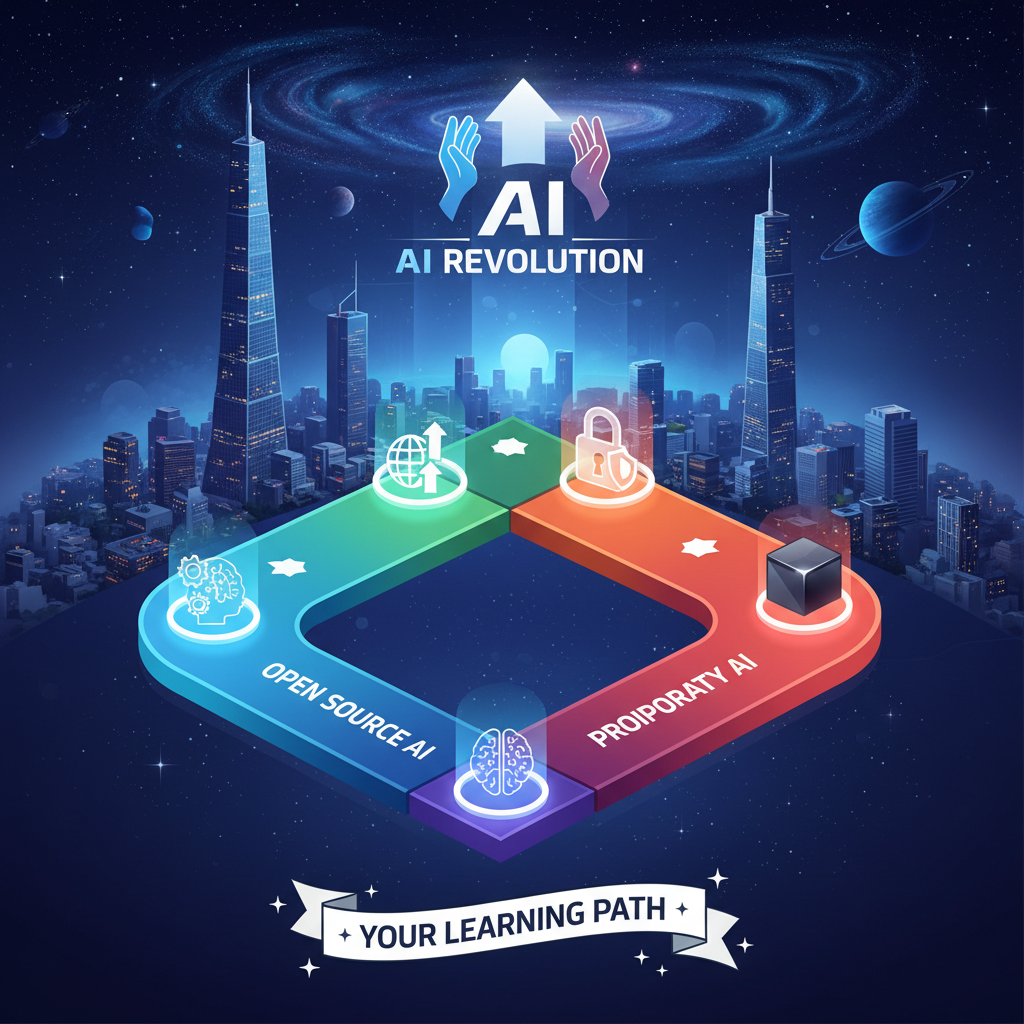

Chào bạn, my dear readers at DataGlobal Hub! Ngo Thi Huừngé here, buzzing with excitement as always from the vibrant heart of Ho Chi Minh City. You know, sometimes I look at the endless motorcycles weaving through our streets, each rider on their own path, and I see a perfect metaphor for the AI landscape right now. It is a thrilling, sometimes chaotic, but always forward moving journey, and today we are diving deep into one of its most pivotal crossroads: open source versus proprietary AI models.
This isn't just a technical debate; it is a philosophical one, an economic one, and frankly, a human one. It is about who controls the future of intelligence, who benefits, and who gets to build it. For us here in Vietnam, a nation that is rapidly embracing technology with an infectious energy, this distinction is absolutely vital. We are not just consumers; we are creators, innovators, and we need to understand the tools at our disposal.
So, whether you are a student at a Hanoi university, a developer in a bustling Saigon startup, or just someone fascinated by the future, this learning path is for you. Let us embark on this journey together, from zero to expert, and unlock the power of both open and closed AI.
Who This Is For
This learning path is designed for anyone with a basic understanding of programming concepts, ideally Python, and a burning curiosity about artificial intelligence. You do not need to be an AI expert yet; that is what we are here for! If you are an aspiring data scientist, a software engineer looking to pivot into AI, a product manager wanting to understand the tech behind your next big idea, or even a policy maker seeking clarity, this roadmap will light your way. No prior deep learning knowledge is required, just an open mind and a passion for learning.
The Big Picture: A Visual Roadmap Overview
Imagine a branching tree. One major branch is 'Open Source AI', flourishing with community contributions and transparent code. The other is 'Proprietary AI', a towering, meticulously crafted structure, often with unparalleled performance. Our path will explore the roots, the trunk, and the distinct fruits of both, showing you how to navigate between them. We will start with fundamental concepts, move to hands-on implementation, then tackle real world applications, and finally, delve into advanced topics and ethical considerations. It is a journey that will equip you with a holistic understanding, preparing you for any challenge or opportunity.
Stage 1: Foundations (2-4 weeks)
This is where we lay the groundwork, understanding the core definitions and the historical context that led us to this exciting juncture. Think of it as learning the alphabet before writing a novel.
Key Concepts:
- What is AI, Machine Learning, Deep Learning? A quick refresher on the hierarchy.
- Open Source AI: Definition, philosophy (transparency, collaboration, community), key examples (TensorFlow, PyTorch, Hugging Face models like Llama 3, Mistral), advantages (flexibility, cost, auditability) and disadvantages (support, complexity, potential for misuse).
- Proprietary AI: Definition, business models (API access, licensing), key examples (OpenAI's GPT series, Anthropic's Claude, Google's Gemini), advantages (performance, ease of use, dedicated support) and disadvantages (vendor lock-in, black box, cost).
- Ethical Considerations: Bias, transparency, accountability in both paradigms.
Resources:
- Free: Coursera's