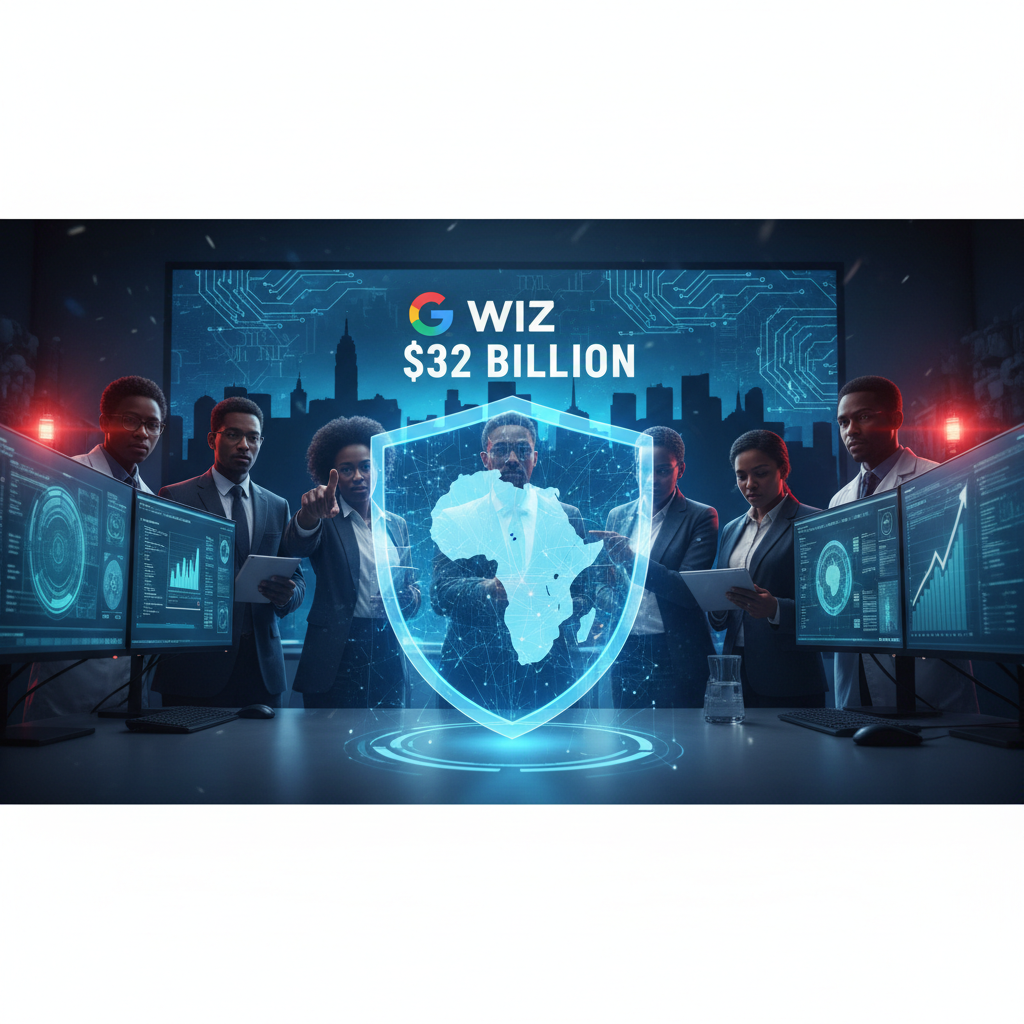

The digital landscape, much like the rugged mountains of Lesotho, is ever-shifting and fraught with unseen perils. Today, a seismic event has rocked this terrain: Google's staggering $32 billion acquisition of Wiz, a cloud security startup that has rapidly become a titan in its field. This monumental deal, confirmed by sources close to the negotiations, is not merely a corporate transaction; it is a profound declaration of intent in the burgeoning arena of AI-powered cybersecurity. For nations across Africa, including my home Lesotho, this development demands meticulous scrutiny, for it will undoubtedly reshape the digital infrastructure we increasingly rely upon.
The breaking news, which emerged from Silicon Valley boardrooms just hours ago, positions Google to integrate Wiz's cutting edge cloud security platform, renowned for its ability to identify and mitigate risks across complex cloud environments, directly into its formidable Google Cloud offerings. The stated aim is clear: to create an unparalleled AI-driven cybersecurity bulwark against the escalating tide of cyber threats. Wiz, founded by former Microsoft and Adallom executives, has achieved a meteoric rise, reaching a valuation that few startups ever dream of. Their technology, which leverages artificial intelligence to provide comprehensive visibility and threat detection across multi-cloud setups, is now Google’s to wield. The implications are vast, particularly for governments and corporations in Africa that are increasingly adopting cloud solutions.
Official reactions have been swift, if somewhat guarded. A spokesperson for the Southern African Development Community Sadc Secretariat, speaking anonymously due to the sensitivity of the ongoing discussions, expressed cautious optimism. “Enhanced cybersecurity infrastructure is a necessity, not a luxury, for our member states,” the official stated. “However, the concentration of such critical technology in the hands of a single global entity, no matter how reputable, always warrants careful consideration regarding data privacy, national security, and equitable access.” This sentiment echoes a long-standing concern in Africa: the balance between leveraging advanced foreign technology and safeguarding national interests.
Expert analysis from the continent’s nascent but growing tech sector highlights both the promise and the peril. Dr. Thato Mofokeng, a leading cybersecurity researcher at the National University of Lesotho, emphasized the immediate benefits. “Wiz’s platform, with its AI capabilities, offers a level of proactive threat detection and vulnerability management that many African enterprises currently lack,” Dr. Mofokeng explained. “For small and medium enterprises, and even government agencies struggling with limited resources, integrating such a robust solution could significantly elevate their defensive posture against sophisticated cyberattacks.” She pointed to the increasing frequency of ransomware attacks targeting critical infrastructure and financial institutions across the continent as evidence of this urgent need. According to a recent report, cybercrime costs African economies billions annually, a figure that is projected to rise exponentially.
However, Dr. Mofokeng also articulated a deeper apprehension. “What they’re not telling you is the extent to which this centralizes control over our digital security. When one company becomes the de facto guardian of vast swathes of cloud data, questions of sovereignty and potential surveillance become paramount. Will African data, secured by Google-Wiz, remain solely within our jurisdiction, or will it be subject to foreign legal frameworks and data access requests?” This is a question that resonates deeply in a region acutely aware of its colonial past and the ongoing struggle for digital self-determination.
Sources close to the matter confirm that discussions are already underway within various African Union bodies regarding the broader implications of such mega-acquisitions. There is a palpable concern that while these deals promise advanced protection, they also inadvertently create new dependencies and potential vulnerabilities. The fear is not just of external threats, but of the power dynamics inherent in relying on a single, dominant provider for fundamental digital security. As one senior policy advisor in Pretoria privately remarked, “We must always follow the money, and understand the power that comes with controlling the digital gates.”
What happens next for Lesotho and the wider African continent is a complex interplay of opportunity and strategic maneuvering. Google will undoubtedly push for rapid integration of Wiz’s technology, aiming to capture a larger share of the enterprise cloud market, including in Africa. This could mean more accessible, albeit centralized, advanced security tools for local businesses and governments. However, it also necessitates a proactive stance from African policymakers. Discussions around data localization, the establishment of independent cybersecurity oversight bodies, and the development of local AI talent will become more critical than ever.
The acquisition also underscores the urgent need for African nations to invest in their own indigenous cybersecurity capabilities and AI research. Relying solely on imported solutions, no matter how sophisticated, risks creating a perpetual state of technological dependence. Initiatives like the African Union’s cybersecurity strategy and various national digital transformation agendas must now accelerate their efforts to build local expertise and infrastructure. The goal should be not merely to consume technology, but to innovate and contribute to its development, ensuring that our unique contexts and needs are embedded in the solutions.
Why should readers care? Because the digital security of our institutions, our businesses, and our personal data hinges on these global power plays. The Google-Wiz acquisition is a bellwether for the future of AI in cybersecurity, a future where the lines between protection and control can become increasingly blurred. For the average Mosotho citizen, this means that the security of their online banking, their government services, and their personal communications will increasingly be managed by systems whose ultimate control resides thousands of kilometers away. It is a stark reminder that in the digital age, national sovereignty is not just about physical borders, but also about the integrity and autonomy of our data. As the world becomes more interconnected, the decisions made in Silicon Valley have direct and profound impacts on the daily lives of people everywhere, from the bustling markets of Maseru to the quiet villages nestled in the Maloti Mountains. We must be vigilant, asking the difficult questions and demanding transparency, lest we find ourselves secured but simultaneously constrained by the very technologies meant to protect us. For more insights into the evolving landscape of AI and its societal impacts, consider exploring articles on MIT Technology Review. The rapid pace of these developments means continuous vigilance is required, and platforms like TechCrunch often provide immediate coverage of these significant industry shifts. The conversation around AI governance, particularly in developing regions, is only just beginning, and it is imperative that African voices are not just heard, but are central to shaping its future direction, as highlighted by discussions on Reuters Technology.