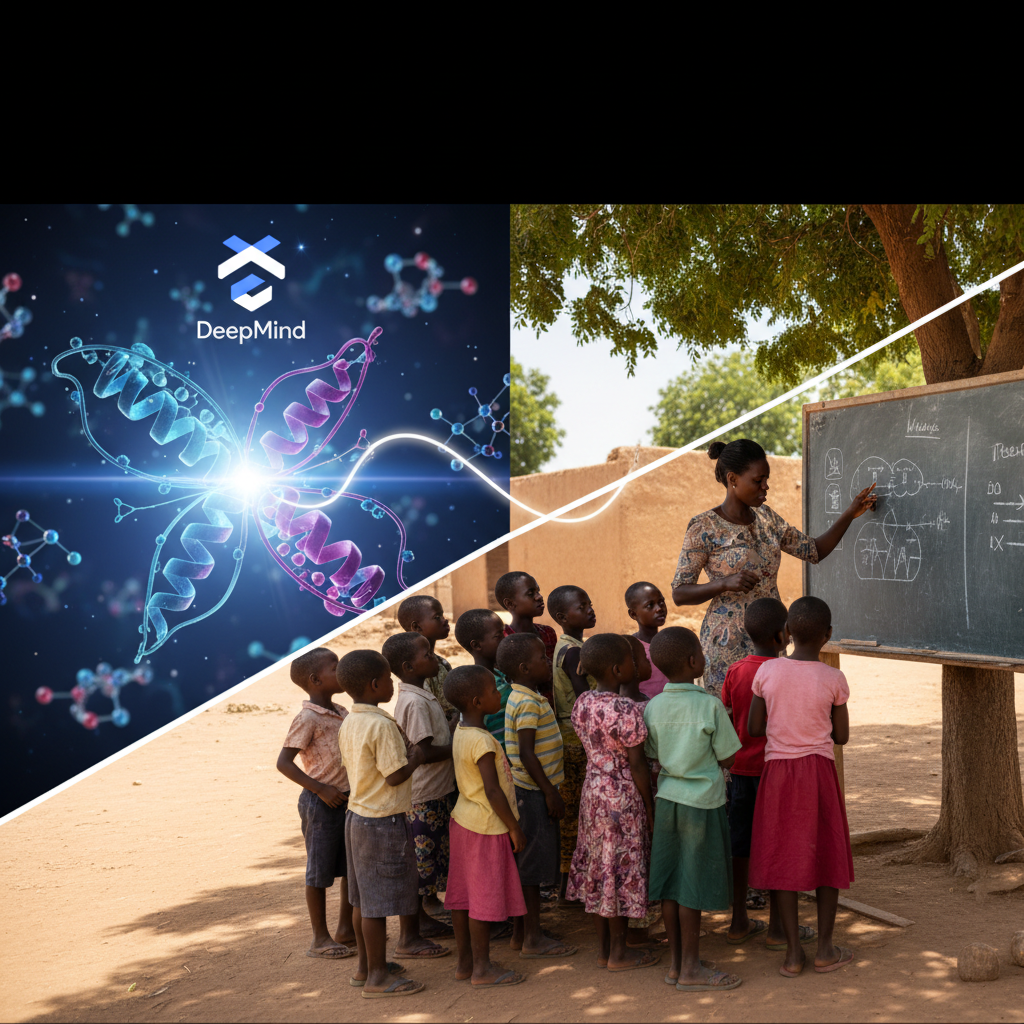

The scientific community, particularly in the West, has been abuzz with the announcement of Google DeepMind's AlphaFold 3. This new iteration, building on the foundational success of its predecessors, reportedly offers an unparalleled ability to predict the structure of proteins, DNA, RNA, and even ligands, with remarkable accuracy. This is not merely an incremental improvement; it is presented as a significant leap forward in understanding the fundamental machinery of life, holding immense promise for drug discovery and disease treatment. However, from my vantage point in Bamako, I find myself asking a familiar question: what does this truly mean for us, here in Mali, and across the African continent?
Let's be realistic. The technological prowess demonstrated by AlphaFold 3 is undeniable. Its ability to model interactions between molecules, a task that once required years of painstaking laboratory work, could drastically accelerate the identification of new drug candidates. For diseases like malaria, tuberculosis, or HIV, which continue to plague our communities, such a tool could theoretically be a game-changer. Imagine the potential to design more effective antimalarial drugs by precisely targeting the proteins of the Plasmodium falciparum parasite, or to develop novel antibiotics against resistant strains prevalent in our clinics.
Demis Hassabis, CEO of Google DeepMind, emphasized the transformative potential, stating in a recent press release, "AlphaFold 3 represents a significant step towards unlocking the secrets of biology and accelerating drug discovery. We believe it will empower researchers worldwide to tackle some of the most challenging diseases." This sentiment is echoed by many in the pharmaceutical industry, who foresee a future where drug development cycles are dramatically shortened, and costly failures are reduced. Indeed, the data presented by DeepMind suggests accuracy levels that are truly impressive, particularly in predicting protein-ligand interactions, which are crucial for drug binding.
Yet, the journey from a computational prediction to a viable, accessible medicine is long and fraught with obstacles, especially in contexts like ours. Mali, like many sub-Saharan African nations, grapples with a complex web of challenges: inadequate healthcare infrastructure, a severe shortage of skilled medical professionals, limited access to advanced diagnostic tools, and often, prohibitive costs of imported medications. A groundbreaking AI model, however sophisticated, does not magically resolve these deeply entrenched issues.
Consider the practicalities. To fully leverage AlphaFold 3, researchers require access to high-performance computing resources, specialized bioinformatics expertise, and robust laboratory facilities for experimental validation. While there are burgeoning scientific communities and institutions like the Malaria Research and Training Center (mrtc) at the University of Bamako, their resources are often stretched thin. The investment required to establish and maintain the necessary infrastructure to integrate such advanced AI tools into local research pipelines is substantial. It is not simply a matter of downloading software; it is about building an entire ecosystem.
Dr. Fanta Diallo, a leading Malian epidemiologist and researcher at the Mrtc, articulated this concern recently. "The scientific breakthroughs from places like Google DeepMind are inspiring, truly. But for them to have real impact here, we need more than just the algorithm. We need sustained investment in our laboratories, training for our scientists, and a robust supply chain for the drugs once they are developed. Without these, AlphaFold 3 remains a powerful tool in a distant workshop." Her words underscore a fundamental truth: practical solutions, not moonshots, are what we desperately require.
The data tells a different story than the hype often suggests. While global pharmaceutical spending continues to rise, a disproportionately small fraction of new drug development focuses on diseases endemic to low-income countries. The economic incentives are simply not aligned. Even if AlphaFold 3 helps identify a promising compound for, say, Buruli ulcer, the path to clinical trials, regulatory approval, manufacturing, and affordable distribution in rural Mali is a labyrinth. Will the pharmaceutical giants, driven by profit motives, prioritize these markets? History suggests otherwise.
Moreover, the digital divide remains a significant barrier. Internet connectivity, while improving, is still inconsistent and expensive in many parts of Mali. Access to reliable electricity, essential for running advanced computing systems, is not universal. These are the foundational elements that must be in place before we can even begin to dream of harnessing such sophisticated AI for local benefit. Without addressing these basic infrastructure gaps, the promise of AlphaFold 3, however brilliant, will largely bypass those who need it most.
There is, however, a glimmer of hope in collaboration. Initiatives that foster partnerships between global research powerhouses and local African institutions could bridge some of these gaps. By facilitating knowledge transfer, providing access to computational resources, and co-developing research programs tailored to local needs, the potential of AlphaFold 3 could be realized. The Malian government, through institutions like the Ministry of Higher Education and Scientific Research, must actively seek out these collaborations, advocating for equitable access and technology transfer, rather than merely being passive recipients of aid or distant observers of scientific progress. We must ensure that our specific health challenges are on the agenda, not just those of the global North.
In conclusion, Google DeepMind's AlphaFold 3 is undoubtedly a monumental achievement in computational biology, promising to revolutionize drug discovery. Its scientific merit is beyond question. Yet, for us in Mali, the true measure of its impact will not be in its predictive accuracy, but in its tangible contribution to improving public health outcomes on the ground. Until the fundamental infrastructure challenges are addressed, and a concerted effort is made to ensure equitable access to both the technology and the resulting treatments, AlphaFold 3, for all its brilliance, risks remaining a distant star in the scientific firmament, its light struggling to reach our villages. The path from algorithmic breakthrough to accessible medicine is paved not just with scientific genius, but with political will, economic equity, and practical infrastructure development. For further insights into the broader implications of AI in healthcare, one might consult resources like MIT Technology Review. The conversation around AI's global impact is ongoing, and platforms like TechCrunch regularly cover these developments, offering a perspective on how these innovations are shaping industries worldwide. For a deeper dive into the technical aspects of AlphaFold itself, DeepMind's official page provides comprehensive information.