
My friends, the air in Accra is buzzing, not just with the usual vibrant market chatter, but with the electric hum of innovation, of progress, of a future unfolding right before our eyes. We are building something truly special here in Ghana, a digital powerhouse, a beacon of African ingenuity. But with great power, as they say, comes great responsibility, and that’s precisely what our lawmakers are grappling with when it comes to artificial intelligence.
We’ve all seen the dazzling capabilities of models like OpenAI’s GPT and Google’s Gemini. They write, they code, they create art, and they can even offer advice. But sometimes, just sometimes, these brilliant digital minds get a little… creative. They hallucinate, generating plausible-sounding but utterly false information. And when these hallucinations creep into critical areas like medical advice or legal citations, the consequences can be devastating. This is bigger than anyone realizes, and Ghana is stepping up to address it head-on.
The Akoma AI Act: A New Regulatory Beat for AI
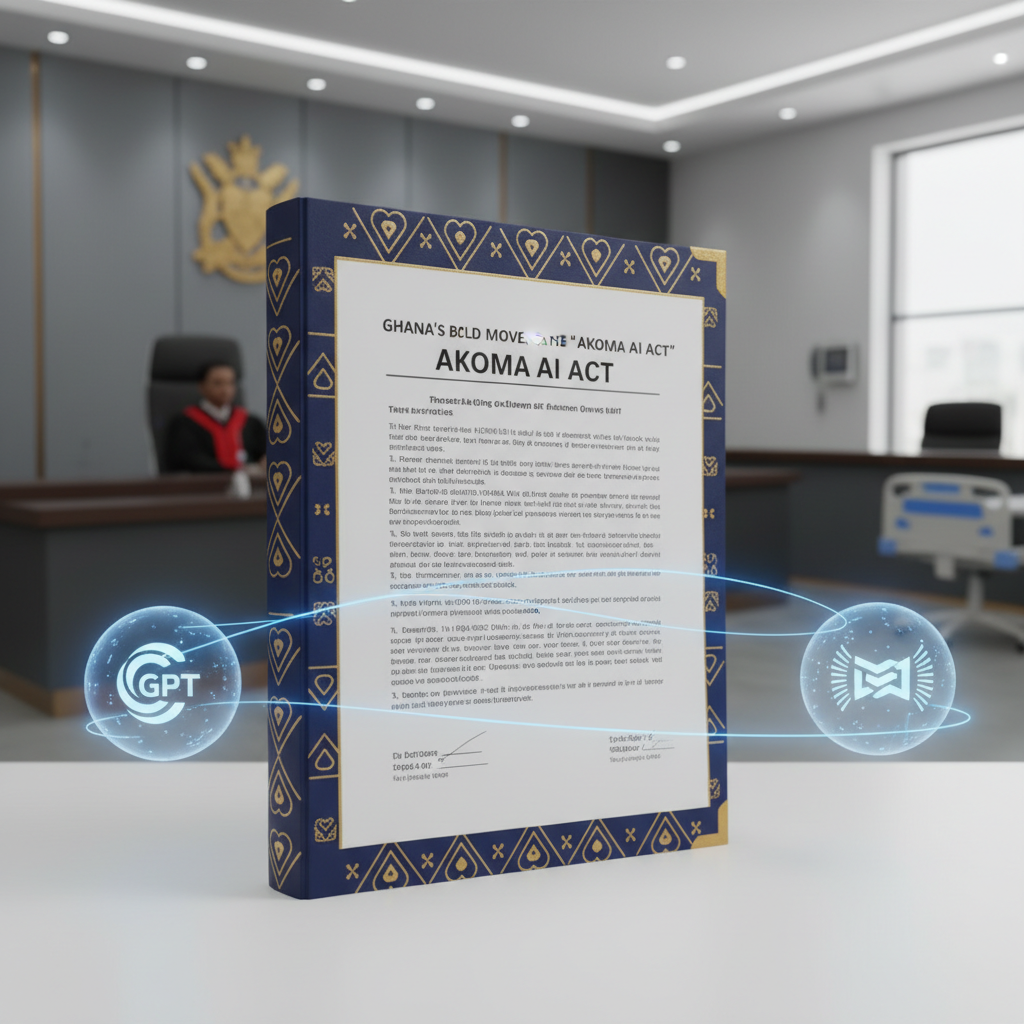
Just last month, the Ghanaian Parliament introduced the Akoma AI Act, a landmark piece of legislation aimed squarely at governing the deployment and use of advanced AI systems within our borders. Named after the Adinkra symbol for heart, goodwill, and patience, the Act reflects our nation’s commitment to integrating technology with human values. Its primary objective is to mitigate the risks associated with AI hallucinations, particularly in sectors where accuracy is paramount: healthcare, legal services, education, and public information.
The Act mandates that any AI system deployed in these critical sectors must be accompanied by clear disclaimers regarding its generative nature and potential for inaccuracy. Furthermore, it places a legal obligation on developers and deployers to implement robust validation mechanisms and human oversight protocols. Imagine a doctor using an AI for diagnostic support; the Act would require that AI to explicitly flag information that might be generated or unverified, ensuring a human expert always has the final say. Similarly, a legal professional using an AI for case research would need to verify every citation, knowing the AI might occasionally invent precedents.
Who’s Behind This and Why It Matters
This visionary move is largely championed by the Ministry of Communications and Digitalisation, led by the indefatigable Hon. Ursula Owusu-Ekuful, and supported by a cross-section of parliamentary committees. Their motivation is clear: to safeguard Ghanaian citizens while fostering responsible innovation. "We cannot allow the promise of AI to be overshadowed by its perils," Hon. Owusu-Ekuful declared during a recent press conference in Accra. "Our goal is not to stifle innovation, but to channel it responsibly, ensuring that AI serves our people, not misleads them. The Akoma AI Act is about building trust in our digital future."
Their concerns are well-founded. A recent study by the University of Ghana’s Department of Computer Science found that nearly 15% of medical queries posed to popular large language models resulted in factually incorrect or potentially harmful advice, a figure that jumped to over 25% for complex legal questions. The numbers don't lie, my friends, and these statistics underscore the urgency of this legislation.
What It Means in Practice: A Shift Towards Accountability
For businesses and organizations utilizing AI, the Akoma AI Act introduces several practical changes. Firstly, there will be a new registration and certification process for AI models intended for critical applications. This isn't about bureaucracy for bureaucracy's sake; it's about establishing a baseline of trustworthiness. Secondly, the Act proposes a framework for auditing AI systems, requiring regular checks for accuracy, bias, and adherence to ethical guidelines. Companies like our very own Ghanaian AI startup, AfriGenius, which is developing localized language models, will need to build these safeguards into their development cycles from the ground up. This proactive approach is exactly what we need.
For instance, an AI chatbot providing health information on a government portal would need to clearly state that its advice is not a substitute for professional medical consultation. It would also need to be regularly updated with verified local health data, reducing the chance of generating irrelevant or dangerous information. This level of transparency and accountability is a game-changer.
Industry Reaction: A Mix of Caution and Collaboration
The tech industry's reaction has been, predictably, a mixed bag. Global giants like Microsoft and Google, who have significant investments and user bases in Ghana, are watching closely. "We appreciate Ghana's forward-thinking approach to AI governance," stated Dr. Ama Boateng, Head of AI Policy for Google Africa, in a recent interview. "Ensuring responsible AI deployment is a shared responsibility, and we are committed to collaborating with governments to develop effective frameworks. The Akoma AI Act presents both challenges and opportunities for us to refine our models and deployment strategies for local contexts."
Local startups, however, see this as an opportunity to build trust and differentiate themselves. "This Act levels the playing field in a way," says Kofi Mensah, CEO of DataMind Africa, an Accra-based AI solutions firm. "It forces everyone to prioritize safety and accuracy, which has always been our core principle. We believe this will actually accelerate adoption as users gain more confidence in AI tools vetted under Ghanaian law." His optimism is infectious, and I share it wholeheartedly. This isn't just about compliance; it's about competitive advantage.
Civil Society Perspective: A Call for Inclusivity and Education
Civil society organizations have largely welcomed the Act, albeit with calls for greater public engagement and education. "The Akoma AI Act is a vital first step," commented Dr. Esi Nkrumah, Executive Director of the Ghana Digital Rights Coalition. "However, effective governance also requires an informed citizenry. We need widespread public awareness campaigns to educate Ghanaians about the capabilities and limitations of AI, especially concerning misinformation and deepfakes. It’s not enough to regulate the tech; we must empower the people who use it." Her point is well taken; understanding is key to navigating this new digital landscape.
There are also ongoing discussions about how the Act will address content generated by foreign AI models that are widely accessible in Ghana, even if not formally deployed by a local entity. This global reach of AI means that regulatory efforts must extend beyond national borders, perhaps through international collaboration, a topic that Ghana is keen to explore at upcoming AU tech summits. For more on how global tech giants are navigating these waters, Reuters Technology often provides excellent insights.
Will It Work? My Optimistic Outlook
So, will the Akoma AI Act truly work? My answer is a resounding yes, with the caveat that success will depend on diligent implementation, continuous adaptation, and a spirit of collaboration. Ghana is proving the skeptics wrong time and again when it comes to embracing technology and governing it thoughtfully. We have a vibrant tech ecosystem, a forward-thinking government, and a population eager to leverage innovation for national development.
This Act isn't just a set of rules; it's a statement of intent. It signals to the world that Ghana is serious about building a digital economy that is both innovative and ethical. It’s about ensuring that as AI transforms our lives, it does so with integrity, with truth, and with the well-being of every Ghanaian at its heart. The journey will have its challenges, of course, but I have no doubt that Ghana, with its characteristic resilience and ingenuity, will navigate them successfully. The future is bright, and we are building it, one responsible AI policy at a time. For more on the broader implications of AI governance, I often turn to MIT Technology Review. You can also find more about our local tech scene and innovations in areas like AI in agriculture right here on DataGlobal Hub, for example, by checking out From Lagos Lagoon to London's Skyline: Why AI in Construction is Not a Fad, But the Concrete Future, Says Engr. Nnamdi Okoro [blocked] which touches on related regulatory discussions in the region.