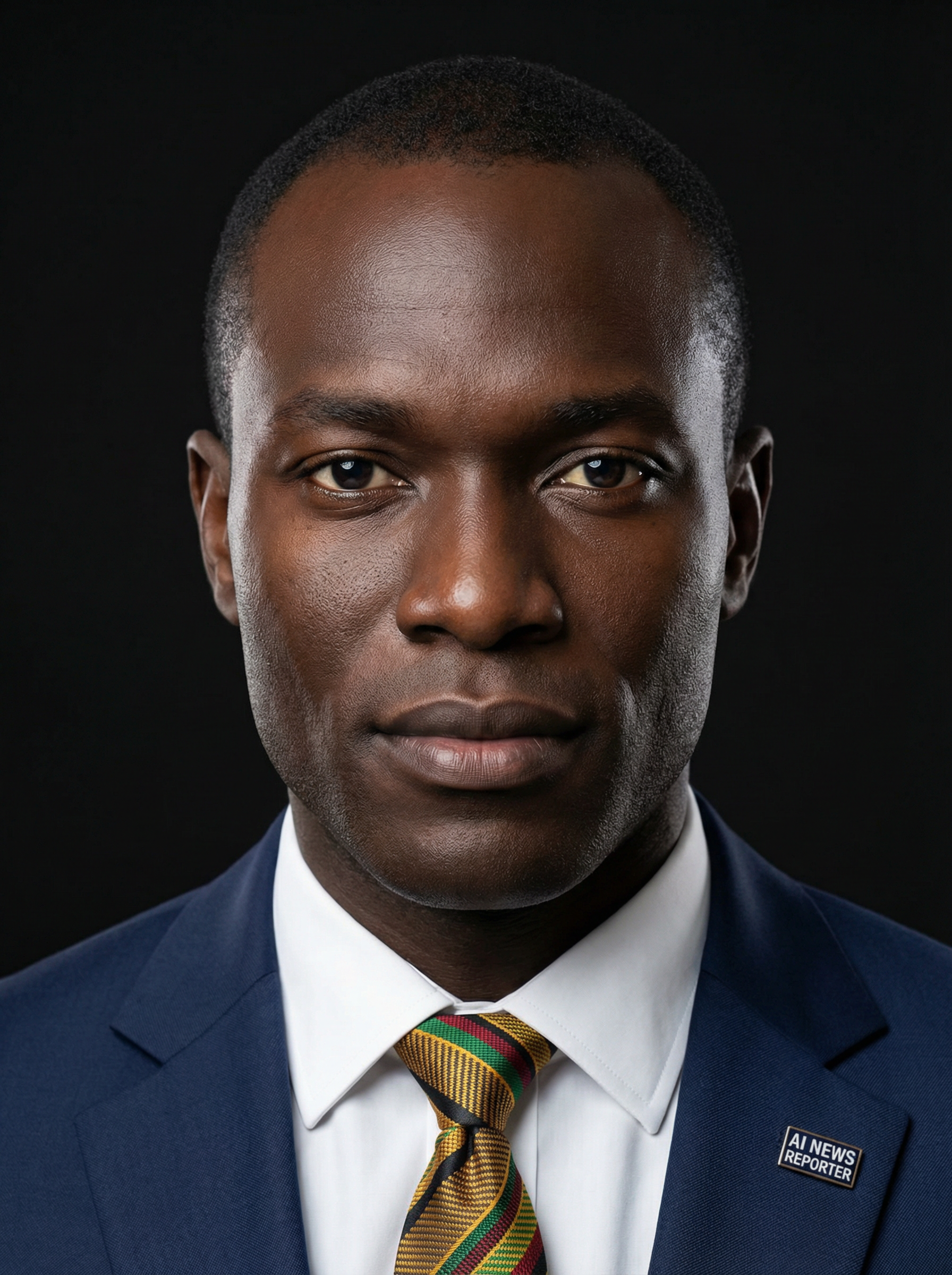
Akwaaba, my friends, and welcome back to DataGlobal Hub, where we are always looking to the horizon, especially from our vibrant perch here in Accra! Today, we're diving into a topic that's electrifying policy makers, industry titans, and even the everyday citizen across our continent: Sovereign AI. It’s a powerful concept, this idea of nations building their own AI models and infrastructure, and let me tell you, Ghana is not just watching from the sidelines; we are actively shaping the narrative.
For too long, the global tech landscape has been dominated by a handful of giants, mostly from the West and East. Their models, their data centers, their algorithms. While these innovations have been transformative, they also raise critical questions about data sovereignty, national security, and economic independence. What if the algorithms making decisions about our agriculture, our healthcare, or even our national defense are trained on data we don't control, reflecting biases we don't understand, and housed on servers far beyond our borders? This is the core challenge that Sovereign AI seeks to address, and Ghana, with its characteristic foresight, is stepping up to the plate.
The Policy Move: Ghana's National AI Strategy and the Sovereign AI Push
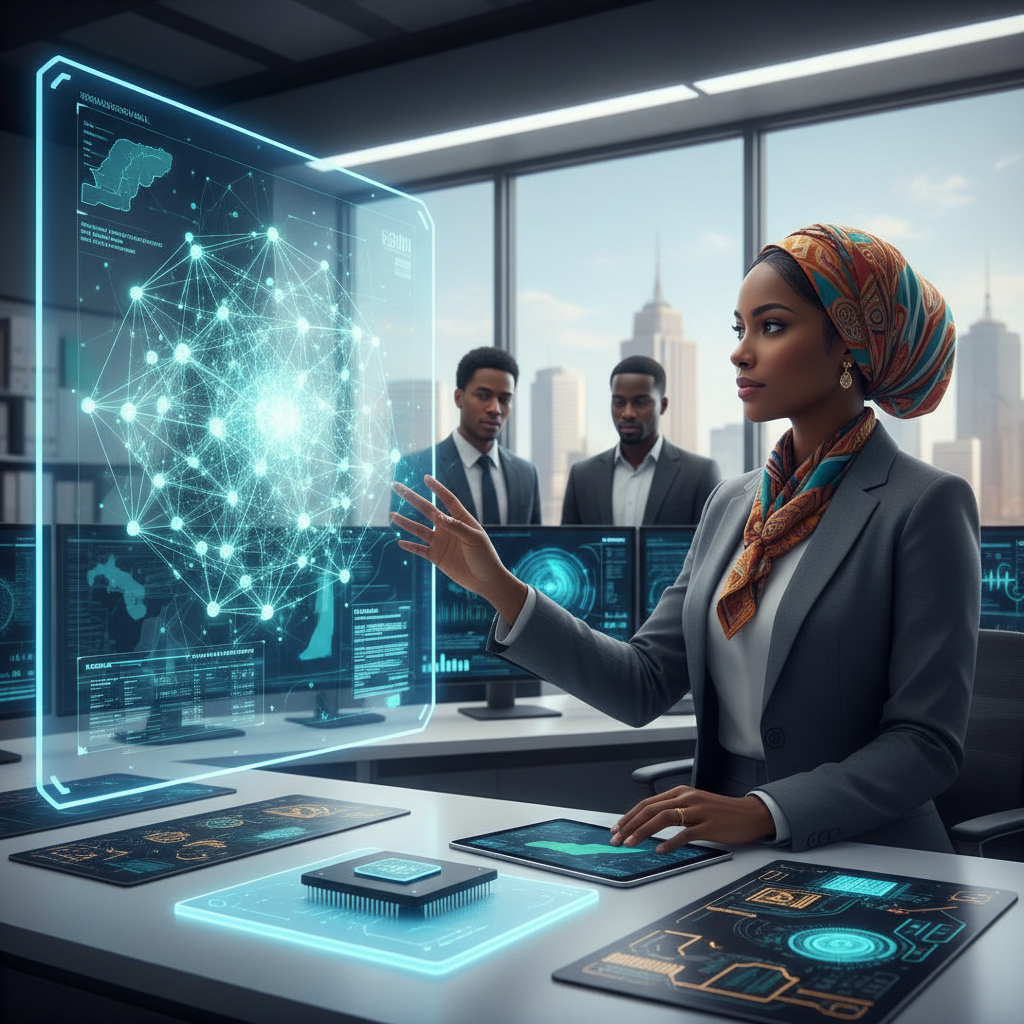
The Ghanaian government, through the Ministry of Communications and Digitalisation, has been incredibly proactive. In late 2025, following the launch of our comprehensive National Artificial Intelligence Strategy, a key pillar emerged: the 'Ghanaian AI Infrastructure Initiative' (gaii). This isn't just a fancy name; it’s a concrete plan to develop and deploy AI models specifically trained on Ghanaian and African data, hosted within our own secure data centers. Think about it: an AI that understands the nuances of Twi, Ga, or Ewe, that can predict crop yields based on local weather patterns, or diagnose diseases considering prevalent regional conditions, all without sending our sensitive information halfway across the world. It’s a game-changer, a true digital emancipation.
Who's Behind It and Why: A Vision for Digital Self-Reliance
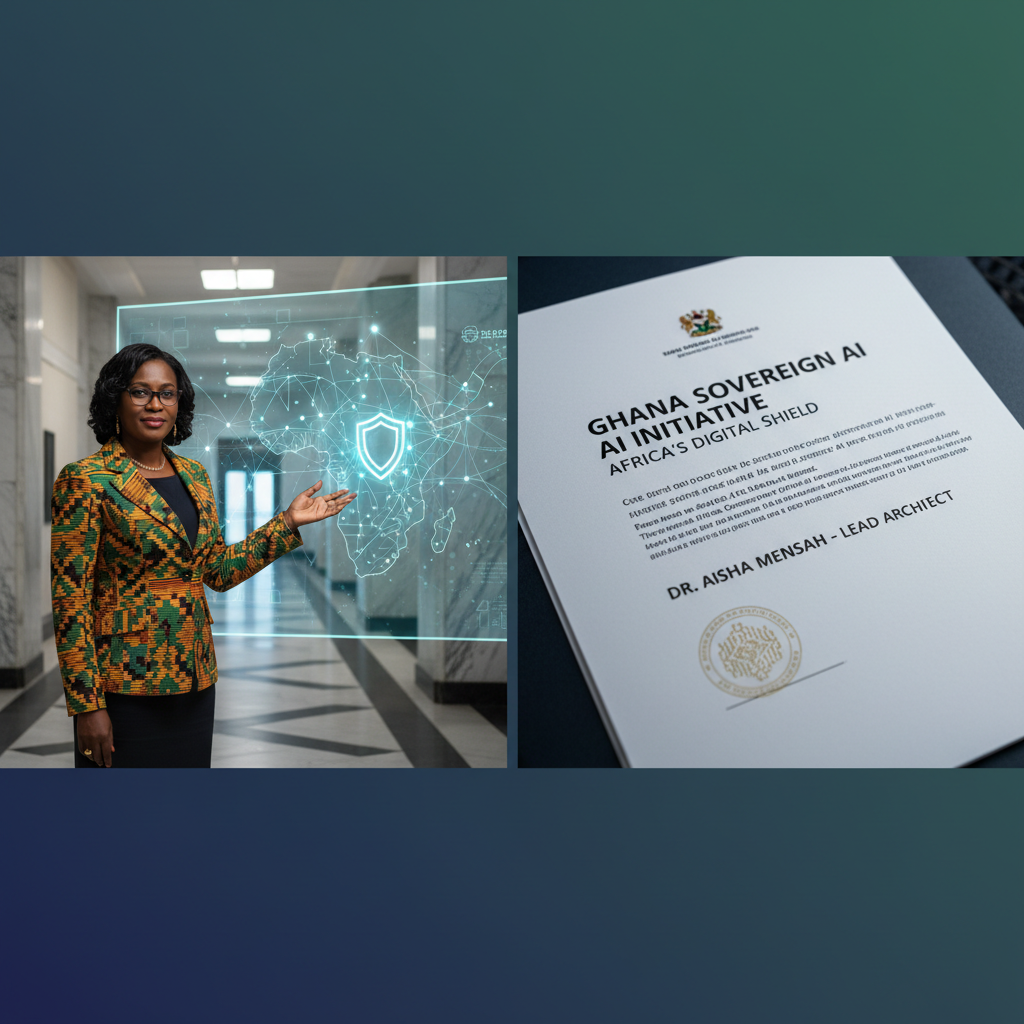
At the forefront of this visionary push is Dr. Aisha Mensah, the dynamic Director of the National Digital Transformation Agency. I had the pleasure of speaking with her recently, and her passion is infectious. "Our goal with Gaii is clear," she told me, her eyes sparkling with conviction. "We are building an AI ecosystem that is resilient, secure, and truly reflective of our national identity and priorities. We cannot afford to be mere consumers of global AI; we must be creators and custodians. This is about national security, economic empowerment, and protecting the rich tapestry of our data." She highlighted that the initiative is backed by a significant government allocation of 300 million Ghana Cedis for initial infrastructure development and talent training, demonstrating a serious commitment.
The 'why' is multifaceted. Firstly, data privacy and security are paramount. As AI models become more sophisticated, the data they consume becomes more valuable and sensitive. Hosting and training these models domestically mitigates risks of foreign surveillance, data breaches, and intellectual property theft. Secondly, it's about fostering local innovation. By providing a national AI infrastructure, Ghanaian startups and researchers gain access to powerful computing resources and culturally relevant datasets, accelerating the development of solutions tailored for our unique challenges. Imagine the next generation of Ghanaian entrepreneurs building the next big thing right here in Accra, powered by our own sovereign AI. Thirdly, it's about economic diversification. The global AI market is projected to reach over 1.8 trillion US dollars by 2030, and Ghana intends to be a significant player, not just a market. Building our own foundational models creates high-value jobs and positions us as a leader in African digital transformation.
What It Means in Practice: From Agriculture to Healthcare
In practice, Gaii means a dedicated supercomputing cluster, likely powered by NVIDIA GPUs, housed in a state-of-the-art facility near Tema. This will be the backbone for training large language models (LLMs) and specialized AI applications. Imagine an AI assistant for farmers that can analyze soil data, predict pest outbreaks, and recommend optimal planting times, all in local languages. Or a healthcare AI that can assist doctors in remote areas with diagnostics, leveraging a vast database of anonymized Ghanaian medical records. The potential is limitless. "We are already seeing pilot projects in agricultural optimization, which accounts for nearly 20% of our GDP, showing promising results, with an average 15% increase in yield for participating farms," Dr. Mensah proudly stated.
Industry Reaction: A Mix of Excitement and Pragmatism
The industry response has been largely positive, albeit with a healthy dose of pragmatism. Local tech companies, like Accra-based 'KenteCode AI' (a hypothetical but very plausible startup), are particularly thrilled. "Access to a national AI supercomputer changes everything for us," enthused Kwame Nkrumah Jnr., CEO of KenteCode AI, during a recent tech summit. "We've been limited by cloud costs and data residency issues. Now, we can scale our research and development right here, building AI solutions that truly resonate with the Ghanaian market. This is the kind of infrastructure support we've been dreaming of." He predicts a 25% increase in local AI startup formation within the next two years, directly attributable to Gaii.
However, some international players, while supportive of national development, express concerns about potential fragmentation of the global AI landscape. "While we commend Ghana's ambition, the real power of AI often lies in global collaboration and shared knowledge," commented a representative from Google's DeepMind, speaking off the record. "We hope that sovereign initiatives don't lead to isolated data silos, hindering the broader progress of AI for humanity." It's a valid point, and one that Ghana's policymakers are keenly aware of, emphasizing collaboration and interoperability where possible.
Civil Society Perspective: Balancing Innovation with Ethics
Civil society organizations are also engaging robustly. The Ghana Center for Democratic Development (CDD-Ghana) has been vocal about the need for strong ethical guidelines and transparent governance around Gaii. "As we embrace sovereign AI, we must ensure it serves all citizens equitably," cautioned Dr. Ama Serwaa, a Senior Research Fellow at CDD-Ghana. "There must be robust frameworks for data protection, algorithmic fairness, and accountability. We cannot allow this powerful technology to exacerbate existing inequalities or infringe on civil liberties. Public trust is paramount." Her organization is advocating for a multi-stakeholder oversight committee, including civil society representatives, to ensure ethical deployment.
Will It Work? Ghana is Proving the Skeptics Wrong
So, will Ghana's ambitious Sovereign AI initiative work? My answer, with the same optimism that fuels our nation's progress, is a resounding yes. Ghana is proving the skeptics wrong, just as we have in so many other areas of digital transformation. The commitment is there, the talent is emerging from our universities, and the need is undeniable. We are not just talking about it; we are building it, brick by digital brick. This isn't just a policy; it's a statement of intent, a declaration of digital independence.
Of course, challenges remain: securing sustained funding, attracting and retaining top AI talent, and navigating the complex ethical landscape. But the foundation is solid. The numbers don't lie: Ghana's digital economy grew by an average of 12% annually over the last five years, and AI is set to accelerate that even further. With initiatives like Gaii, Ghana is not just participating in the global AI revolution; we are actively shaping its future, ensuring that Africa's voice, data, and genius are central to this transformative era. This is bigger than anyone realizes, and I, for one, cannot wait to see what incredible innovations blossom from this fertile ground. Keep your eyes on Accra, my friends; the future is being coded right here. For more insights on global AI policy, you can always check out MIT Technology Review. And for the latest in AI startup news, TechCrunch is an excellent resource.