
The scent of jasmine and the hum of a thousand conversations always greet you in India, a symphony of life that feels both ancient and impossibly new. It is in this dynamic setting that the global tech narrative often finds its most compelling chapters. And right now, everyone is talking about Mark Zuckerberg. Not about his metaverse dreams, which once felt like a grand, digital Taj Mahal in the making, but about his very public, very aggressive pivot to artificial intelligence. It is a strategic shift that has implications far beyond Silicon Valley, reaching right into the heart of India's burgeoning AI ecosystem.
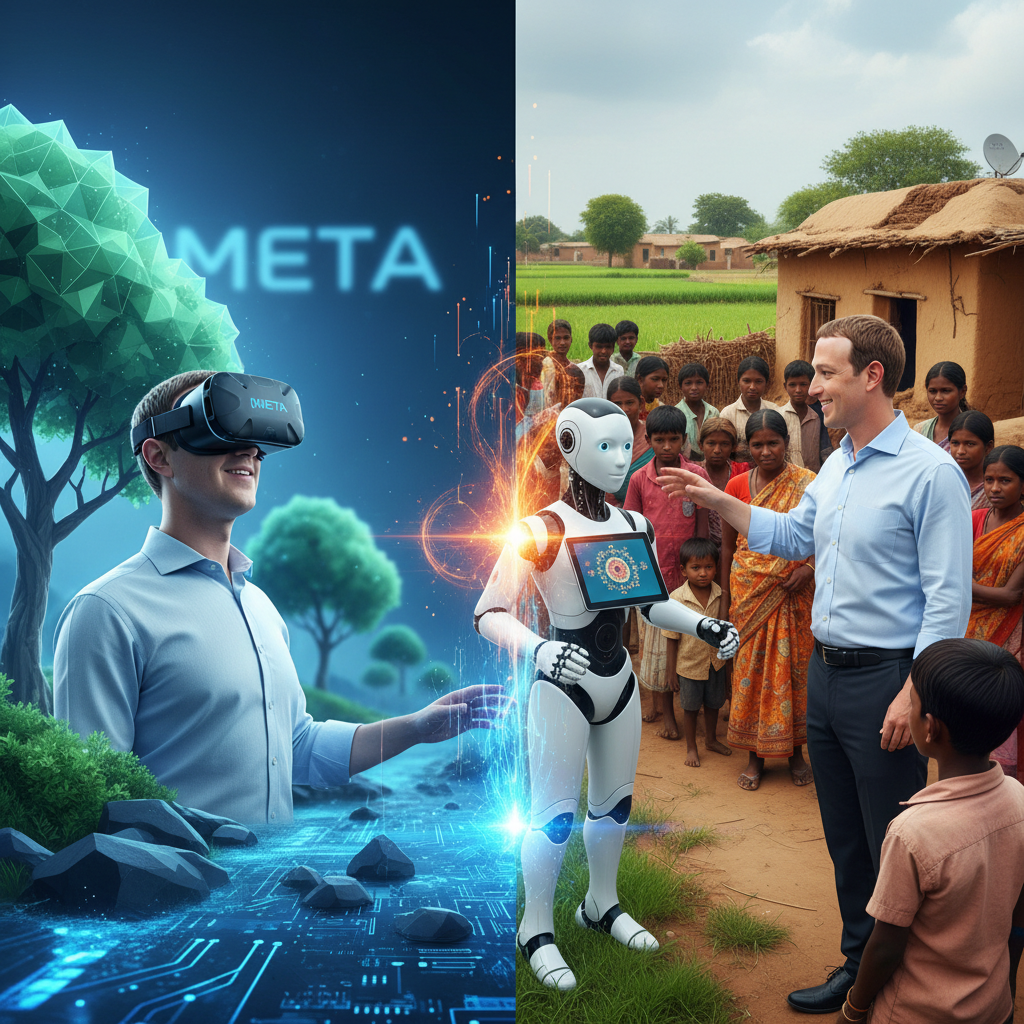
Remember the buzz around Meta's metaverse? Billions poured into a vision of virtual reality where we would work, play, and connect. For a while, it felt like the future was going to be rendered in pixels and haptic feedback. But things change, don't they? The market, ever a fickle deity, has spoken, and it seems the immediate future, the one commanding investor attention and technological breakthroughs, is firmly rooted in AI. Zuckerberg, ever the pragmatist beneath the visionary, has listened. His company, Meta, is now all-in on AI, from foundational models like Llama to consumer-facing applications that promise to redefine our digital interactions. This story will change how you think about how quickly tech giants can adapt, and how deeply those adaptations can influence markets like ours.
For us in India, this pivot is not just a corporate strategy; it is a catalyst. Our nation, with its vast talent pool and insatiable appetite for digital innovation, is a prime battleground and a fertile ground for AI development. Meta's open-source approach with Llama has resonated particularly well here. Unlike proprietary models that often feel like black boxes, Llama's accessibility has empowered countless Indian developers and startups. They are not just consuming AI, they are building with it, adapting it, and, crucially, localizing it.
“Meta’s commitment to open-source AI, particularly with Llama 3, has democratized access to cutting-edge models for our developers,” explains Dr. Anjali Sharma, a leading AI ethicist at the Indian Institute of Technology, Bombay. “This allows for innovation that is culturally relevant and addresses unique Indian challenges, rather than simply importing solutions from the West.” She points out that the ability to fine-tune these models with local languages and datasets is a game-changer for applications in healthcare, education, and agriculture, sectors vital to India's growth.
Indeed, the impact is already visible. In Gujarat's diamond district, AI sparkles differently. Small and medium enterprises, traditionally reliant on skilled human eyes for sorting and grading, are now experimenting with AI-powered vision systems built on open-source frameworks. These systems, often developed by local tech consultancies, are improving efficiency by as much as 15% and reducing human error, allowing artisans to focus on the more intricate, creative aspects of their craft. It is a beautiful blend of tradition and technology, proving that AI is not just for the big players.
Meta’s aggressive pursuit of AI also means a significant investment in infrastructure. The demand for powerful GPUs, primarily from NVIDIA, to train and run these massive models is skyrocketing. This has a direct impact on India, as data centers expand and the need for skilled AI engineers intensifies. Reports suggest that Meta plans to deploy hundreds of thousands of NVIDIA H100 GPUs by the end of 2026, a scale that rivals even the most ambitious projects from OpenAI or Google DeepMind. This massive computational power is the engine driving the AI revolution, and India is keenly aware of the opportunities it presents for local talent and economic growth.
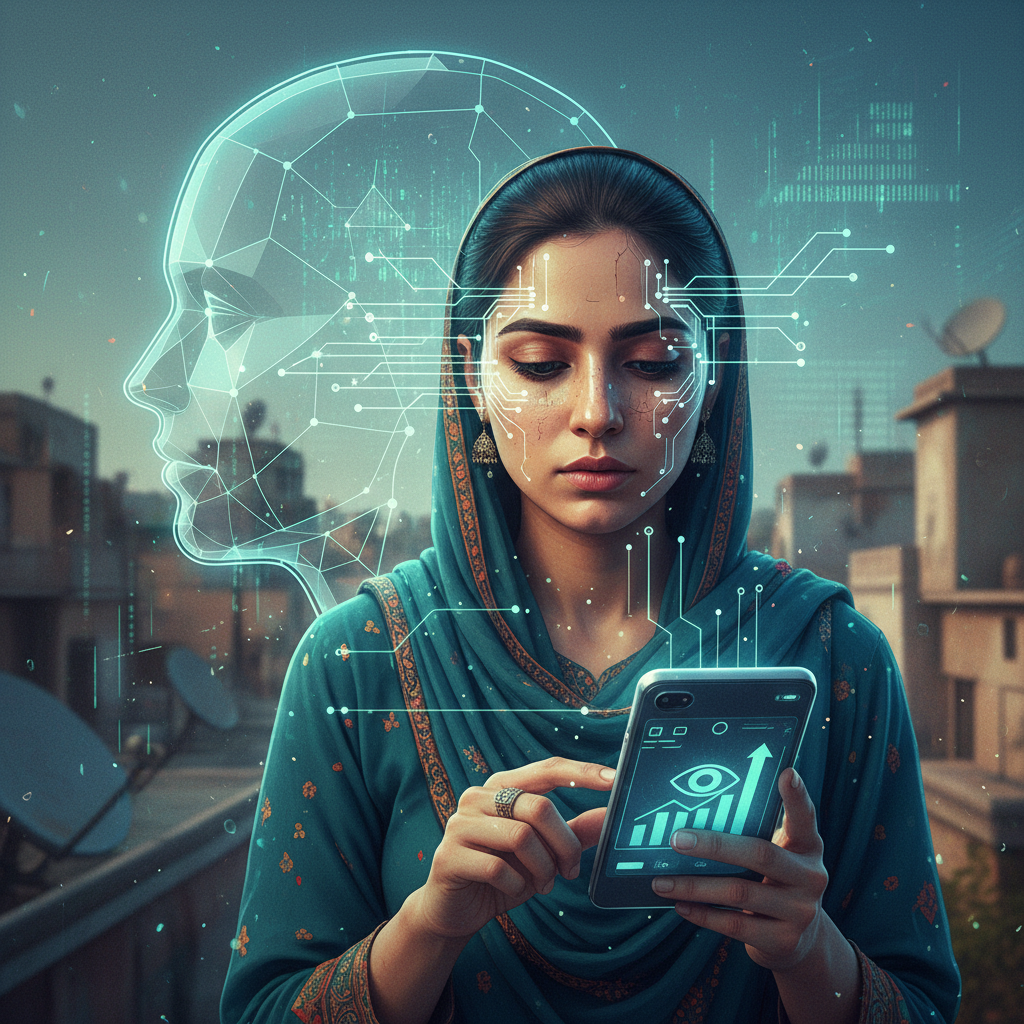
But what does this mean for the average Indian? For many, AI is still an abstract concept, a magic box that powers their smartphones or suggests the next video to watch. However, Meta's pivot promises to make AI more tangible and integrated into daily life. Think about the potential for AI-powered assistants that understand regional dialects, educational tools that adapt to individual learning styles, or even agricultural AI that helps farmers optimize crop yields based on local weather patterns and soil conditions. The possibilities are as vast as the subcontinent itself.
One of the most exciting aspects is the rise of women entrepreneurs in this space. Meet the woman who, just two years ago, was running a small textile business in Surat, and is now leading a team developing AI solutions for quality control in fabric manufacturing. Her name is Priya Singh, and her startup, 'ThreadSense AI,' uses Meta's Llama models, fine-tuned with massive datasets of fabric patterns and defect images, to identify flaws with remarkable accuracy. “I saw a problem, and I saw AI as the solution,” Priya tells me, her eyes bright with determination. “Meta’s open approach meant I didn’t need a huge budget to start building. It leveled the playing field for someone like me.” Her company has already secured a seed round of 2 million USD, a testament to the power of accessible AI.
However, this rapid acceleration also brings its own set of challenges. The ethical considerations around AI, particularly in a diverse country like India, are paramount. Bias in datasets, privacy concerns, and the potential for job displacement are conversations that need to happen now. “We must ensure that as we embrace these powerful AI tools, we do so responsibly,” cautions Professor Rajesh Kumar, a data privacy expert at the National Law University, Delhi. “The speed of innovation from companies like Meta is breathtaking, but regulation and ethical frameworks must evolve just as quickly to protect our citizens and ensure equitable access.”
Meta is not alone in its AI ambitions in India. Google continues to push its Gemini models, Microsoft is integrating Copilot into every facet of its ecosystem, and local giants are also making significant strides. The competition is fierce, and India is a crucial market for all of them. The sheer volume of data, the diversity of languages, and the unique socio-economic landscape make India an unparalleled laboratory for AI development and deployment. According to a recent report by Reuters, India's AI market is projected to grow at a Cagr of over 25% for the next five years, reaching an estimated 20 billion USD by 2030.
Zuckerberg's pivot is not merely a course correction; it is a full-throttle embrace of what he clearly sees as the next frontier. The metaverse, for now, seems relegated to a longer-term vision, while AI is the immediate, tangible future. For India, this means more investment, more innovation, and more opportunities to shape the global AI narrative. It is a future where technology is not just imported, but truly made in India, for India, and for the world. The journey from virtual worlds to village AI is just beginning, and I, for one, am excited to see where it takes us. For more insights into how global tech trends are impacting local economies, you might find this article on Iceland's Cold Logic: Why Meta's Llama Might Just Outlast OpenAI in the Open AI Race [blocked] interesting, as it delves into Meta's Llama strategy from a different perspective. Meanwhile, the rapid pace of AI development continues to be a hot topic, with many new breakthroughs being shared on platforms like TechCrunch.
As we look ahead, the strategic calculus for Meta, and indeed for all major tech players, is clear: AI is not just a feature, it is the foundation. And in India, with its billion-plus dreams and boundless potential, that foundation is being laid with both global vision and local ingenuity. It is a fascinating time to be alive, watching this digital transformation unfold right before our eyes, touching every aspect of our lives, from the biggest cities to the smallest villages.