The global artificial intelligence landscape has been irrevocably altered by strategic alliances and colossal investments. Among these, Microsoft's multi-billion dollar commitment to OpenAI stands as a monumental declaration of intent, a partnership that has fundamentally redefined the competitive playing field. With an estimated $13 billion poured into the venture, the question echoes across boardrooms and research labs worldwide: Is this audacious bet truly paying off, particularly for nations like Japan, renowned for their precision engineering and technological foresight?
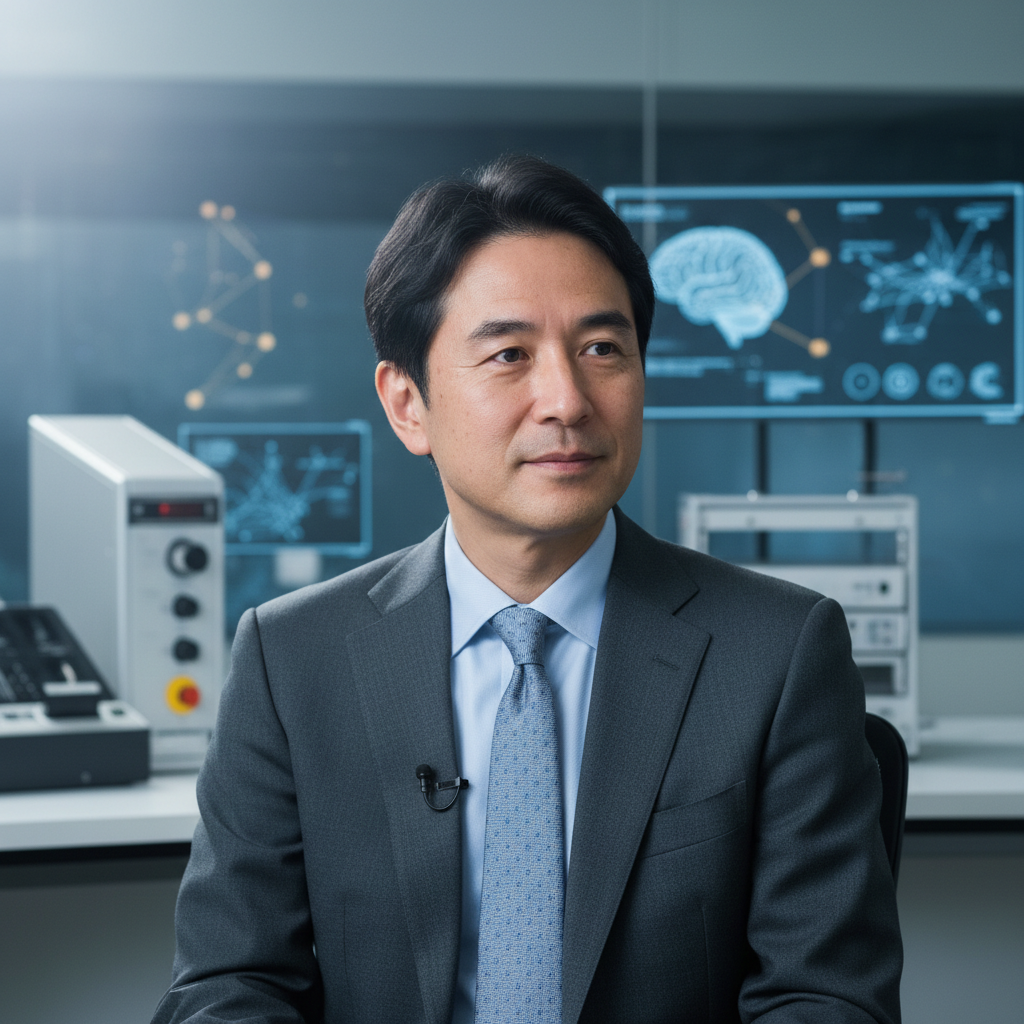
To explore this complex question, I recently had the privilege of speaking with Dr. Yutaka Matsuo, a luminary in Japan's AI research community. Dr. Matsuo, a professor at the University of Tokyo and the director of the SoftBank Group's AI Research Institute, has been at the forefront of Japan's AI development for decades. His insights offer a uniquely Japanese perspective on the global AI race and the specific implications of the Microsoft-OpenAI synergy.
Our conversation began in his quiet, yet bustling, laboratory at the University of Tokyo, a space where the meticulous pursuit of knowledge mirrors the precision that Japan has been quietly building into its technological infrastructure for generations. Dr. Matsuo, known for his calm demeanor and profound analytical capabilities, articulated his views with characteristic clarity. "The scale of Microsoft's investment in OpenAI is not merely financial; it represents a profound strategic alignment of resources and vision," he explained. "It has accelerated the development of large language models and generative AI capabilities at an unprecedented pace, setting a new benchmark for the industry."
Dr. Matsuo's background is deeply rooted in the foundations of AI. After earning his Ph.D. from the University of Tokyo, he dedicated himself to the study of artificial intelligence, particularly in the areas of machine learning and deep learning. He is a co-founder of the Japan Deep Learning Association (jdla), an organization pivotal in fostering AI talent and industry collaboration within Japan. His work has consistently emphasized the practical application of AI, moving beyond theoretical constructs to tangible, impactful solutions. This pragmatic approach is a hallmark of Japanese innovation, where theoretical brilliance is often paired with an unwavering commitment to real-world utility.
When discussing the payoff of Microsoft's investment, Dr. Matsuo highlighted the rapid commercialization and integration of OpenAI's technologies into Microsoft's vast product ecosystem. "We have seen OpenAI's models, particularly GPT, being seamlessly integrated into Microsoft Azure, Copilot, and even enterprise solutions," he noted. "This rapid deployment has democratized access to advanced AI capabilities for businesses globally, including many here in Japan. The engineering is remarkable, allowing complex models to be utilized by a broader audience." This integration, he suggested, provides a clear return on investment through enhanced product offerings and increased cloud consumption.
However, Dr. Matsuo also presented a nuanced view, particularly concerning Japan's position. While acknowledging the global benefits, he stressed the importance of indigenous AI development. "While we benefit from the advancements made by global leaders, Japan must also cultivate its own distinctive strengths," he stated. "Our focus on robotics, industrial automation, and highly specialized manufacturing presents unique opportunities for AI application. We are not simply consumers of global AI; we are also creators, especially in areas requiring extreme precision and reliability."
He pointed to Japan's long history of automation and robotics, a legacy that provides a fertile ground for AI innovation. The integration of AI into industrial robots, for instance, promises to revolutionize manufacturing processes, making them more efficient, adaptable, and less prone to errors. "Precision matters immensely in these sectors," Dr. Matsuo emphasized, "and AI can elevate this precision to levels previously unattainable." He believes that while large language models are powerful, Japan's niche might lie in more embodied AI, intelligent systems that interact physically with the world, a domain where Japanese expertise is globally recognized.
Dr. Matsuo has been a vocal advocate for strengthening Japan's AI talent pool and fostering an ecosystem that encourages startups and research. He has publicly stated the necessity for Japan to invest more in fundamental AI research and to create an environment where researchers can compete on a global scale. "To truly thrive, Japan needs to nurture its own AI champions, companies and research institutions that can contribute original breakthroughs, not just adapt existing technologies," he once remarked in a public forum. This sentiment underscores a broader national strategy to ensure Japan remains a significant player in the global technology arena.
The conversation naturally shifted to the future. Dr. Matsuo envisions a future where AI is not merely a tool but a pervasive intelligence that enhances human capabilities across all sectors, from healthcare to infrastructure. He is particularly optimistic about AI's potential in solving societal challenges, such as an aging population, a concern acutely felt in Japan. "AI, when applied thoughtfully, can augment our workforce, improve medical diagnostics, and even personalize care for the elderly," he mused. "This is where the true value of AI will be realized, beyond mere economic returns."
He also touched upon the ethical considerations surrounding powerful AI models, a topic that has gained significant traction globally. "As AI becomes more capable, the ethical frameworks governing its development and deployment become paramount," Dr. Matsuo asserted. "Transparency, fairness, and accountability are not just buzzwords; they are foundational principles that must guide our progress. Japan, with its emphasis on harmony and societal well-being, can contribute significantly to these global discussions."
Microsoft's investment in OpenAI has undeniably accelerated the AI revolution, making advanced capabilities accessible and pushing the boundaries of what is possible. For Japan, while benefiting from these global advancements, the path forward, as articulated by Dr. Matsuo, involves a dual strategy: judicious adoption of global innovations coupled with a robust, distinctive domestic AI agenda. The payoff for Microsoft is evident in market capitalization and product integration, but for the world, and especially for Japan, the true dividends will be measured in the societal impact, the new industries created, and the complex problems solved with unparalleled precision. The journey of AI is long, and Japan, with its deep-rooted commitment to craftsmanship and innovation, is poised to make its unique mark. For more insights into the broader AI landscape, one might consult Reuters' technology section or MIT Technology Review for in-depth analyses.