
I remember my grandmother, Gogo Thembi, battling with her diabetes medication. It was a constant dance of adjustments, side effects, and the fear that what worked for one person might not work for her. She lived in Gugulethu, a vibrant community near Cape Town, where access to specialized care was often a luxury, not a right. Her story, like countless others across our continent, highlights a fundamental truth about medicine: we are not all built the same. Our bodies, our genes, our environments, they are a tapestry of unique threads. Yet, for too long, healthcare has operated on a 'one-size-fits-all' model, a broad brushstroke approach that leaves too many behind.
But what if that was about to change, fundamentally and irrevocably, in the next five to ten years? What if the future of medicine was not about averages, but about you, specifically you, down to the very blueprint of your DNA? This isn't just a tech story because it's a justice story, a story of equity and access that could redefine health outcomes for millions, especially here in Africa.
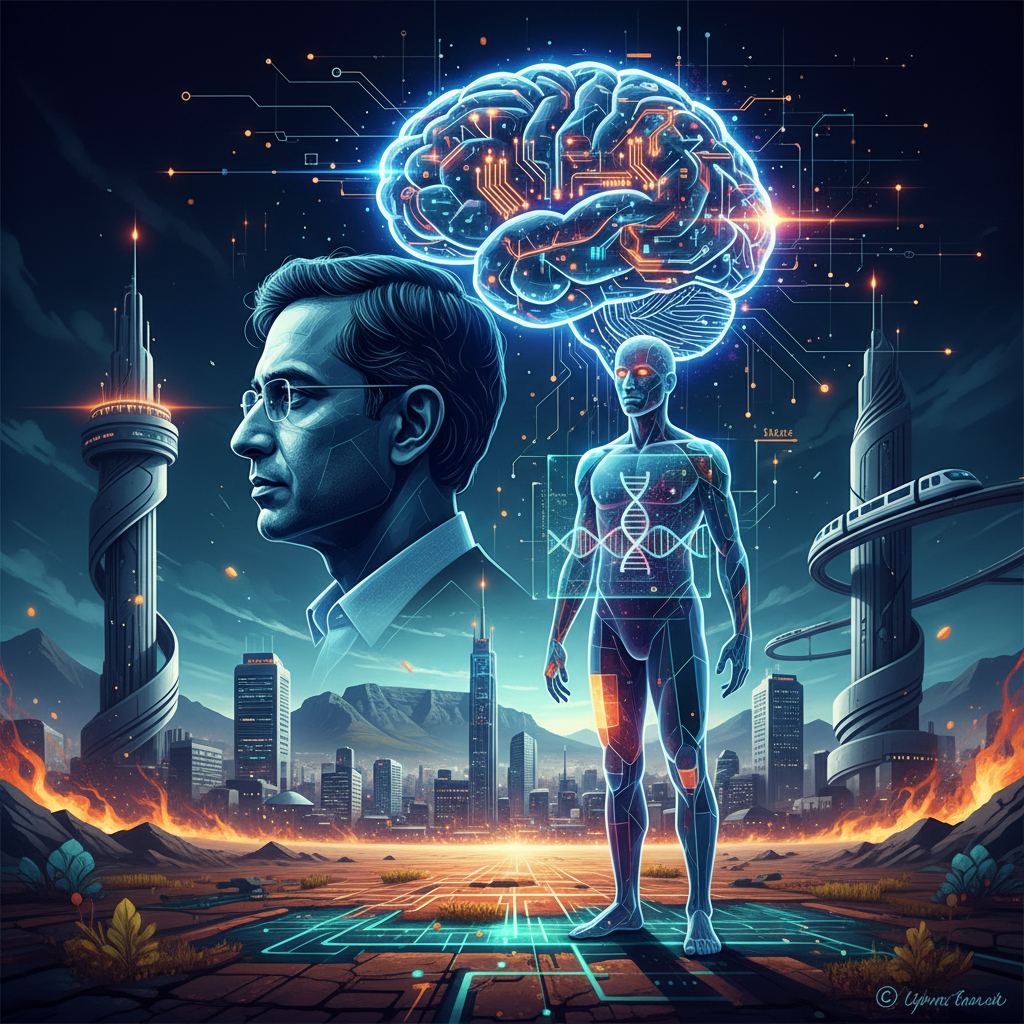
We are on the cusp of an era where AI-powered personalized medicine, treatments tailored to your DNA, will transform how we prevent, diagnose, and treat disease. Imagine a future where a simple genetic test, analyzed by sophisticated AI models from companies like Google DeepMind or NVIDIA, can predict your predisposition to certain conditions years in advance. It could recommend lifestyle changes that are precisely right for your genetic makeup, not just general advice. When illness strikes, the AI could sift through millions of drug compounds and clinical trial data points, cross-referencing them with your unique genetic profile, to identify the exact treatment most likely to succeed, with the fewest side effects.
A Glimpse into 2030: The Khayelitsha Health Hub
Fast forward to 2030. Picture the Khayelitsha Health Hub, a bustling, state-of-the-art facility in one of Cape Town's largest townships. It doesn't look like a traditional hospital. Instead, it's a network of smaller, community-integrated clinics, all connected to a central AI diagnostics lab. A young woman, Nomusa, visits the hub for her routine check-up. She provides a saliva sample, and within hours, an AI system, powered by a localized version of Google DeepMind's AlphaFold, has analyzed her genomic data. It flags a heightened genetic risk for a particular type of autoimmune disease, one that often goes undiagnosed for years in its early stages. The system doesn't just identify the risk, it suggests a personalized preventative nutritional plan, specific exercise routines, and a schedule for targeted, non-invasive screenings. This isn't just about treating sickness, it's about optimizing wellness before disease takes hold.
When Nomusa's elderly father, Thabo, is diagnosed with a complex form of cancer, the AI steps in again. His tumor's genetic markers are sequenced, and the data is fed into a powerful NVIDIA GPU-accelerated platform. The AI identifies a specific combination of existing therapies that, based on his unique genetic profile and the tumor's mutations, has a 70 percent higher success rate than the standard protocol. It even suggests a novel drug combination currently in late-stage trials, connecting him with a clinical research program run by a South African biotech firm collaborating with global pharmaceutical giants. This level of precision, this hope, was unimaginable just a few years prior.
How We Get There From Today: Milestones and Momentum
This future isn't science fiction; it's an extrapolation of current trends. The foundations are being laid right now. The first key milestone is the dramatic reduction in the cost and time of genomic sequencing. In 2003, sequencing the first human genome cost billions of dollars and took years. Today, it costs a few hundred dollars and takes days, sometimes hours. Within five years, we will see this drop to under 50 dollars, making it accessible for routine medical practice.
Secondly, the sophistication of AI models, particularly in bioinformatics and drug discovery, is accelerating at an unprecedented pace. Companies like Google DeepMind are already revolutionizing protein folding with AlphaFold, a critical step in understanding disease mechanisms and designing new drugs. MIT Technology Review has highlighted how these advances are speeding up research pipelines. We will see AI models become adept at integrating diverse data sets: genomic, proteomic, metabolomic, clinical, and even environmental data, to create a holistic 'digital twin' of each patient.
Thirdly, infrastructure development is crucial. While the digital divide remains a challenge, the expansion of mobile networks and cloud computing, even in remote areas, is creating the backbone for data transmission and processing. South African initiatives like the National Integrated Health Information System (nihis) are working towards digitizing health records, though progress needs to be faster and more equitable.
Who Wins and Who Loses? The Equity Question
Here's the thing nobody's talking about enough: while the potential for personalized medicine is immense, the risk of exacerbating existing health inequalities is equally significant. Who will truly benefit from these tailored treatments? Will it only be those in Sandton, or will it reach the rural clinics of Limpopo? The global North, with its established research institutions and deep pockets, is already investing heavily. Without deliberate, equitable strategies, Africa could once again find itself on the receiving end of technologies designed elsewhere, without local context or affordability.
We need to ensure that the datasets training these powerful AI models are diverse and representative of African populations. If the AI is trained predominantly on European or East Asian genomes, its efficacy for African patients will be compromised. This isn't just about fairness; it's about scientific accuracy. Institutions like the African Centre of Excellence for Genomics of Infectious Diseases (acegid) are doing vital work in this space, but they need far more support and collaboration from global tech giants.
What Readers Should Do Now: A Call to Action
For us in South Africa, and across the continent, this isn't a passive future to be observed. It's a future we must actively shape. Governments must prioritize investment in digital health infrastructure and genomic research. Policy makers need to craft ethical guidelines for data privacy and equitable access to these advanced treatments. Reuters often covers the global policy debates around AI in healthcare, and we must ensure our voices are heard in these discussions.
Our local startups, the innovators in places like Silicon Cape and Jozi's Tshimologong Precinct, need to be empowered to build AI solutions tailored to our unique health challenges, from tuberculosis to HIV and non-communicable diseases. We need more women in Stem, more young people inspired to pursue careers in bioinformatics and AI, ensuring that the next generation of personalized medicine is built by us, for us. Let that sink in.
The promise of AI-powered personalized medicine is not just about extending lives, it's about improving the quality of those lives, reducing suffering, and fostering a healthier, more productive society. It offers a path to truly embody the spirit of Ubuntu: 'I am because we are.' If we approach this revolution with intention, with a deep commitment to justice and community, then the future of health in Africa could be brighter than we've ever dared to imagine.