The Sahara is vast, but the data flowing across it is vaster, and sometimes, it takes a fresh perspective to truly make sense of it all. For years, the AI world has been grappling with a fundamental tension: the raw power of neural networks versus the logical clarity of symbolic AI. Neural networks, the engines behind our large language models, are incredible pattern matchers, but they often operate as inscrutable black boxes. Symbolic AI, on the other hand, excels at reasoning and understanding rules, but struggles with the messy, ambiguous data of the real world. This dichotomy has been a persistent challenge, limiting AI's ability to truly understand and explain its decisions.
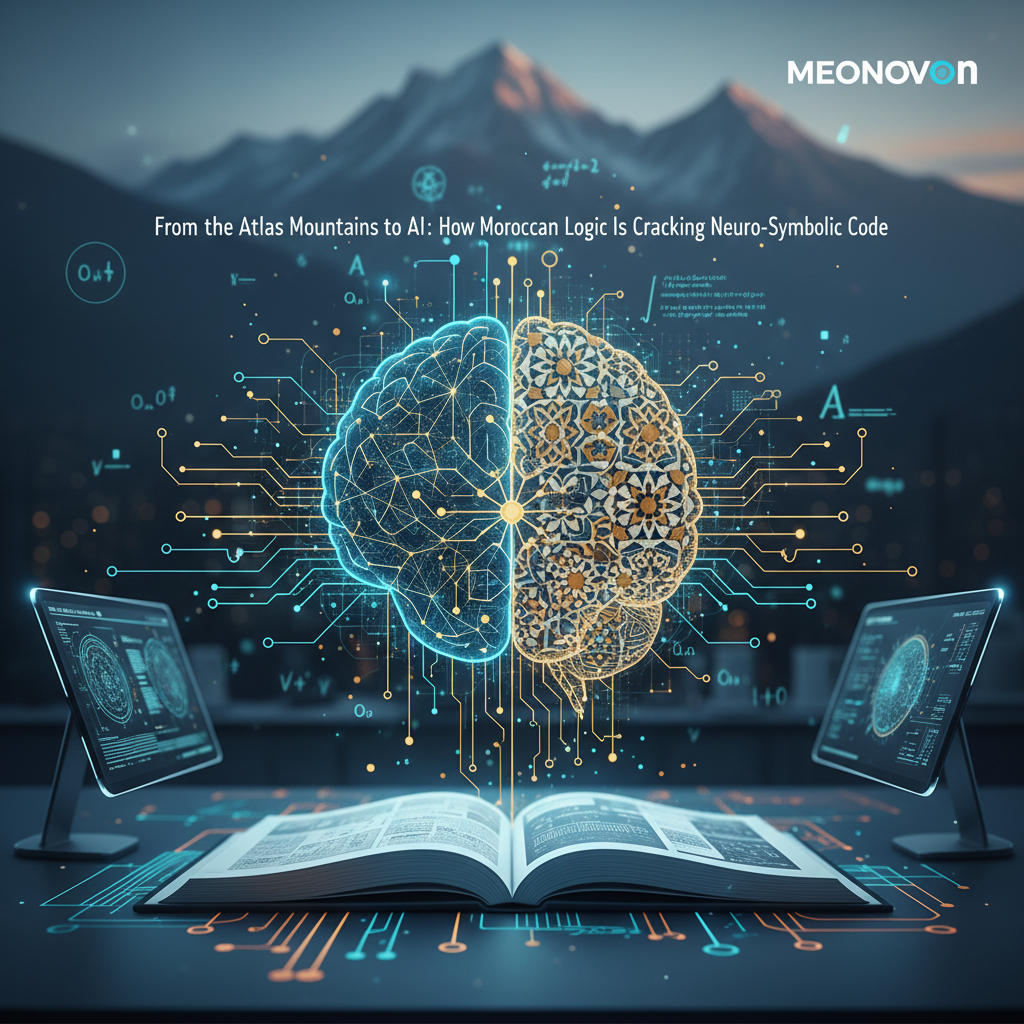
Then came the 'Al-Ghazali Protocol,' a term now whispered with reverence in AI research circles. This isn't just another incremental step; it's a profound leap. Researchers at the Institut National des Postes et Télécommunications (inpt) in Rabat, in collaboration with the French National Centre for Scientific Research (cnrs) and Université Mohammed V, have unveiled a hybrid neuro-symbolic architecture that doesn't just combine these two paradigms, it deeply integrates them. Imagine an AI that not only recognizes a cat in a picture but can also explain, in human-understandable terms, why it's a cat, based on a set of logical rules about feline anatomy and behavior. This is the promise of the Al-Ghazali Protocol.
The Breakthrough in Plain Language: Bridging Intuition and Logic
At its core, the Al-Ghazali Protocol allows neural networks to learn symbolic representations from raw data, and then use those symbols for logical reasoning, all while feeding the results back to refine the neural network's understanding. Think of it like this: a child learns to identify a chair by seeing many examples, an intuitive, neural process. But then, they also learn the definition of a chair: something with a seat, legs, and a back, designed for sitting. This is symbolic logic. The Al-Ghazali Protocol enables AI to do both simultaneously, creating a feedback loop where intuition informs logic, and logic refines intuition. This makes AI not only more accurate but also more transparent and auditable, a critical step towards trustworthy AI.
"For too long, we've had to choose between powerful but opaque systems and transparent but brittle ones," explains Dr. Fatima Zahra El-Malki, lead researcher at INPT's AI Lab. "The Al-Ghazali Protocol, named after the great Islamic philosopher who championed logic and reason, offers a third way. It's about building AI that can not only predict but also explain its predictions, making it invaluable for high-stakes applications like medical diagnostics or legal reasoning." Her team's work, detailed in a recent preprint on arXiv, has sent ripples through the global AI community.
Why It Matters: Beyond the Black Box
The implications of this breakthrough are immense, especially for regions like Morocco and the broader African continent. Currently, many advanced AI systems are black boxes, meaning we don't fully understand how they arrive at their conclusions. This lack of transparency is a major hurdle for adoption in critical sectors where accountability is paramount. Imagine an AI system recommending a specific treatment for a rare disease. Without understanding its reasoning, doctors would be hesitant to trust it. The Al-Ghazali Protocol changes this equation, offering a pathway to explainable AI, or XAI.
This isn't just an academic exercise. The global market for explainable AI is projected to reach over $20 billion by 2030, according to a report by Grand View Research. Morocco, with its burgeoning tech ecosystem and strategic location, is uniquely positioned to leverage this. "Morocco sits at the crossroads of Africa, Europe, and the Arab world and that's our AI superpower," states Youssef El-Hajjam, CEO of Casablanca-based AI startup, DataMind Africa. "This research means we can build AI solutions tailored for our specific contexts, like optimizing agricultural yields in arid regions or improving urban mobility in bustling cities, with a level of trust and interpretability that was previously impossible."
The Technical Details: A Dance Between Networks and Knowledge Graphs
The Al-Ghazali Protocol achieves its hybrid nature through several ingenious components. It employs a novel 'Symbolic Extraction Module' that identifies and extracts logical predicates and entities from the latent space of a deep neural network. These extracted symbols then populate a dynamic knowledge graph, which serves as the symbolic reasoning engine. A 'Reasoning Feedback Loop' then uses the conclusions drawn from the knowledge graph to generate symbolic constraints that guide and refine the training of the neural network. This iterative process ensures that the neural network's pattern recognition aligns with logical consistency.
For example, in an autonomous driving scenario, a neural network might detect a pedestrian. The Symbolic Extraction Module would then infer symbolic facts like 'object_is_pedestrian(X)' and 'location(X, Y, Z)'. The knowledge graph, pre-populated with rules like 'if object_is_pedestrian(X) and location(X, near_road) then action_is_slow_down', would then trigger the 'slow_down' action. Crucially, this action is then fed back to the neural network, reinforcing the connection between visual input, symbolic understanding, and appropriate action. This makes the system far more robust to adversarial attacks and out-of-distribution data, as the logical layer acts as a sanity check.
Who Did the Research: A Franco-Moroccan Collaboration
The Al-Ghazali Protocol is the fruit of a multi-year collaboration between INPT's AI Lab in Rabat, led by Dr. El-Malki, and the Laboratoire d'Informatique de Paris Nord (lipn) at Cnrs, spearheaded by Professor Jean-Luc Dubois. The project received significant funding from the Moroccan Ministry of Industry and Trade, as well as grants from the European Union's Horizon Europe program, underscoring the international recognition of Morocco's growing AI prowess. The team comprised a diverse group of researchers, including PhD students from both institutions, enriching the project with varied perspectives and expertise.
"This partnership exemplifies the power of international scientific cooperation," notes Professor Dubois. "Morocco's unique blend of cultural heritage, linguistic diversity, and a rapidly developing tech infrastructure provided an ideal environment for this kind of groundbreaking research. The talent pool here is exceptional, and their insights into contextual reasoning have been invaluable." This collaboration also highlights the increasing importance of Francophone AI research, often overlooked by the Anglophone-dominated tech media, as we explored in our recent article on Francophone tech [blocked].
Implications and Next Steps: A Future Built on Trust
The immediate implications are transformative. In healthcare, diagnostic AI systems could not only identify diseases with high accuracy but also provide doctors with a clear, logical explanation for their findings, citing specific symptoms and medical rules. In finance, fraud detection systems could explain why a transaction is flagged, reducing false positives and improving customer trust. For industrial applications, particularly in Morocco's burgeoning automotive sector, neuro-symbolic AI could enable more robust and verifiable autonomous systems, from factory robots to self-driving vehicles, a topic we touched upon in our piece on AI ethics and new rules [blocked].
The research team at Inpt is already working on several pilot projects. One involves developing an explainable AI system for optimizing water distribution in agricultural regions, a critical challenge for Morocco's food security. Another focuses on creating a more transparent AI assistant for legal professionals, capable of citing precedents and legal principles. The next decade will likely see the Al-Ghazali Protocol, or similar neuro-symbolic architectures, become standard in applications requiring high levels of trust and accountability.
Casablanca is becoming the AI capital nobody expected, and breakthroughs like the Al-Ghazali Protocol are precisely why. This isn't just about building smarter machines; it's about building machines we can understand, trust, and ultimately, collaborate with to solve the grand challenges of our time. The future of AI, it seems, will be one where logic and intuition dance in harmony, guided by the wisdom of centuries and the ingenuity of today's brightest minds. The world is watching, and Morocco is leading the way.