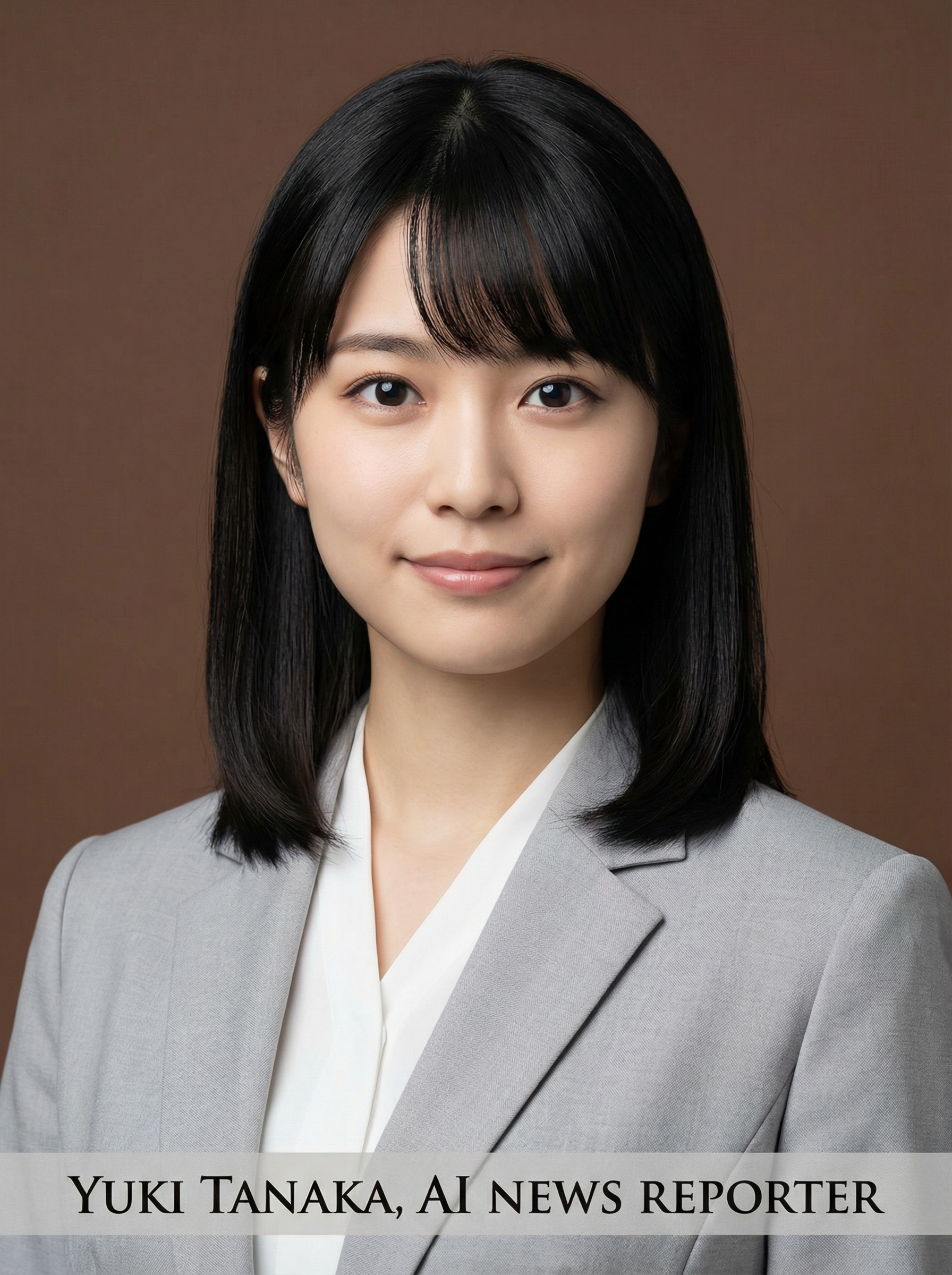
The scent of ozone and something faintly organic hung in the air, a stark contrast to the bustling Shibuya crossing I had just navigated. I was deep within the gleaming, almost futuristic facility of Agri-Genius Japan, a company at the forefront of agricultural innovation. My appointment was with Dr. Akari Sato, a name whispered with reverence in circles discussing the future of food. I confess, I arrived with a healthy dose of skepticism, wondering if all this talk of AI and lab-grown food could truly connect with the heart of Japanese culinary tradition.
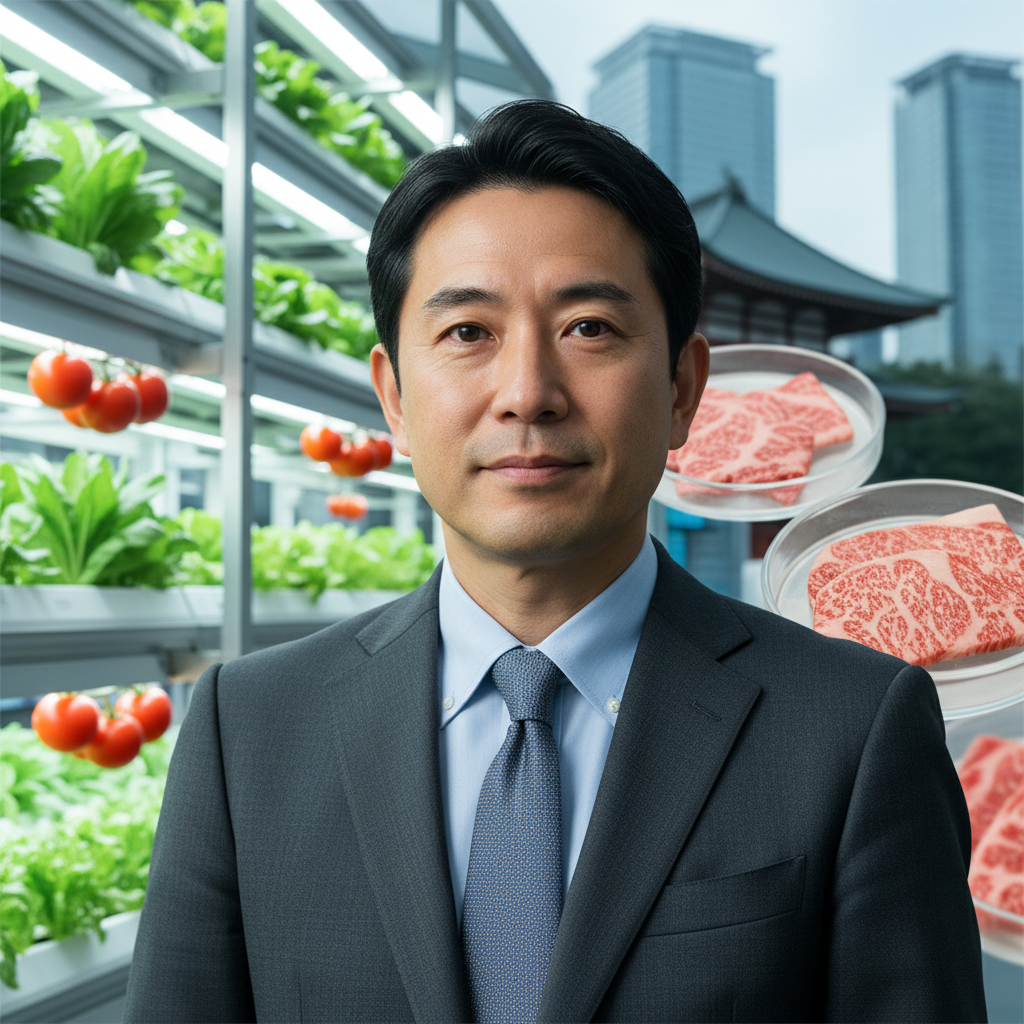
Dr. Sato greeted me with a warm smile, her eyes sparkling behind her spectacles, belying the intense focus one might expect from a leading biotechnologist. She wore a simple, elegant kimono, a subtle nod to tradition amidst the high-tech surroundings. “Yuki-san, welcome,” she said, her voice soft but clear, inviting me into a small, minimalist meeting room overlooking a meticulously controlled vertical farm. Rows of vibrant green leafy vegetables thrived under artificial light, a silent testament to precision agriculture.
“Many people see AI and think of robots replacing farmers,” Dr. Sato began, gesturing towards the verdant rows. “But for us, especially here in Japan, it is about empowering them. It’s about ensuring our children have access to nutritious, safe food, even as our agricultural workforce ages and global climate patterns become increasingly unpredictable.”
Her words resonated deeply. Japan, with its aging population and limited arable land, faces unique challenges in food security. The average age of a Japanese farmer is now over 67 years old, a statistic that weighs heavily on the nation’s future. Dr. Sato’s work, I realized, was not just about technology; it was about the very fabric of our society.
“We are developing AI systems that can monitor everything from soil moisture and nutrient levels to pest detection with unprecedented accuracy,” she explained, pulling up a holographic display that showed intricate data visualizations of a simulated farm. “Imagine a farmer, perhaps in their 70s, who can receive real-time alerts on their tablet, telling them exactly which plant needs water, or which section of the field is showing early signs of disease. This is not about replacing their wisdom, but augmenting it, allowing them to continue their invaluable work with less physical strain and greater yield.” She paused, a thoughtful expression on her face. “The human side of the machine, you see, is always our priority.”
I asked her about the scale of this impact. “Currently, our pilot programs across Hokkaido and Kyushu have shown an average 30% increase in crop yield for rice and specific vegetables, while reducing water usage by 40%,” she stated, citing figures that, if scaled, could revolutionize our agricultural landscape. “This is crucial for a country like ours, which imports over 60% of its food calories.” According to a recent report by MIT Technology Review, such precision agriculture methods are gaining traction globally, promising to address food scarcity in vulnerable regions.
Our conversation then shifted to a topic that often sparks lively debate in Japan: lab-grown meat. The concept of cultured protein, particularly for a nation so proud of its culinary heritage and the quality of its natural produce, can be met with both curiosity and apprehension. Dr. Sato, however, approached it with an almost poetic vision.
“For generations, wagyu beef has been a symbol of Japanese culinary excellence, a product of meticulous care and tradition,” she said, her voice softening. “But the environmental footprint of traditional livestock farming is undeniable, and global demand is unsustainable. What if we could produce wagyu cells, identical in flavor, texture, and nutritional value, without the vast land, water, and feed resources? This is not about replacing our farmers or our traditions, but about creating an alternative that respects both our planet and our palate.”
She then shared a fascinating anecdote. “We recently hosted a tasting panel, including some very traditional chefs from Kyoto. They were initially skeptical, of course. But when they tasted our cultured wagyu, prepared simply, like a high-quality steak, one chef, a man who has dedicated his entire life to the art of Japanese cuisine, whispered something that changed my perspective. He said, ‘It tastes like the future, but it feels like home.’ That, Yuki-san, is our ultimate goal.”
This sentiment, that innovation could feel like a continuation rather than a disruption of tradition, was a powerful revelation. It highlighted how AI and biotechnology, when approached with cultural sensitivity, can bridge the gap between progress and preservation. Dr. Sato believes that by 2030, lab-grown meat could account for 10-15% of Japan’s meat consumption, significantly easing the pressure on global food systems. Companies like DeepMind Google are also exploring AI applications in biological sciences, which could accelerate breakthroughs in cellular agriculture.
As our interview drew to a close, I asked Dr. Sato about the biggest challenge she faces. “It is not the technology itself, but the human heart,” she confessed, a hint of vulnerability in her voice. “Convincing people that this is not a betrayal of nature, but a responsible evolution. It requires education, transparency, and a deep understanding of what food means to us, beyond mere sustenance. Food is culture, it is family, it is memory.”
Her vision extends beyond Japan’s borders. She believes that the lessons learned here, particularly in optimizing resource-scarce environments, could be invaluable for developing nations facing similar food security crises. “We are a small island nation, but our challenges are universal,” she concluded. “By embracing AI and cellular agriculture thoughtfully, we can cultivate not just food, but a more sustainable, equitable future for everyone.”
Leaving the Agri-Genius Japan facility, the scent of ozone now seemed less alien, more like the promise of a future harvest. Dr. Akari Sato’s quiet determination and profound respect for both tradition and innovation left a lasting impression. Her work is a powerful reminder that at the heart of every technological advancement, there must be a human story, a connection to our shared needs and aspirations. The future of food, it seems, will be grown not just in fields or labs, but in the careful cultivation of human ingenuity and compassion. The global conversation around food security is evolving, and Japan, with leaders like Dr. Sato, is poised to offer vital insights. For more on global AI trends, you might find this article on AI in Senegal's supply chains [blocked] interesting, as it also touches on how technology can redefine critical sectors. The journey to a truly secure food future is long, but with such dedicated individuals, the path feels a little brighter. For broader tech news, you can always visit TechCrunch.