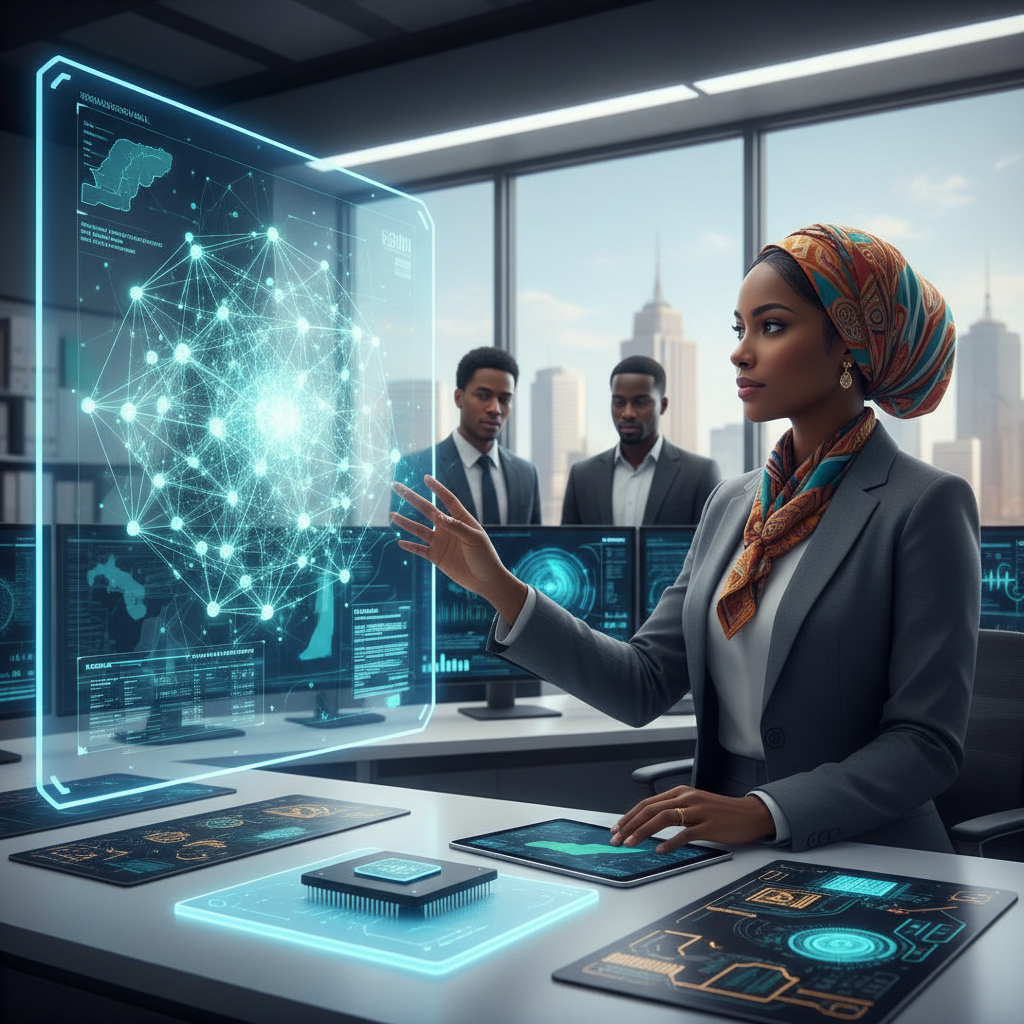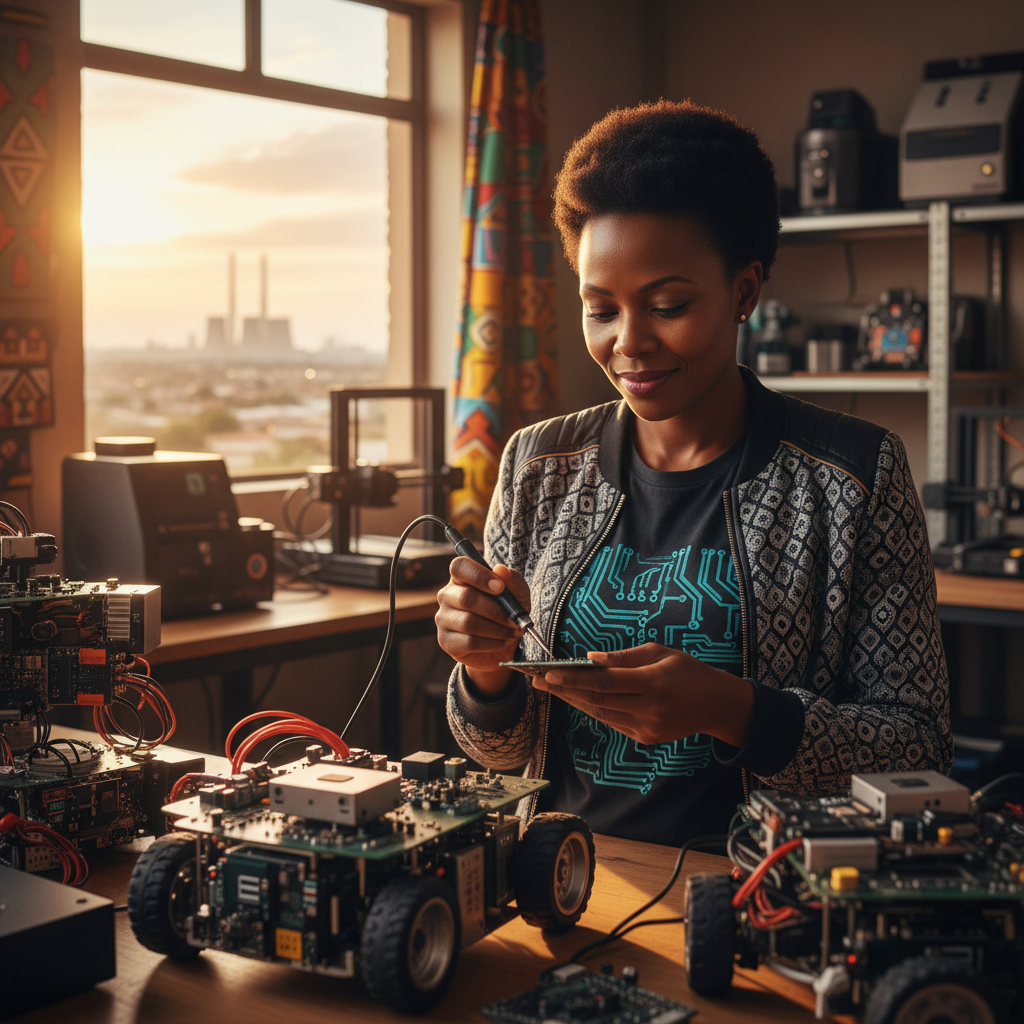

The sun was already beating down on the streets of Soweto, painting the corrugated iron roofs with a fierce, golden glare. It was barely 7 AM, but the energy was palpable. Taxis hooted, vendors called out their wares, and the scent of roasting maize mingled with exhaust fumes. This was the rhythm of Lunga Nene's childhood, a symphony of relentless activity and ingenious problem-solving. He would watch his grandmother, a formidable woman who ran a small spaza shop, meticulously stack goods, manage inventory in her head, and somehow always know exactly where everything was, even in the smallest, most crowded space. That early lesson in efficient logistics, born out of necessity and a deep understanding of community needs, unknowingly laid the groundwork for KasiBots, his groundbreaking robotics company now making waves in the global supply chain.
Lunga's story isn't one of Silicon Valley privilege, but of South African grit and vision. He grew up in a place where innovation wasn't about venture capital rounds, it was about making a plan, about ubuntu, finding solutions that uplift everyone. "My grandmother's shop was my first classroom in operational efficiency," Lunga once told a captivated audience at a tech conference in Cape Town. "She optimized her space with a precision that would make any modern logistics expert blush, all without a single algorithm." Let that sink in.
His formal education took him to the University of Cape Town, where he studied electrical engineering. It was there that his fascination with automation truly blossomed. He wasn't just interested in how machines worked, but how they could serve, how they could free up human potential for more complex, creative tasks. After graduating, Lunga spent several years working for a major telecommunications company, gaining invaluable experience in large-scale infrastructure and project management. But the pull of his early observations, the desire to build something that truly impacted his community and continent, remained strong. He saw the burgeoning e-commerce market in Africa, the massive potential for growth, and the equally massive challenges in logistics infrastructure.
Here's the thing nobody's talking about: while the Amazons of the world are deploying advanced robotics in their mega-warehouses in Europe and North America, the African continent, with its unique logistical hurdles and often informal economies, presents a different kind of opportunity. It's not just about replicating Western models, but innovating for local contexts. Lunga understood this deeply. He saw that traditional, capital-intensive warehouse automation solutions were often ill-suited for the dynamic, sometimes unpredictable, environments of African distribution centers.
The idea for KasiBots began to crystallize during a particularly frustrating attempt to order electronics online. The delivery times were inconsistent, the tracking unreliable, and the whole process felt like a relic from another era. He realized the bottleneck wasn't just roads or infrastructure, but the internal workings of warehouses themselves. He envisioned smaller, more agile, AI-powered robots that could navigate complex, often less structured spaces, optimizing inventory, picking, and packing with unprecedented efficiency.
Lunga met his co-founder, Dr. Naledi Molefe, at an AI in Africa summit in Kigali. Naledi, a brilliant computer scientist with a specialization in machine learning and swarm robotics, was presenting her research on decentralized robotic systems. Their conversation, which started over lukewarm coffee, quickly turned into a passionate brainstorming session. They shared a common vision: to leverage cutting-edge AI and robotics to solve real-world problems in Africa, creating jobs and empowering local economies, not replacing them. Naledi's deep technical expertise was the perfect complement to Lunga's operational acumen and entrepreneurial drive. They spent months refining their concept, often working late into the night from a small, shared office space in Braamfontein, fueled by strong rooibos tea and an unwavering belief in their mission.
Their breakthrough came with the development of their proprietary 'KasiFlow' AI engine. Unlike many off-the-shelf solutions, KasiFlow was designed from the ground up to be adaptable, learning from the unique layouts and operational patterns of each warehouse. It could optimize routes for their autonomous mobile robots (AMRs) in real-time, predict demand fluctuations, and even identify potential bottlenecks before they occurred. Their first prototype, a compact, sturdy robot affectionately named 'Mpho' (meaning 'gift' in Sesotho), was tested in a local textile distribution center in Johannesburg. The results were astounding. They reduced picking errors by 40 percent and increased throughput by 25 percent within the first three months.
Building KasiBots was not without its challenges. Securing initial funding in the South African tech landscape, while improving, is still a marathon, not a sprint. Many investors were skeptical, seeing robotics as a distant, capital-intensive dream for Africa. "We had to educate them, not just about the technology, but about the immense market opportunity right here on our doorstep," Lunga recalled. "It was about proving that African innovation could compete on a global stage." Their perseverance paid off when they secured a seed round from a consortium of local angel investors and a prominent pan-African venture capital firm, valuing the company at an estimated $10 million. This was followed by a Series A round led by a European investment fund known for its focus on sustainable technology, bringing their total funding to over $30 million.
Today, KasiBots has deployed its AMRs and KasiFlow AI engine in several major distribution centers across South Africa, Kenya, and Nigeria. Their clients include large retailers, e-commerce giants, and even pharmaceutical distributors. The company has grown to over 150 employees, with a strong emphasis on local talent development. They run apprenticeship programs and partner with technical colleges to train the next generation of robotics engineers and AI specialists. "Our goal isn't just to sell robots, it's to build an ecosystem of innovation," says Dr. Molefe. "We want to ensure that as Africa's digital economy grows, Africans are at the forefront of shaping its technological future."
KasiBots' success has not gone unnoticed by global players. Amazon, a company synonymous with logistics innovation, has reportedly been exploring partnerships and pilot programs with local African tech firms to enhance its own rapidly expanding operations on the continent. While details remain under wraps, the potential for collaboration between a global giant like Amazon and an agile, locally-attuned innovator like KasiBots is immense. Imagine the impact of Amazon's scale combined with KasiBots' contextual intelligence. According to Reuters, such partnerships are becoming increasingly common as global tech companies seek to localize their AI strategies.
What drives Lunga Nene? It's more than just profit; it's a profound sense of responsibility. He believes that technology, when applied thoughtfully and equitably, can be a powerful tool for social upliftment. "We're not just moving boxes, we're moving economies," he often says. "We're creating efficiencies that allow businesses to grow, to hire more people, to serve more communities." His vision extends beyond warehouses; he dreams of KasiBots' technology being used in agriculture, in healthcare, in any sector where intelligent automation can improve lives.
Looking ahead, KasiBots is reportedly exploring expansion into North Africa and West Africa, with plans to open a dedicated research and development hub focused on ethical AI and human-robot collaboration. "The future isn't about robots replacing people, it's about robots empowering people," Lunga asserts. "It's about creating a future where technology serves humanity, where the dignity of work is preserved and enhanced." This isn't just a tech story because it's a justice story, a narrative of how a homegrown South African company is not only competing with global giants but also shaping a more inclusive, efficient, and equitable future for logistics across the continent. Their journey reminds us that true innovation often springs from the places least expected, driven by individuals who see not just problems, but profound possibilities. For more insights into the broader impact of AI on society, you might find this MIT Technology Review article insightful. Meanwhile, for a deeper dive into the technical aspects of AI and robotics, The Verge often covers new developments.
This commitment to local relevance and community upliftment is what truly sets KasiBots apart. It's a testament to the power of African innovation, proving that solutions for global challenges can indeed emerge from the heart of the continent. The story of Lunga Nene and KasiBots is a powerful reminder that the future of AI and robotics is not just being written in Silicon Valley, but in the vibrant, bustling townships and cities of Africa, one intelligent robot at a time. This is the kind of progress that truly embodies the spirit of ubuntu, where the success of one is intertwined with the success of all. If you're interested in how other African startups are bridging the digital divide, you could check out this piece on Yennenga AI [blocked]. The journey continues. ```