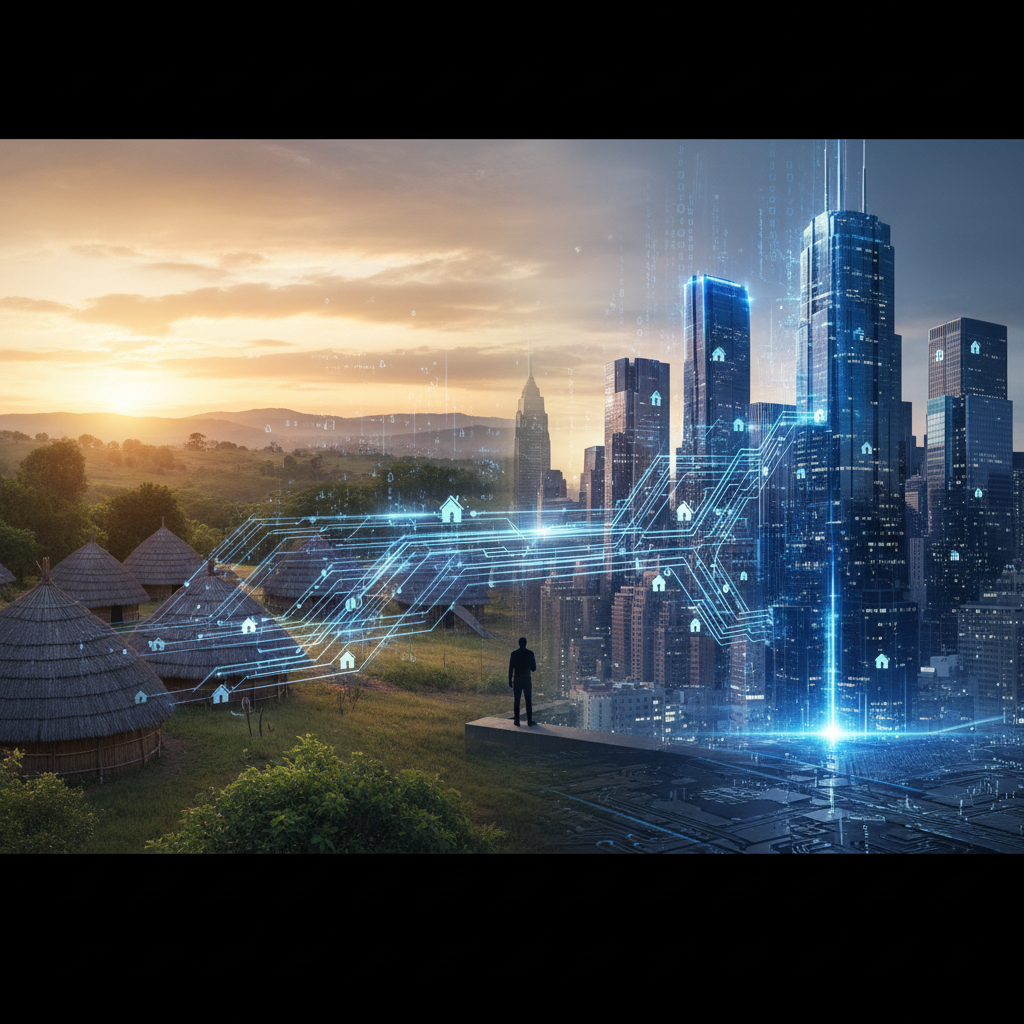

The morning mist still clings to the Dlangeni hills as I sip my strong coffee, but my thoughts are already miles away, across oceans and continents, where algorithms are making decisions that ripple back even to our quiet corners of Eswatini. We often think of AI as something far removed, a tool for the tech giants of the West, but the truth is, it’s already knocking on our doors, particularly when it comes to something as fundamental as where we live.
The Quiet Revolution in Your Living Room
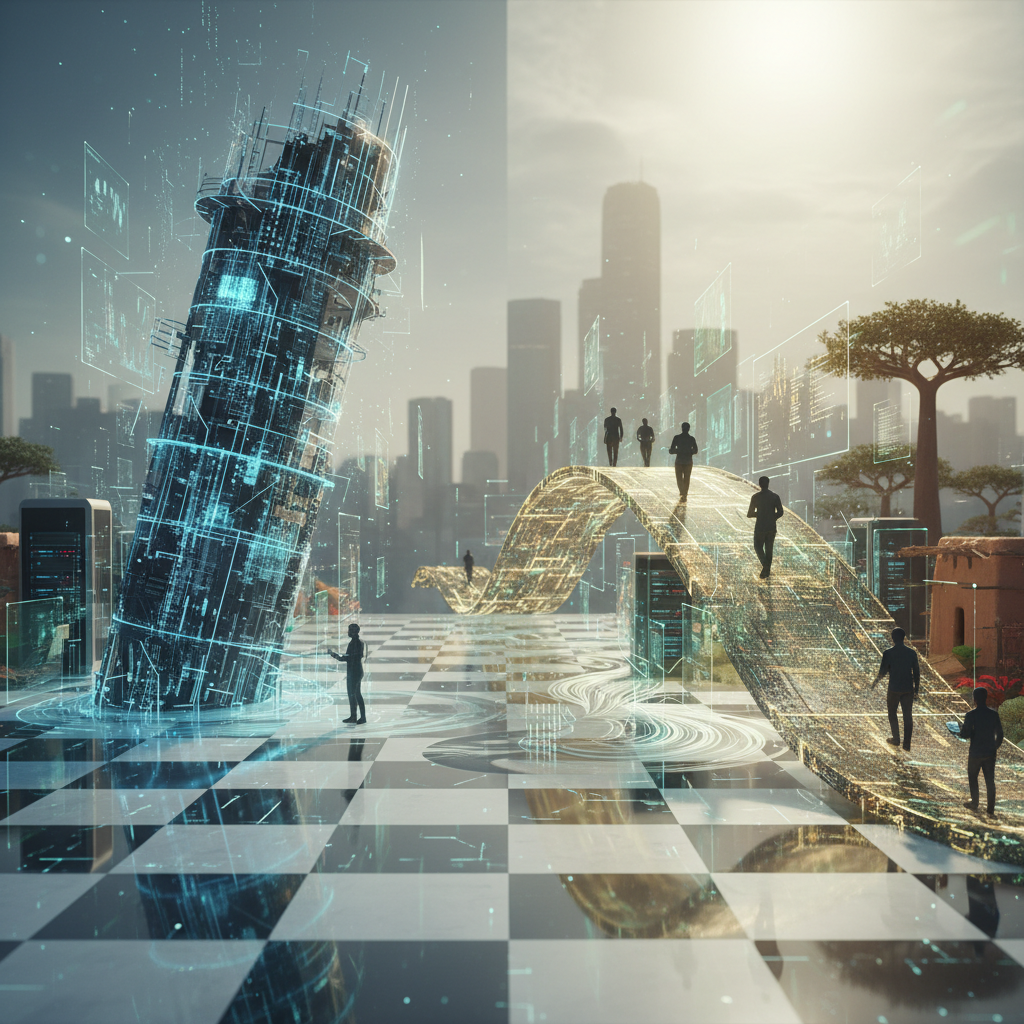
What happened, or rather, what is happening, is a silent revolution in the global housing market. It's not a sudden crash or a boom, but a gradual, pervasive shift driven by artificial intelligence. Think about it: when you search for a home online, when a bank assesses your loan application, or when a developer decides where to build next, AI is increasingly in the driver's seat. Algorithmic pricing models, powered by companies like Zillow's long-retired iBuying program or newer, more sophisticated platforms, are crunching vast datasets to determine property values, sometimes with unsettling accuracy, sometimes with disastrous bias. Smart home technologies, from Google's Nest to Amazon's Alexa controlled devices, are transforming houses into connected ecosystems, promising convenience but also raising questions about privacy and accessibility. And behind the scenes, AI is disrupting real estate agencies, construction planning, and even urban development. It’s a complex web, and its threads are reaching everywhere.
Why Most People Are Ignoring It: The Digital Divide and Distraction
Here in Eswatini, and in many parts of the world, the immediate concerns are often more tangible: the price of mealie meal, access to clean water, or finding a stable job. The abstract concept of AI influencing housing prices can feel distant, almost like a luxury problem. We are a nation where community ties are strong, where the family homestead, umuti, is more than just bricks and mortar; it’s a living history. The idea of an algorithm dictating its value or accessibility feels, frankly, foreign. Many simply don't have the digital literacy or access to even engage with these platforms, let alone understand their underlying mechanics. The news cycle is dominated by more immediate, often sensational, headlines. The slow, steady creep of algorithmic influence doesn't grab attention like a new OpenAI model release or a Tesla earnings report. This attention gap is dangerous, allowing these systems to embed themselves deeply before we, the people, even realize their full implications.
How It Affects YOU: More Than Just a Price Tag
So, how does this quiet revolution affect you, my friend, whether you live in Manzini or Manchester? Firstly, it’s about access. AI-driven loan applications can flag 'risky' neighborhoods or individuals based on data patterns, sometimes perpetuating historical biases. This can make it harder for certain communities, often those already marginalized, to secure financing. Secondly, it’s about affordability. If algorithms are optimizing for profit, they might drive up prices in desirable areas, making homeownership an increasingly distant dream for many. A recent study by MIT Technology Review highlighted how algorithmic pricing models in some US cities led to a 15% increase in rental costs over two years, disproportionately affecting low-income tenants. Imagine that happening in our small towns, where a 15% increase could mean the difference between having a roof over your head and not.
Then there's the smart home aspect. While a 'connected home' might sound appealing, it often comes with a premium. Who owns the data generated by your smart fridge or security cameras? What happens if the company goes out of business, or if the technology becomes obsolete? For many, the promise of convenience is overshadowed by concerns about privacy and control. It’s not just about buying a house; it’s about buying into an entire ecosystem, often without fully understanding the terms.
The Bigger Picture: A Challenge to Our Very Notion of Community
The societal implications are profound. Housing is not merely an economic commodity; it is the bedrock of community, stability, and identity. When AI begins to dictate who lives where, what properties are valued, and how quickly homes are bought and sold, it can erode the social fabric. It can accelerate gentrification, displace long-standing communities, and create new forms of digital redlining. In Eswatini, we say 'a person is a person through other people', ubuntu. AI should learn this lesson. If technology fragments our communities, if it makes housing less accessible for our young people or our elders, then it fails the fundamental test of humanity.
This tiny kingdom has big ideas about technology, and we understand that while innovation is vital, it must serve the people, not the other way around. The disruption isn't just to real estate agents' jobs; it's to the very idea of a stable, equitable society where everyone has a fair shot at a home.
What Experts Are Saying: A Chorus of Caution and Opportunity
“The challenge with algorithmic pricing is its opacity,” explains Dr. Nothando Mkhonta, a data ethics researcher at the University of Eswatini. “These models are often black boxes, making it difficult to understand why a property is valued a certain way or why a loan is denied. This lack of transparency can lead to unfair outcomes and exacerbate existing inequalities.” She emphasizes the need for regulatory oversight and explainable AI in these critical sectors.
Across the globe, voices echo similar concerns. “Companies like Google and Amazon are collecting vast amounts of data through smart home devices, creating detailed profiles of our daily lives,” says Professor Anya Sharma, an urban planning expert at the London School of Economics. “This data, while seemingly innocuous, can be used to influence everything from insurance premiums to neighborhood development plans, often without explicit consent or understanding from homeowners.” She argues for robust data governance frameworks.
Mr. Sipho Dlamini, a local real estate agent in Mbabane, acknowledges the shift. “I’ve seen how quickly properties are snapped up now, sometimes before I even have a chance to list them publicly. The big online platforms, with their AI tools, have an advantage. We need to adapt, but also ensure that the human touch, the understanding of local nuances and community needs, isn't lost.”
Even within the tech world, there's a growing awareness. “While AI can optimize efficiency, we must ensure it doesn't optimize for discrimination,” stated Satya Nadella, CEO of Microsoft, in a recent interview with Bloomberg Technology. “Building ethical AI, especially in sensitive areas like housing, requires diverse teams and a commitment to fairness from the ground up.”
What You Can Do About It: Engage, Question, and Advocate
So, what can we, the ordinary people, do? Firstly, educate yourself. Understand how these technologies work, even at a basic level. When you interact with a housing platform or consider a smart home device, ask questions: How is this price determined? What data is being collected? Who has access to it? Secondly, advocate for transparency and accountability. Support policies that demand explainable AI and protect consumer data. Here in Eswatini, we can push our government and local councils to consider these issues as they develop national digital strategies. Finally, remember the power of community. If AI threatens to create divisions, we must actively work to strengthen our human connections, ensuring that housing remains a right, not just a data point.
The Bottom Line: Housing, Humanity, and the Next Five Years
In five years, the impact of AI on housing will be undeniable. We will see more personalized home search experiences, more efficient construction, and potentially, more affordable housing solutions if designed ethically. However, without careful consideration, we could also face increased housing inequality, deeper digital divides, and a further erosion of privacy. The stakes are incredibly high because a home is more than just an investment; it is where families are raised, where traditions are kept, and where our very sense of belonging takes root. The future of housing, much like the future of our communities, depends on how we choose to integrate these powerful technologies with our deeply human values. It’s a conversation we must have, and soon, because the algorithms are not waiting.