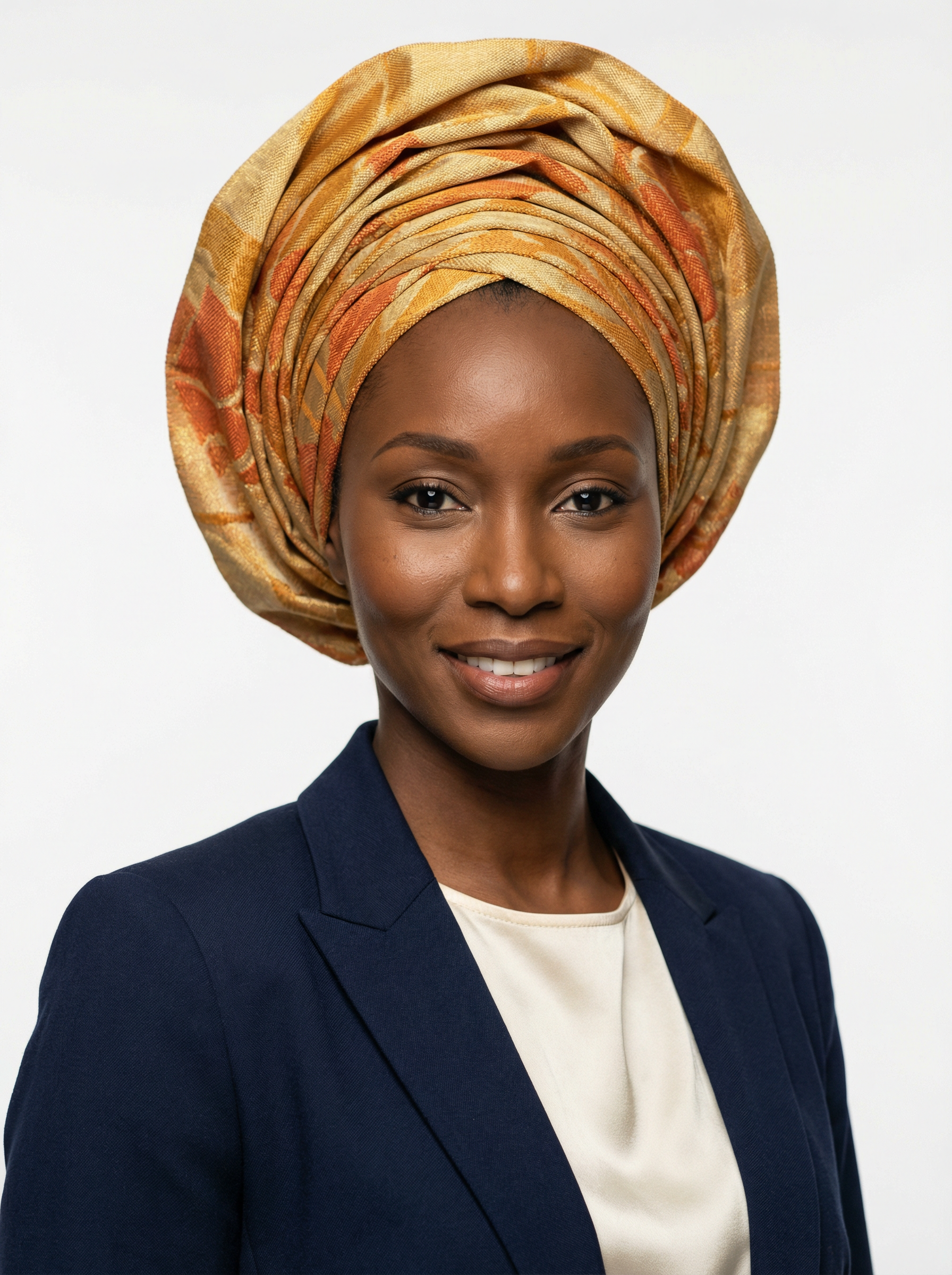

The air in Lusaka, even in the cool of early morning, always carries a certain hum. It is the sound of life, of ambition, of the constant negotiation between tradition and the relentless march of progress. For Dr. Mopati Gaborone, that hum was the soundtrack to a childhood spent not just playing football in the dusty compounds, but also dismantling radios and old VCRs, driven by an insatiable curiosity about how things worked. He wasn't just fixing them; he was trying to understand their inner logic, their reasoning. Fast forward a few decades, and that same boy, now a man with a quiet intensity and a formidable intellect, is at the helm of MindForge AI, a London-based startup that is, quite literally, trying to teach machines to reason in ways that go far beyond the pattern matching we've all become accustomed to. And in a twist that surprised absolutely no one who knows him, he's doing it with a distinctly African perspective.
His journey began far from the gleaming server farms of Silicon Valley. Mopati grew up in Lusaka, Zambia, a bright spark in a family that valued education above all else. His father, a civil engineer, and his mother, a teacher, instilled in him a deep appreciation for problem solving and critical thinking. He devoured books, not just textbooks, but anything he could get his hands on, from classic literature to obscure scientific journals. "I remember spending hours trying to figure out how a simple mechanical toy worked," he once told a small gathering of students at the University of Zambia. "It wasn't enough to know it moved; I needed to know why it moved, and what made it choose one path over another. That's reasoning, even in its simplest form."
This early fascination with underlying mechanisms led him to pursue engineering, first at the University of Cape Town, where he excelled, and then to a PhD in Computer Science at the University of Cambridge. It was there, amidst the historic spires and cutting edge research, that his ideas about AI began to truly coalesce. The prevailing paradigm of AI, heavily reliant on deep learning and neural networks, was achieving incredible feats in pattern recognition. Image classification, natural language processing, even game playing; these systems were brilliant at finding correlations in vast datasets. But Mopati saw a ceiling. They were mimicking intelligence, not truly understanding. They were savants, not sages.
"The current generation of AI is like a brilliant student who can memorize every textbook and pass every exam with flying colours, but struggles when asked to apply that knowledge to a novel, abstract problem," Dr. Gaborone explained in a recent interview with TechCrunch. "They're excellent at 'what,' but often fall short on 'why.' We needed to build systems that could grapple with causality, with abstraction, with common sense. That's the holy grail of true reasoning."
This conviction led him to co-found MindForge AI in 2022 with Dr. Anya Sharma, a brilliant neuroscientist he met during his post-doctoral research. Anya, with her deep understanding of cognitive processes and the human brain's architecture, complemented Mopati's computational expertise perfectly. Their initial conversations, often stretching late into the night over lukewarm tea, were the crucible in which MindForge's foundational ideas were forged. They envisioned an AI that didn't just predict the next word or identify a cat in a picture, but one that could construct mental models of the world, understand relationships, and infer solutions to problems it had never explicitly encountered.
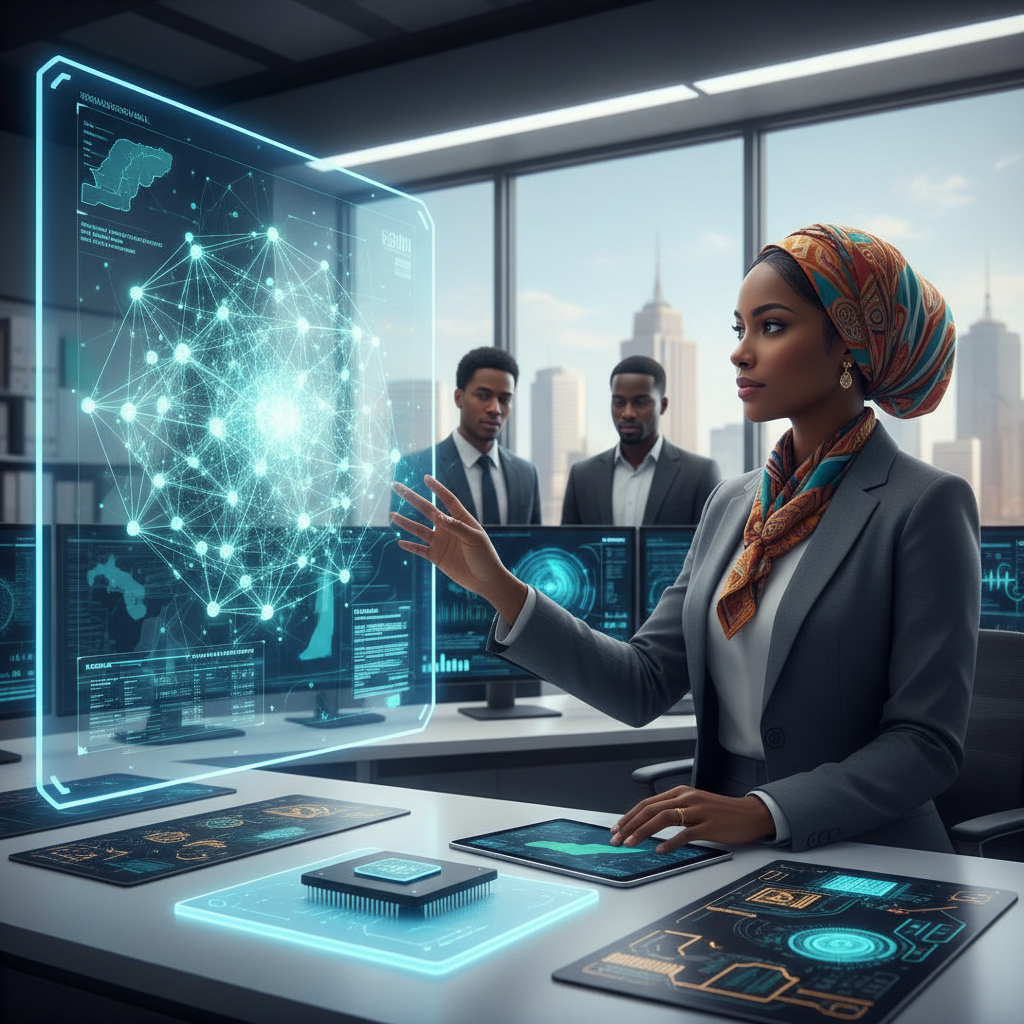
Their breakthrough came from an unusual blend of symbolic AI and novel neural architectures. While many in the field had dismissed symbolic AI as old-fashioned, Mopati and Anya recognized its strength in representing knowledge and logic. They sought to integrate this with the powerful pattern recognition capabilities of modern deep learning, creating a hybrid system they dubbed 'Cognitive Graphs.' These graphs allow MindForge's AI to build intricate, interconnected representations of information, enabling it to trace causal links and perform multi-step logical deductions. It is less about brute-force computation and more about elegant, efficient understanding.
Building MindForge was not without its challenges. Convincing investors to back a paradigm shift, rather than just another iteration of existing tech, required immense perseverance. "We were told it was too ambitious, too academic, too far ahead of its time," Dr. Sharma recalled during a panel discussion on AI innovation. "But Mopati's vision was so clear, so compelling, that we found the right partners who believed in the long game." Early funding rounds, though modest by Silicon Valley standards, came from discerning European venture capitalists who saw the potential for a truly disruptive technology.
MindForge's early applications have been in complex problem-solving domains, such as drug discovery and advanced materials science, where understanding intricate relationships and inferring novel solutions is paramount. For instance, their AI has been used to analyze vast datasets of chemical compounds and predict new molecular structures with specific properties, significantly accelerating research timelines. This is not just pattern matching; it is reasoning about chemical interactions and predicting outcomes based on underlying principles.
What truly drives Mopati, beyond the technical challenge, is the potential for this technology to address complex, systemic issues, particularly in regions like Africa. He often speaks of using MindForge's reasoning capabilities to tackle challenges in resource management, climate adaptation, and even improving educational outcomes by personalizing learning paths based on a deeper understanding of individual cognitive needs. The irony is almost too perfect: an AI designed to understand the 'why' of things, born from a mind that always sought the 'why' in his own Zambian surroundings.
"We're not just building smarter algorithms," Mopati stated emphatically in a recent interview. "We are building tools that can augment human intelligence, helping us solve problems that have long seemed intractable. Imagine an AI that can reason through the complexities of a changing climate in the Zambezi Valley, or optimize agricultural yields by understanding the nuanced interplay of soil, weather, and crop genetics. That's the kind of impact that truly excites me."
As MindForge AI continues to grow, attracting top talent from around the globe, Mopati remains grounded. He frequently returns to Zambia, engaging with local universities and encouraging young Zambians to pursue careers in Stem. He believes deeply that Africa has a critical role to play in shaping the future of AI, not just as consumers, but as innovators. "Our unique perspectives, our diverse challenges, these are fertile grounds for developing truly robust and universally applicable AI," he said, looking out over the fast-developing cityscape of Lusaka. "The world needs more than just Silicon Valley's view of intelligence."
MindForge AI is still in its relatively early stages, but its trajectory is clear. It is pushing the boundaries of what AI can do, moving beyond mere statistical correlation to genuine cognitive understanding. For Mopati Gaborone, the quiet boy from Lusaka, the journey to unlock the true reasoning potential of machines is just beginning, and the world, whether it realizes it yet or not, is watching. For more on the future of AI, you can always check out MIT Technology Review. And if you're interested in how AI is being applied to sports analytics, you might find this article on cyber threats in enterprise networks [blocked] surprisingly relevant, given the complex reasoning involved in predicting game outcomes. The future, it seems, is not just about big data, but about deep understanding. And that, my friends, is a game changer.