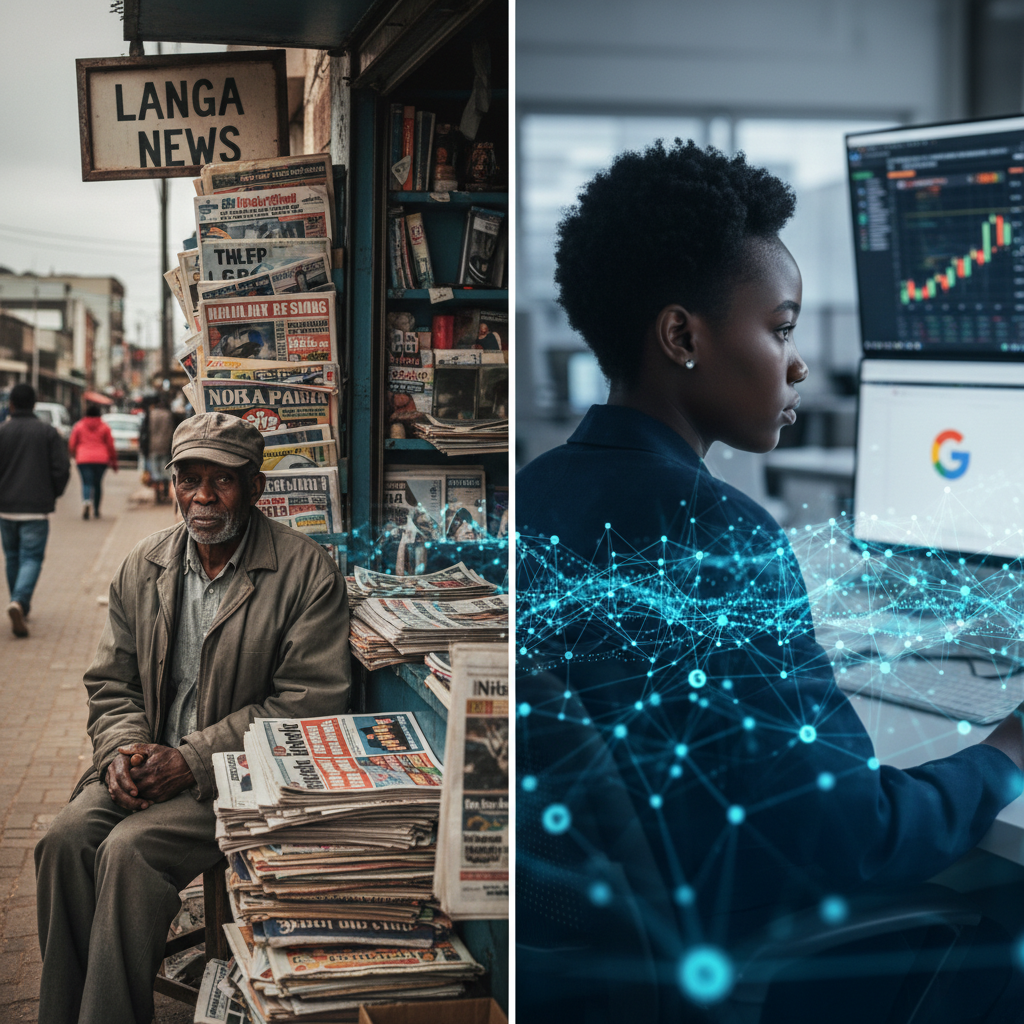
The morning sun was already baking the pavement outside the newsstand in Langa, Cape Town, a few weeks ago. Mama Zola, her hands gnarled from years of folding newspapers, was arranging the day's headlines. 'Ah, Amahlé,' she greeted me, 'another day, another story. But sometimes, I wonder who is telling these stories now.' She gestured to a glossy supplement, its pages filled with sleek infographics and data points. 'Is it still people like you, or is it these clever machines they talk about?'
Mama Zola's question, simple yet profound, echoes a global conversation, especially here in South Africa. The world of journalism is undergoing a seismic shift, powered by artificial intelligence. From automated reporting that churns out financial summaries and sports scores to sophisticated fact-checking algorithms and personalized news feeds, AI is transforming how news is gathered, produced, and consumed. But for us, on this continent, the stakes feel different, more personal. This isn't just a tech story because it's a justice story.
Globally, giants like Google and OpenAI are pouring resources into AI models designed to assist or even generate journalistic content. Google's 'Genesis' project, reportedly in discussions with major news organizations like The New York Times and The Washington Post, aims to use AI to draft news articles. OpenAI's GPT models are already being leveraged by various media outlets for everything from summarizing long reports to generating social media captions. The promise is clear: increased efficiency, cost reduction, and the ability to cover more ground with fewer human hands. For newsrooms grappling with shrinking budgets and declining revenues, it sounds like a lifeline.
But here's the thing nobody's talking about enough: what does this mean for the nuanced, often complex, narratives that define a country like South Africa? Our history, our present struggles, and our vibrant cultures demand a human touch, a deep understanding of context that algorithms, for all their prowess, often miss. Can an AI truly grasp the socio-economic implications of a policy decision in KwaZulu-Natal, or the subtle political undercurrents of a protest in Soweto? I have my doubts.
Automated reporting, while excellent for data-heavy stories like quarterly earnings or election results, struggles with the qualitative. A report on a local government meeting might accurately list attendees and motions passed, but it won't capture the tension in the room, the unspoken grievances, or the community's hopes. That requires a journalist on the ground, someone who understands the local dialect, the community leaders, and the historical backdrop. It requires empathy, a quality AI has yet to master.
Then there's fact-checking. The proliferation of misinformation, particularly on social media platforms, is a grave concern worldwide, and acutely so in South Africa, where it can exacerbate social divisions and undermine democratic processes. AI tools are being developed to combat this. Companies like Meta are investing heavily in AI-powered content moderation and fact-checking partnerships. News organizations are exploring AI to quickly verify claims and identify deepfakes. This is undeniably a powerful application. For instance, the International Fact-Checking Network (ifcn) has been exploring AI tools to scale their verification efforts. Reuters has reported on several initiatives leveraging AI for faster news verification.
However, even here, caution is key. The effectiveness of AI fact-checkers depends entirely on the data they are trained on. If that data carries inherent biases, or if it doesn't adequately represent the diverse perspectives and languages of our nation, then the AI's 'truth' could be skewed. We saw this with early AI models exhibiting racial and gender biases, a reflection of the datasets they consumed. We need to ensure that the AI systems used in our newsrooms are trained on diverse, representative data, and that human oversight remains paramount. Otherwise, we risk perpetuating existing inequalities, or worse, creating new forms of digital apartheid in information access.
Newsroom transformation is perhaps where AI's impact is most felt. Many news organizations are experimenting with AI to personalize news delivery, analyze audience engagement, and even assist with investigative journalism by sifting through vast datasets. The South African Broadcasting Corporation (sabc) and other local media houses are exploring how AI can help them reach wider audiences, particularly in rural areas, and make their content more accessible. This could mean AI-powered translation services for news into indigenous languages or using AI to optimize content for low-bandwidth environments.
Dr. Sizwe Snail ka Mtuze, a prominent South African legal scholar and expert in data privacy and AI ethics, recently emphasized this point. "The real challenge for AI in African newsrooms," he stated at a recent media conference in Johannesburg, "is not just about adopting technology, but adapting it to our unique socio-cultural fabric. We must ensure these tools enhance, not diminish, our commitment to truth, diversity, and community engagement. Without careful ethical frameworks, AI could become a tool for homogenization, not empowerment." Let that sink in.
Indeed, the concept of Ubuntu, 'I am because we are,' should guide our approach. Technology, especially AI, must serve the collective good. It should amplify marginalized voices, not silence them. It should foster understanding, not division. This means investing in local AI talent, ensuring our data scientists and journalists are collaborating, and building AI models that understand the nuances of our 11 official languages and countless cultural expressions. It means not just consuming AI from Silicon Valley, but actively shaping its development to reflect our values and needs.
Consider the work of startups like Media Monitoring Africa, which has been at the forefront of using technology to track and analyze media narratives, particularly around elections and public discourse. While not strictly AI-driven in all their endeavors, their ethos of using data for public good aligns with the potential of AI. Imagine their work amplified by sophisticated AI, not just identifying misinformation, but proactively identifying underreported stories in underserved communities.
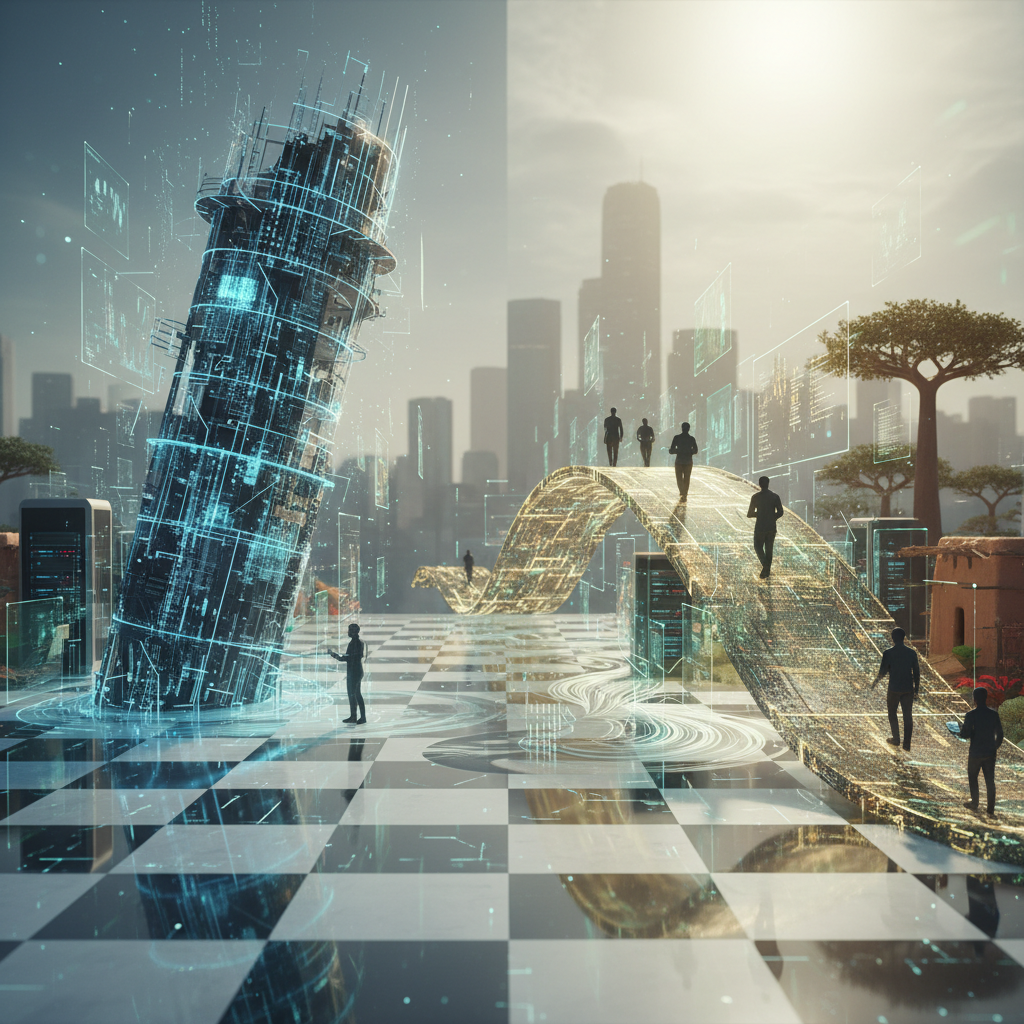
The future of journalism in South Africa, and indeed across Africa, is not about replacing journalists with machines. It is about empowering journalists with intelligent tools. It is about using AI to free up reporters from mundane tasks, allowing them to focus on deep investigations, compelling storytelling, and holding power accountable. It is about using AI to bridge the digital divide, making quality information accessible to everyone, regardless of their location or language.
But this future requires vigilance. It requires robust ethical guidelines, transparent AI development, and a commitment to human oversight. It requires us to ask not just 'can AI do this?' but 'should AI do this, and how can it do it in a way that truly benefits our people?' As Mama Zola reminds us, the stories we tell, and how we tell them, shape our reality. We must ensure that as AI reshapes the newsroom, it does so with integrity, empathy, and a deep respect for the human spirit that defines our nation. For more insights into how AI is shaping global news, you can explore articles from MIT Technology Review. The conversation around AI's impact on journalism is ongoing, with many voices contributing to its future direction, as seen in various reports on TechCrunch.
We cannot afford to be passive recipients of this technological wave. We must be active participants, shaping its trajectory to ensure it serves our unique context and our collective aspirations. The integrity of our news, the bedrock of our democracy, depends on it.