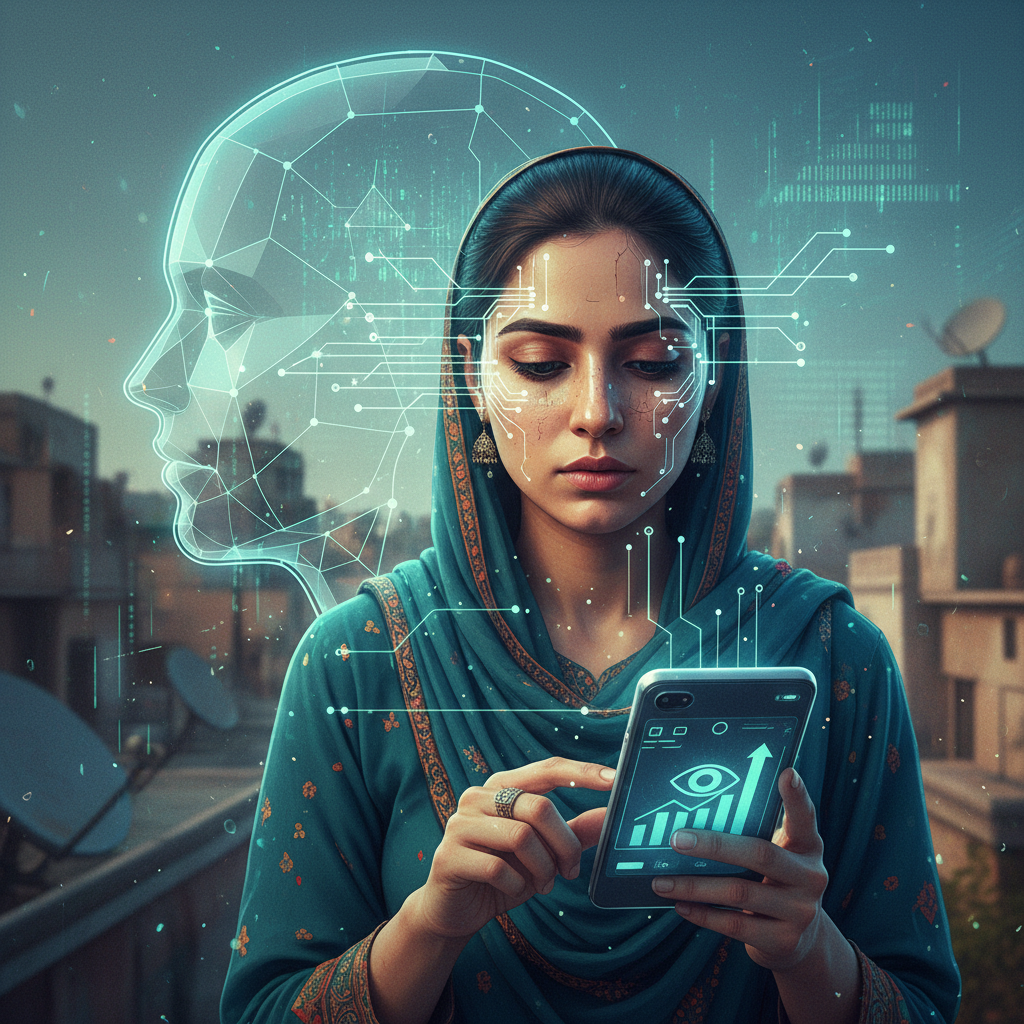

The hum of servers in a data center, the quiet click of a keyboard in a Lahore university lab, these are the sounds of progress. But for too long, the narrative of artificial intelligence has been dominated by the giants of Silicon Valley, their innovations often presented as universal truths. I have always believed that true progress, equitable progress, comes from diverse voices, from the edges, not just the center. And today, I want to talk about one such voice, a fierce advocate whose journey from Pakistan has profoundly shaped the global conversation around ethical AI and open source: Dr. Huma Shah.
I first encountered Dr. Shah's work years ago, her name appearing consistently in discussions about responsible AI development, bias detection, and the philosophical underpinnings of machine consciousness. She is not a CEO of a unicorn startup, nor does she command a vast corporate empire. Instead, Dr. Shah is a scholar, a researcher, and an ethicist, whose influence radiates through her relentless advocacy and her foundational contributions to understanding AI's societal impact. Her story, for me, is a defining moment, a testament to the power of intellectual rigor combined with an unwavering moral compass.
Born and raised in Pakistan, Huma's early life was steeped in a culture that values education and community. She pursued her Bachelor of Science in Electrical Engineering at the University of Engineering and Technology, Lahore, a prestigious institution that has produced some of Pakistan's brightest minds. This was not a typical path for women in many parts of the world, even then, but Huma was driven by an insatiable curiosity about how things work, how systems could be improved, and how technology could serve humanity. Her academic journey continued, taking her to the United Kingdom where she earned her PhD in Artificial Intelligence from the University of Southampton. This was a pivotal period, placing her at the forefront of AI research as the field was beginning its exponential growth.
Her early career was marked by a deep engagement with the theoretical and practical aspects of AI, but it was her growing concern for the ethical implications of this burgeoning technology that truly set her apart. While many were focused on building bigger, faster models, Dr. Shah was asking critical questions: Who benefits? Who is excluded? What biases are we inadvertently embedding into our digital future? These were questions that resonated deeply with me, echoing the struggles for equity and access that I witness daily in Pakistan.
Dr. Shah's work has been particularly relevant in the context of open source AI platforms, such as Hugging Face, which recently reached a staggering $4.5 billion valuation and now hosts over a million models. This explosion of open source innovation is a double-edged sword. On one hand, it democratizes access to powerful AI tools, allowing developers from Karachi to Kuala Lumpur to experiment and build. This is a human rights issue disguised as a tech story, because access to these tools can unlock economic opportunity and educational advancement in ways previously unimaginable. On the other hand, the sheer volume and diversity of these models mean that biases, ethical pitfalls, and even malicious applications can proliferate rapidly, often without adequate scrutiny.
This is where Dr. Shah's expertise becomes indispensable. She has consistently championed the need for robust ethical frameworks, transparent model documentation, and inclusive development practices within the open source community. Her research often highlights how seemingly neutral algorithms can perpetuate and even amplify societal inequalities, particularly affecting marginalized communities. For instance, she has spoken extensively about the need for diverse datasets and development teams to prevent algorithmic bias, a common issue in AI models trained predominantly on data from Western, English-speaking populations.
In a recent interview, Dr. Shah stated, "The promise of AI is immense, but its potential for harm is equally significant if we do not embed ethics and fairness from the very beginning. Open source democratizes technology, but it also democratizes responsibility." This sentiment perfectly captures her approach: a pragmatic recognition of AI's power coupled with an insistent demand for accountability. She understands that the rapid growth of platforms like Hugging Face, while exciting, necessitates a parallel growth in ethical vigilance. The sheer scale of models hosted, over one million now, means that every small bias can have a global ripple effect.
Her work is not just theoretical. Dr. Shah has been actively involved in international initiatives and policy discussions aimed at shaping responsible AI governance. She has contributed to various expert groups and committees, offering a crucial perspective that often challenges the Silicon Valley-centric view of AI development. Her voice ensures that the concerns of the Global South, the realities of societies grappling with digital divides, are not overlooked in the rush to innovate. She is a powerful example of how women in Pakistan are coding the future, not just with algorithms, but with principles.
Building a truly ethical AI ecosystem requires more than just good intentions; it demands rigorous analysis, interdisciplinary collaboration, and a willingness to confront uncomfortable truths. Dr. Shah has been a tireless advocate for these principles, pushing for greater transparency in AI development and deployment. She frequently emphasizes that the responsibility for ethical AI does not rest solely with the developers but extends to policymakers, educators, and the end-users themselves.
What drives Dr. Shah is a profound sense of justice and a belief in the transformative power of technology, if wielded responsibly. She envisions a future where AI serves all of humanity, not just a privileged few. Her work is a constant reminder that innovation without conscience is a dangerous path. As the AI landscape continues to evolve at breakneck speed, with companies like OpenAI and Google pushing the boundaries of what is possible, Dr. Shah’s contributions become even more critical. Her insights are essential for navigating the complex ethical terrain of advanced AI systems, ensuring that the benefits are widely shared and the risks are carefully mitigated.
Looking ahead, Dr. Shah continues to be a leading voice in the conversation around AI ethics, particularly as generative AI models become more sophisticated and pervasive. Her focus remains on ensuring that these powerful tools are developed and deployed in ways that respect human dignity, promote fairness, and protect fundamental rights. She is a beacon for those who believe that technology can be a force for good, provided we infuse it with our deepest human values.
For anyone interested in the intersection of AI and ethics, particularly from a global perspective, Dr. Huma Shah's work is essential reading. Her contributions highlight that the future of AI is not just about technical breakthroughs, but about the profound moral choices we make along the way. Don't look away from the ethical complexities; instead, engage with the critical insights offered by voices like hers. Her journey from Lahore to the global AI stage is a powerful narrative of conviction, intellect, and an unwavering commitment to a more just digital world. You can find more of her work and discussions on ethical AI in publications like MIT Technology Review and Reuters Technology. Her continued advocacy reminds us that the human element must always be at the heart of our technological aspirations.