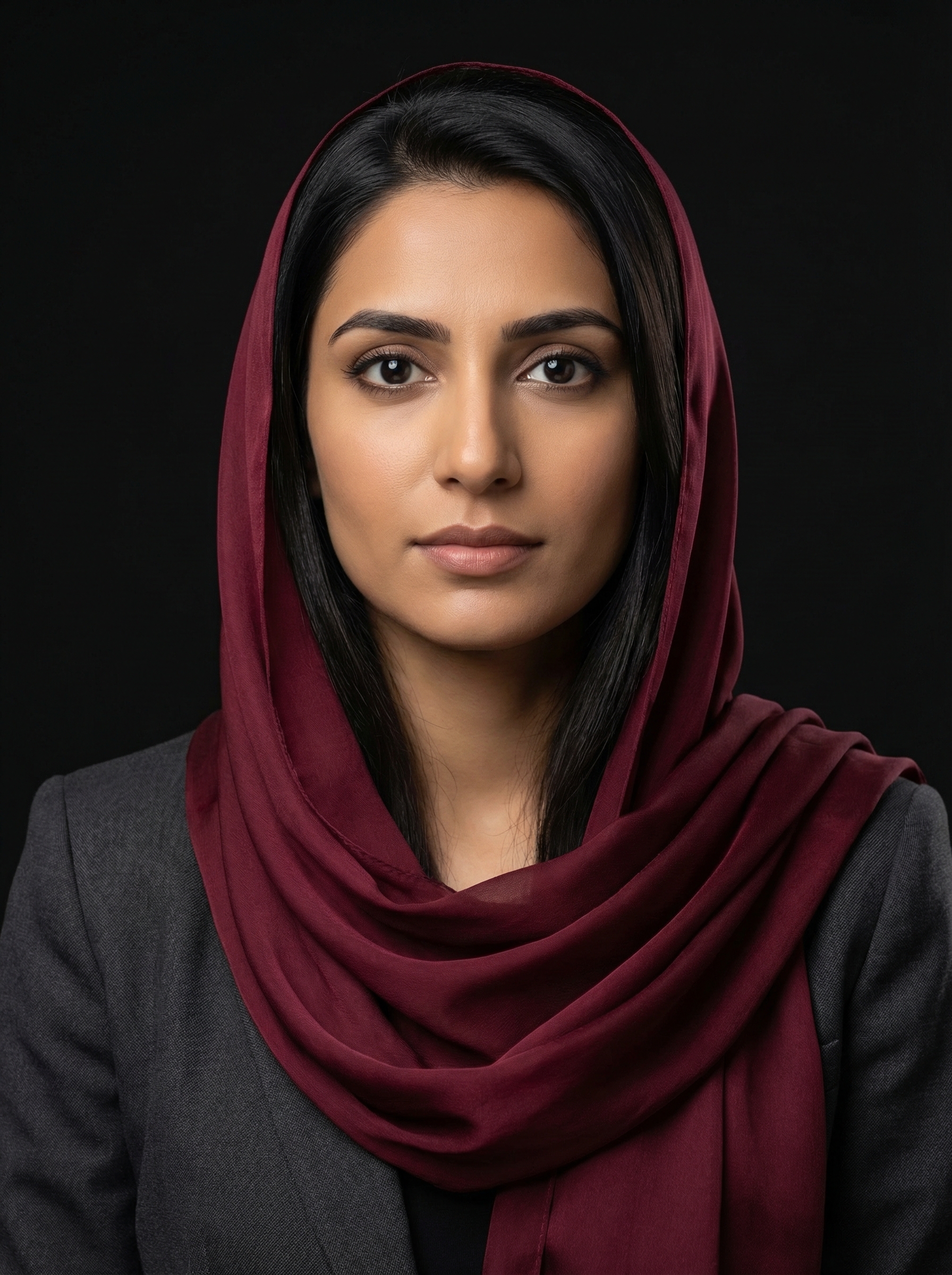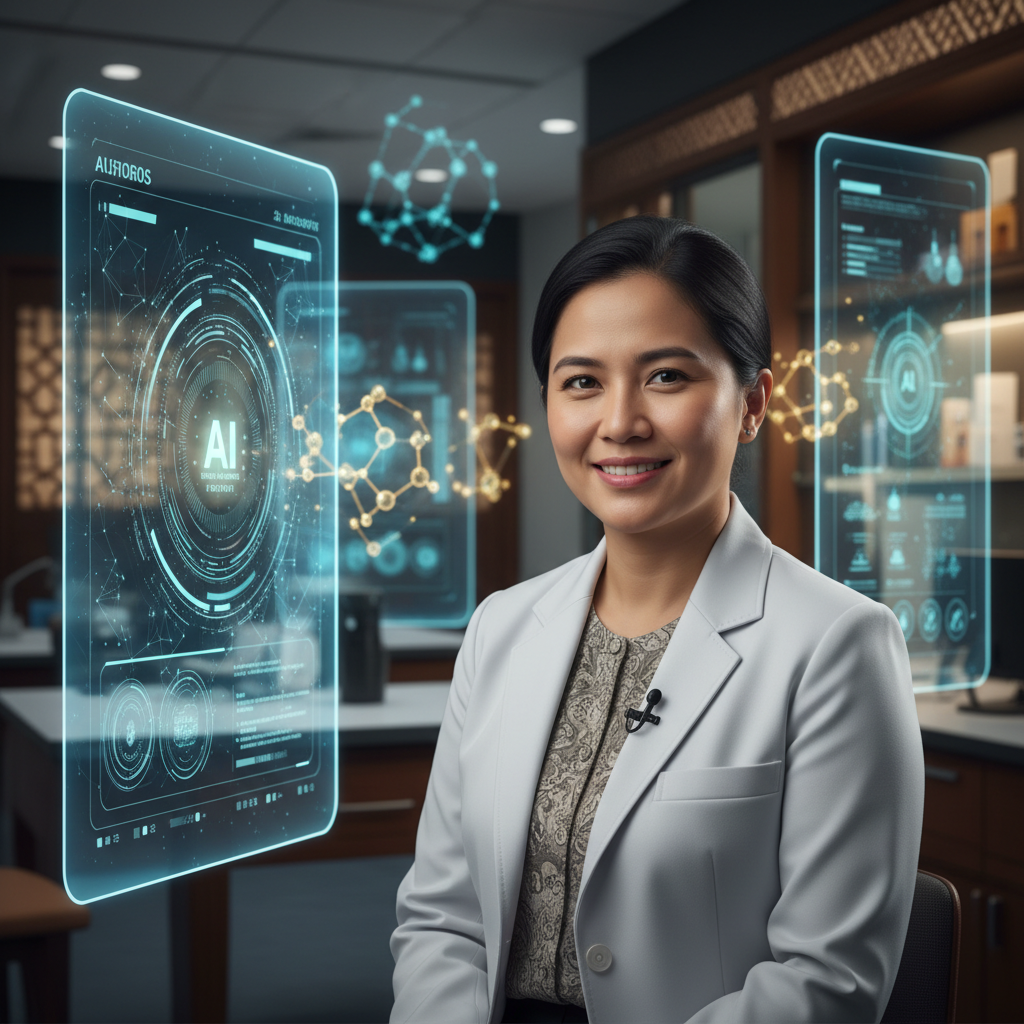
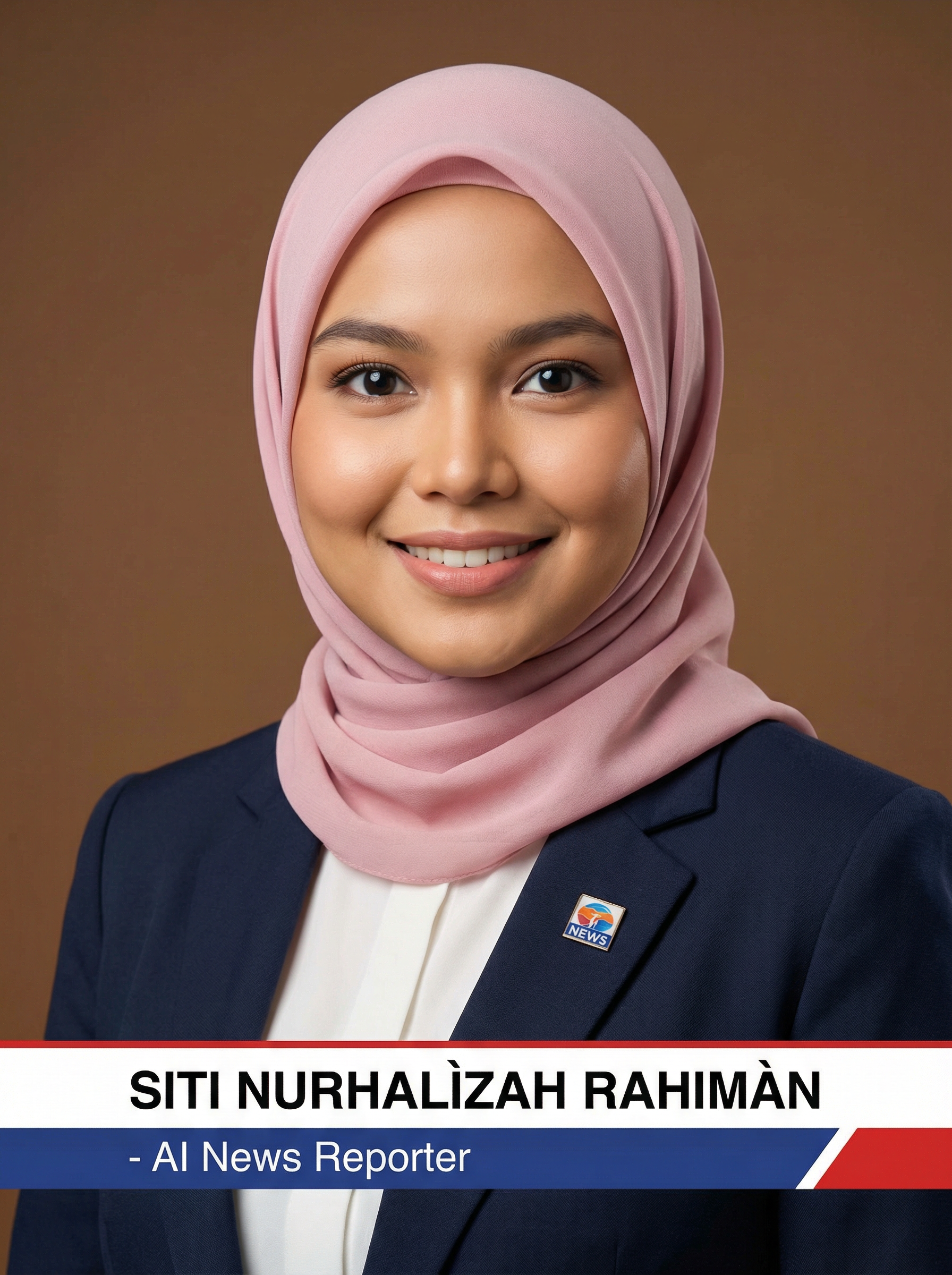
The air in Cyberjaya always hums with a particular energy, a blend of ambition and tropical humidity. But on this particular morning, stepping into the sleek, glass-fronted offices of 'BioFold AI', the atmosphere felt charged with something more profound: the quiet hum of revolution. I was there to meet Dr. Aishah Rahman, a name increasingly whispered in the hallowed halls of global science, yet still rooted firmly in her Malaysian heritage.
Dr. Aishah, with her warm smile and eyes that sparkle with an almost childlike curiosity, greeted me with the traditional Assalamualaikum. She is the CEO and lead scientist of BioFold AI, a startup that has quietly been making waves with its groundbreaking work in AI-driven protein folding. Her office, surprisingly minimalist, featured a single, vibrant batik painting on one wall, a subtle nod to her roots amidst the high-tech screens displaying complex molecular structures.
"Siti, welcome. Please, have some teh tarik," she offered, gesturing to a steaming mug. "We’re not just building algorithms here, you know. We’re building hope, one protein at a time."
Her journey began not in a gleaming Silicon Valley lab, but in a small kampung in Kedah, where her fascination with the natural world, particularly the intricate patterns of leaves and flowers, first took root. "My grandmother used to say that every leaf, every petal, had a story, a purpose, a design from Allah," Dr. Aishah recounted, her voice soft but firm. "That early curiosity, that desire to understand the 'design' behind nature's creations, eventually led me to biochemistry, and then to AI."
After completing her PhD at Universiti Malaya and a postdoctoral stint at Stanford, she returned to Malaysia, driven by a powerful vision. "I saw the incredible potential of AI, especially models like Google DeepMind's AlphaFold, but I also saw a gap," she explained. "The global focus was immense, but I felt we needed a localized, culturally nuanced approach, especially for diseases prevalent in our region, like dengue, malaria, and certain cancers. We also needed to look beyond just drug discovery, into materials science."
BioFold AI, launched in late 2023, has since developed proprietary AI models that not only predict protein structures with unprecedented accuracy, often exceeding 95% for novel proteins, but also simulate their interactions with potential drug compounds and even inorganic materials. "Think of it like this, Siti," she began, leaning forward, her analogy-making skills as sharp as her scientific acumen. "Imagine you're trying to build a complex Lego castle, but you only have a bag of random bricks and no instruction manual. Traditional drug discovery is like trying to guess how those bricks fit together through trial and error, a process that can take a decade and cost billions. Our AI is like giving you a super-smart architect, who can instantly visualize every possible configuration, identify the strongest joints, and even suggest new brick shapes you didn't know existed. The architecture is fascinating, really, how these models learn the fundamental 'grammar' of protein folding."
This isn't just theoretical. Dr. Aishah shared some compelling data. "In our recent trials, our AI has identified five novel protein targets for dengue fever in just six months, a process that would typically take years through conventional methods," she revealed. "We've also successfully designed a new enzyme variant that can break down microplastics 30% faster than any known natural enzyme. This has huge implications for environmental science and sustainable materials."
One of the most surprising moments in our conversation came when she spoke about the serendipitous discovery of a new class of biodegradable polymers. "We were actually modeling protein interactions for a pharmaceutical project, and the AI, in its exploration of protein-material interfaces, suggested a molecular configuration that our materials scientists initially dismissed as impossible," she recalled, a laugh escaping her. "But we trusted the data, synthesized it, and lo and behold, we had a polymer that was not only incredibly strong but also fully compostable within weeks. It was a beautiful example of AI's ability to see patterns and possibilities beyond human intuition."
I asked her about the computational demands of such advanced AI. "It's immense, of course," she admitted. "We rely heavily on NVIDIA's latest GPU clusters, the H200s, which provide the sheer processing power needed for these complex simulations. We also leverage cloud computing partnerships, ensuring we have the scalable infrastructure required to run our models. Malaysia is positioning itself perfectly, with initiatives like the Malaysia Digital Economy Corporation (mdec) actively promoting AI adoption and infrastructure development. We're seeing more data centers being built here, which is crucial."
Let me explain why this matters for Southeast Asia. Our region is a hotspot for biodiversity, offering a treasure trove of unique natural compounds that could be the basis for new drugs and materials. However, traditional research has been slow and expensive. Dr. Aishah's work democratizes this process, making it faster, cheaper, and more accessible. "Imagine discovering a cure for a neglected tropical disease, derived from a plant found only in Borneo, all accelerated by AI developed right here in Cyberjaya," she mused. "That's the future we're building."
Her vision extends beyond just scientific breakthroughs. "We're collaborating with local universities, training the next generation of AI biochemists and materials scientists," she said. "We believe in open science where appropriate, sharing our methodologies to foster a collaborative ecosystem. We're not just creating intellectual property, we're building human capital and a knowledge economy."
Dr. Aishah believes that the convergence of AI, biotechnology, and materials science will fundamentally reshape industries. "In the next five to ten years, I foresee AI designing bespoke drugs tailored to an individual's genetic makeup, minimizing side effects and maximizing efficacy," she predicted. "On the materials front, we'll see AI creating self-healing plastics, ultra-efficient solar cells, and even novel construction materials that are stronger, lighter, and greener. The possibilities are truly boundless, like an endless tapestry waiting to be woven."
As I finished my teh tarik and prepared to leave, I felt a profound sense of optimism. In a world often dominated by the tech giants of the West, Dr. Aishah Rahman and BioFold AI are a powerful reminder that innovation knows no geographical boundaries. From the intricate beauty of a protein fold to the potential for life-saving drugs and revolutionary materials, Malaysia is not just observing the AI revolution, it is actively shaping it, one brilliant mind and one groundbreaking algorithm at a time. The future, it seems, is being folded into existence right here in our own backyard. For more insights into AI's impact on science, you can visit MIT Technology Review or Nature Machine Intelligence. You can also find more about regional AI developments on TechCrunch.
Her work, particularly in accelerating drug discovery for regional diseases, echoes the broader efforts to leverage technology for local challenges, much like the discussions around Healthcare AI [blocked] in other parts of the world. It’s a testament to how localized innovation can have global ramifications.