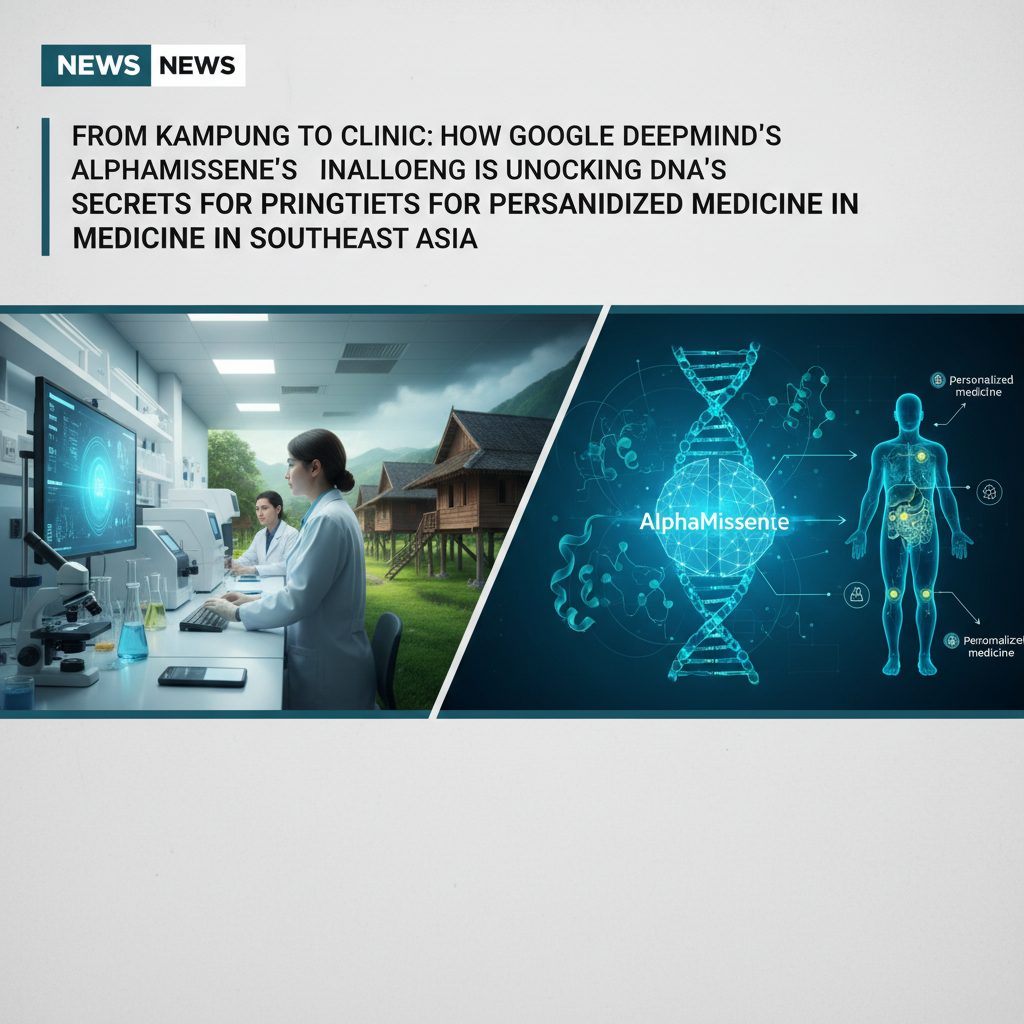

The air in Kuala Lumpur often hums with the promise of innovation, a blend of tradition and forward-thinking ambition. But imagine a future where the hum is not just from the LRT, but from the very cells within us, whispering secrets about our health, guiding doctors to treatments as precise as a tailor-made baju kurung. This future is closer than we think, thanks to a groundbreaking development from Google DeepMind: AlphaMissense.
Just last year, DeepMind gave us AlphaFold, a marvel that predicted protein structures with astonishing accuracy, fundamentally changing biology. Now, they have unveiled AlphaMissense, a new AI model that takes this a step further. It predicts whether a 'missense' genetic mutation, a single letter change in our DNA, is likely to cause disease or if it is benign. Think of it like this: our DNA is a very long, complex recipe book for our bodies. Sometimes, a single ingredient, a single word, is misspelled. A missense mutation is like changing 'flour' to 'flower' in a baking recipe. Sometimes, it makes no difference to the final cake, but other times, it can ruin the entire dish. AlphaMissense helps us discern which of these 'typos' are truly problematic.
Let me explain why this matters for Southeast Asia. Our region is a tapestry of cultures and ethnicities, and with that comes a rich, diverse genetic landscape. Diseases manifest differently across populations. A treatment that works wonders for a patient in Europe might be less effective, or even harmful, for someone with a distinct genetic background in Malaysia or Indonesia. For too long, medicine has often been a 'one-size-fits-all' approach, like trying to fit everyone into the same sized songkok. AlphaMissense offers the potential to move beyond this, towards truly personalized medicine.
The breakthrough itself is rooted in DeepMind's deep learning expertise. They trained AlphaMissense on a massive dataset of known missense variants, leveraging insights from evolutionary biology. The model analyzes the evolutionary conservation of amino acids and the structural context of the mutation within the protein. It then assigns a pathogenicity score, essentially telling us how likely that specific mutation is to cause trouble. Early results, published in Nature, indicate that AlphaMissense can classify 89% of all possible human missense variants with high accuracy, a staggering leap compared to previous methods. This is not just an incremental improvement, it is a paradigm shift.
Who did this research? The team at Google DeepMind, led by scientists like Dr. Jun Cheng and Dr. Ziyang Li, building on the legacy of AlphaFold. Their work represents a monumental effort in computational biology, combining vast datasets with cutting-edge AI architectures. The architecture is fascinating; it leverages a transformer-based model, similar to those used in large language models, but adapted for protein sequences and genetic data. This allows it to understand the complex relationships and dependencies within the genetic code in a way that was previously impossible. It is like having a super-intelligent geneticist who has read every medical textbook and seen every patient's genetic profile.
Implications and Next Steps for Malaysia and Beyond
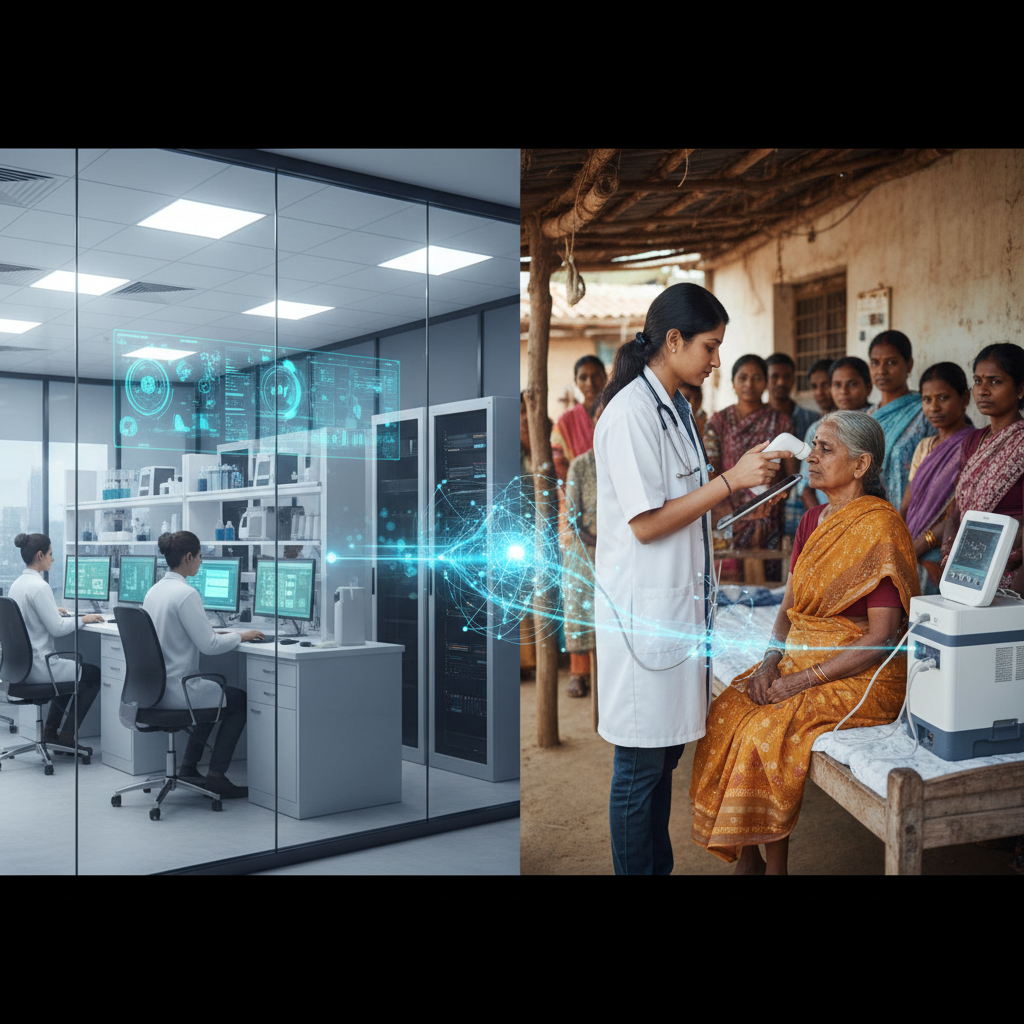
The implications for healthcare are profound. Firstly, in diagnosis: many rare diseases are caused by single gene mutations, and diagnosing them can be a long, arduous, and expensive journey. AlphaMissense can help clinicians quickly identify pathogenic mutations, providing answers to families who have often waited years. This is particularly crucial in Malaysia, where access to advanced genetic testing can still be limited in certain rural areas. Imagine the relief for parents finally understanding why their child is unwell.
Secondly, for drug discovery and development: pharmaceutical companies can use AlphaMissense to better understand disease mechanisms and identify potential drug targets. If we know exactly which genetic 'typo' causes a problem, we can design a drug to correct or bypass that specific error. This could accelerate the development of new therapies, especially for genetic conditions that currently have no effective treatment.
Thirdly, and perhaps most excitingly for our region, is its role in personalized treatment plans. With a clearer understanding of a patient's genetic profile and the specific mutations driving their disease, doctors can tailor treatments, predicting which therapies will be most effective and which might cause adverse reactions. This moves us away from broad-spectrum drugs towards highly targeted interventions, reducing side effects and improving patient outcomes. As Dr. Azman Omar, a leading geneticist at Universiti Kebangsaan Malaysia, recently stated, “This technology has the potential to democratize access to advanced genetic insights. It can empower our local researchers and clinicians to provide world-class personalized care, even with limited resources.”
Of course, challenges remain. Data privacy is paramount. Genetic data is perhaps the most personal information one can possess, and ensuring its secure and ethical handling is non-negotiable. Regulatory frameworks will need to evolve rapidly to keep pace with these technological advancements. Malaysia is positioning itself perfectly to address these, with ongoing discussions around data governance and ethical AI use in healthcare, driven by agencies like the Ministry of Health and the Malaysia Digital Economy Corporation (mdec).
Furthermore, integrating such sophisticated AI tools into existing healthcare systems requires significant investment in infrastructure and training. Our medical professionals will need to be equipped with the knowledge and skills to effectively utilize these powerful new diagnostic aids. This is not just about technology, it is about human capacity building.
Looking ahead, the collaboration between global AI giants like Google DeepMind and local research institutions will be key. Imagine Malaysian researchers contributing to global genetic databases, enriching the understanding of diverse populations, and ensuring that these AI models are truly universal, not just biased towards Western genetic profiles. This is not a distant dream; it is an active area of discussion and partnership. The potential for a truly equitable and personalized healthcare future, where every individual's unique genetic story informs their path to wellness, is now within our grasp. It is a future I, for one, am incredibly excited to see unfold, right here in our kampung and beyond.
For more insights into cutting-edge AI research, you can always check out MIT Technology Review. The journey towards a healthier, more personalized future is just beginning, and AI is certainly driving the bus.