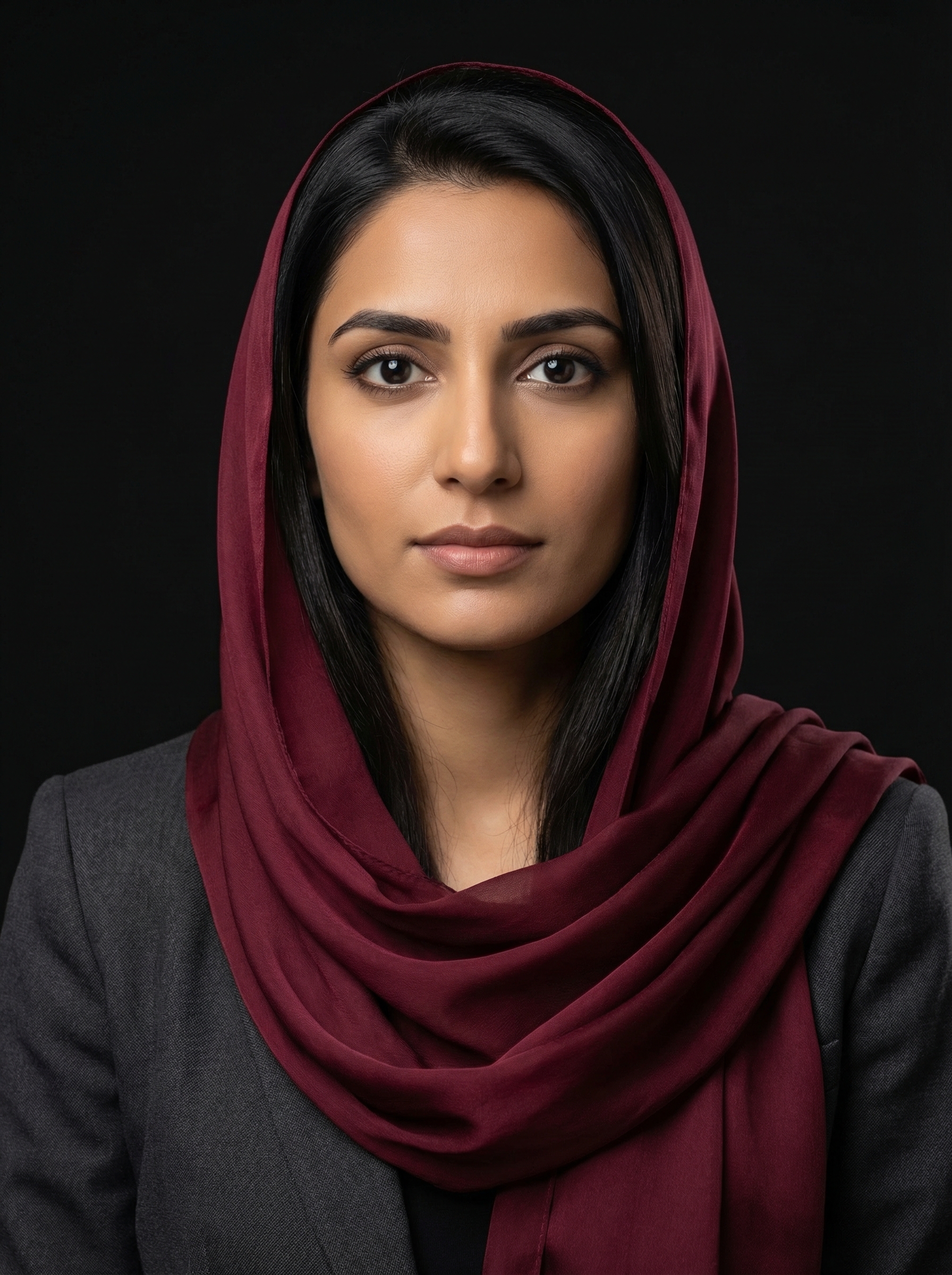
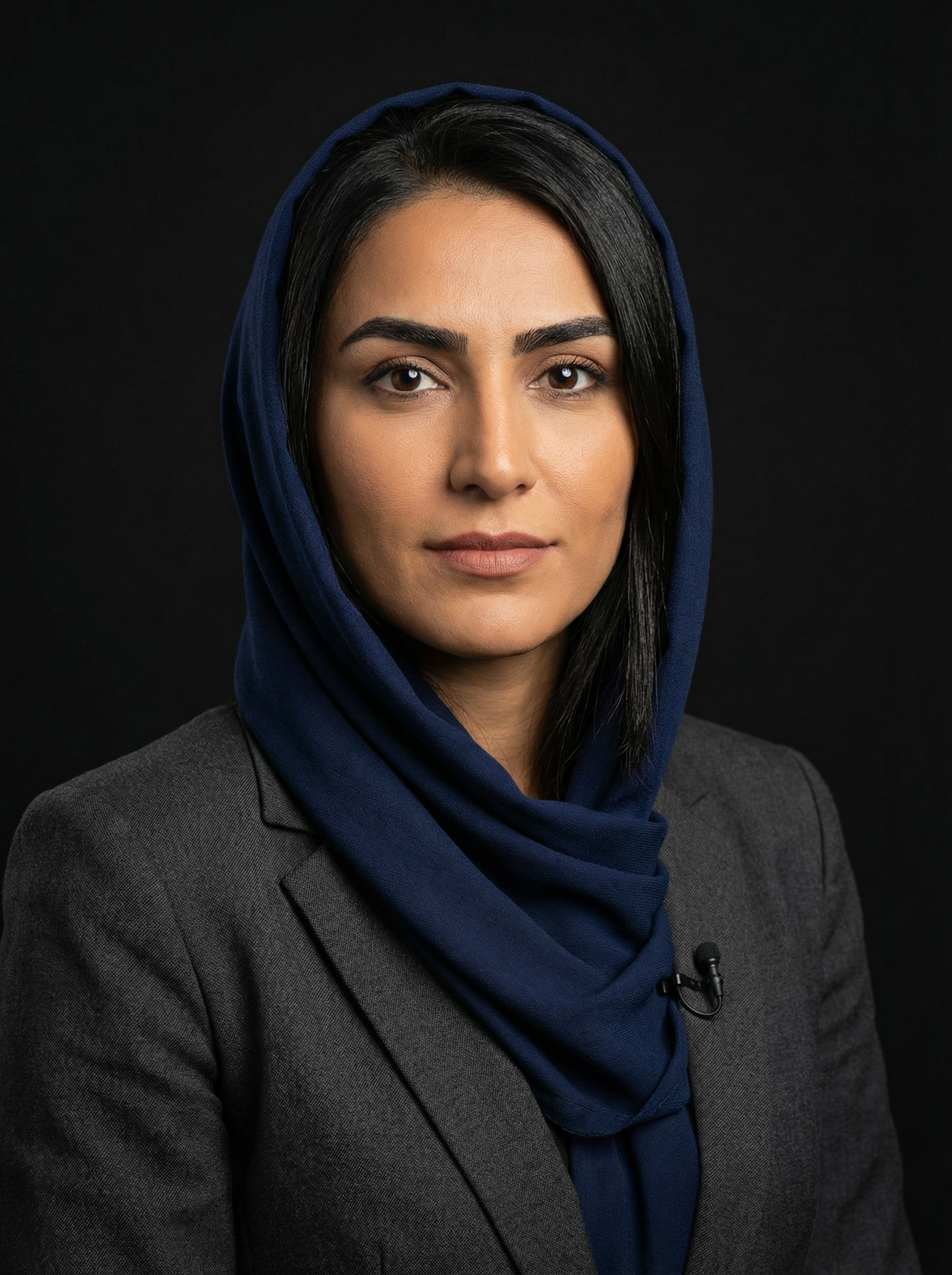
The scent of cardamom tea and old paper hung in the air of Dr. Zahra Ahmadi's small, bustling laboratory, tucked away in a quiet district of Kabul. Outside, the city hummed with its familiar rhythm, a symphony of resilience and daily life. Inside, a different kind of revolution was brewing. Dr. Ahmadi, with her keen eyes and a quiet determination that belied the immense complexity of her work, was not merely building algorithms; she was weaving the very fabric of a more equitable future for Afghanistan, one line of code at a time.
I had traveled across the city, past the vibrant bazaars and the enduring historical sites, to meet her. Her name, whispered among the tech community here and increasingly abroad, was synonymous with a groundbreaking development: small language models, or SLMs, that were beginning to demonstrate capabilities comparable to the much larger, resource-intensive models like OpenAI's GPT-4, but at a fraction of the computational cost and energy footprint. This is not just an academic achievement; for a nation like Afghanistan, grappling with limited infrastructure and pressing humanitarian needs, it represents a profound shift in potential.
Dr. Ahmadi greeted me with a warm, yet focused, smile. Her lab, though modest by Silicon Valley standards, was alive with the quiet whir of servers and the focused energy of her small team. "Welcome, Fatimàh," she said, gesturing to a seat. "It is important that stories like ours are told." Her voice carried the weight of conviction, a reflection of the deep purpose driving her work. I felt immediately that this conversation would be more than just an interview; it would be a journey into the heart of innovation born of necessity.
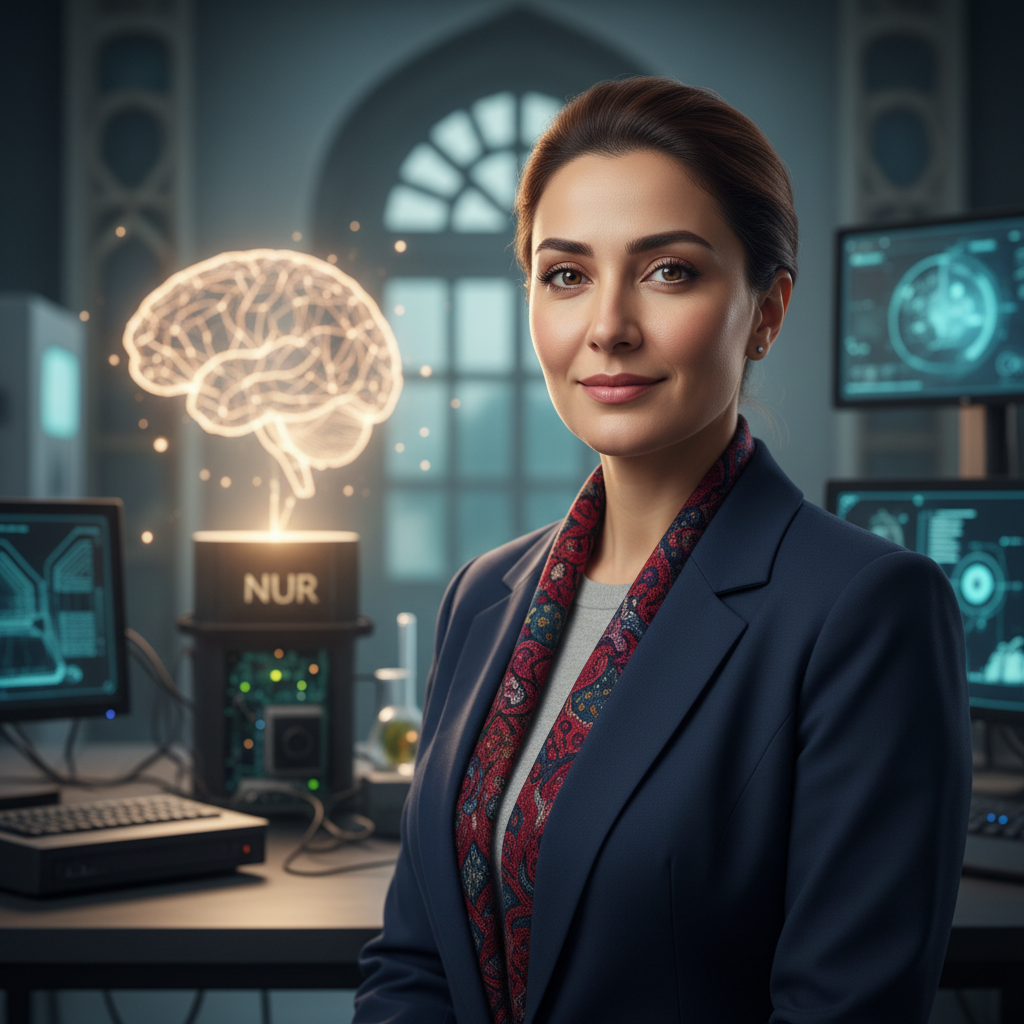
Born in Herat, Dr. Ahmadi pursued her education abroad, earning her doctorate in computer science from a prestigious European university. Yet, her heart remained tethered to her homeland. "I saw the vast chasm between the technological advancements happening globally and the realities on the ground here," she explained, her gaze sweeping over a whiteboard covered in complex equations. "When I returned five years ago, I knew my research had to be relevant, it had to address our unique challenges. The colossal scale of models like GPT-4, while impressive, is simply not sustainable or accessible for most of the world, especially for countries like ours." Her team's flagship model, affectionately named 'Nur' meaning 'light' in Dari, is trained on a meticulously curated dataset, including vast amounts of local languages and cultural contexts, making it uniquely suited for Afghan applications.
Nur, currently operating with approximately 7 billion parameters, a mere fraction of the estimated trillions in cutting edge large language models, has shown remarkable proficiency in tasks ranging from natural language understanding to content generation in Dari and Pashto. Early benchmarks, independently verified by researchers at Kabul University, indicate that Nur achieves an average of 88% of GPT-4's performance on specific language tasks relevant to education and local governance, while consuming 95% less energy and requiring significantly less specialized hardware. This efficiency is paramount. "Imagine the cost of running a GPT-4 instance for a month in Afghanistan, where electricity is neither cheap nor consistently available," Dr. Ahmadi stated. "It is prohibitive. Nur changes that equation entirely."
The implications are staggering. For years, the global conversation around AI has been dominated by a handful of well-funded corporations, primarily in the West. Their models, while powerful, often reflect the biases and priorities of their creators, sometimes overlooking the nuanced needs of diverse cultures. Dr. Ahmadi's work represents a powerful counter-narrative. "Behind every algorithm is a human story," she emphasized, a signature phrase she has used in many public addresses. "And our story, the Afghan story, deserves to be told, understood, and amplified by technology that is built for us, by us."
One of the most surprising revelations during our conversation was the sheer ingenuity employed by Dr. Ahmadi's team to overcome resource constraints. They have developed novel quantization techniques and efficient training methodologies, allowing them to squeeze maximum performance from minimal hardware. "We cannot compete with NVIDIA's superclusters or Google's vast data centers," she admitted, a wry smile playing on her lips. "So, we innovate. We optimize. We find smarter ways to achieve the same, or even better, outcomes for our specific use cases." She detailed how they leveraged older, repurposed GPUs donated by international NGOs, transforming what might be considered obsolete technology elsewhere into powerful tools for local development.
Their vision extends far beyond mere cost savings. Dr. Ahmadi envisions Nur being deployed in critical sectors. "Consider education," she proposed, her voice alight with passion. "Many of our schools lack qualified teachers, especially in remote areas. Nur could power personalized learning tools, provide instant translation for educational materials, or even serve as an interactive tutor in local languages. This is about dignity, about ensuring every child, regardless of their location, has access to quality learning." She spoke of potential collaborations with the Ministry of Education to pilot Nur-powered learning platforms in provinces like Bamyan and Badakhshan, where educational resources are scarce.
Another critical application lies in humanitarian aid and disaster response. Afghanistan is prone to natural disasters, and communication can be challenging. A localized, efficient SLM could process information rapidly, translate urgent messages, and even help analyze satellite imagery to identify affected areas, all without requiring a constant, high-bandwidth internet connection. "Technology should serve the most vulnerable," Dr. Ahmadi asserted, echoing another of her core beliefs. "It should be a tool for empowerment, not another barrier."
I asked her about the challenges, the skepticism she might face. "Of course, there are many," she conceded. "Funding is a constant battle. Attracting and retaining talent in a challenging environment is difficult. And there is always the perception that 'big tech' has all the answers." She paused, then continued with renewed resolve. "But the need here is so immense, the potential impact so profound, that these challenges only fuel our determination. We are not just building models; we are building capacity, fostering local expertise, and demonstrating that innovation can flourish anywhere, even in the most unexpected places."
The conversation shifted to the broader geopolitical implications. While global tech giants like OpenAI and Anthropic continue to push the boundaries of large-scale AI, the rise of efficient SLMs like Nur could democratize access to powerful AI capabilities, reducing reliance on foreign technologies and fostering digital sovereignty. "Imagine a future where every nation, every community, can develop and deploy AI tailored to its unique linguistic and cultural heritage, without being beholden to external providers," she mused. "That is the future we are striving for." This sentiment resonates deeply in a country that has long navigated complex international dynamics.
As our interview drew to a close, Dr. Ahmadi shared a personal anecdote. "My grandmother, a woman of immense wisdom but no formal education, always told me that true knowledge is what helps your community," she recounted. "That philosophy guides me every day. Nur is not just a scientific project; it is a promise to my grandmother, and to all the grandmothers and children of Afghanistan, that technology can indeed be a force for good, a light in the darkness." Her words, delivered with quiet power, underscored the profound human element driving her technological pursuit.
Dr. Ahmadi's work with Nur is a testament to the fact that innovation is not exclusive to the gleaming campuses of Silicon Valley. It thrives wherever there is a pressing need and an unwavering spirit. As the world grapples with the immense power and potential pitfalls of artificial intelligence, the story of Nur from Kabul serves as a vital reminder that the most impactful advancements might just come from those who understand the true value of every resource, and the profound importance of building technology that genuinely serves humanity. The journey of Nur, as reported by Reuters Technology, is one that the global AI community should watch closely, for it offers a blueprint for a more inclusive and equitable technological future. Her insights are also gaining traction in academic circles, with discussions often appearing on platforms like arXiv highlighting efficient model architectures.
The future of AI, it seems, will not solely be defined by the largest models or the biggest budgets, but by the ingenuity, resilience, and deeply human purpose embedded in projects like Nur. It is a future where the voices from places like Afghanistan are not just heard, but are actively shaping the technological landscape, proving that localized innovation can indeed rival global giants. The work being done in Kabul is a powerful example of how necessity can be the mother of invention, and how that invention can truly change lives. The global conversation on AI access and equity is incomplete without acknowledging these vital contributions from the Global South, as highlighted by publications like MIT Technology Review. The quiet revolution of Nur is just beginning.
} }