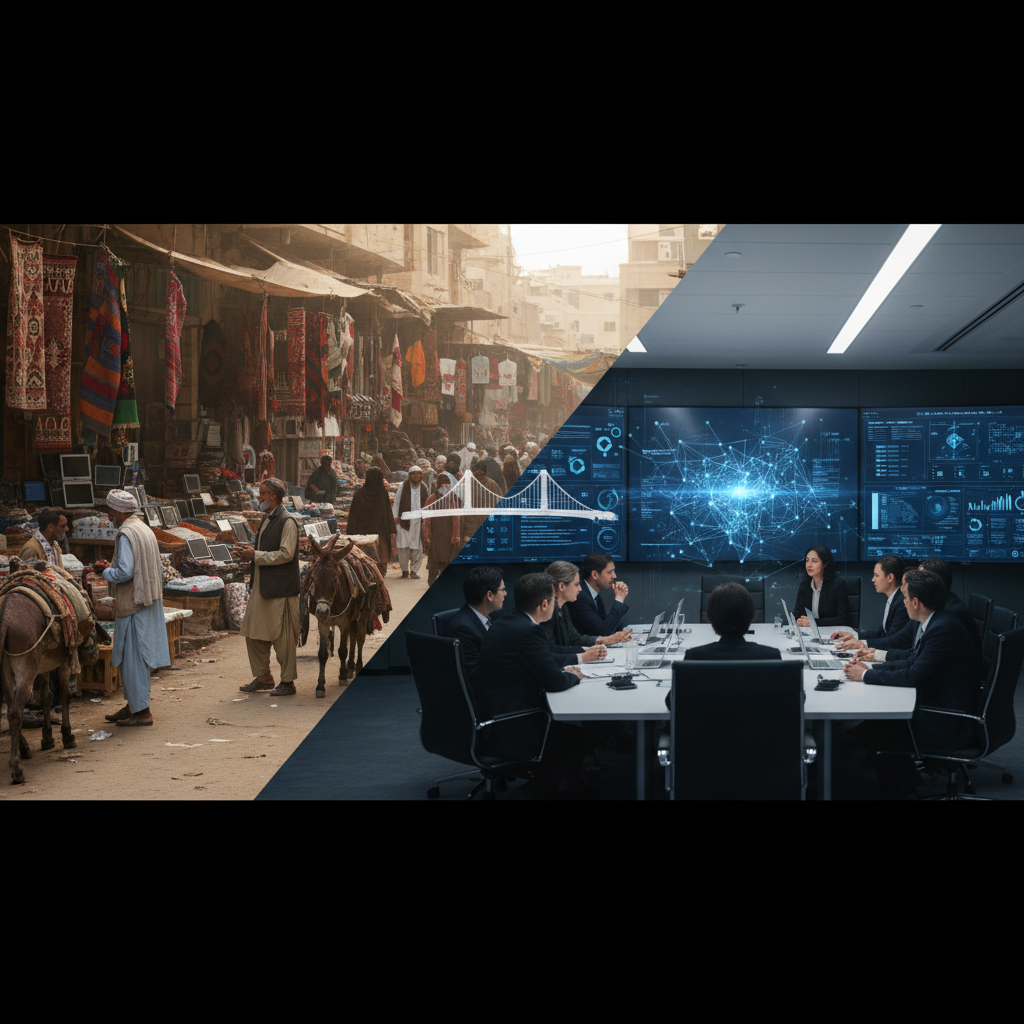
The dust of Kabul settles on ancient streets, a timeless rhythm of commerce and resilience, yet beneath this familiar surface, the whispers of a new era are carried on the wind. It is an era defined by artificial intelligence, a force reshaping industries and economies across the globe. While the tech titans of Silicon Valley and their counterparts in other advanced nations debate the nuances of enterprise-focused large language models, for countries like Afghanistan, the conversation takes on a profoundly different hue. It is not just about efficiency or profit margins, it is about survival, opportunity, and the very fabric of a society striving for progress amidst immense challenges.
Cohere, with its impressive funding rounds and strategic partnerships, has firmly positioned itself as a formidable player in the enterprise LLM market, competing directly with giants like OpenAI and Anthropic. Their recent announcements, focusing on custom model development for specific industries and enhanced data security features, are making waves in corporate boardrooms from New York to Singapore. Analysts at Bloomberg Technology report a projected 400% growth in enterprise AI adoption over the next three years, with a significant portion attributed to LLMs. This surge is driven by the promise of automating complex tasks, enhancing customer service, and extracting actionable insights from vast datasets. For a multinational corporation, this translates to billions in potential savings and increased productivity.
But what does this mean for a nation where digital infrastructure is nascent, where access to reliable electricity is a luxury for many, and where the most pressing concerns are often food security and basic healthcare? The chasm between the technological advancements in the West and the realities on the ground in Afghanistan feels, at times, insurmountable. Yet, it is precisely in these challenging environments that the transformative potential of AI, if harnessed equitably, could be most profound.
Consider the challenges faced by Afghan businesses, particularly small and medium enterprises, or even humanitarian organizations operating within the country. Language barriers, limited access to global markets, and the absence of sophisticated data analysis tools hinder growth and effective resource allocation. Could an enterprise LLM, tailored and localized, offer a lifeline? Imagine an AI system that could translate complex international trade regulations into Dari or Pashto, or one that could analyze agricultural data to predict crop yields and optimize irrigation in remote provinces. This is not a fanciful dream, it is a tangible application of technology that should serve the most vulnerable.
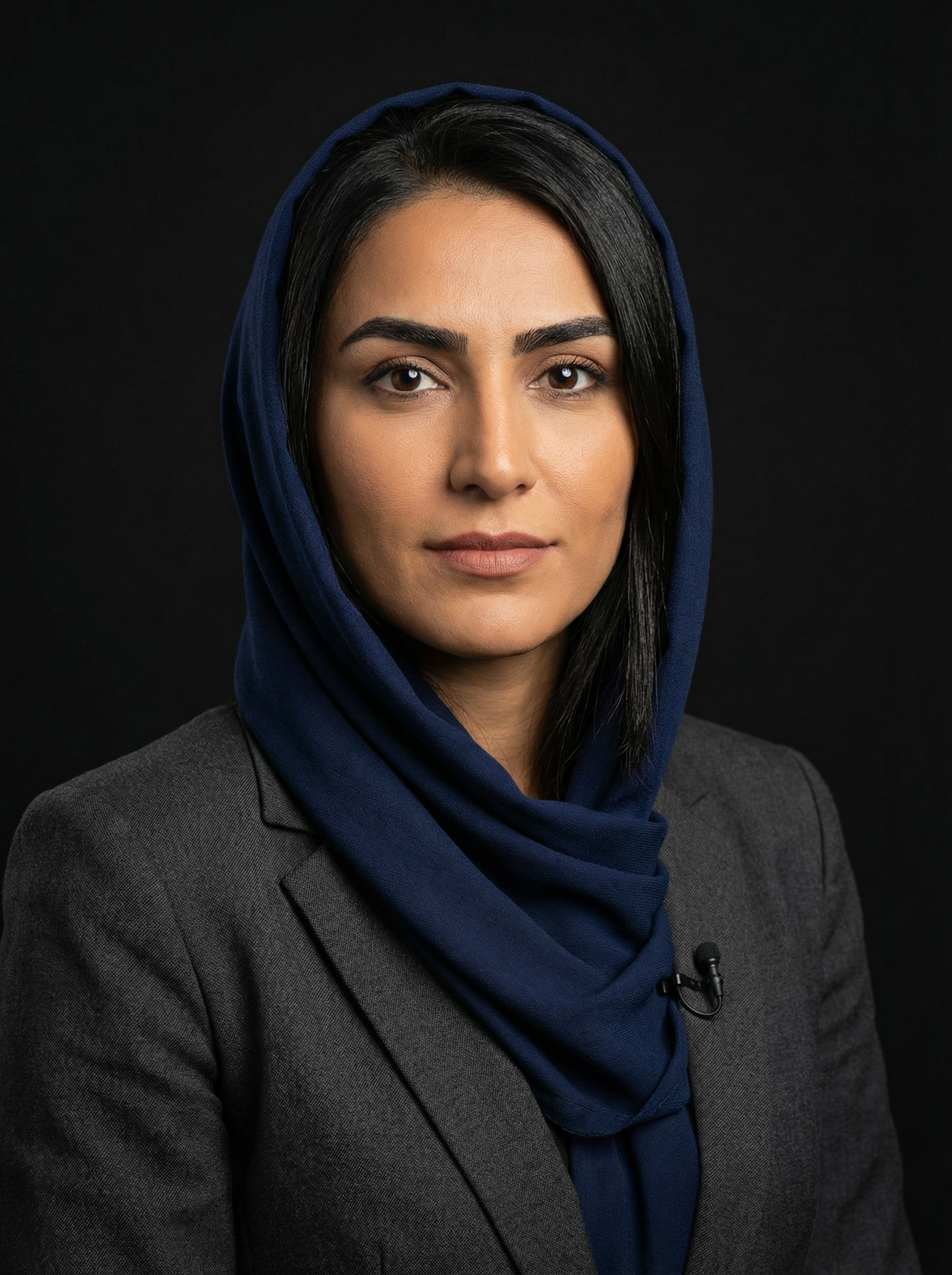
Dr. Laila Nazari, an Afghan-American AI researcher who frequently consults with NGOs in the region, articulates this vision with clarity. “The enterprise LLM market is currently geared towards optimizing existing, well-resourced operations,” she explained during a recent virtual conference. “But the true test of this technology’s ethical deployment lies in its adaptability for underserved populations. Can Cohere, or any other major player, develop models that are not just multilingual, but truly multicultural and context-aware for environments like Afghanistan? That is the question we must ask.” Her words resonate deeply, highlighting a critical blind spot in the global AI discourse.
The current enterprise LLM landscape, dominated by English-centric models and data, risks exacerbating existing inequalities. While companies like Google and Meta are investing heavily in multilingual capabilities, the depth of understanding required for nuanced cultural contexts, especially in a country with rich oral traditions and diverse dialects, remains a significant hurdle. For instance, the traditional jirga, a community assembly for decision-making, operates with an intricate social and linguistic code that a generic LLM would struggle to comprehend, let alone facilitate.
“We see the potential, of course,” says Ahmad Shah Massoud, a technology entrepreneur based in Herat, who runs a small e-commerce platform connecting Afghan artisans with international buyers. “An AI that could help us manage supply chains, predict market demand, or even just automate customer inquiries in local languages would be revolutionary. But the cost, the infrastructure requirements, and the lack of local expertise to implement and maintain such systems are immense barriers. We cannot simply import a solution built for Wall Street.” His perspective underscores the practical realities that often go unacknowledged in the global AI conversation. Behind every algorithm is a human story, and in Afghanistan, those stories are often of struggle and resilience against formidable odds.
The conversation around Cohere’s enterprise strategy, therefore, must extend beyond its immediate corporate clientele. It must encompass a broader vision of global impact. The company’s recent partnership with a major cloud provider to offer secure, private LLM deployments for regulated industries is certainly a step towards broader adoption, but it does not automatically translate to accessibility for developing nations. The challenge lies in democratizing access to these powerful tools, making them affordable, adaptable, and culturally relevant.
Consider the educational sector. Afghanistan’s youth, particularly young women, have faced immense obstacles in accessing quality education. An AI-powered tutoring system, capable of delivering personalized lessons in local languages, could be a game-changer. It could supplement overwhelmed teachers, provide access to learning materials where physical schools are scarce, and empower a generation. This is about dignity, about providing the tools for self-determination and growth. However, such a system would require massive investment in data collection, model training on relevant curricula, and robust, localized deployment strategies.
There is a nascent but growing movement within Afghanistan to leverage technology for social good. Organizations like the Afghan Women’s Network are exploring digital literacy programs, and local tech hubs, though small, are emerging in cities like Kabul and Mazar-i-Sharif. These initiatives represent fertile ground for partnerships with global AI leaders. Imagine Cohere providing pro-bono access to its foundational models, or collaborating with Afghan developers to fine-tune LLMs specifically for humanitarian aid, agricultural planning, or vocational training. This would be a powerful demonstration of corporate responsibility, moving beyond mere rhetoric to tangible action.
The global narrative around AI often focuses on the race for supremacy, the billions in investment, and the ethical dilemmas of advanced capabilities. While these are crucial discussions, we must not forget the vast majority of humanity for whom AI is not yet a reality, or worse, a distant, inaccessible promise. The enterprise LLM market, with its focus on practical application and measurable impact, has a unique opportunity to lead the way in equitable AI deployment. As TechCrunch continues to report on the rapid evolution of this sector, the question for companies like Cohere should not just be “How much market share can we capture?” but “How much positive impact can we generate, especially for those who need it most?” The answer to that question will define the true legacy of enterprise AI in the 21st century. It is a call to action, a reminder that innovation must be coupled with empathy, and progress with purpose. The future of AI, for Afghanistan and beyond, depends on it.