
Is it just me, or does it feel like we are always waiting for a miracle, especially when it comes to health? For generations, our grandmothers and traditional healers in Zimbabwe have understood the power of the earth, extracting remedies from indigenous plants, a slow, painstaking process. Now, the tech giants are telling us that artificial intelligence, specifically in drug discovery, is that miracle. They are saying it can cut pharmaceutical research and development timelines from years, sometimes decades, down to mere months. But I have to ask, is this a genuine dawn for global health, or just another glittering promise from Silicon Valley that will bypass the very people who need it most?
Let us rewind a bit. The pharmaceutical industry has always been a beast of burden, a necessary one, but a beast nonetheless. Developing a new drug, from initial concept to market, traditionally takes an average of 10 to 15 years and costs billions of dollars. We are talking about a process riddled with failures, where only a tiny fraction of compounds ever make it past clinical trials. This is why medicines are so expensive, and why diseases prevalent in regions like ours, without the same market incentives, often get neglected. It is a system built on slow science and massive capital investment, a system that has left many, particularly in the Global South, behind.
Now, enter AI. We are not talking about simple data analysis here. We are talking about sophisticated machine learning models, like Google DeepMind's AlphaFold 3, which can predict the structure of proteins with astonishing accuracy. Why does this matter? Because understanding protein structures is fundamental to understanding how diseases work and how drugs can interact with them. Imagine trying to design a key without knowing the shape of the lock; that is what drug discovery often felt like before. With AI, it is like having a master key designer who can visualize the lock in 3D, instantly.
Companies like Recursion Pharmaceuticals, BenevolentAI, and Insilico Medicine are leading the charge. Insilico Medicine, for instance, used its AI platform, Pharma.AI, to identify a novel target for idiopathic pulmonary fibrosis, design a new molecule, and take it to clinical trials in a fraction of the usual time. They went from target discovery to a clinical candidate in less than 18 months, a process that typically takes several years. This is not just shaving off a few weeks; it is a fundamental re-engineering of the entire pipeline. The sheer speed is breathtaking, almost dizzying.
According to a report by MIT Technology Review, the global AI in drug discovery market is projected to grow exponentially, reaching tens of billions of dollars within the next decade. This is not a niche trend; it is a seismic shift. Major pharmaceutical players like AstraZeneca, Pfizer, and Novartis are pouring billions into AI partnerships and in-house capabilities. They are not doing this for charity; they are doing it because the data is clear: AI accelerates discovery, reduces costs in the long run, and increases the probability of success.
But here is where my Zimbabwean lens comes into play. When I hear about these breakthroughs, I think of the countless people in my country, and across Africa, who still lack access to basic medicines, let alone cutting-edge treatments. We have diseases like malaria, tuberculosis, and HIV that have plagued us for generations, and while progress has been made, the R&D cycle for new, more effective, and affordable treatments still feels agonizingly slow. Will AI truly democratize drug discovery, making life-saving treatments accessible and affordable for everyone, or will it just create a new tier of ultra-expensive, AI-designed drugs for the wealthy few?
I recently spoke with Dr. Tendai Murewa, a pharmacologist at the University of Zimbabwe's College of Health Sciences. She is cautiously optimistic. “The potential is undeniable, Zinhlée,” she told me. “Imagine if we could rapidly discover compounds effective against neglected tropical diseases, or even develop personalized treatments for cancers prevalent in our population, using our own genetic data. The challenge, however, lies in infrastructure, data access, and equitable distribution. We need to ensure that the algorithms are trained on diverse datasets, including African genomic data, to avoid biases that could render these drugs less effective for us.” Her point is crucial: if the AI is primarily trained on data from European or North American populations, will the resulting drugs be optimized for us?
Another voice I respect, Dr. John Nkengasong, Director of the Africa Centres for Disease Control and Prevention, has often emphasized the need for African agency in health innovation. He has said, and I am paraphrasing here, that Africa cannot always be a recipient; we must be a contributor. This AI revolution in drug discovery presents a unique opportunity for us to leapfrog traditional R&D bottlenecks. Imagine if institutions like the African Institute for Biomedical Science and Technology, or even smaller biotech startups across the continent, could leverage these AI tools. We could focus on diseases that specifically affect our communities, diseases that the global pharmaceutical giants might overlook because the market is not 'lucrative' enough.
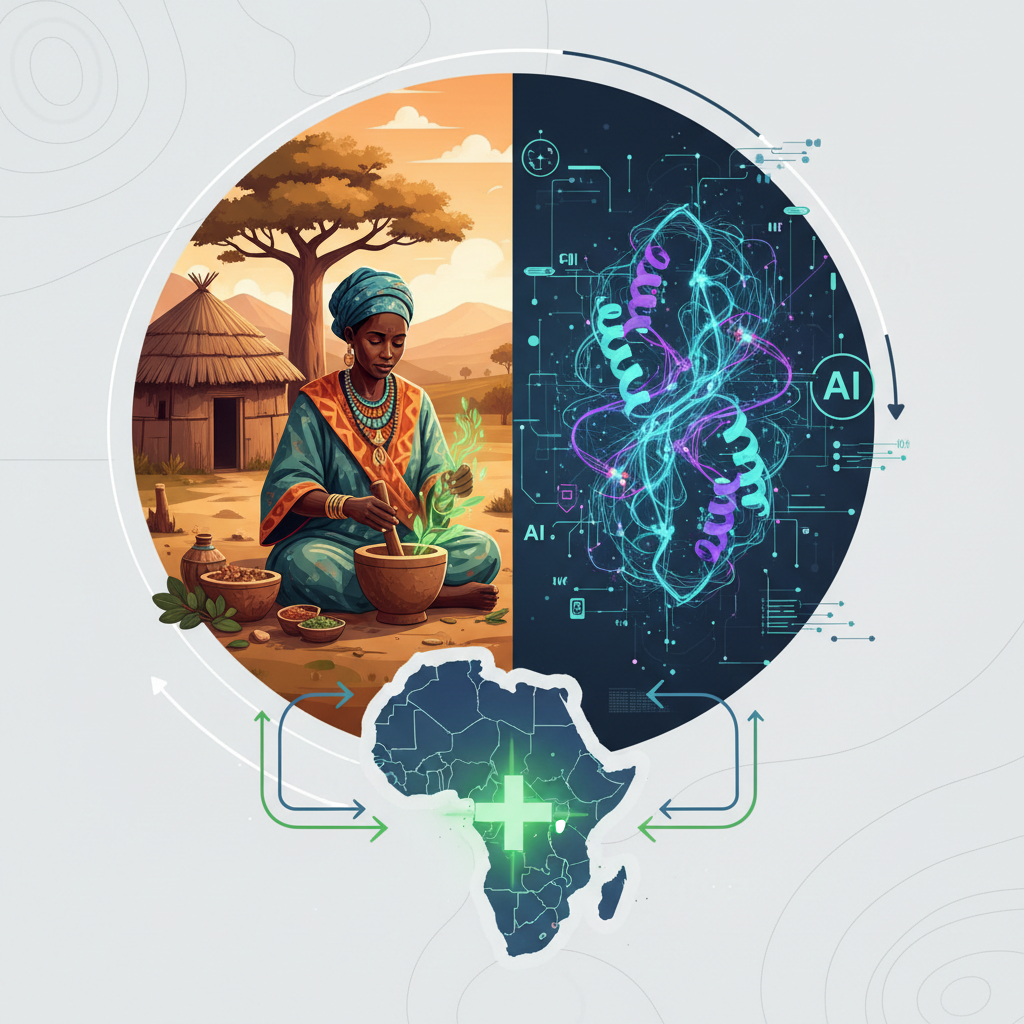
This is not just about technology; it is about sovereignty. It is about taking control of our health destiny. The future is African, and that includes our future in healthcare innovation. We have brilliant minds here, researchers and scientists who, given the right tools and investment, could harness these AI platforms to solve our unique health challenges. We have a rich biodiversity, a treasure trove of traditional knowledge that, when combined with AI, could unlock entirely new avenues for drug discovery. Think of the umkhanyakude tree, revered by our traditional healers for its medicinal properties; what secrets could AI unlock from its compounds, faster and more efficiently than ever before?
So, is AI-powered drug discovery a fad or the new normal? I am calling it now: it is the new normal, and it is here to stay. The efficiency gains, the cost reductions, and the sheer acceleration of the discovery process are too significant to ignore. Pharmaceutical companies that do not embrace AI will simply be left behind. However, the critical question for us, for Zimbabwe, and for Africa, is how we ensure this new normal benefits everyone, not just a privileged few. We need investment in local AI talent, access to these powerful computational platforms, and policies that promote equitable access to the medicines developed. Otherwise, we risk a future where the miracle cures are discovered in months, but still take decades to reach those who need them most, trapped behind walls of patents and prohibitive pricing.
Watch this space. The potential for AI to revolutionize health is immense, but the fight for equitable access and African leadership in this revolution is just beginning. We must ensure that the promise of AI-driven drug discovery translates into tangible health outcomes for all, from the bustling markets of Mbare to the remote villages of Binga. The science is moving at warp speed; now, our collective will to ensure fairness must keep pace. For more on the broader implications of AI in healthcare, you might find this interesting: The Verge on AI in healthcare.