¡Hola, mis amigos! Mariànnà Sanchèz here, bubbling with excitement as always, because today we are diving deep into a story that truly embodies the spirit of innovation, open science, and the profound impact technology can have on our world. We are talking about Dr. Joelle Pineau, the co-managing director of Meta AI's Fundamental AI Research, or Fair, lab. Her journey, her vision, and her commitment to open science are not just shaping the future of artificial intelligence, they are also laying the groundwork for how AI can become a powerful ally for conservation, a topic so close to my Ecuadorian heart.
Imagine a world where the most advanced AI tools are not locked away in corporate vaults but are freely available, sparking innovation in every corner of the globe. That is the world Dr. Pineau is striving to build. For me, coming from Ecuador, a country renowned for its unparalleled biodiversity, this open approach is not just academic, it is revolutionary. It means that local researchers, conservationists, and even passionate citizens can harness cutting-edge AI to protect our precious ecosystems, from the Amazon rainforest to the Galápagos Islands. It is where Ecuador's biodiversity meets AI and it is magical.
Dr. Pineau's story is one of relentless curiosity and a deep-seated belief in collaboration. She grew up in Ottawa, Canada, a place far removed from the tropical wonders of my homeland, but her intellectual journey has brought her to a place where her work resonates globally. She pursued her undergraduate degree in engineering physics at the University of British Columbia, then earned her master's and Ph.D. in robotics from Carnegie Mellon University. This foundational training in robotics and artificial intelligence set her on a path to explore the most complex challenges in machine learning.
Before joining Meta, Dr. Pineau was a professor at McGill University and a faculty member at Mila, the Quebec Artificial Intelligence Institute, a global hub for AI research. It was there that she truly honed her philosophy of open research. She understood that progress accelerates when knowledge is shared, when algorithms and models are not proprietary secrets but communal resources. This ethos aligns perfectly with Meta AI's Fair lab, which has become a beacon of open science in the AI world, releasing models like Llama, Segment Anything, and AudioCraft to the public, empowering countless developers and researchers.
Her commitment to open science is not just theoretical. "We believe that open science is the best way to accelerate progress in AI," Dr. Pineau has stated in interviews, emphasizing the importance of community contributions. "By making our research and models openly available, we enable a wider community to build upon our work, identify new applications, and discover potential issues, ultimately leading to more robust and beneficial AI systems." This philosophy has profound implications for places like Ecuador, where resources for developing cutting-edge AI from scratch can be limited. With open models, the barrier to entry is dramatically lowered.
One of the defining moments in her career, and perhaps a pivotal one for the broader AI community, was her leadership in making large language models more accessible. The release of Llama, Meta's family of large language models, was a game changer. It democratized access to powerful AI, moving beyond the walled gardens of a few tech giants. For us in Ecuador, this means our local startups and universities can experiment, innovate, and tailor AI solutions to our unique environmental and social challenges without needing to build foundational models from the ground up. This Ecuadorian startup just might be the next big thing, all thanks to open-source foundations.
The journey of building and leading a world-class research lab like Fair is not without its challenges. It requires navigating the complex landscape of cutting-edge research, balancing academic freedom with corporate objectives, and fostering a culture of innovation and collaboration. Dr. Pineau has excelled at this, creating an environment where researchers are encouraged to push boundaries and share their findings broadly. Her leadership style is often described as supportive and visionary, empowering her teams to tackle ambitious projects.
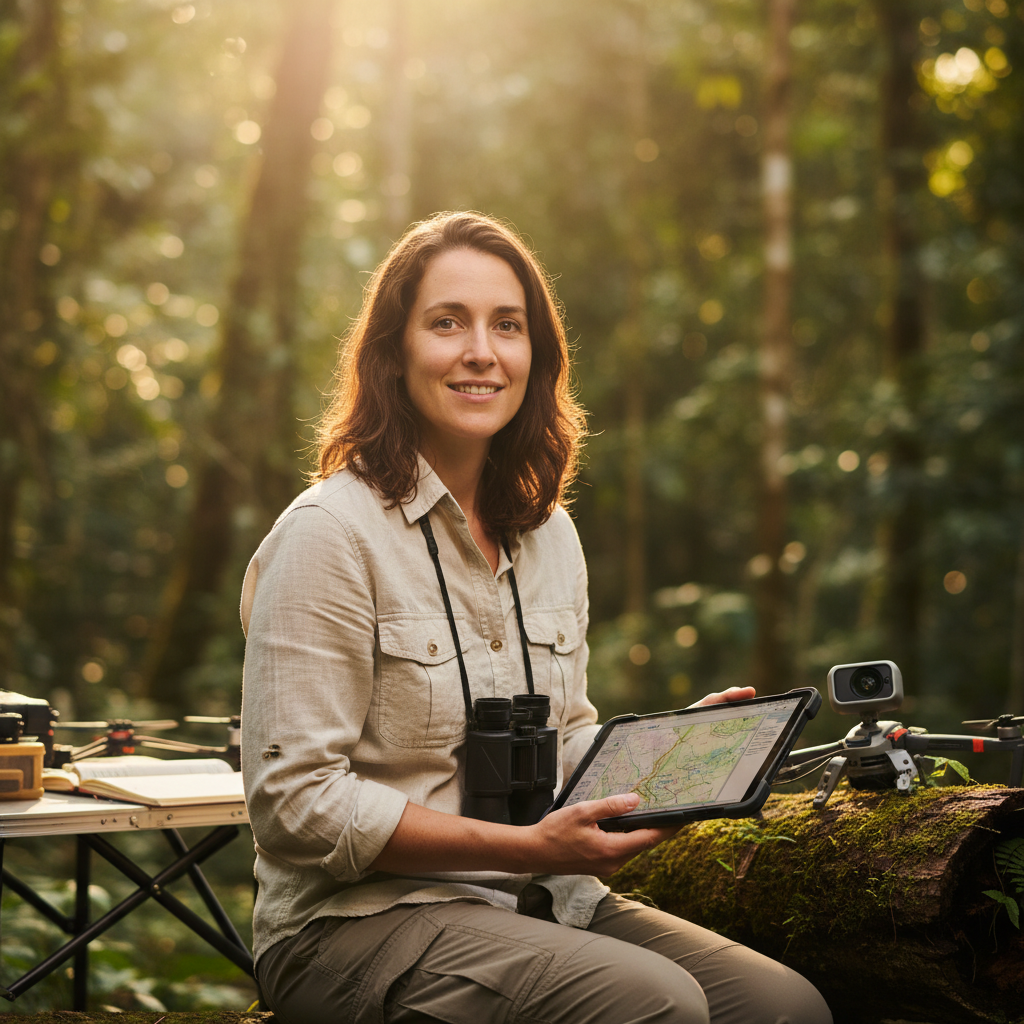
Her work is particularly inspiring when we consider its potential for conservation. Imagine AI models, trained on vast datasets of satellite imagery and acoustic recordings, helping us monitor deforestation in the Amazon in real time, or tracking endangered species in the Galápagos. Meta's open models provide the computational backbone for such applications. For example, the Segment Anything Model, or SAM, could be used by conservationists to quickly identify and segment different plant species or animal habitats from aerial photos, a task that would be incredibly time-consuming for humans. This is the Galápagos of technology, where every new tool opens up an island of possibilities.
Dr. Pineau's influence extends beyond just releasing models. She actively advocates for responsible AI development and ethical considerations, understanding that powerful technology must be wielded with care. Her involvement in various AI ethics initiatives and her public discussions on the topic underscore her commitment to ensuring AI benefits humanity as a whole, not just a select few. As Wired has often highlighted, the ethical dimension of AI is as crucial as its technical prowess.
Looking ahead, Dr. Pineau and the Fair team continue to push the frontiers of AI, exploring multimodal AI, embodied AI, and more. Their ongoing research promises even more powerful and versatile tools that will undoubtedly find applications in areas we cannot even fully imagine today. For a country like Ecuador, with its rich cultural heritage and unparalleled natural beauty, these advancements offer a glimmer of hope for a future where technology and nature can coexist and thrive. We can use these tools to better understand the delicate balance of our ecosystems and to educate the next generation of environmental stewards.
What truly drives Dr. Pineau is the belief that AI can be a force for good, a tool to solve some of the world's most pressing problems. Her dedication to open science is a testament to this belief, creating a ripple effect that empowers researchers and innovators globally. It is a vision that I, Mariànnà Sanchèz, find incredibly compelling, a future where the brilliance of human ingenuity, amplified by AI, works in harmony with the natural world. It is a future worth building, and thanks to leaders like Dr. Joelle Pineau, it is a future within our grasp. Her work is not just about algorithms, it is about unlocking potential, fostering collaboration, and ultimately, building a better world for all of us. And for that, I say, ¡muchas gracias! You can learn more about Meta AI's open research initiatives on their official page ai.meta.com.
This commitment to open research also aligns with the broader movement towards accessible AI, a topic frequently discussed in the tech community. For instance, the challenges and opportunities of open-source AI in other Latin American countries, like Colombia, highlight the global relevance of FAIR's approach. Hugging Face's Open-Source AI: Will Colombia's New Regulations Keep the Digital Door Open for Everyone? [blocked] explores similar themes of access and regulation, showing that Dr. Pineau's work has a wide-reaching impact beyond just the lab.
Her journey reminds us that the most impactful innovations often come from a place of generosity and a willingness to share. It is not just about building the most powerful AI, but about building an AI ecosystem that is inclusive, ethical, and beneficial for everyone, everywhere. And that, my friends, is a future I am incredibly excited to report on. Keep your eyes open, because the next big breakthrough, powered by open AI, could be happening right here in Ecuador! We are ready. We are eager. And we are inspired.