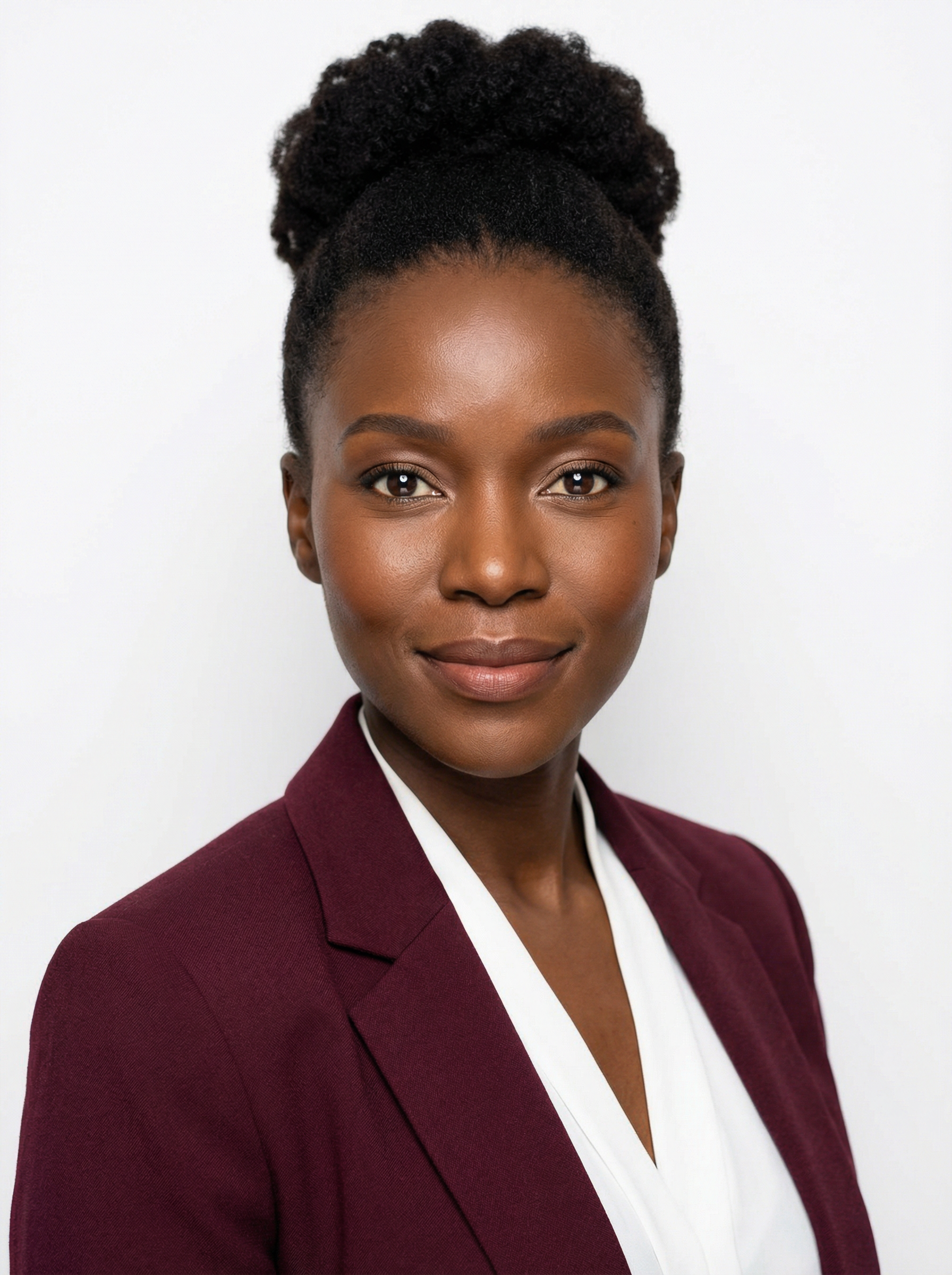
The air in Washington D.C. in April 2026 is thick with two things: cherry blossoms and the scent of lobbying money. Everyone, from Google to the smallest startup with a fancy acronym, wants a piece of the pie as the US Congress debates comprehensive AI legislation. But amidst the usual suspects and their well-oiled influence machines, a new player has emerged, one whose story began not in a Stanford dorm room, but under the relentless sun of Dar es Salaam. Her name is Dr. Imani Kijana, and her company, Uaminifu AI, is making the giants sweat.
I first met Imani at a tech summit in Nairobi a few years back. She was on a panel discussing algorithmic bias, and while others spoke in academic jargon, Imani cut straight to the chase. She talked about how an AI credit scoring system, trained on biased data, could lock out millions of small business owners in Africa, perpetuating cycles of poverty. Her voice, calm yet resonant, carried the weight of lived experience. She wasn't just theorizing about bias, she was fighting it. She ended her talk with a simple, powerful statement: 'If we don't build ethics into AI from the ground up, we're just automating inequality, only faster.' I remember thinking, you can't make this stuff up, the audacity of some of these tech bros, and then here she was, calling them out with such elegance.
Imani's journey began in a bustling neighborhood of Dar es Salaam, Tanzania. Her father was a secondary school teacher, her mother a small-scale entrepreneur selling fabric at Kariakoo Market. Education was their family's religion. Imani devoured books, often under the flickering light of a kerosene lamp during power outages. She excelled in mathematics and physics, a rarity for girls in her community at the time. 'I saw patterns everywhere,' she once told me, 'in the flow of people through the market, in the way my mother managed her inventory, even in the rhythm of the waves on the Indian Ocean.'
Her brilliance earned her a scholarship to the University of Dar es Salaam, where she pursued computer science. It was there, during a project on predictive analytics for agricultural yields, that she first encountered the dark side of data. 'The models were brilliant, mathematically sound,' she recalled, 'but they consistently predicted lower yields for farms owned by women, simply because historical data showed men owned larger, better-resourced farms. The AI wasn't racist, but the data it learned from was.' This was her 'aha!' moment, the seed of Uaminifu AI.
After graduating top of her class, Imani secured another scholarship, this time to MIT, where she specialized in machine learning and AI ethics. The cultural shock was immense, but her focus remained unwavering. It was at a hackathon during her Ph.D. program that she met her co-founder, Dr. Ben Carter, a brilliant but somewhat socially awkward data scientist from Boston. Ben was obsessed with the technical purity of algorithms, while Imani was driven by their societal impact. 'He saw the elegance of the code, I saw the faces of the people it would affect,' Imani laughed, recounting their early, often heated, debates. 'It was a beautiful clash of perspectives, really.'
Their first attempt at a startup, a personalized learning platform for underserved communities, failed spectacularly. They poured their hearts and meager savings into it, but couldn't secure enough funding to scale. 'We were too early, perhaps,' Imani mused. 'Or maybe we just hadn't learned how to sell a vision that wasn't just about profit.' They pivoted, hard. The core idea of fairness and impact remained, but the application shifted. Instead of building AI, they would build tools to scrutinize it.
Uaminifu AI, Swahili for 'Trustworthiness AI,' was born in 2021. Their initial product was a suite of open-source tools for auditing AI models for bias, transparency, and robustness. They started small, working with NGOs and academic institutions. The 'garage moment' for them was actually a cramped, windowless office in a Cambridge incubator, fueled by instant coffee and the occasional samosa from a nearby Tanzanian restaurant. Their big break came when a major financial institution, facing public scrutiny over biased loan approvals, hired them to audit their AI systems. Uaminifu AI identified critical flaws, helped them retrain their models, and restored public trust. The success story spread like wildfire.
In 2023, Uaminifu AI secured a $30 million Series A round at a $300 million valuation, led by Altos Ventures, with participation from Y Combinator and a small, but significant, investment from the Tanzanian Diaspora Fund. 'It wasn't just about the money,' Imani stressed, 'it was about validating our mission. It showed that ethics wasn't just a nice-to-have, but a business imperative.' Their revenue milestones have been impressive, hitting $100 million ARR by early 2026, largely driven by enterprise contracts with companies eager to avoid regulatory fines and reputational damage. They now employ over 200 people, with offices in Boston, London, and a growing research hub in Dar es Salaam.
Today, Imani Kijana, at 34 years old, is a force to be reckoned with. She's testifying before congressional committees, advising global tech giants, and still finding time to mentor young women in Stem back home. Her company's AI auditing platform, now a sophisticated SaaS offering, is considered the gold standard for ethical AI deployment. 'We're not here to stop innovation,' she told a recent panel, 'we're here to ensure it serves humanity, not just shareholders.'
The US Congress is grappling with complex issues: how to balance innovation with safety, how to define accountability, and how to prevent algorithmic discrimination. Lobbyists from OpenAI and Anthropic are pushing for self-regulation, while consumer advocacy groups demand stricter oversight. Imani and Uaminifu AI are positioned right in the middle, offering practical solutions and a voice of reason. 'The future of AI is not just about what it can do,' Imani stated in her latest congressional testimony, 'it's about what it should do, and how we ensure it does it fairly. That's the conversation we need to have, not just in Washington, but everywhere.'
Her personal sacrifices have been immense. Long hours, constant travel, and the immense pressure of leading a rapidly growing company. Yet, she remains grounded. She regularly visits her family in Dar es Salaam, finding solace in the familiar rhythms of her childhood. 'It reminds me why I started,' she says, 'that the algorithms we build in Silicon Valley have real-world consequences for people like my mother, my neighbors, my country.'
What drives her? A deep-seated belief that technology, when wielded responsibly, can be a powerful force for good. She envisions a future where AI is a tool for empowerment, not just efficiency. 'We're building the guardrails for a technology that will reshape our world,' she says, 'and frankly, welcome to the future, because it's weird, and we need to make sure it's also just.' Her work is a testament to the fact that groundbreaking innovation and profound ethical considerations are not mutually exclusive, and sometimes, the sharpest insights come from those who have seen the world from a different vantage point, far from the echo chambers of Silicon Valley. Her vision is clear: AI must serve all of us, not just a privileged few. And in the halls of power, both technological and political, Imani Kijana is making sure that message is heard loud and clear. For more on the ongoing debates, you can follow the latest developments on TechCrunch or Reuters Technology. The conversation around AI ethics is only just beginning, and Imani Kijana is leading the charge, proving that sometimes, the most impactful solutions come from the most unexpected places. Her story is a powerful reminder that the global AI landscape is richer and more complex than many in the West often perceive, with critical voices like hers shaping its very foundations, as highlighted by publications like MIT Technology Review.