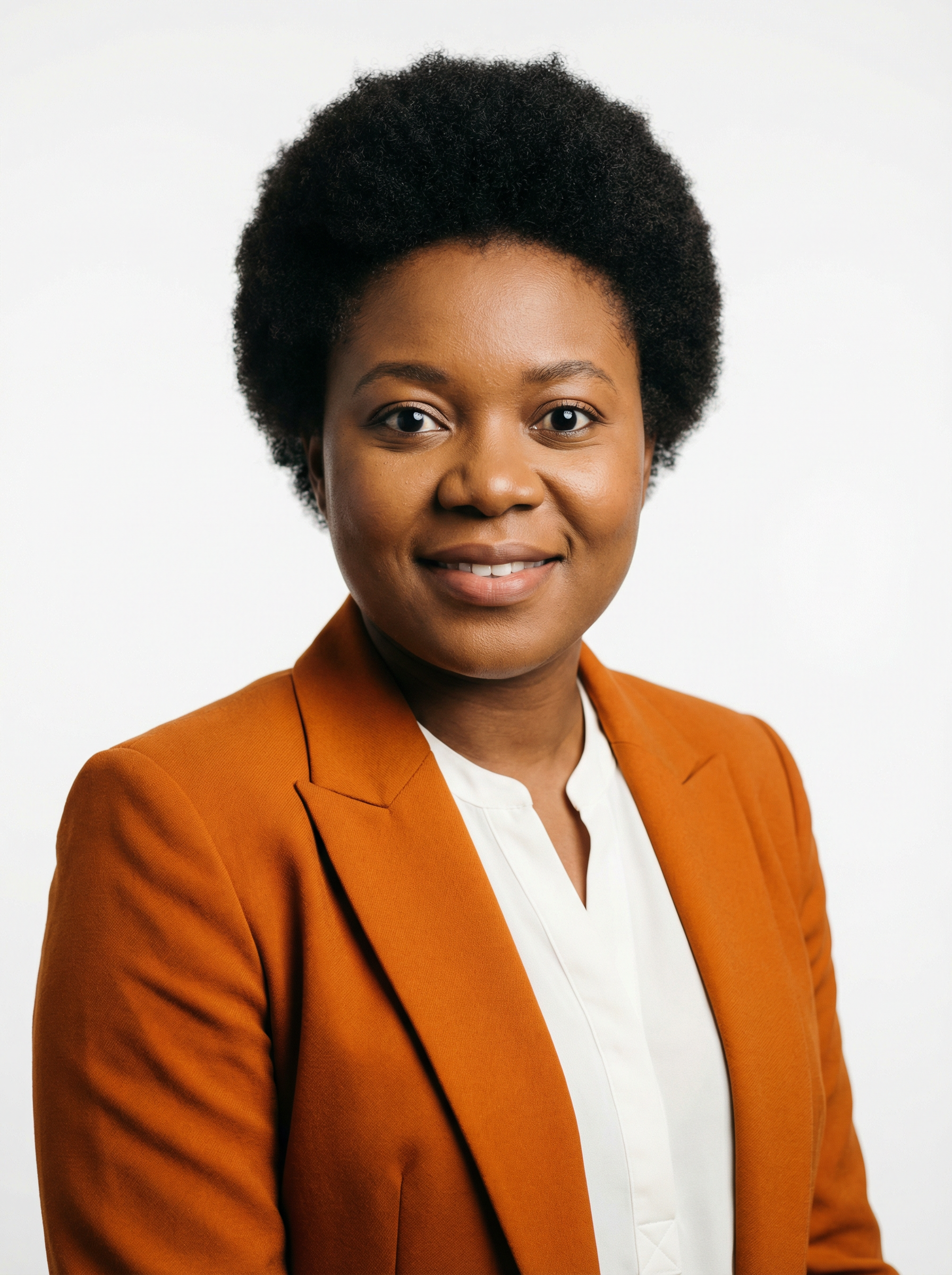
The air in Dar es Salaam is thick with the scent of spices and exhaust fumes, a symphony of urban life that hums with ambition. It is a world away from the silent, cold vacuum of space, yet for Naledi Thabiso, the two are inextricably linked. I first met Naledi at a small tech meetup, tucked away in a bustling corner of the city, where she spoke with a quiet intensity that belied the cosmic scale of her work. She was talking about algorithms, satellite imagery, and the search for extraterrestrial intelligence, all while sipping a lukewarm soda. You can't make this stuff up, I thought, as she effortlessly transitioned from discussing the challenges of local infrastructure to the intricacies of deep space communication. This woman, born and raised under the Tanzanian sun, is teaching satellites to think. Welcome to the future, because it is weird, and wonderfully so. It is also, profoundly, African.
Naledi Thabiso, the CEO and co-founder of AstroSense AI, is not your typical Silicon Valley archetype. There is no hoodie, no overly rehearsed pitch deck, just a sharp mind and an unwavering belief that Africa has a critical role to play in humanity's quest for the stars. Her journey began not with a fascination for rockets, but with a deep love for patterns, for understanding how things work, and for problem-solving. Growing up in a modest home in Dar es Salaam, she was often found tinkering with old radios and dissecting discarded electronics, much to the amusement and occasional exasperation of her family. Her parents, both educators, nurtured her curiosity, encouraging her to pursue science and mathematics.
“My mother always told me, 'Naledi, the universe is a book, and mathematics is its language,'” she once recounted during an interview with a local newspaper. “That stuck with me. I saw the world in equations, in probabilities.” This early fascination led her to the University of Dar es Salaam, where she excelled in computer science, specializing in machine learning. It was here that she first encountered the burgeoning field of AI, not as a futuristic fantasy, but as a powerful tool for deciphering complex data.
After graduating, Naledi briefly worked for a telecommunications company, optimizing network traffic, but her mind kept drifting skyward. The sheer volume of data being generated by Earth-observing satellites captivated her. “We were collecting terabytes of information every day, but only scratching the surface of what it could tell us,” she explained. “Most of it was just sitting there, waiting for someone to ask the right questions.” This realization became the seed for AstroSense AI.
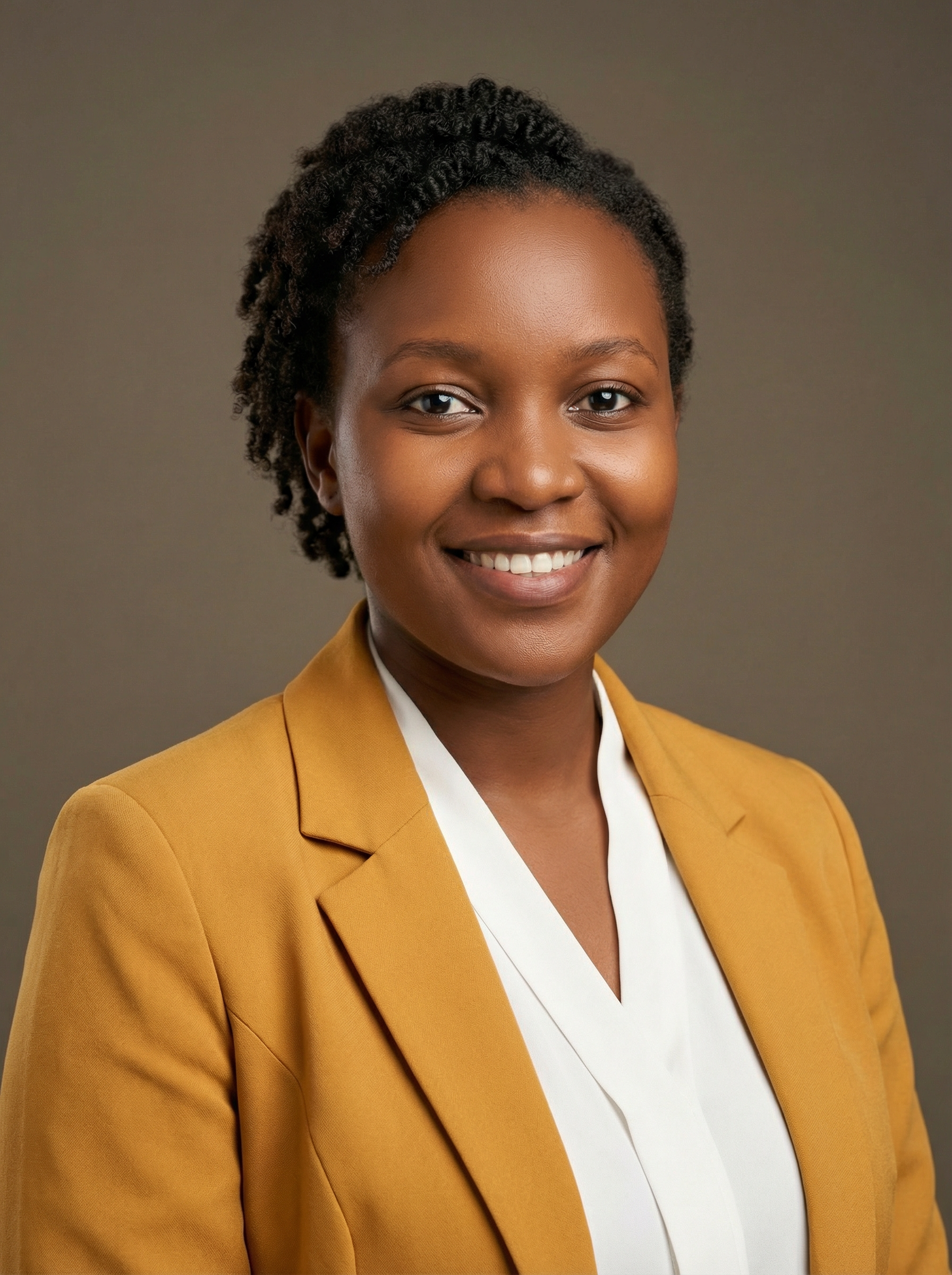
Her co-founder, Dr. Kwame Adjei, a Ghanaian astrophysicist she met at a pan-African science conference in Arusha, shared her vision. Kwame, with his deep understanding of celestial mechanics and signal processing, was the perfect complement to Naledi's AI prowess. They spent countless nights huddled over laptops, fueled by strong Tanzanian coffee, sketching out algorithms on whiteboards, and debating the nuances of neural networks. Their idea was deceptively simple: use advanced AI to analyze satellite data, not just for pretty pictures, but for actionable insights. Initially, they focused on Earth observation, helping local farmers predict crop yields and assisting conservationists in tracking wildlife migration patterns. This early work, while impactful, was merely a stepping stone.
The breakthrough came when they secured a small grant from the Tanzanian Commission for Science and Technology, allowing them to expand their research into space-based applications. They began developing algorithms that could process raw telemetry from satellites, identifying anomalies, predicting equipment failures, and even optimizing orbital trajectories. “Imagine a satellite that can 'learn' its environment, adapt to solar flares, or autonomously navigate debris fields,” Naledi told me, her eyes gleaming. “That is what we are building.”
Building AstroSense AI was not without its challenges. Access to high-performance computing resources was a constant battle, and attracting top-tier AI talent in a nascent tech ecosystem proved difficult. “We were a small startup in Dar es Salaam, trying to compete with giants like Google and NVIDIA for talent,” Naledi admitted. “It was like trying to climb Mount Kilimanjaro with only a kanga for warmth.” Yet, their passion and the unique nature of their work drew a dedicated team. They fostered a culture of innovation, encouraging open discussion and celebrating small victories.
Their big break arrived when a major European space agency, impressed by their preliminary work on autonomous satellite diagnostics, awarded them a significant contract. This led to further partnerships, including a collaboration with a US-based firm exploring AI applications for future Mars missions. AstroSense AI's technology is now being used to develop intelligent systems that can analyze Martian terrain data, identify potential hazards for rovers, and even assist in the search for subsurface water. Their algorithms are designed to handle massive datasets, filtering out noise and highlighting patterns that human analysts might miss.
“The goal is to make space exploration more efficient, safer, and ultimately, more intelligent,” Naledi stated, emphasizing the crucial role of AI in processing the deluge of data from distant probes. “When you are talking about missions that take years to reach their destination, every kilobyte of information, every millisecond of processing power, matters.” Their work extends to the search for extraterrestrial intelligence, where their AI models are being trained to sift through radio signals, looking for non-random patterns that could indicate intelligent origins. It is a needle in a cosmic haystack, but Naledi believes AI offers the best chance of finding it.
Today, AstroSense AI, though still relatively small compared to global tech behemoths, is making waves. They have secured several rounds of funding, reportedly valued at over $50 million, attracting investors who see the immense potential in their specialized AI solutions. Their team has grown to over 50 engineers and scientists, a significant portion of whom are African. “It is important for us to build capacity here, to show that world-class space tech can come from Tanzania,” Naledi stressed. “This is not just about AstroSense AI, it is about inspiring the next generation of African innovators.”
What drives Naledi Thabiso is not just the pursuit of scientific discovery, but a deep-seated desire to contribute to humanity's collective future, and to do so from her home continent. She sees AI not as a replacement for human ingenuity, but as an amplification of it. “We are extending our senses, our intellect, into the vastness of space,” she mused. “It is an incredible privilege to be part of that journey.”
Looking ahead, AstroSense AI is exploring further applications, including AI-powered asteroid detection and space debris management. The vision is clear: to be at the forefront of intelligent space systems, making the cosmos a little less mysterious and a lot more accessible. Only in East Africa, perhaps, could such a grand vision be nurtured with such grounded humility. As the world grapples with the complexities of AI, Naledi Thabiso and her team are a testament to the idea that the most profound innovations often emerge from a blend of local insight and global ambition. Their story is a reminder that the future of space, and of AI, is truly a global endeavor, with critical contributions coming from every corner of our pale blue dot, even from the bustling streets of Dar es Salaam. For more insights into the evolving landscape of AI in space, you can often find relevant discussions on TechCrunch or MIT Technology Review. The journey to the stars is long, but with minds like Naledi's at the helm, it feels a little closer every day. You can also read about other African tech ventures here [blocked].