
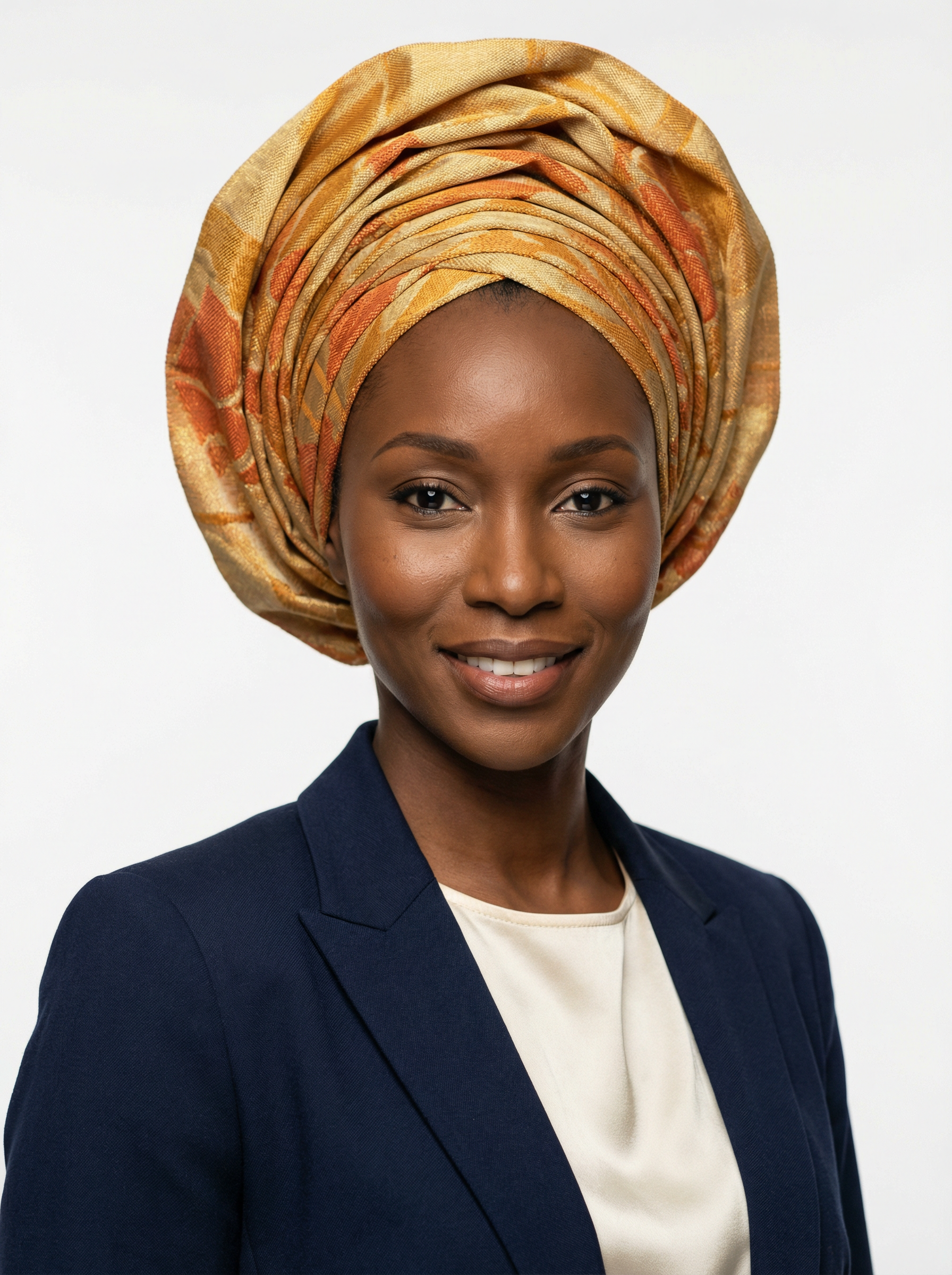
The air in Dakar, even in the cool of the morning, always carries a certain energy, a symphony of sounds and smells from the bustling markets and the salty breeze off the Atlantic. It is a place where stories are told not just in words, but in the vibrant patterns of fabrics, the rhythm of the drums, and the wisdom passed down through generations. It was in this very spirit, the spirit of connection and community, that I found myself sitting with Aminata Diop, the founder and CEO of Jigeen AI, a company that is quietly, yet powerfully, changing how we interact with the internet.
Her office, perched high in a modern building overlooking the Corniche, felt like a bridge between worlds. Traditional Senegalese art adorned the walls, a stark contrast to the sleek monitors displaying lines of code. Aminata, 32, with a bright smile and eyes that sparkled with intelligence, greeted me with a warm, 'Salam alaikum.' We settled into comfortable chairs, and as she began to speak, I understood immediately that this was a story about people, not algorithms, a narrative woven with ambition, resilience, and a deep sense of purpose.
Aminata's journey began not in the hallowed halls of Silicon Valley, but in the vibrant, sometimes chaotic, streets of Dakar. She grew up in a family of educators, her mother a primary school teacher, her father a university professor of literature. Education was paramount, a lamp guiding their path. "My parents always told me, 'Jàng rekk, jàng rekk,' which means 'Study only, study only,'" she recounted, a soft laugh escaping her lips. "They wanted me to be a doctor, perhaps, or a lawyer. But I was always fascinated by how things worked, by the logic behind the world." This curiosity led her to computers, a relatively new phenomenon in her childhood home, but one she embraced with fierce determination.
She excelled in mathematics and physics, eventually earning a scholarship to the University of British Columbia in Canada. It was there, amidst the towering evergreens and the crisp Vancouver air, that her world truly opened up to the possibilities of technology. She pursued a degree in Computer Science, often finding herself one of the few African women in her advanced classes. "It was challenging, of course," she admitted, "but it also fueled a fire in me. I wanted to show that talent knows no borders, no gender, no continent." She spent her summers interning at various tech companies, from small startups to giants like Microsoft, soaking up knowledge like a sponge.
After graduation, Aminata found herself drawn to the burgeoning AI scene. She landed a coveted role as a software engineer at Google, working on their search algorithms. The work was stimulating, the environment dynamic, but something felt missing. "I was building incredible things, yes, but I felt a disconnect," she explained. "The impact felt distant, abstract. I kept thinking about the small businesses back home, the artisans, the farmers, who could benefit so much from technology, but were often left behind." The seed of an idea began to sprout, watered by her longing to bridge that gap.
The defining moment came during a visit back to Senegal for Tabaski, the Eid al-Adha celebration. She watched her aunt, a talented seamstress, struggle to manage online orders using a clunky, outdated website. "She was losing customers because her site was slow, confusing, and offered no real interaction beyond a static page," Aminata recalled. "It hit me then, like a 'coup de foudre,' a lightning bolt. Every website, no matter how small, needed an intelligent layer, a way to truly engage its visitors, not just display information." She saw the potential of Vercel's new AI SDK, a powerful toolkit for developers to embed AI capabilities directly into web applications, and envisioned a future where it was universally accessible and intuitive.
She shared her nascent idea with a former UBC classmate, David Chen, a brilliant full-stack developer with a knack for user experience. David, who had been working at Shopify, was immediately captivated by Aminata's vision. "Her passion was infectious," David told me over a video call from Jigeen AI's San Francisco office. "She wasn't just talking about code, she was talking about empowerment, about making technology truly serve people. That's what convinced me to leave a stable job and jump into the unknown with her." They became co-founders, a formidable duo blending Aminata's strategic vision and AI expertise with David's development prowess.
Their first attempt, a platform designed specifically for Senegalese artisans, struggled to gain traction. "We learned a hard lesson about trying to do too much, too soon, and not listening closely enough to our initial users," Aminata admitted, shaking her head slightly. "It was humbling, a real 'ndank ndank' moment, meaning 'slowly, slowly.' We had to pivot." They realized the core problem wasn't just for artisans, but for any website owner who lacked the resources or technical know-how to integrate complex AI features. Their new focus became a simplified, modular AI SDK built on top of Vercel's framework, designed to be easily integrated into any web platform, offering features like personalized recommendations, intelligent chatbots, and dynamic content generation.
They applied to Y Combinator, the prestigious startup accelerator, and after a grueling interview process, were accepted. The experience was intense, a crucible that forged their company's identity. "It was like drinking from a firehose," David chuckled. "But it forced us to sharpen our focus, refine our product, and truly understand our market." They emerged from YC with a clear product vision and initial funding. In early 2024, Jigeen AI secured a $30 million Series A round led by Altos Ventures, with participation from Sequoia Capital, valuing the company at $300 million. "Altos Ventures saw the global potential, not just the niche," Aminata explained, her eyes lighting up when she told me about the funding round. "They understood that the need for intelligent, dynamic web experiences is universal."
Building the company was another challenge. Aminata was determined to foster a culture that reflected her values: collaboration, innovation, and a commitment to impact. She established a dual-headquarters model, with engineering and research teams in Dakar and business development and sales in San Francisco. "It wasn't just about bringing jobs to Senegal, though that's important," she clarified. "It was about tapping into a different perspective, a different way of problem-solving. Our Dakar team brings a unique creativity, an adaptability that is invaluable." The company now boasts over 150 employees globally, and their annual recurring revenue (ARR) is projected to hit $100 million by the end of 2026, a testament to the market's hunger for accessible AI solutions.
Jigeen AI's platform allows developers to leverage Vercel's powerful infrastructure while adding AI capabilities with just a few lines of code. "We are seeing a massive shift," commented Dr. Lena Hansen, a leading analyst at MIT Technology Review, "Companies like Jigeen AI are democratizing access to cutting-edge AI, making it possible for even small and medium-sized businesses to offer highly personalized and interactive web experiences. This is not just about Vercel, it's about the entire web ecosystem evolving."
Today, Aminata splits her time between Dakar and San Francisco, a true global citizen. Her days are a whirlwind of product meetings, investor calls, and mentoring sessions with young Senegalese entrepreneurs. She remains grounded, often starting her mornings with a walk along the beach, reflecting on the journey. "The sea, it always reminds me of the vastness of possibility, and the importance of staying connected to where you come from," she mused. "'Nit nitay garabam,' a Wolof proverb, means 'man is man's remedy.' It reminds me that technology, at its best, should serve humanity, not dominate it."
What drives her now, beyond the impressive revenue figures and the growing team, is the impact. She envisions a future where every website is a dynamic, intelligent entity, anticipating user needs, offering personalized assistance, and fostering deeper connections. "We are just at the beginning," Aminata affirmed, a determined glint in her eye. "The bet that every website will have an AI layer is not just a prediction, it's a necessity. And we, at Jigeen AI, are building the bridge to that future, one intelligent interaction at a time." Her company is not just building software, they are building opportunities, proving that innovation can flourish anywhere, especially when rooted in a deep understanding of people and their needs. The digital tide is rising, and Aminata Diop, with Jigeen AI, is helping to guide its current. For more insights into the evolving AI landscape, you can often find relevant discussions on TechCrunch. The journey of Jigeen AI also highlights the growing importance of global talent in tech, a topic explored in articles like When Harare's Brightest Minds Earn Seven Figures [blocked].
As I left her office, the Dakar sun was setting, painting the sky in hues of orange and purple. The city lights began to twinkle, mirroring the ambition and innovation that Aminata Diop and Jigeen AI are bringing to the world. It is a powerful reminder that the future of technology is not just being shaped in established hubs, but in every corner of our interconnected world, by people with vision, heart, and a story to tell.