Here in Dakar, where the Atlantic breeze carries the scent of thieboudienne and the rhythm of mbalax, the talk often turns to the future. Our future, our children's future. But lately, when I sit down with the bright minds at our tech hubs, the conversation inevitably drifts to something bigger, something global, yet deeply personal: the simmering AI cold war between the world's superpowers.
It feels a bit like a distant storm, brewing over oceans and continents, but its thunder is starting to rumble even on our shores. This isn't just about who builds the fastest chip or the smartest algorithm; it's about who controls the very infrastructure of tomorrow, and whether countries like Senegal will be partners, or merely pawns, in this grand game. As we say in Wolof, "Ndank ndank, mooy japp golo ci ñaay." Slowly, slowly, one catches the monkey in the bush. This AI struggle is slow, but its grip is tightening.
I recently visited the Centre de Recherche et de Formation en Intelligence Artificielle at the Université Cheikh Anta Diop. Dr. Aïcha Diop, a brilliant computer scientist who returned home after years abroad, welcomed me with a warm smile. Her eyes lit up when she told me about her students' projects, from AI models predicting crop yields for our farmers to diagnostic tools for rural clinics. "Fatimà," she explained, her voice earnest, "our young people have the talent, the hunger, and the unique perspectives to build AI that truly serves our communities. But the tools, the access, the very foundation of this work, are increasingly caught in a global tug-of-war."
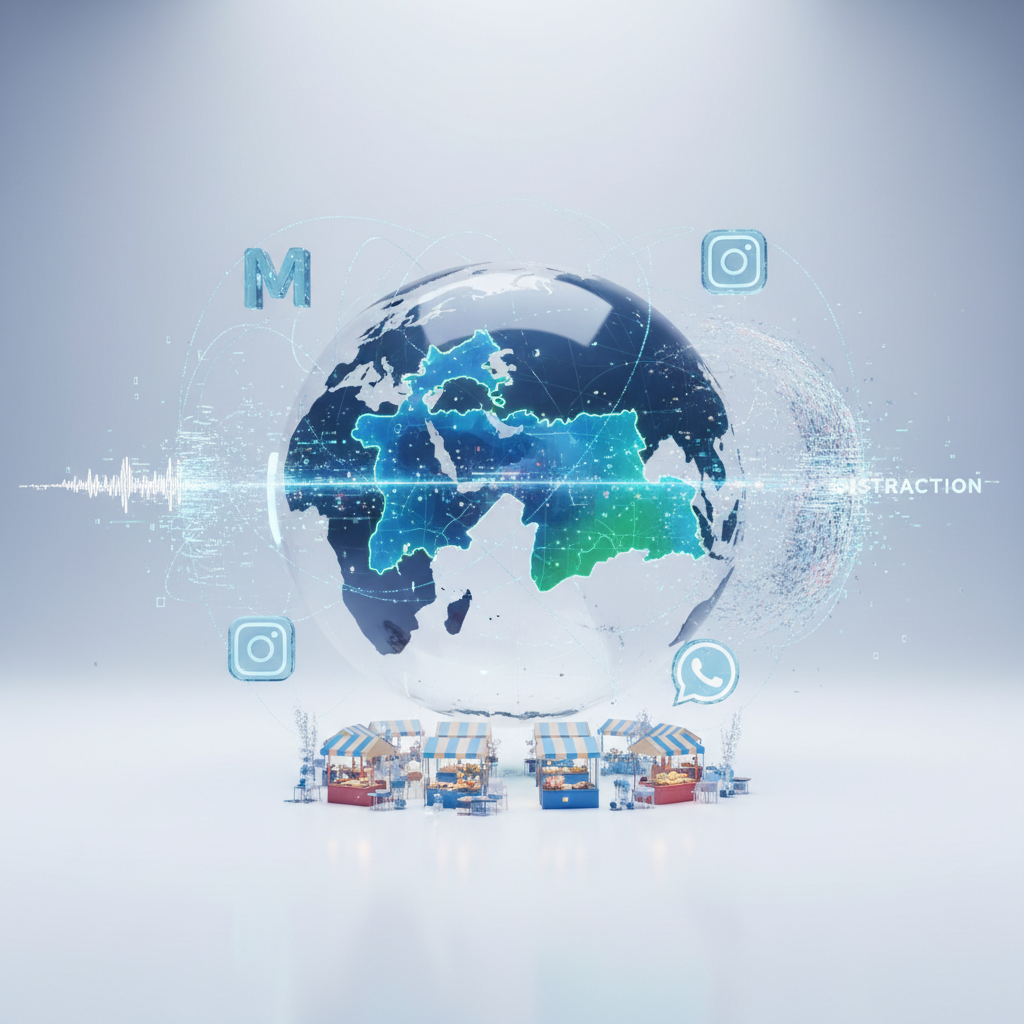
She was speaking about the escalating tensions between nations, particularly the United States and China, over AI technology. This isn't just abstract geopolitics; it manifests in very real ways for places like Senegal. We see it in export controls on advanced semiconductors, restrictions on data flows, and the intense competition for talent and intellectual property. For a developing nation, this can mean limited access to cutting edge hardware, crucial research partnerships, and even the open-source models that fuel much of our innovation.
Consider the NVIDIA chips, for instance. These powerful graphics processing units, or GPUs, are the engines of modern AI. They are essential for training large language models and complex neural networks. The demand is astronomical, and the supply chains are increasingly politicized. "When a country like ours wants to acquire a significant number of these high-end GPUs, we're not just competing on price anymore," Dr. Diop elaborated. "We're navigating a complex web of international regulations and strategic alliances. It becomes a question of who you are aligned with, not just what you can afford." This sentiment is echoed by many in the global south, where the technological divide risks widening further due to these new barriers.
This isn't a story about algorithms; it's a story about people. It's about young Senegalese developers, brimming with ideas, who might find their ambitions curtailed not by lack of skill, but by global power plays. It's about researchers struggling to access the computational power needed to solve local problems. It's about the very sovereignty of our digital future.
On the other side of the coin, this geopolitical rivalry is also spurring some nations to invest heavily in their own domestic AI capabilities, creating new opportunities. China, for example, has poured billions into developing its own AI ecosystem, from chip manufacturing to foundational models. The European Union is pushing for "sovereign AI" initiatives, aiming to reduce reliance on US tech giants. These efforts, while primarily focused on national interests, can sometimes create alternative pathways for smaller nations.
However, the risks are substantial. "The fragmentation of the global AI landscape could lead to incompatible standards, balkanized data ecosystems, and a stifling of collaborative research," warned Dr. Naledi Pandor, South Africa's Minister of International Relations and Cooperation, in a recent address at the African Union. "We must ensure that Africa is not merely a consumer of technology dictated by others, but an active participant in shaping its ethical and equitable development." Her words resonate deeply here, reminding us that our voice matters.
I sat down with Omar Faye, a young entrepreneur who runs a small startup focused on using AI for waste management in Dakar. His team uses open-source models and locally sourced data to optimize collection routes and identify recycling opportunities. "We rely heavily on the open exchange of information and tools," Omar told me, his brow furrowed. "If the world splits into completely separate AI spheres, with different foundational models and incompatible hardware, it could make our work much harder. We don't have the resources to adapt to multiple, closed ecosystems." His concern is valid; the promise of AI for development hinges on accessibility and interoperability.
The global AI market is projected to reach trillions of dollars in the coming years, with significant investments from both public and private sectors. Companies like Google, OpenAI, and Microsoft are at the forefront of developing powerful large language models and AI infrastructure. Meanwhile, Chinese tech giants like Baidu and Alibaba are making similar strides, often with state backing. This intense competition, while driving innovation, also fuels the geopolitical undercurrents.
According to a report by MIT Technology Review, the US government has significantly tightened export controls on advanced AI chips and manufacturing equipment to China, citing national security concerns. This move has prompted China to accelerate its efforts to achieve self-sufficiency in semiconductor production, creating a parallel ecosystem. The implications for nations like Senegal are profound. Do we choose one system over another, or do we try to navigate both, risking incompatibility and increased costs?
This is where the wisdom of our elders comes in. "Ku bëgg a xam fu rew mi jëm, seetël jigeen ñi ak njàngale mi." If you want to know where a country is going, look at its women and its education. Investing in our own human capital, fostering local innovation, and advocating for open and equitable access to AI technologies on the global stage are paramount. We must train our own experts, build our own datasets, and develop AI solutions that are culturally relevant and ethically sound.
Organizations like the African Union and Ecowas are beginning to formulate continental AI strategies, recognizing the need for a unified approach. They are pushing for policies that promote data sovereignty, ethical AI development, and capacity building. This collective voice is crucial in a world where individual nations, especially smaller ones, might struggle to assert their interests.
The AI cold war is a reality, and its consequences will touch every corner of the globe. For Senegal, it means a renewed focus on self-reliance, strategic partnerships, and a loud, clear voice in international forums. We must ensure that the pursuit of technological dominance by a few does not overshadow the potential of AI to uplift and empower the many, especially in places like ours. The future of AI, like the future of our people, must be built on collaboration, not confrontation. We cannot afford to be left behind, nor can we afford to be mere spectators in this unfolding drama. Our destiny, as always, remains in our own hands, guided by our ingenuity and our enduring spirit. For more on the global tech landscape, you can often find insightful analysis on Reuters Technology.