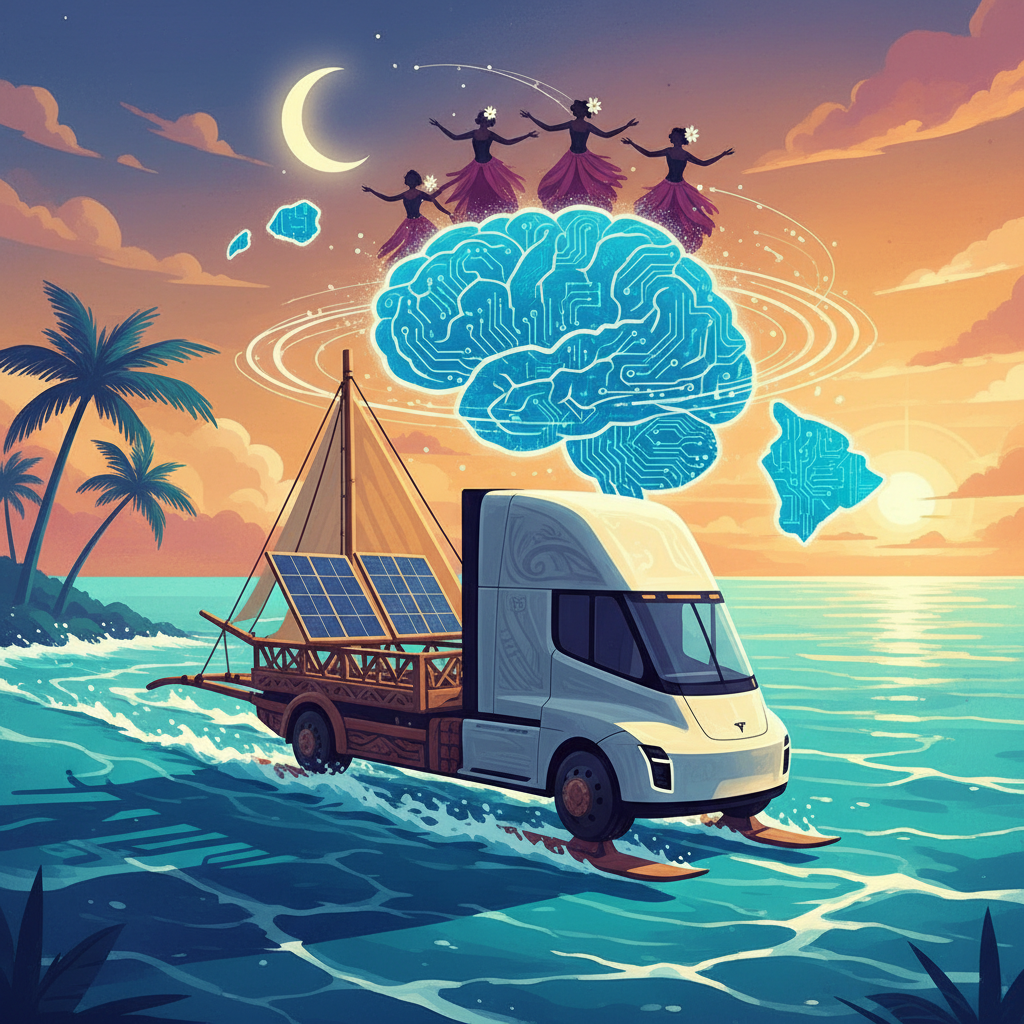

The tech world, as always, is buzzing about the latest advancements. This time, the spotlight is firmly on Apple and its M-series processors, which are increasingly being touted as the engine for a new generation of local artificial intelligence. We are told these chips will bring powerful AI capabilities directly to our devices, reducing reliance on cloud servers and enhancing privacy. It sounds impressive, a real step forward, but from my vantage point here in Fiji, I always ask: what does this mean for us, the people on the frontlines of real-world challenges?
For years, the narrative around AI has been dominated by massive data centers, energy-hungry GPUs, and the colossal models trained by giants like OpenAI, Google, and Microsoft. These models, while powerful, often feel distant, abstract, and certainly not designed with the specific needs of small island developing states in mind. The idea of 'local AI,' powered by chips like Apple's M-series, offers a different vision: intelligence that lives and breathes on your device, accessible even when internet connectivity is patchy or non-existent. This is not just a technical detail; it is a fundamental shift with profound implications for how AI can be deployed, especially in regions like the Pacific.
Think about it. In Fiji, we face the future with clear eyes, and that future includes more frequent and intense cyclones, rising sea levels, and the persistent challenge of delivering equitable healthcare across our scattered islands. Our internet infrastructure, while improving, is still vulnerable. During a major cyclone, communication lines often go down, and access to centralized cloud services becomes impossible. This is where local AI, running on a device that can operate independently, starts to look less like a luxury and more like a necessity.
Apple's push into on-device AI is not new, but it is accelerating. Their M-series chips, from the M1 to the latest M3 and beyond, are designed with dedicated Neural Engines capable of trillions of operations per second. This hardware optimization allows complex machine learning models to run efficiently without needing to send data to the cloud for processing. This means faster responses, enhanced data privacy because information stays on the device, and crucially, operation in offline environments. According to reports from The Verge, Apple has been steadily integrating these capabilities across its product lines, from iPhones to MacBooks, making local AI a core part of its ecosystem.
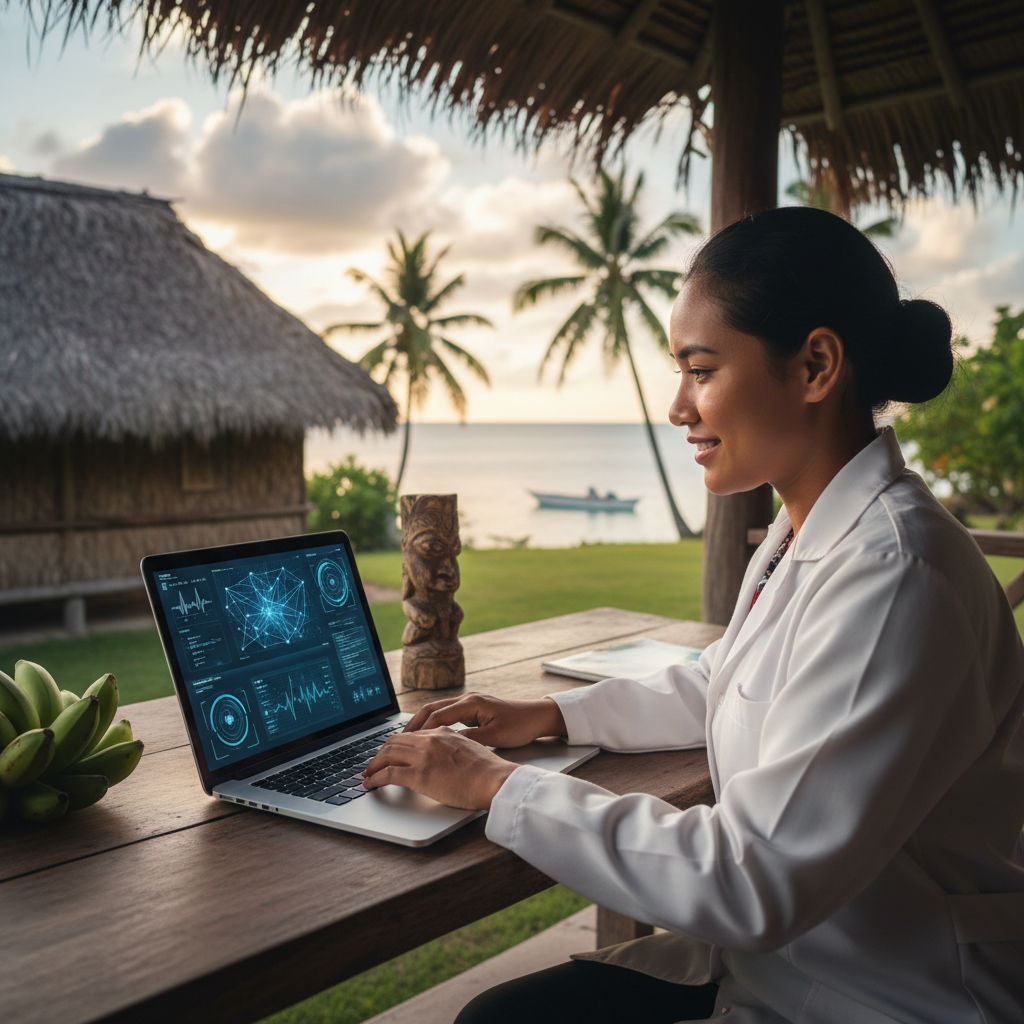
But how does this translate into practical solutions for health in Fiji? Consider the scenario of a remote medical clinic on Kadavu, one of our larger outer islands. A doctor or nurse there might need to rapidly diagnose a condition, access medical records, or even interpret diagnostic images. With limited internet bandwidth, relying on a cloud-based AI system for these tasks is often unfeasible. An iPad or MacBook, equipped with an M-series chip and running specialized AI applications, could potentially offer immediate, intelligent assistance. Imagine an AI model trained to identify early signs of diabetic retinopathy from an image of a patient's eye, or to provide differential diagnoses based on symptoms, all running locally on the device. This could be a game-changer for early intervention and reducing patient travel to the main hospital in Suva.
Dr. Mereani Salani, a public health specialist who has worked extensively in Fiji's rural health sector, emphasized this point recently in a local symposium. She stated,