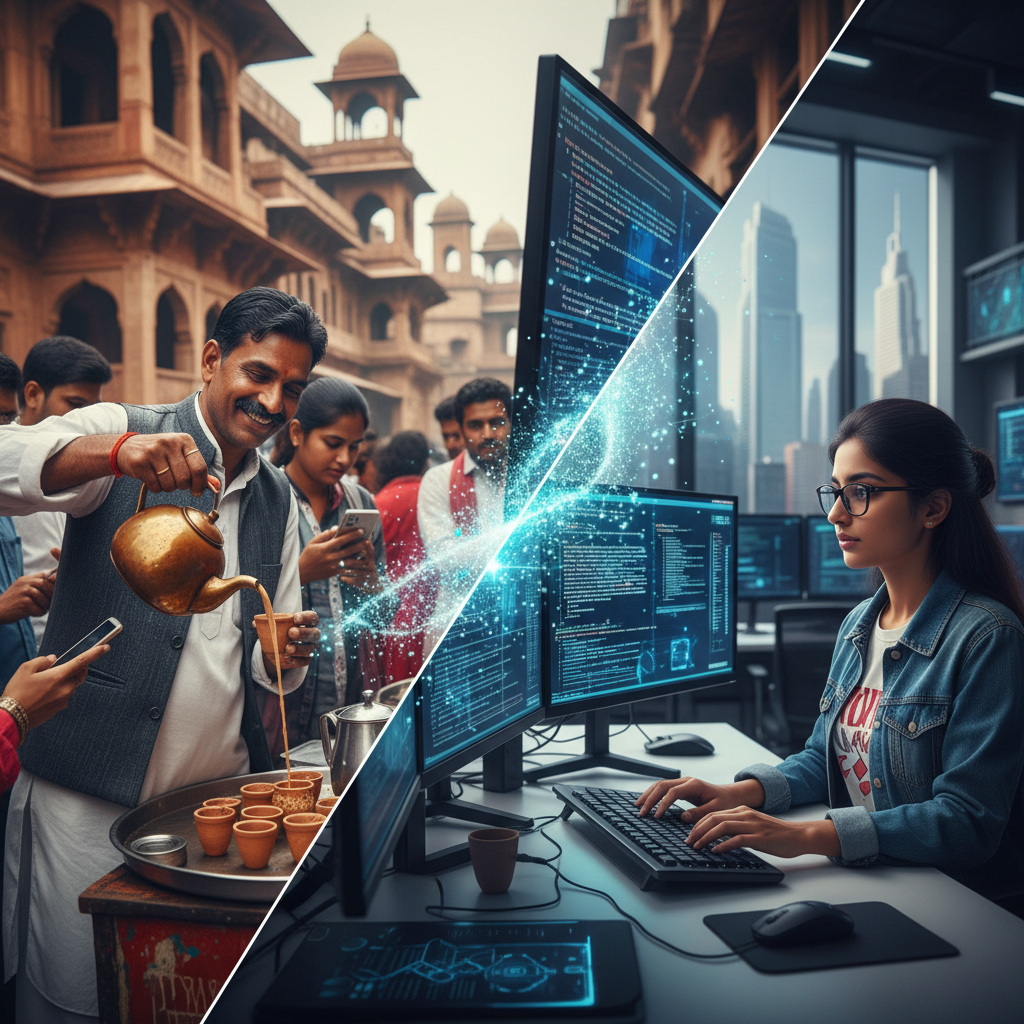

Namaste, my friends, and welcome back to DataGlobal Hub! You know me, Rajèsh Krishnàn, and I am absolutely buzzing with excitement about what's happening right here in our incredible India. The air in Bengaluru, my city, crackles with more energy than a T20 final, and it's all thanks to one thing: Artificial Intelligence. Everyone is talking about AI, from the biggest tech giants to the smallest startups, and even my auntie is asking me if her WhatsApp forwards are AI-generated now. It’s glorious, truly glorious!
But here’s the thing, and it’s a big thing: while the world is dreaming in algorithms, there’s a yawning chasm, a massive skills gap, that threatens to slow down this incredible momentum. Globally, the demand for AI talent is like a runaway express train, and the supply, well, it’s still on a local passenger route. This is where India, my friends, is having its moment, stepping up to bat with a strategy so bold, it could redefine the global AI landscape.
The Big Picture: Why Everyone Needs an AI Upgrade
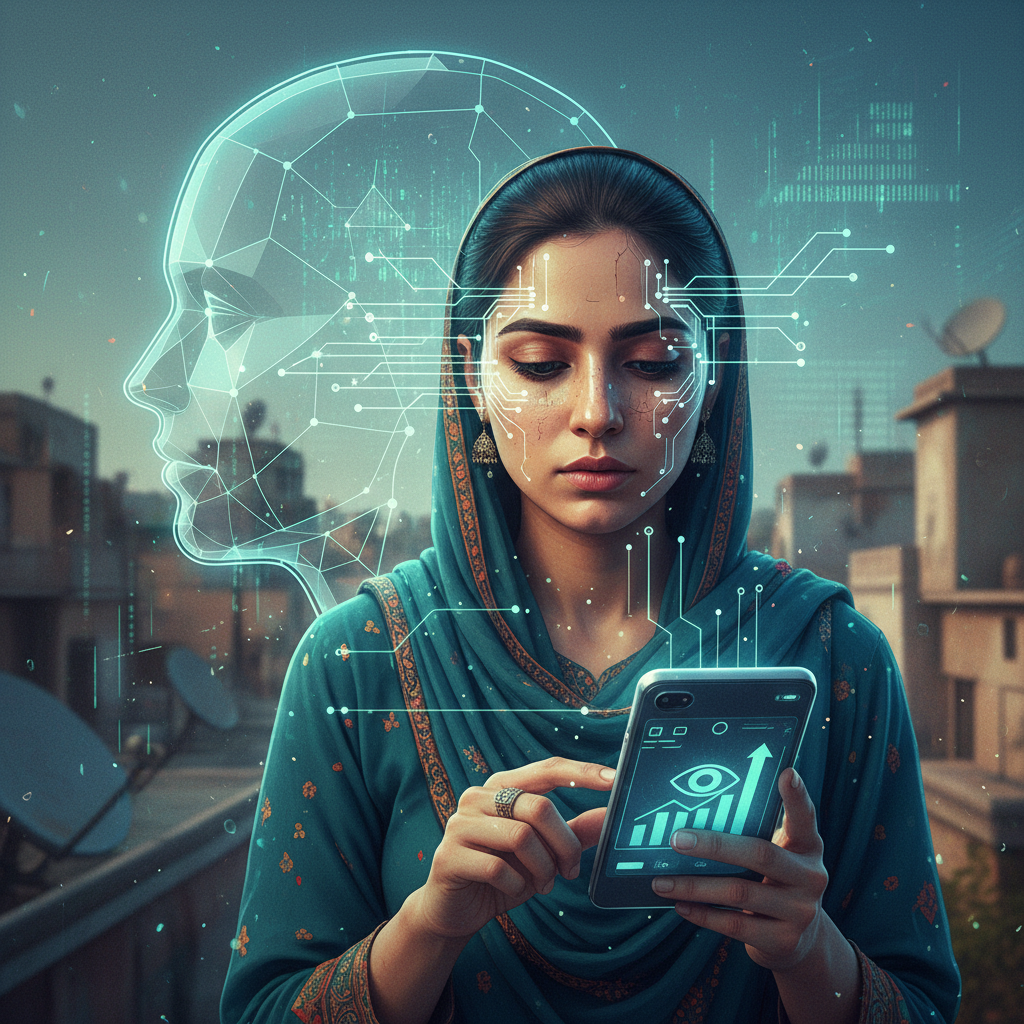
Think of it like this: AI is not just a fancy new app; it’s the electricity of the 21st century. It’s powering everything from personalized medicine to predicting monsoon patterns, from optimizing logistics to creating the next blockbuster Bollywood script. Every industry, every job, will be touched by it. But to harness this power, you need electricians, engineers, and innovators who understand its circuits. That’s the AI skills gap in a nutshell. We need millions of people who can build, deploy, manage, and even ethically question AI systems.
According to a recent report by Reuters Technology, the global demand for AI engineers and data scientists is projected to grow by over 40% annually for the next five years. Forty percent! That’s a staggering number, and it means if we don't act now, we'll be left behind. This isn't just about coding; it’s about critical thinking, problem-solving, and understanding the nuances of data. It’s about retraining entire workforces, from factory floors to corporate boardrooms.
The Building Blocks: What Makes an AI Pro?
So, what exactly are these elusive AI skills? It’s not just one thing, but a beautiful mosaic of capabilities. Let’s break it down simply:
- Programming Prowess: Python is king here, but R, Java, and C++ also play their part. This is the language you speak to the machines.
- Mathematics and Statistics: Think linear algebra, calculus, probability. This is the grammar and logic behind the machine’s thinking.
- Machine Learning Fundamentals: Understanding algorithms like regression, classification, clustering, and neural networks. This is how the machine learns from data.
- Data Engineering: Cleaning, processing, and managing vast amounts of data. Because garbage in, garbage out, right?
- Domain Expertise: Knowing the specific industry where AI will be applied, be it healthcare, finance, or agriculture. This gives AI its real-world purpose.
- Ethical AI and Explainability: Understanding biases, fairness, and how to make AI transparent. Because power comes with responsibility.
It sounds like a lot, doesn't it? But trust me, with the right approach, it’s entirely achievable. It’s like learning to play the tabla; you start with the basics, practice diligently, and soon you’re creating rhythms that move the soul.
Step by Step: India's Retraining Blueprint
India’s approach to bridging this gap is a multi-pronged strategy, a grand orchestra of public and private initiatives. Let me walk you through how these retraining programs typically work:
Step 1: Assessment and Gap Analysis. First, companies or government bodies assess their existing workforce. What skills do they have? What AI skills do they need? This is like a cricket coach analyzing each player's strengths and weaknesses to build a winning team.
Step 2: Curriculum Design and Partnership. Educational institutions, often in collaboration with tech giants like Google, Microsoft, and homegrown heroes like TCS and Infosys, design specialized courses. These aren't your grandfather's textbooks; they’re hands-on, project-based, and often incorporate modules from platforms like Coursera, edX, or even custom-built learning management systems.
Step 3: Phased Learning Modules. Participants typically go through structured modules. It might start with foundational programming, move to data science basics, then dive into specific machine learning techniques, and finally tackle advanced topics like deep learning or natural language processing. Each module builds on the last, ensuring a solid understanding.
Step 4: Hands-on Projects and Internships. This is crucial. Theory is good, but applying it is where the magic happens. Learners work on real-world problems, often in collaboration with industry mentors. Many programs include paid internships, giving participants practical experience and a foot in the door.
Step 5: Certification and Placement. Upon successful completion, participants receive certifications, often industry-recognized. Then comes the exciting part: placement assistance. Companies are eager to snap up these newly minted AI professionals, sometimes even sponsoring their training from the start.
A Worked Example: The 'AI for All' Initiative
Consider the fictional but very plausible 'AI for All' initiative launched by the National Skill Development Corporation (nsdc) in partnership with a leading Indian IT services firm. Imagine thousands of mid-career professionals, say, a software tester with 10 years of experience, or a business analyst, signing up. They might be worried about job displacement, but they're also excited about new opportunities.
- Month 1-2: Foundations. They start with online modules on Python programming and basic statistics, dedicating evenings and weekends. They learn to write simple scripts and understand data distributions.
- Month 3-4: Data Science Core. They move to data manipulation with libraries like Pandas, data visualization, and introductory machine learning models like linear regression. They might analyze a public dataset of sales figures to predict future trends.
- Month 5-6: Applied AI. Now, they delve into more complex areas: neural networks, natural language processing, or computer vision, depending on their track. Our software tester might learn to build an AI model to detect bugs in code, while the business analyst develops a chatbot for customer service.
- Month 7-9: Capstone Project and Internship. They join a team to work on a real client project, perhaps building a predictive maintenance system for a manufacturing plant or an AI-powered recommendation engine for an e-commerce platform. The software tester might intern at a startup focusing on AI-driven quality assurance.
By the end, they are not just coders; they are problem-solvers who understand how to leverage AI. The scale is mind-boggling, with thousands graduating each quarter, ready to take on the world.
Why It Sometimes Fails: The Bumps on the Road
Of course, it’s not always a smooth ride. Just like a cricket match, there are challenges. One major hurdle is motivation and retention. It's tough to juggle a full-time job with intensive learning. Many drop out if the curriculum isn't engaging or the immediate benefits aren't clear. Then there’s the quality of instruction. Not all programs are created equal, and a rushed curriculum can leave graduates with superficial knowledge. Access to resources is another big one; not everyone has high-speed internet or powerful computers, especially in more rural areas, though the government's Digital India initiatives are rapidly closing this gap.
Dr. Priya Sharma, Head of AI Skilling at TechMahindra, recently told me, "The biggest challenge isn't just teaching code, it's fostering an AI mindset. We need to teach people to think algorithmically, to see problems through a data lens. That's a cultural shift, not just a technical one." She's absolutely right; it's about changing how we approach challenges.
Where This is Heading: The AI-Powered Future
My friends, this is just the beginning. The future of AI retraining in India is brighter than a Diwali night. We’re seeing more personalized learning paths, leveraging AI itself to teach AI. Imagine an AI tutor adapting to your learning style, suggesting resources, and even identifying your knowledge gaps. We're also seeing a greater emphasis on soft skills, like collaboration, creativity, and ethical reasoning, because AI is a tool, and humans must guide its purpose.
Startups in Bengaluru and Hyderabad are innovating rapidly in this space, creating micro-credentialing programs and gamified learning experiences. The government is pushing for AI literacy from school level, ensuring that the next generation is born into an AI-native world. We are not just training individuals; we are building an AI-ready nation.
Mr. Anand Gupta, a policy advisor for the Ministry of Electronics and Information Technology, shared his vision with me: "India has the demographic dividend and the digital infrastructure. Our goal is to make every Indian citizen AI-aware, and a significant portion AI-proficient. This will not only create millions of jobs but also empower us to build AI solutions for our unique challenges, from healthcare accessibility to agricultural productivity." His words resonate deeply with the spirit of innovation I see every day.
India’s journey to bridge the AI skills gap is a testament to its resilience and foresight. It’s a story of transformation, of turning potential into prowess, and of ensuring that when the AI revolution truly explodes, India is not just a participant, but a leader. And that, my friends, is a future worth getting excited about. Jai Hind!