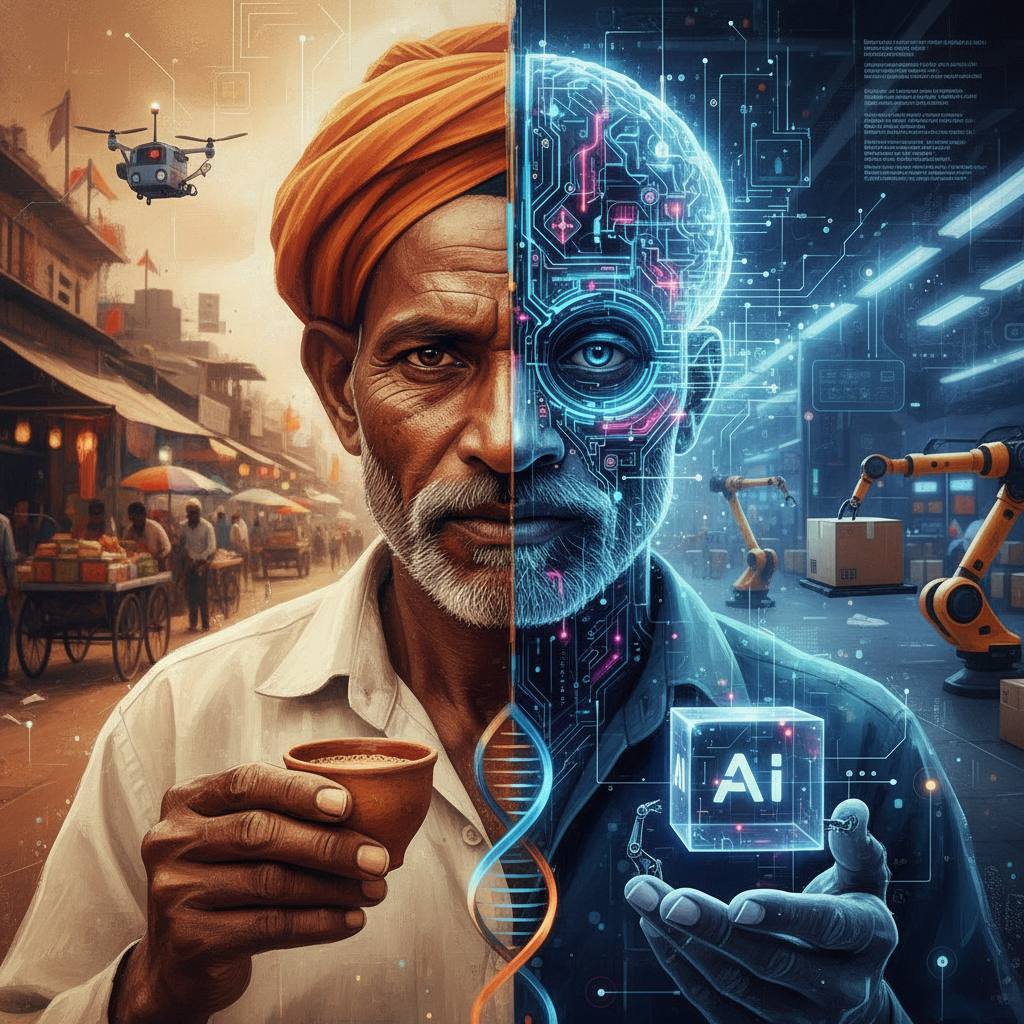

Picture this: it's 6 AM in Bengaluru, the sun is just peeking over the horizon, painting the sky in shades of saffron and rose. The city is stirring, and so is Ramesh, a delivery driver for a major e-commerce giant. For years, Ramesh navigated these labyrinthine streets by instinct, a mental map honed by decades of experience, a true 'gully cricket' champion of the delivery world. Now, his co-pilot is an AI, a sophisticated algorithm that dictates his every turn, every stop, every precious minute. It's brilliant, it's efficient, and it's utterly transforming his day, but what is it doing to Ramesh's brain, to his very sense of self in this bustling, ever-changing India?
This isn't just Ramesh's story, my friends, it's the story of millions across our incredible nation, from the bustling ports of Mumbai to the sprawling warehouses of Haryana. India is having its moment, not just as a consumer market, but as a global powerhouse leveraging AI to optimize its notoriously complex supply chains. We're talking about a sector that contributes over 14% to our GDP, a colossal network that AI is now orchestrating with a precision that would make a Bollywood choreographer proud. But as these intelligent systems take over the nitty-gritty of planning and execution, a fascinating psychological drama is unfolding right before our eyes.
The Algorithm as Your Boss: A Cognitive Shift
For many, the introduction of AI in logistics isn't just a new tool; it's a new way of thinking, working, and even feeling. Take the example of warehouse workers. Gone are the days of manually searching for items across vast spaces. Now, AI-powered robots and inventory management systems guide them with pinpoint accuracy, often through augmented reality interfaces. "It's like having a super-efficient personal assistant whispering instructions directly into your ear," says Priya Sharma, a logistics manager at a major retail chain in Chennai. "Our pick rates have gone up by 30% in the last year alone, but I've also noticed a shift in how my team approaches problem-solving. They're less reliant on spatial memory, more on following the digital breadcrumbs." This reliance, while boosting productivity, can lead to a phenomenon psychologists call 'automation complacency.'
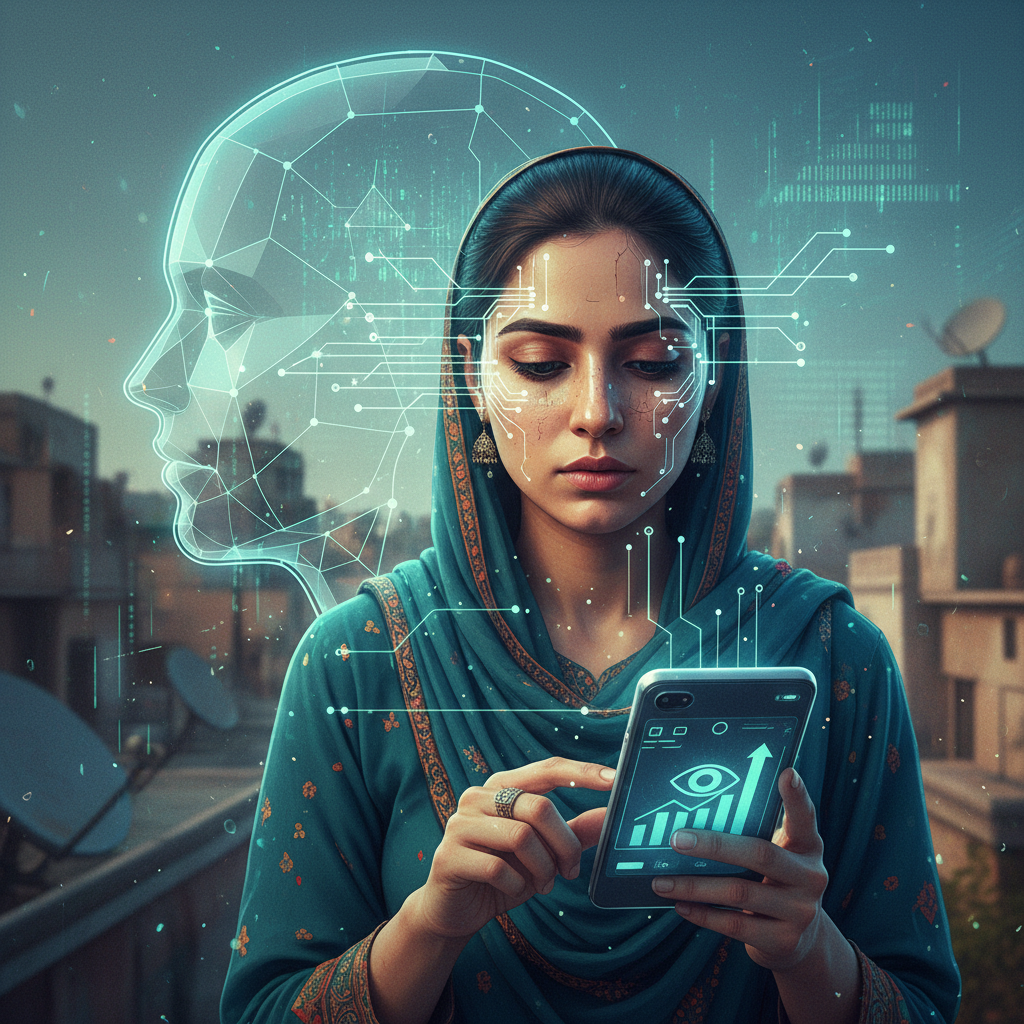
Dr. Anjali Singh, a cognitive psychologist at the Indian Institute of Science, Bengaluru, explains this beautifully. "When AI takes over complex decision-making, human operators can become less vigilant, less engaged in the cognitive process," she tells me over a cup of filter coffee. "Their brains are essentially offloading the heavy lifting to the machine. While this reduces mental fatigue in some ways, it can also diminish critical thinking skills and the ability to react autonomously when the AI inevitably encounters an unforeseen anomaly, like a sudden road closure or a damaged package." She points to a recent study showing a 15% drop in spontaneous problem-solving initiatives among logistics personnel heavily reliant on AI dispatch systems, compared to their peers in less automated roles. This is not to say AI is bad, but it means we need to understand its subtle effects on our grey matter.
The Trust Factor: A Double-Edged Sword
Trust is a cornerstone of any relationship, and it's no different with AI. When an algorithm consistently delivers optimal routes, predicts demand with uncanny accuracy, or flags potential disruptions before they occur, humans tend to trust it implicitly. This trust can be incredibly empowering, freeing up mental bandwidth for more strategic tasks. "Before AI, I spent hours every day just trying to forecast demand for our regional distribution centers," shares Vikramjeet Singh, CEO of 'SwiftShip Logistics,' a rapidly growing startup based out of Gurugram. "Now, our AI predicts with 95% accuracy, allowing my team to focus on supplier relationships and market expansion. It's a game-changer, truly." The scale is mind-boggling, the efficiency gains are undeniable.
However, this trust can also be fragile. A single, significant error by the AI, perhaps a misrouted shipment causing a massive delay, can shatter that trust, leading to what's known as 'automation bias.' People might then overcorrect, second-guessing even correct AI suggestions, or worse, abandoning the system altogether. "We saw this during the initial rollout of our predictive maintenance AI for our fleet," recounts Ms. Singh from Chennai. "One false alarm, where the AI incorrectly predicted a major engine failure, led to unnecessary downtime and costs. For weeks afterward, our mechanics were manually double-checking every AI diagnostic, even the ones that were clearly accurate. It took a lot of retraining and demonstrating the AI's improved reliability to rebuild that confidence." This delicate dance between human intuition and algorithmic precision is a constant challenge.
Social Dynamics and the Human Element
Beyond individual cognition, AI in logistics is subtly reshaping social dynamics and relationships. In highly automated warehouses, human interaction might decrease, leading to feelings of isolation. Team leaders, who once relied on their experience to guide their teams, now find themselves interpreting AI directives. This can shift the power dynamic and require new leadership skills focused on understanding and communicating AI insights.
On the brighter side, AI can also foster new forms of collaboration. Consider the 'last-mile' delivery problem, a perennial headache in India's dense urban centers. AI optimizes routes, but it's the human delivery agent, like our friend Ramesh, who still navigates the final, often unpredictable, stretch. "The AI gives me the best path, but it doesn't know about the sudden street vendor blocking the alley or the local festival that's shut down a road," Ramesh tells me with a knowing smile. "That's where my experience, my 'desi jugaad,' comes in. We work together, the machine and I, like a good opening partnership in cricket. It sets the pace, I score the runs." This beautiful synergy is what makes India's AI adoption so unique, so vibrant.
Broader Societal Implications and a Path Forward
As AI continues its march through India's supply chains, we must proactively address these psychological impacts. The goal isn't to replace human intelligence, but to augment it, to create a harmonious blend of human intuition and algorithmic power. This is just the beginning, and the opportunities are immense.
"We need to invest heavily in training programs that not only teach people how to use AI tools, but also how to understand their limitations, how to maintain critical thinking, and how to collaborate effectively with intelligent systems," argues Dr. Arjun Reddy, a futurist and advisor to several government initiatives on digital transformation. "It's about fostering 'AI literacy' at every level, from the shop floor to the boardroom. We're not just training workers; we're evolving human cognition for the AI age." You can find more insights on this evolving landscape on platforms like MIT Technology Review which often cover the human element of AI adoption.
Furthermore, system designers must prioritize 'human-centered AI,' ensuring interfaces are intuitive, explanations for AI decisions are transparent, and mechanisms for human override are readily available. The psychological comfort and empowerment of the human operator should be as critical a design parameter as efficiency or cost-saving. The BBC News Technology section frequently highlights companies leading the way in ethical and human-centric AI design.
Our journey with AI in supply chain and logistics is a thrilling one. It's a testament to India's entrepreneurial spirit and its ability to embrace the future while staying true to its human core. We're not just optimizing routes; we're rewiring minds, forging new partnerships between humans and machines, and building a more efficient, more connected India. The challenges are real, but so is our capacity for adaptation and innovation. As we continue this exciting adventure, let's ensure that as the algorithms get smarter, we humans get wiser, more adaptable, and more connected than ever before. For more on the latest AI innovations and their impact, keep an eye on TechCrunch's AI section.
It's a new innings, and India is batting strong, with AI as our powerful new bat, but our human spirit, our 'josh,' remains our ultimate captain. What a time to be alive!