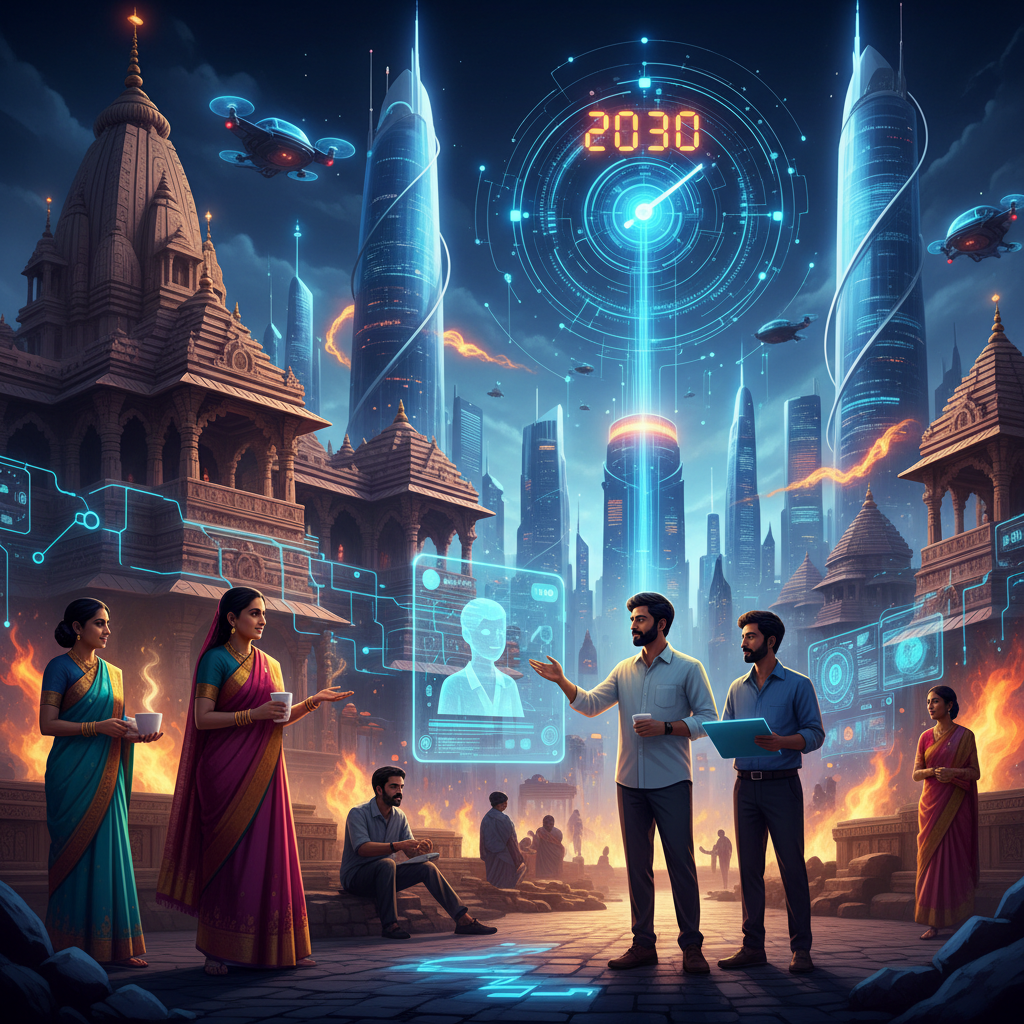

Picture this: it is 2030. You are sitting in your favorite café in Ahmedabad, sipping a perfectly brewed chai. Your phone gently vibrates. It is a notification from your bank, not a generic marketing message, but a personalized alert. It tells you that based on your recent spending patterns and upcoming travel plans to Kerala, it has proactively adjusted your credit card limits and found a better exchange rate for your rupees, all without you lifting a finger. A quick tap confirms, and a friendly, familiar voice, customized to sound like your favorite RJ, thanks you. This is not science fiction, my friends, this is the near future of AI-powered customer experience, and India is right at the heart of this revolution.
For too long, customer service has felt like a necessary evil, a maze of automated menus and frustrating hold times. But the winds are changing. We are moving from a reactive model, where you call when something goes wrong, to a proactive, predictive, and deeply personal engagement. This shift is powered by sophisticated AI that understands not just your words, but your context, your emotions, and even your unspoken needs. It is about bringing the warmth of human connection to the efficiency of technology, a blend we Indians understand so well.
How do we get there from today, you ask? The journey involves several key milestones. Right now, in April 2026, we see the foundational layers being laid. Large language models, like those from OpenAI and Google, are becoming incredibly adept at understanding nuanced human language, including India's diverse dialects and linguistic variations. We are seeing early applications in chatbots that can handle complex queries, but they still often lack that crucial spark of empathy. The next 2-3 years will be about infusing these AI systems with emotional intelligence and cultural awareness. Think about it, a chatbot that understands the subtle difference between a customer in Mumbai expressing 'chalega' versus one in Chennai saying 'parava illai'. It is more than just translation; it is about cultural context.
“The biggest leap will be in predictive personalization, moving beyond simple recommendations to anticipating needs before they arise,” explains Dr. Anjali Sharma, Head of AI Ethics at a leading Bangalore-based tech firm. “Imagine your healthcare provider proactively suggesting a check-up based on your wearables data and family medical history, or your local kirana store automatically adding your favorite snacks to your next delivery order. This requires not just data, but intelligent, ethical interpretation of that data.” This story will change how you think about how businesses interact with us, transforming transactions into true relationships.
By 2028, we will see AI agents, not just chatbots, capable of orchestrating complex multi-channel interactions. These agents will seamlessly switch from text to voice, even to augmented reality interfaces, offering real-time support that feels less like talking to a machine and more like a highly efficient, incredibly knowledgeable personal assistant. They will remember past interactions, preferences, and even your mood from the last conversation. This is where companies like NVIDIA, with their advanced AI chips, and startups like Sarvam AI in India, are making significant strides in building the infrastructure for these intelligent agents. We are already seeing glimpses of this in advanced virtual assistants, as Wired recently reported on the rise of hyper-personalized AI.
One of the most exciting areas is how this will empower small businesses. In Gujarat's diamond district, AI sparkles differently. Small and medium enterprises, often constrained by resources, will leverage affordable AI tools to offer world-class customer service. Imagine a local sari shop in Surat using AI to recommend designs based on a customer's social media style, or a traditional sweets vendor in Delhi predicting demand for specific mithai during festivals with uncanny accuracy. This levels the playing field, allowing local businesses to compete with global giants on the quality of their customer engagement.
“We are building AI tools that are not just powerful, but also intuitive for the everyday entrepreneur,” says Rohan Kapoor, founder of a Chennai-based AI startup specializing in SMB solutions. “Our goal is to make sophisticated customer intelligence accessible, so a small business owner can understand their customers as deeply as a multinational corporation, without needing a team of data scientists.” This democratizes access to cutting-edge technology, fostering economic growth from the ground up.
Who wins and who loses in this AI-driven future? The winners will be businesses that embrace AI as a tool to enhance human connection, not replace it. Companies that prioritize ethical AI development, data privacy, and transparency will build trust and loyalty. Customers, too, will win, enjoying unprecedented levels of convenience and personalized service. The losers will be those who cling to outdated, impersonal service models, or those who deploy AI without considering its ethical implications, risking alienating their customer base. As we have seen in discussions around AI authenticity and trust [blocked], consumer confidence is paramount.
What should readers do now? For businesses, it is time to invest in understanding AI's potential, starting with pilot projects in customer service. Focus on data governance and ethical guidelines from day one. For individuals, it is about understanding how your data is used and advocating for privacy. Engage with these new AI tools, provide feedback, and help shape a future where technology serves humanity. This is not just about efficiency; it is about enriching our daily lives, making interactions more meaningful, and bringing a touch of that Indian hospitality, that 'Atithi Devo Bhava' spirit, to the digital realm.
By 2030, the global customer experience landscape will be unrecognizable, and India, with its vast talent pool, diverse data, and inherent cultural emphasis on relationships, is poised to lead this transformation. The future of customer experience is not just smart, it is warm, it is intuitive, and it is deeply human. It is a future where technology understands us, not just our data points, and that, my friends, is something truly special. For more insights into the evolving landscape of AI, check out recent analyses from Bloomberg Technology and TechCrunch. The journey has just begun, and it promises to be an exciting one.