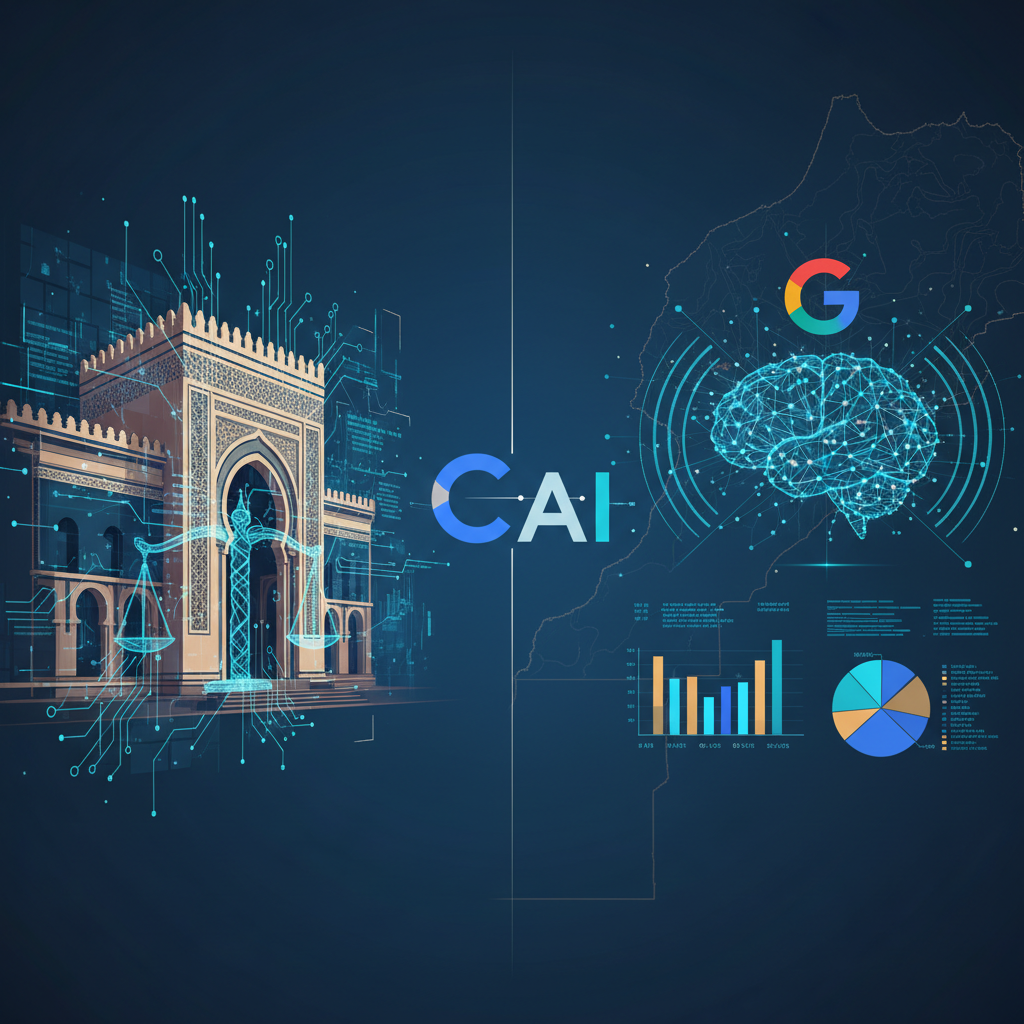

Walk into any law office in Casablanca today, from the bustling commercial firms near the port to the more traditional chambers nestled in the old medina, and you will find stacks of paper, legal tomes, and perhaps a faint scent of mint tea. This is the enduring image of the legal profession, one steeped in tradition, precedent, and meticulous human effort. But beneath this familiar surface, a quiet revolution is brewing, powered by artificial intelligence. The question on everyone's mind, from Rabat to Silicon Valley, is this: Is AI in legal tech a passing fad, or are we witnessing the dawn of a new normal for justice itself?
To understand where we are going, we must first glance at where we have been. The legal profession has always been about information management, about sifting through mountains of data, whether it is ancient Roman law or modern corporate regulations. For centuries, this was a manual, painstaking process. The advent of computers brought word processors and digital databases, making research marginally faster, but the core analytical work remained firmly in human hands. Then came the internet, offering vast repositories of legal information at our fingertips, yet still requiring immense human effort to synthesize and apply. Each step was an evolution, not a revolution.
Today, however, the landscape is shifting with unprecedented speed. The current state of AI in legal tech is far beyond simple keyword searches. We are talking about sophisticated algorithms capable of contract analysis, case prediction, and automated legal research that can parse complex documents, identify relevant clauses, and even forecast litigation outcomes with surprising accuracy. Data from a recent report by Thomson Reuters and Georgetown Law indicates that AI adoption in legal departments globally surged by 65% between 2023 and 2025, with a projected market value reaching $35 billion by 2030. This is not a marginal improvement; it is a fundamental retooling of legal practice.
Consider contract analysis. What once took junior associates hours, if not days, to review can now be done in minutes by platforms like LegalRobot or Kira Systems. These AI tools identify anomalies, flag non-standard clauses, and ensure compliance across thousands of documents. For large corporations, this translates into massive cost savings and reduced risk. In Morocco, where commercial law often involves intricate contracts spanning multiple languages, the efficiency gains are particularly pronounced. "We used to dedicate entire teams to due diligence for mergers and acquisitions," says Fatema Zahra El Fassi, a senior partner at a prominent Casablanca law firm. "Now, with AI, we can complete the initial review in a fraction of the time, allowing our lawyers to focus on strategic negotiation rather than repetitive document review. It is transforming our workflow and our bottom line." Her firm recently invested in a bespoke AI solution trained on Moroccan commercial code and French legal texts, demonstrating a clear commitment to this new paradigm.
Case prediction is another fascinating frontier. Companies like Lex Machina and Premonition are leveraging machine learning to analyze historical case data, judicial behavior, and even lawyer performance to predict the likely outcome of a case. Imagine a lawyer in Marrakech advising a client on a property dispute, able to access predictions based on thousands of similar cases heard by specific judges in the region. This is not about replacing human judgment but augmenting it, providing a data-driven edge that was previously unimaginable. "The predictive power of AI is still nascent, but its potential to inform strategy is undeniable," notes Dr. Karim Bensouda, a legal tech expert and professor at Mohammed V University in Rabat. "It empowers lawyers to make more informed decisions, not to mention the ethical implications we must carefully navigate as this technology matures." He points out that while the algorithms are powerful, the quality of the input data, especially from diverse legal systems like Morocco's, is paramount.
Automated legal research, perhaps the most widespread application, has also moved beyond simple search engines. Tools like Ross Intelligence, built on IBM Watson's cognitive computing, can understand natural language queries and provide highly relevant answers, summarizing complex legal concepts and identifying precedents. This frees up lawyers and paralegals from tedious research tasks, allowing them to dedicate more time to client interaction and complex problem-solving. For a country like Morocco, with a legal system drawing from civil law, Islamic law, and local customs, the ability to quickly cross-reference diverse legal sources is invaluable. "Morocco sits at the crossroads of Africa, Europe, and the Arab world and that's our AI superpower," I often say. This unique position means our legal tech solutions must be multilingual and multi-jurisdictional, a challenge that AI is uniquely suited to address.
However, it is not all smooth sailing. Skepticism persists, and rightly so. The legal profession is inherently conservative, and for good reason: the stakes are incredibly high. Concerns about data privacy, algorithmic bias, and the potential for job displacement are valid. What happens when an AI makes a mistake that costs a client millions, or worse, affects someone's freedom? Who is accountable? These are not trivial questions. "While AI offers incredible efficiencies, we must never forget the human element of justice," cautions Amina Boukhari, a barrister specializing in human rights law in Tangier. "Empathy, ethical reasoning, and nuanced interpretation of human stories cannot be outsourced to a machine. AI should be a tool for justice, not a replacement for its soul." Her words echo a sentiment shared by many in the legal community globally, underscoring the need for careful integration and oversight.
Even tech giants are stepping into this arena. Google, with its vast data processing capabilities and advanced AI research, is reportedly developing 'LegalAI,' a suite of tools aimed at streamlining legal processes for its own massive in-house legal team, with potential for broader commercial release. While details are scarce, industry whispers suggest it could integrate with Google Workspace and leverage the power of Gemini for document generation and analysis. This move from a company known for its data prowess could significantly accelerate adoption and innovation across the sector, pushing smaller, specialized legal tech firms to innovate even faster. According to a recent article in TechCrunch, venture capital funding for legal tech startups reached an all-time high of $1.5 billion in 2025, indicating strong investor confidence in the sector's future.
My verdict? This is no fad. This is the new normal, albeit one that will evolve and mature over the next decade. The legal profession, like so many others, is undergoing a profound transformation. The initial wave of AI in legal tech focused on automation and efficiency, tackling the 'grunt work' of law. The next wave, already upon us, will see AI becoming a strategic partner, offering insights, predicting outcomes, and even assisting in legal argumentation. The Sahara is vast, but the data flowing across it is vaster, and that data, when harnessed by AI, will reshape our understanding of legal practice.
For Morocco, this presents both challenges and unparalleled opportunities. Our bilingual and trilingual legal frameworks, our unique blend of legal traditions, and our strategic geographical position make us an ideal testbed for developing AI solutions that can bridge diverse legal systems. Casablanca is becoming the AI capital nobody expected, with startups and established firms alike exploring how to tailor these global technologies to local contexts. The key will be to foster collaboration between legal professionals, technologists, and policymakers to ensure that AI serves justice equitably and ethically, enhancing human capabilities rather than diminishing them. The future of law will not be about lawyers versus machines, but about lawyers empowered by intelligent machines, delivering more efficient, accessible, and hopefully, more just outcomes for all. The journey has just begun, and the implications will resonate for decades to come. For more insights into how AI is shaping various industries, you can always refer to analyses on MIT Technology Review. The conversation around AI's impact on society is just getting started, and the legal field is a crucial part of that dialogue. We must engage with it thoughtfully and proactively, ensuring that technology serves humanity's highest ideals.