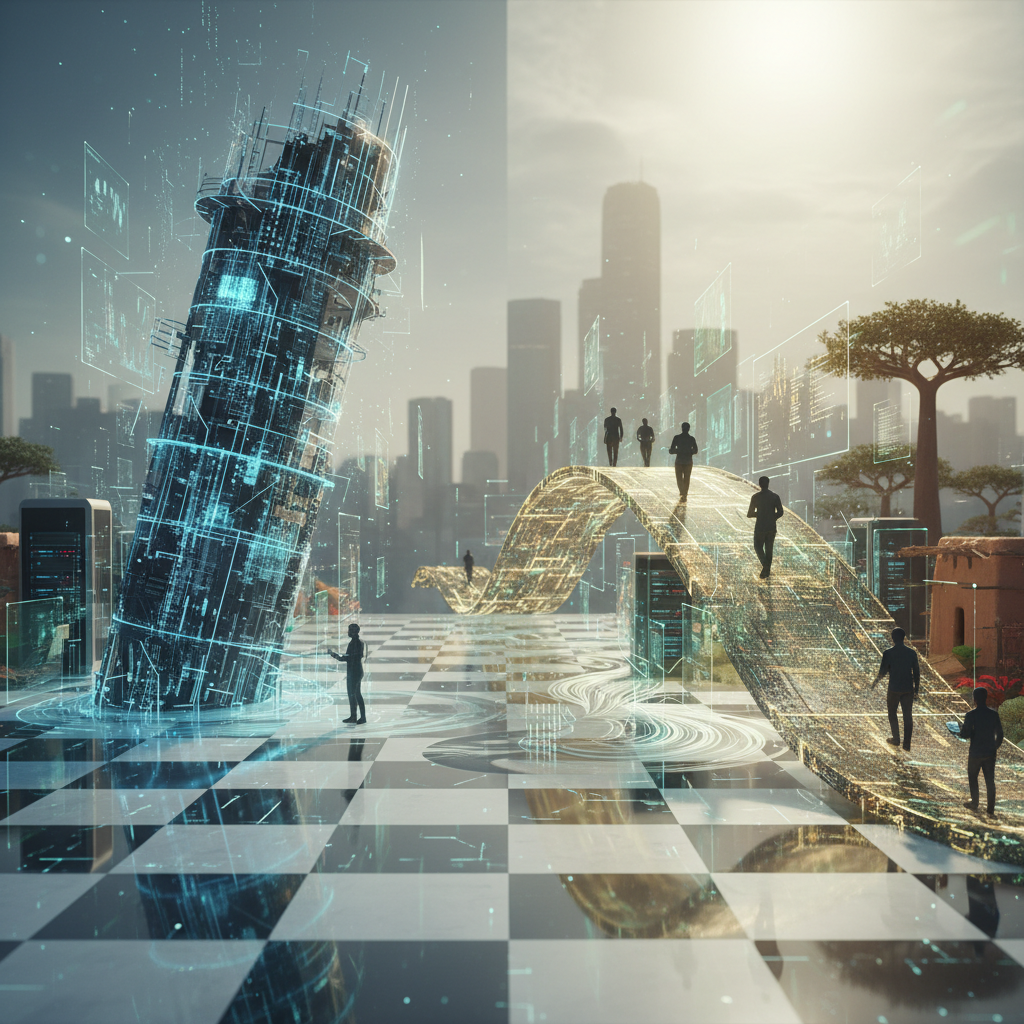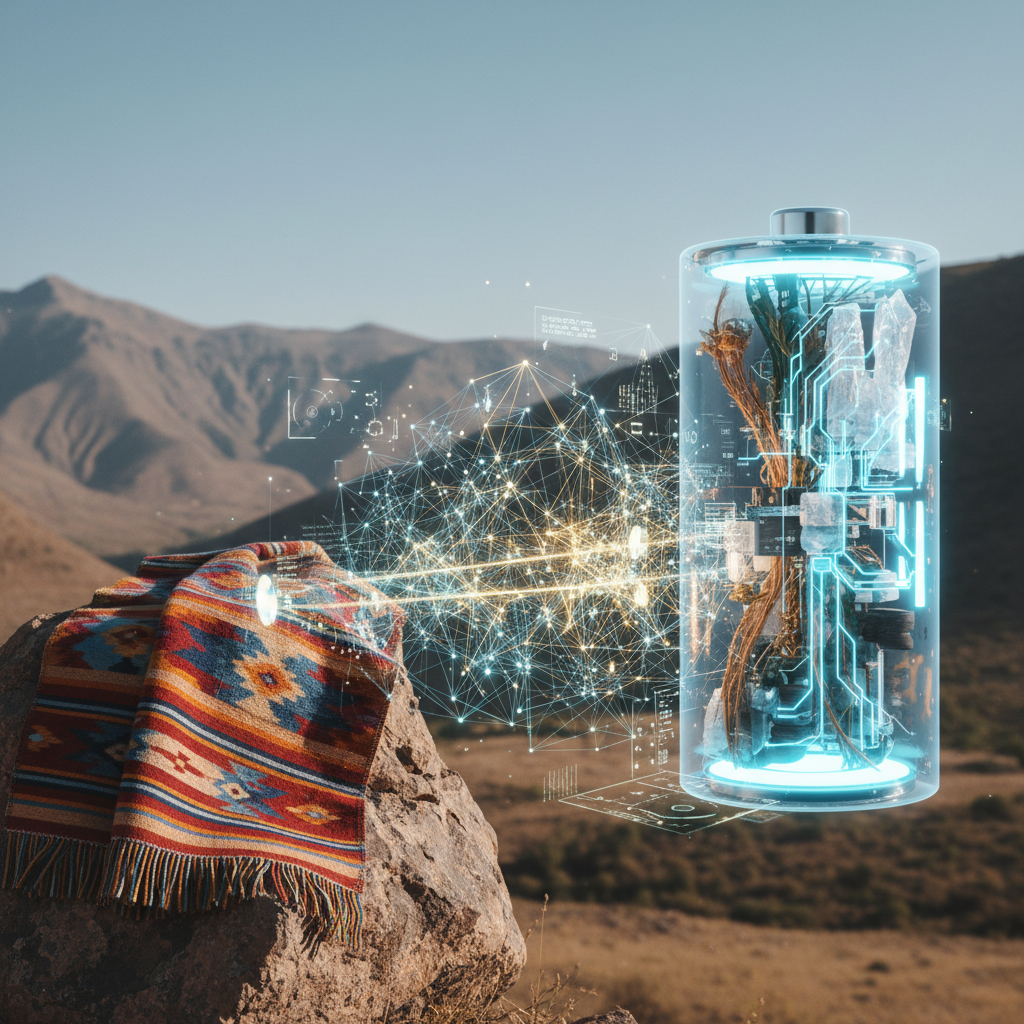

The sun rises over the Maloti Mountains, casting long shadows across a landscape rich in untapped potential. Here, in Lesotho, we understand the value of what lies beneath the surface, much like the intricate patterns woven into our traditional Basotho blankets tell stories of our heritage. Today, however, the treasure hunt is not for diamonds alone, but for the very building blocks of our technological future: new superconductors, advanced battery materials, and catalysts that could redefine energy and industry. The tool leading this charge is artificial intelligence, specifically AI-powered materials discovery, a field promising to accelerate innovation at an unprecedented pace.
This is not merely a scientific curiosity; it is an economic and geopolitical imperative. Nations across Africa, including Lesotho, possess vast reserves of minerals critical for modern electronics and renewable energy technologies. Lithium, cobalt, graphite, rare earth elements, these are the sinews of the 21st century. The challenge has always been how to efficiently extract, process, and, crucially, innovate with these resources. Enter AI, a technology that claims to cut years, even decades, off the traditional materials research cycle. But as always, when immense wealth is at stake, we must ask: who benefits, and at what cost?
The Big Picture: Accelerating the Alchemy of Materials
At its core, AI-powered materials discovery is about using sophisticated algorithms to predict, design, and optimize new materials with specific properties, far faster than human scientists could through traditional laboratory experimentation. Imagine a vast digital library of every known atom and molecule, along with their interactions. Now, give an AI the ability to 'read' this library, understand the rules of chemical bonding, and then 'write' new combinations, predicting their properties before a single gram is synthesized. That is the essence of this technology.
For Africa, this holds particular significance. We are not merely suppliers of raw materials; we aspire to be innovators and producers. The ability to discover, for instance, a new, more efficient battery material from locally sourced minerals could transform our economies, shifting us from mere exporters to key players in the global value chain. The potential is immense, yet the underlying mechanisms, and the corporate interests driving them, demand meticulous scrutiny.
The Building Blocks: How the Digital Alchemist Works
To understand this complex process, let us break it down into its fundamental components, much like a Mosotho elder explains the intricate weaving of a blanket. Each thread, each color, serves a purpose.
- Data Foundation: This is the bedrock. AI models require enormous datasets detailing existing materials, their atomic structures, synthesis methods, and measured properties (e.g., conductivity, strength, stability). These datasets are compiled from decades of scientific literature, experimental results, and computational simulations. Companies like Google DeepMind, with their vast data infrastructure, are uniquely positioned here.
- Machine Learning Algorithms: These are the 'brains' of the operation. They include various types of neural networks, such as graph neural networks (which are excellent at representing atomic structures) and deep learning models. These algorithms learn patterns and relationships within the data, essentially building an intuitive understanding of materials science.
- Computational Simulation Tools: Before an AI can predict, it often needs a playground. Tools like Density Functional Theory (DFT) or molecular dynamics simulations provide high-fidelity data on how atoms behave under various conditions, generating synthetic data that augments real-world experimental results.
- High-Performance Computing (HPC): The sheer computational power required for these simulations and for training complex AI models is staggering. NVIDIA's specialized GPUs are often at the heart of these supercomputers, providing the muscle for rapid calculation.
Step by Step: From Input to Innovation
Let us walk through the process, from a researcher's initial query to the AI's proposed solution:
Step 1: Define the Target Properties. A scientist, perhaps at the National University of Lesotho, might specify a need: “I need a material that is highly conductive, stable at high temperatures, and uses only abundant, non-toxic elements found in Southern Africa.” This is the initial prompt.
Step 2: Data Ingestion and Feature Engineering. The AI system sifts through its vast databases of known materials. It extracts relevant features from their atomic structures, chemical compositions, and synthesis parameters. This is where the AI learns the 'language' of materials.
Step 3: Predictive Modeling. Using its trained machine learning models, the AI begins to generate hypothetical new material structures. It predicts the properties of these novel materials based on the patterns it has learned. It can screen millions, even billions, of potential candidates in a fraction of the time a human chemist would take for just one. This is where the magic, or rather, the advanced mathematics, happens.
Step 4: Virtual Screening and Optimization. The AI filters these hypothetical materials, selecting those that best match the desired target properties. It can then iteratively refine the composition or structure of these promising candidates, optimizing them for maximum performance.
Step 5: Experimental Validation and Feedback Loop. The most promising candidates are then passed to human scientists for actual synthesis and experimental testing in a laboratory. The results of these experiments are crucial; they are fed back into the AI system, improving its models and making future predictions even more accurate. This creates a continuous learning cycle.
A Worked Example: The Quest for a Better Battery
Consider the global push for electric vehicles and grid-scale energy storage. The demand for better, cheaper, and safer batteries is insatiable. Traditional lithium-ion batteries, while effective, rely on materials like cobalt, often sourced under questionable ethical conditions. An AI-powered discovery platform could be tasked with finding a new battery cathode material.
- Input: Design a cathode material with higher energy density, faster charging capability, and composed primarily of manganese and iron, both abundant in parts of Africa, while avoiding cobalt.
- AI Process: The AI would analyze existing manganese- and iron-based compounds, learn their electrochemical behaviors, and then propose novel crystal structures and compositions. It might identify a previously unconsidered arrangement of atoms that, according to its models, offers superior ion transport and stability.
- Output: A list of several hundred candidate materials, each with predicted properties. The top 10 are then synthesized and tested by human researchers. One candidate, a novel manganese-iron phosphate, shows promising results, exceeding the performance of current commercial alternatives in preliminary tests. This significantly shortens the path to a new battery technology.
Why it Sometimes Fails: The Cracks in the Digital Facade
Despite its immense promise, AI-powered materials discovery is not a panacea. There are significant limitations and edge cases, and it is crucial to understand these, especially when considering the implications for developing nations.
Firstly, the quality and quantity of data are paramount. If the training data is biased, incomplete, or contains errors, the AI's predictions will be flawed. Many existing material databases are skewed towards materials discovered and studied in Western laboratories, potentially overlooking unique properties of materials prevalent in other regions. What they are not telling you is that proprietary data from corporate labs often remains locked away, creating an uneven playing field.
Secondly, the 'black box' problem persists. While an AI can predict a material's properties, it often cannot fully explain why it works the way it does. This lack of interpretability can hinder scientific understanding and make it difficult for human researchers to refine or troubleshoot the AI's suggestions effectively. It is like being given a perfect recipe without understanding the chemistry behind the cooking.
Thirdly, experimental validation remains indispensable. The AI's predictions are just that: predictions. They still need to be proven in the physical world. This requires well-equipped laboratories, skilled scientists, and significant financial investment, resources that are not always readily available in many African nations. The digital promise often clashes with real-world infrastructure limitations.
Finally, there is the ethical dimension of intellectual property and ownership. If an AI, developed by a multinational corporation, discovers a new material using data potentially derived from African resources or research, who owns the patent? Who reaps the financial rewards? This is a critical question that demands robust governance and clear policy frameworks, especially as global giants like NVIDIA and Google DeepMind expand their influence. Sources close to the matter confirm that discussions around data sovereignty and IP rights for AI-discovered materials are becoming increasingly contentious in international forums.
Where This Is Heading: A Future Forged in Algorithms?
The trajectory for AI-powered materials discovery is clear: faster, more accurate, and increasingly autonomous. We are moving towards systems that can not only predict but also design experiments, control robotic labs, and even synthesize materials with minimal human intervention. This vision, often termed 'self-driving labs,' is already being pursued by institutions like the University of Toronto's Acceleration Consortium and companies like Aionics.
For Lesotho and the broader African continent, the path forward is dual-pronged. We must invest in building our own scientific infrastructure and human capital, ensuring that we are not merely consumers of AI-discovered materials but active participants in their creation. This includes fostering local talent in data science, materials engineering, and high-performance computing. Initiatives like the African Materials Research Society are vital in this regard.
Simultaneously, we must advocate for equitable partnerships and transparent data governance. The vast mineral wealth of Africa should not simply fuel the AI engines of distant corporations without significant, tangible benefits flowing back to the continent. The algorithms may be global, but the resources, and the people who live above them, are local. The future of materials science, powered by AI, holds immense promise, but only if we ensure it is a future built on justice, equity, and genuine collaboration, not just technological prowess. The patterns of our Basotho blankets teach us that true strength comes from interconnectedness and purpose; let us ensure our digital future reflects the same wisdom. For more insights into the broader implications of AI in global contexts, one might consult MIT Technology Review. The conversation around AI's impact on resource-rich nations is only just beginning, and it is one we must shape actively. The latest advancements in AI research are often detailed on platforms like arXiv. For a deeper dive into the business side of AI, Reuters Technology offers valuable perspectives.